Loading...
Done
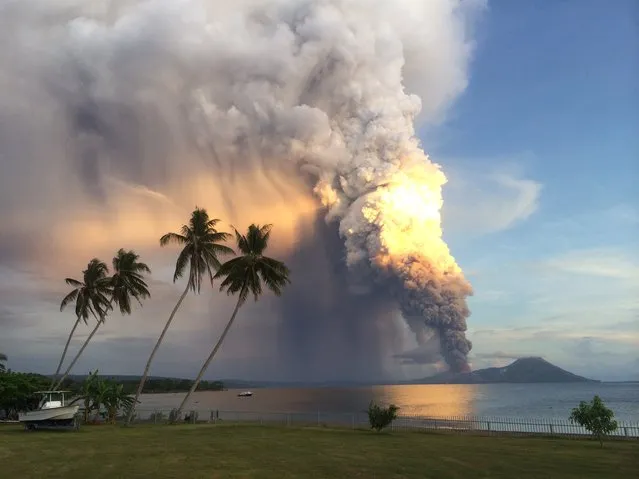
A photo taken on August 29, 2014, shows Mount Tavurvur erupting in eastern Papua New Guinea, spewing rocks and ash into the air, forcing the evacuation of local communities and international flights to be re-routed. Mount Tavurvur, which destroyed the town of Rabaul when it erupted simultaneously with nearby Mount Vulcan in 1994, rumbled to life early in the morning on the tip of the remote island of New Britain. (Photo by Oliver Bluett/AFP Photo)

A photo taken on August 29, 2014, shows Mount Tavurvur erupting in eastern Papua New Guinea, spewing rocks and ash into the air, forcing the evacuation of local communities and international flights to be re-routed. Mount Tavurvur, which destroyed the town of Rabaul when it erupted simultaneously with nearby Mount Vulcan in 1994, rumbled to life early in the morning on the tip of the remote island of New Britain. (Photo by Oliver Bluett/AFP Photo)
Details
30 Aug 2014 10:51:00
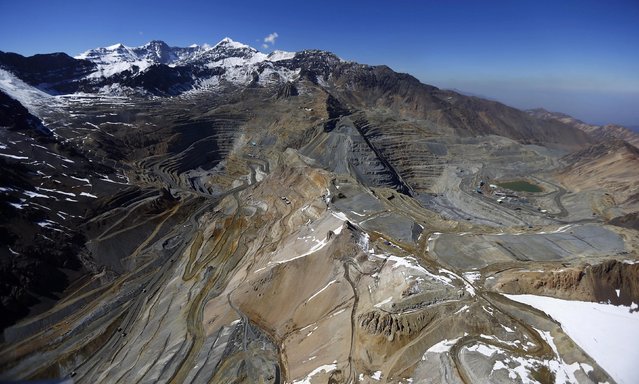
An aerial view of open pits of CODELCO's Andina (L) and Anglo American's Los Bronces copper mines with Olivares glaciers in the background (top L) at Los Andes Mountain range, near Santiago city, November 17, 2014. The rock glaciers of the Chilean central zone, a huge source of water for the basins of the capital, are said to be threatened by the environmental impacts of hydroelectric and mining projects, according to environmental activists Greenpeace. (Photo by Ivan Alvarado/Reuters)

An aerial view of open pits of CODELCO's Andina (L) and Anglo American's Los Bronces copper mines with Olivares glaciers in the background (top L) at Los Andes Mountain range, near Santiago city, November 17, 2014. The rock glaciers of the Chilean central zone, a huge source of water for the basins of the capital, are said to be threatened by the environmental impacts of hydroelectric and mining projects, according to environmental activists Greenpeace. (Photo by Ivan Alvarado/Reuters)
Details
19 Nov 2014 14:06:00
Scientists trekking for days to the undisputed furthest north land point on the planet, in October 2024 were greeted by an unexpected welcoming party: a stoat, whom they named Randall. The team were heading to Kaffeklubben Island, also known as Inuit Qeqertaat, off the northern tip of Greenland, about 440 miles from the North Pole, when Randall emerged from a cairn of rocks, showing no fear as he went to investigate them. (Photo by Jeff Kerby/Magnus News)

Scientists trekking for days to the undisputed furthest north land point on the planet, in October 2024 were greeted by an unexpected welcoming party: a stoat, whom they named Randall. The team were heading to Kaffeklubben Island, also known as Inuit Qeqertaat, off the northern tip of Greenland, about 440 miles from the North Pole, when Randall emerged from a cairn of rocks, showing no fear as he went to investigate them. (Photo by Jeff Kerby/Magnus News)
Details
27 Oct 2024 04:30:00
The calm before storm Bert, with the sunrise on November 22, 2024 through Durdle Door in Dorset, UK, the sun beams through the famous rock arch on the Jurassic Coastline, a shot known as “Through the Keyhole”. It only happens from the end of November to early January and not that often as clear skies are needed on the horizon for the sun to shine through. (Photo by Steve Hogan/Picture Exclusive)

The calm before storm Bert, with the sunrise on November 22, 2024 through Durdle Door in Dorset, UK, the sun beams through the famous rock arch on the Jurassic Coastline, a shot known as “Through the Keyhole”. It only happens from the end of November to early January and not that often as clear skies are needed on the horizon for the sun to shine through. (Photo by Steve Hogan/Picture Exclusive)
Details
14 Jan 2025 05:39:00
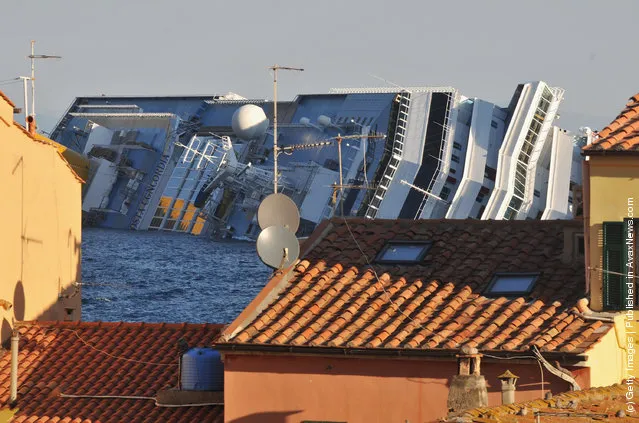
The cruise ship Costa Concordia lies stricken off the shore of the island of Giglio

The cruise ship Costa Concordia lies stricken off the shore of the island of Giglio, on January 17, 2012 in Giglio Porto, Italy. More than four thousand people were on board when the ship hit a rock off the Tuscan coast. At least 11 people have been confirmed dead and another 24 missing. (Photo by Laura Lezza/Getty Images)
Details
18 Jan 2012 09:26:00
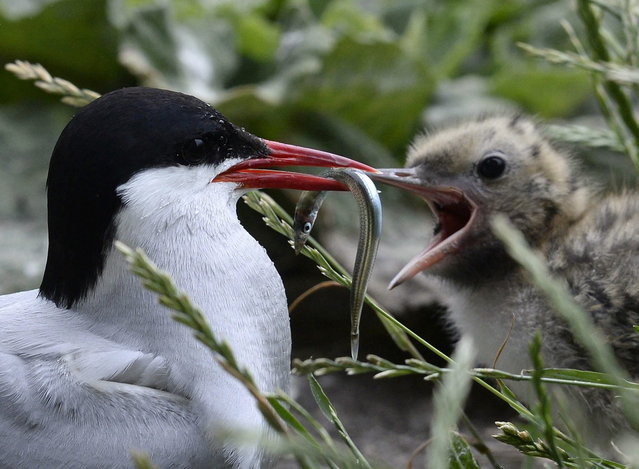
An arctic tern feeds its chick on the Farne Islands off the Northumberland coast, northern England July 8, 2013. (Photo by Nigel Roddis/Reuters)

An arctic tern feeds its chick on the Farne Islands off the Northumberland coast, northern England July 8, 2013. The Farne Islands, which lie off the coast of northeast England, are home to a huge array of wildlife. The islands are owned and protected by the British conservation charity, the National Trust, which says they host some 23 species of seabird, as well as a substantial colony of grey seals, who come to have their pups there in the autumn. Every five years the National Trust carries out a census of the islands' population of puffins, and this year's survey showed there were almost 40,000 nesting pairs on the islands – an 8 percent rise from 2008. (Photo by Nigel Roddis/Reuters)
Details
11 Dec 2013 09:21:00


“With a fourth explosion rocking the Fukushima nuclear plant on Tuesday, danger of the spent nuke fuel pool boiling and radiation levels at the facility's gate increasing hundredfold, fears of a meltdown in Japan skyrocket”. – Russia Today

Photo: In this handout image provided by U.S. Navy, an aerial view of tsunami and earthquake damage is seen from an SH-60B helicopter assigned to the Chargers of Helicopter Antisubmarine Squadron (HS) 14 from Naval Air Facility Atsugi March 12, 2011 seen from the air of Sendai, Japan. (Photo by U.S. Navy via Getty Images)
Details
16 Mar 2011 10:19:00


Axel, a research prototype rover for exploring the Moon, Mars and other planets, is remotely driven over rocks as engineers from Jet Propulsion (JPL) and grad students from Caltech (California Institute of Technology) demonstrate its mobile over the steep and rocky grounds of the JPL Mars Yard on January 14, 2009 in Pasadena, California. The rover is capable of descending cliffs or into craters and returning by a cable tethered to its starting point. Development of the Axel rover is a point effort funded by NASA Exploration Systems Mission Directorate (ESMD) and lead by Principal Investigator Issa Newnas and Co-Investigator and Caltech professor of mechanical engineering bio engineering Joel Burdick. (Photo by David McNew/Getty Images)
Details
05 Apr 2011 07:47:00