Loading...
Done
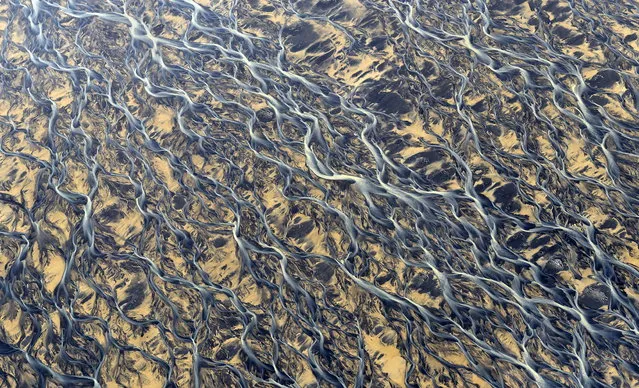
These pictures look like an artist has painted abstract patterns on canvas – but in fact they are natural rivers captured on camera. The spectacular rivers in Iceland's central highlands and southern parts originate from glaciers, which is why the water is a milky colour. (Photo by Andrey Ermolaev/Solent News)

These picture look like an artist has painted abstract patterns on canvas – but in fact they are natural rivers captured on camera. The spectacular rivers in Iceland's central highlands and southern parts originate from glaciers, which is why the water is a milky colour. They are shallow rivers and the water spreads quickly over a flat and sandy surface, creating random and beautiful patterns. Photographer Andrey Ermolaev from Moscow, Russia, flew 500ft above the unique sight in a small plane. (Photo by Andrey Ermolaev/Solent News)
Details
05 May 2014 10:57:00
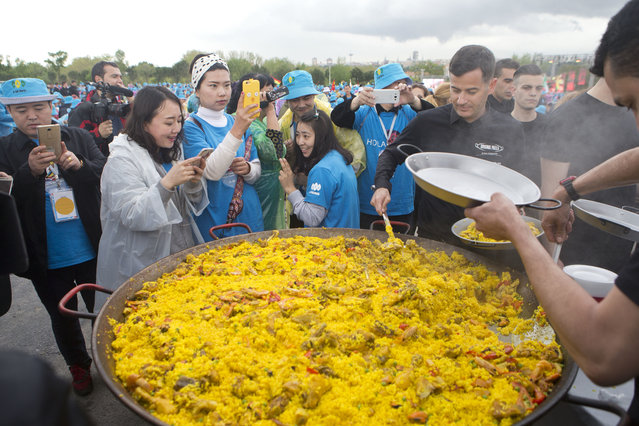
Chinese conglomerate Tiens Group employers take photos while waiting to be served Paella in Madrid, Spain, Friday, May 6, 2016. (Photo by Paul White/AP Photo)

Chinese conglomerate Tiens Group employers take photos while waiting to be served Paella in Madrid, Spain, Friday, May 6, 2016. The billionaire founder of Chinese conglomerate Tiens Group is treating 3,000 of his best salespeople to a traditional Spanish paella meal in a free Madrid trip that also includes a bullfight and a tour of King Felipe VI's Royal Palace. The smiling salespeople washed down their heaping plates of paella with sangria Friday at a mass spread of picnic tables in a riverside park during the event footed by Li Jinyuan and organized by China's U Tour travel company. (Photo by Paul White/AP Photo)
Details
07 May 2016 12:49:00
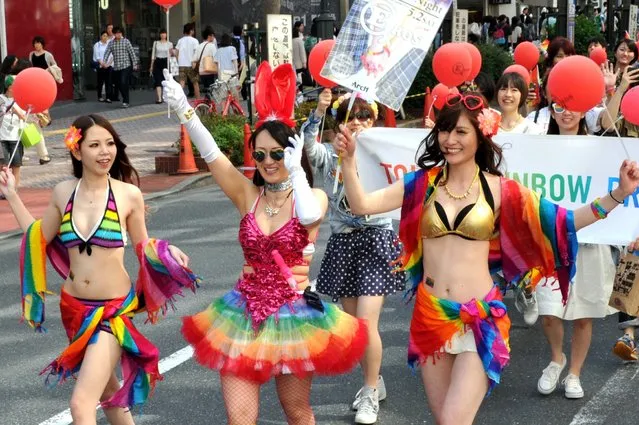
Tokyo Rainbow Pride 2015, at Yoyogi park-Shibuya,  on April 26, 2015. Some 3,000 lesbian, gay, bisexual and transgender people paraded through Tokyo’s Shibuya district Sunday afternoon to demonstrate their hope that Japanese society will continue to forge ahead with recent moves to embrace equality and diversity. (Photo by Yoshiaki Miura)

Tokyo Rainbow Pride 2015, at Yoyogi park-Shibuya, on April 26, 2015. Some 3,000 lesbian, gay, bisexual and transgender people paraded through Tokyo’s Shibuya district Sunday afternoon to demonstrate their hope that Japanese society will continue to forge ahead with recent moves to embrace equality and diversity. In a nation where prejudice against sexual minorities persists, the annual Tokyo Rainbow Pride parade has sought to counter the trend by openly spotlighting LGBT residents and spreading their voices. But this year, LGBT participants and proponents seemed particularly joyous, emboldened by what they see as a blossoming of LGBT-friendly moves by municipalities and companies. (Photo by Yoshiaki Miura)
Details
27 Apr 2015 10:40:00
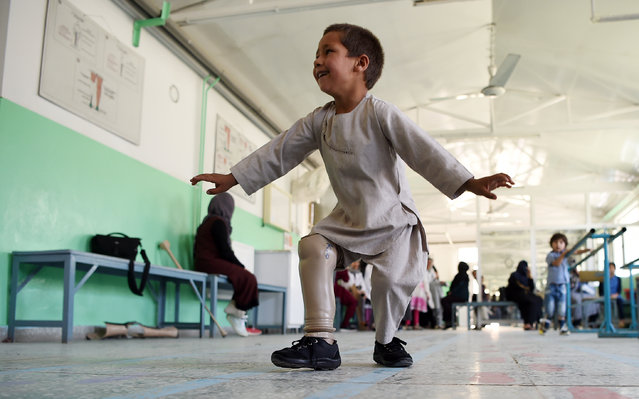
Ahmad Sayed Rahman, a five-year-old Afghan boy who lost his right leg when he was hit by a bullet in the crossfire of a battle, dances with his prosthetic leg at the International Committee of the Red Cross (ICRC) hospital for war victims and the disabled, in Kabul on May 7, 2019. With his hands in the air and an infectious grin spreading from ear to ear, a young Afghan boy whirls around a Kabul hospital room on his new prosthetic leg. The boy, five-year-old Ahmad Sayed Rahman, has become a social media star in Afghanistan and beyond after a short video of him effortlessly dancing on his new limb was published this week on Twitter. (Photo by Wakil Kohsar/AFP Photo)

Ahmad Sayed Rahman, a five-year-old Afghan boy who lost his right leg when he was hit by a bullet in the crossfire of a battle, dances with his prosthetic leg at the International Committee of the Red Cross (ICRC) hospital for war victims and the disabled, in Kabul on May 7, 2019. (Photo by Wakil Kohsar/AFP Photo)
Details
10 Jun 2019 00:03:00
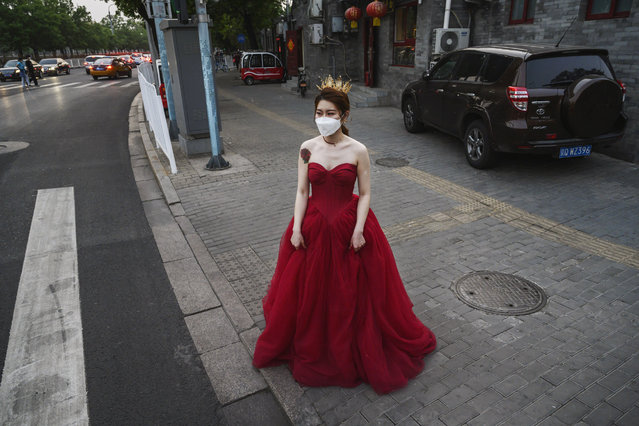
A Chinese woman wears her dress and a protective mask as she waits to change after taking pictures in advance of her wedding near the Forbidden City, on April 30, 2020 in Beijing, China. Beijing lowered its risk level after more than three months Thursday in advance of the May holiday, allowing most domestic travellers arriving in the city to do so without having to do 14 days of quarantine. The Forbidden City will open to a limited number of visitors as of Thursday morning. After decades of growth, officials said China's economy had shrunk in the latest quarter due to the impact of the coronavirus epidemic. The slump in the world's second largest economy is regarded as a sign of difficult times ahead for the global economy. While industrial sectors in China are showing signs of reviving production, a majority of private companies are operating at only 50% capacity, according to analysts. With the pandemic hitting hard across the world, officially the number of coronavirus cases in China is dwindling, ever since the government imposed sweeping measures to keep the disease from spreading. Officials believe the worst appears to be over in China, though there are concerns of another wave of infections as the government attempts to reboot the world's second largest economy. Since January, China has recorded more than 81,000 cases of COVID-19 and at least 3,200 deaths, mostly in and around the city of Wuhan, in central Hubei province, where the outbreak first started. (Photo by Kevin Frayer/Getty Images)

A Chinese woman wears her dress and a protective mask as she waits to change after taking pictures in advance of her wedding near the Forbidden City, on April 30, 2020 in Beijing, China. Beijing lowered its risk level after more than three months Thursday in advance of the May holiday, allowing most domestic travellers arriving in the city to do so without having to do 14 days of quarantine. (Photo by Kevin Frayer/Getty Images)
Details
03 May 2020 00:07:00
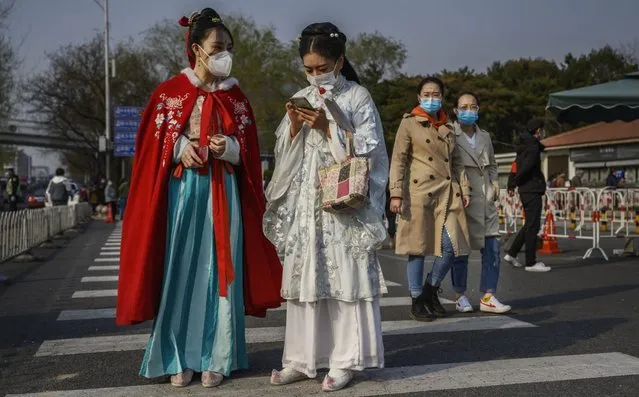
Chinese women wear protective masks as they are dressed in traditional clothing from the Qing Dynasty era outside a park on March 29, 2020 in Beijing, China. A limited section of the iconic tourist site was re-opened to the public this week allowing a smaller number of visitors to reserve tickets online in advance and to enter after passing health screening. With the pandemic hitting hard across the world, China recorded its first day with no new domestic cases of the coronavirus last week, since the government imposed sweeping measures to keep the disease from spreading. For two months, millions of people across China have been restricted in how they move from their homes, while other cities have been locked down in ways that appeared severe at the time but are now being replicated in other countries trying to contain the virus. Officials believe the worst appears to be over in China, though there are concerns of another wave of infections as the government attempts to reboot the worlds second largest economy. In Beijing, it is mandatory to wear masks outdoors, retail stores operate on reduced hours, restaurants employ social distancing among patrons, and tourist attractions at risk of drawing large crowds remain closed. Monitoring and enforcement of virus-related measures and the quarantine of anyone arriving to Beijing is carried out by neighborhood committees and a network of Communist Party volunteers who wear red arm bands. A primary concern for Chinese authorities remains the arrival of flights from Europe and elsewhere, given the exposure of passengers in regions now regarded as hotbeds for transmission. Since January, China has recorded more than 81,000 cases of COVID-19 and at least 3200 deaths, mostly in and around the city of Wuhan, in central Hubei province, where the outbreak first started. (Photo by Kevin Frayer/Getty Images)

Chinese women wear protective masks as they are dressed in traditional clothing from the Qing Dynasty era outside a park on March 29, 2020 in Beijing, China. A limited section of the iconic tourist site was re-opened to the public this week allowing a smaller number of visitors to reserve tickets online in advance and to enter after passing health screening. (Photo by Kevin Frayer/Getty Images)
Details
01 Apr 2020 00:05:00
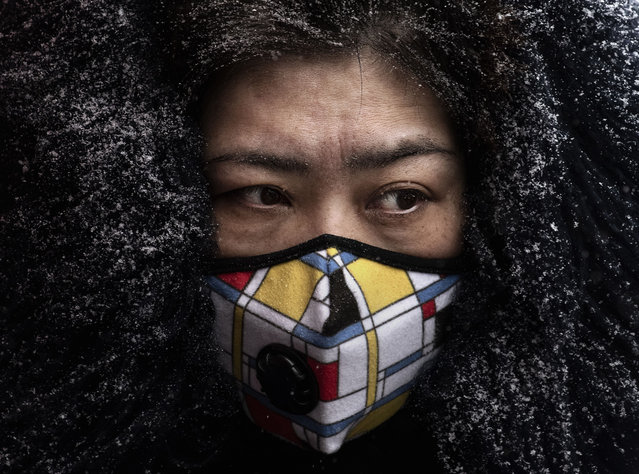
A Chinese woman wears a protective mask as she shops in a market on February 6, 2020 in Beijing, China. The number of cases of a deadly new coronavirus rose to more than 28000 in mainland China Thursday, days after the World Health Organization (WHO) declared the outbreak a global public health emergency. China continued to lock down the city of Wuhan in an effort to contain the spread of the pneumonia-like disease which medicals experts have confirmed can be passed from human to human. In an unprecedented move, Chinese authorities have put travel restrictions on the city which is the epicenter of the virus and municipalities in other parts of the country affecting tens of millions of people. The number of those who have died from the virus in China climbed to over 564 on Thursday, mostly in Hubei province, and cases have been reported in other countries including the United States, Canada, Australia, Japan, South Korea, India, the United Kingdom, Germany, France and several others. The World Health Organization has warned all governments to be on alert and screening has been stepped up at airports around the world. Some countries, including the United States, have put restrictions on Chinese travelers entering and advised their citizens against travel to China. (Photo by Kevin Frayer/Getty Images)

A Chinese woman wears a protective mask as she shops in a market on February 6, 2020 in Beijing, China. The number of cases of a deadly new coronavirus rose to more than 28000 in mainland China Thursday, days after the World Health Organization (WHO) declared the outbreak a global public health emergency. (Photo by Kevin Frayer/Getty Images)
Details
09 Feb 2020 00:07:00
In this Thursday, July 10, 2014, photo, Mike Fitzgerald, right, teaches behind a sample display of cannabis-infused products during a cooking class at the New England Grass Roots Institute in Quincy, Mass. Some pot users turn to edibles because they don't like to inhale or smell the smoke, or just want variety or a longer lasting, more intense high. (Photo by Michael Dwyer/AP Photo)

The proliferation of marijuana edibles for both medical and recreational purposes is giving rise to a cottage industry of baked goods, candies, infused oils, cookbooks and classes that promises a slow burn as more states legalize the practice and awareness spreads about the best ways to deliver the drug. Edibles and infused products such as snack bars, olive oils and tinctures popular with medical marijuana users have flourished into a gourmet market of chocolate truffles, whoopie pies and hard candies as Colorado and Washington legalized the recreational use of marijuana in the past year. Photo: In this Thursday, July 10, 2014, photo, Mike Fitzgerald, right, teaches behind a sample display of cannabis-infused products during a cooking class at the New England Grass Roots Institute in Quincy, Mass. (Photo by Michael Dwyer/AP Photo)
Details
21 Jul 2014 11:02:00