Loading...
Done
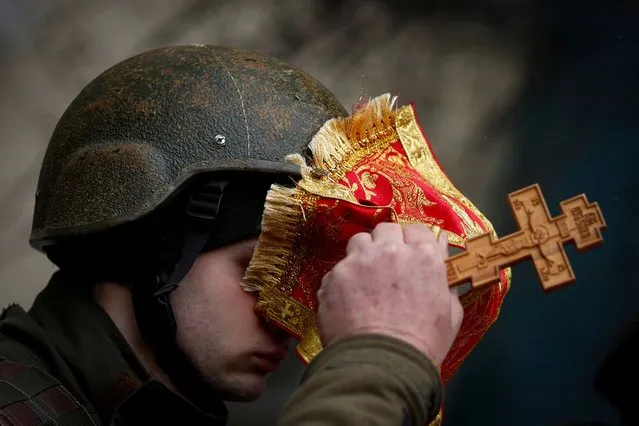
Military Chaplain Nikolay Medynsky blesses a Ukrainian soldier before he goes into battle, as Russia's attack on the Ukraine continues, in Kyiv, Ukraine, March 13, 2022. (Photo by Thomas Peter/Reuters)

Military Chaplain Nikolay Medynsky blesses a Ukrainian soldier before he goes into battle, as Russia's attack on the Ukraine continues, in Kyiv, Ukraine, March 13, 2022. (Photo by Thomas Peter/Reuters)
Details
14 Mar 2022 05:06:00
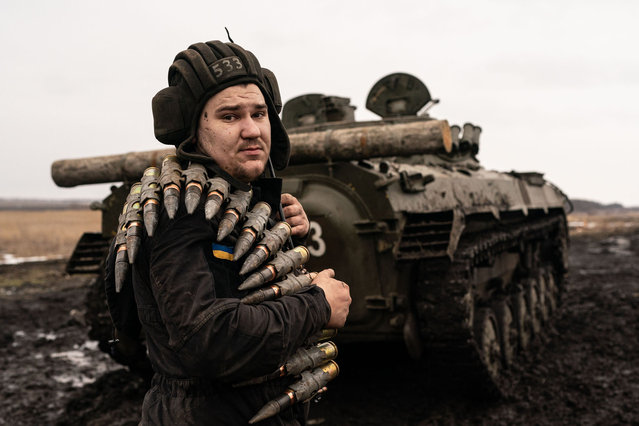
Ukrainian servicemen are seen training with a BMP-2 in Donetsk Region, Ukraine on February 10, 2022. (Photo by Wolfgang Schwan/Anadolu Agency via Getty Images)

Ukrainian servicemen are seen training with a BMP-2 in Donetsk Region, Ukraine on February 10, 2022. (Photo by Wolfgang Schwan/Anadolu Agency via Getty Images)
Details
02 Apr 2022 06:00:00
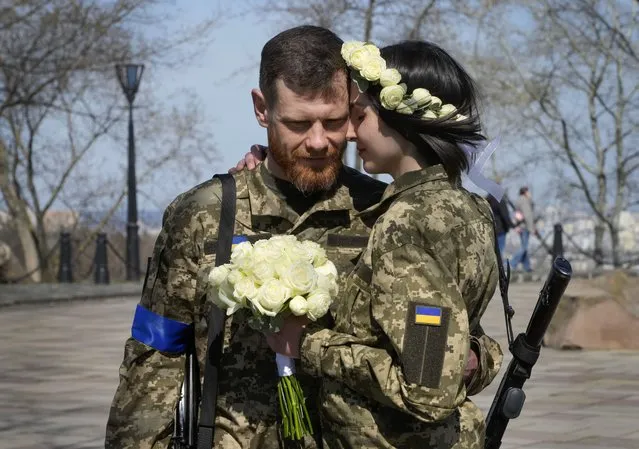
Ukrainian soldiers Anastasia and Vyacheslav embrace prior to their wedding ceremony in a city park in Kyiv, Ukraine, Thursday, April 7, 2022. (Photo by Efrem Lukatsky/AP Photo)

Ukrainian soldiers Anastasia and Vyacheslav embrace prior to their wedding ceremony in a city park in Kyiv, Ukraine, Thursday, April 7, 2022. (Photo by Efrem Lukatsky/AP Photo)
Details
16 May 2022 04:49:00
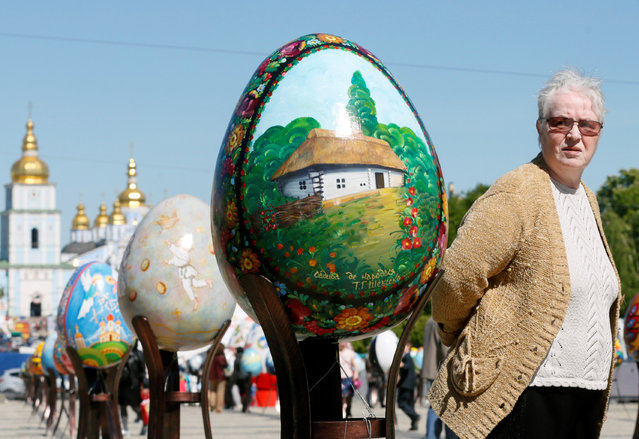
A woman looks at traditional Ukrainian Easter eggs “Pysanka”, installed as part of the upcoming celebrations of Easter, in central Kiev, Ukraine, April 29, 2016. A pysanka is a Ukrainian Easter egg, decorated with traditional Ukrainian folk designs using a wax-resist (batik) method. The word pysanka comes from the verb pysaty, “to write”, as the designs are not painted on, but written with beeswax. Many other eastern European ethnic groups decorate eggs using wax resist for Easter. These include the Belarusians, Bulgarians, Croats, Czechs, Hungarians, Lithuanians, Poles, Romanians, Serbs, Slovaks, Slovenes and Sorbs. (Photo by Valentyn Ogirenko/Reuters)

A woman looks at traditional Ukrainian Easter eggs “Pysanka”, installed as part of the upcoming celebrations of Easter, in central Kiev, Ukraine, April 29, 2016. A pysanka is a Ukrainian Easter egg, decorated with traditional Ukrainian folk designs using a wax-resist (batik) method. The word pysanka comes from the verb pysaty, “to write”, as the designs are not painted on, but written with beeswax. Many other eastern European ethnic groups decorate eggs using wax resist for Easter. These include the Belarusians, Bulgarians, Croats, Czechs, Hungarians, Lithuanians, Poles, Romanians, Serbs, Slovaks, Slovenes and Sorbs. (Photo by Valentyn Ogirenko/Reuters)
Details
30 Apr 2016 09:00:00
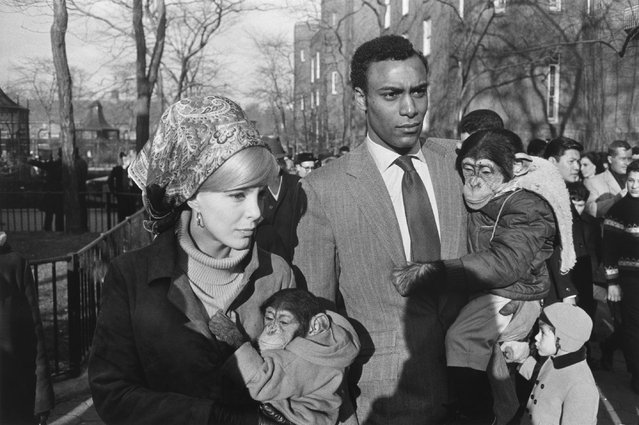
Central Park Zoo, New York, 1967. (Photo by Garry Winogrand)

Central Park Zoo, New York, 1967. (Photo by Garry Winogrand)
Details
28 Nov 2015 08:02:00
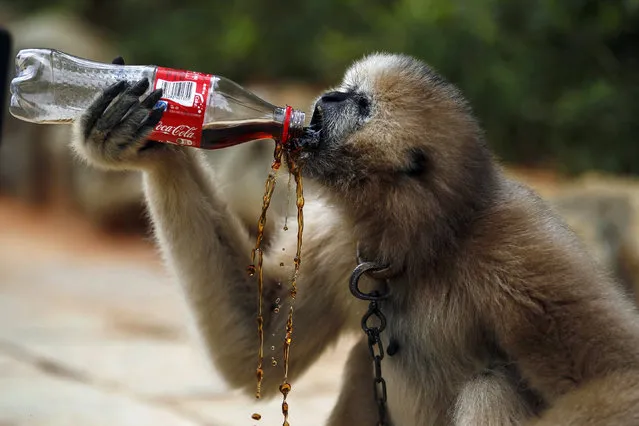
A gibbon drinks from a soft drink bottle, given by a tourist, at a zoo in Kunming, Yunnan province, June 18, 2015. (Photo by Wong Campion/Reuters)

A gibbon drinks from a soft drink bottle, given by a tourist, at a zoo in Kunming, Yunnan province, June 18, 2015. (Photo by Wong Campion/Reuters)
Details
30 Jun 2015 11:48:00
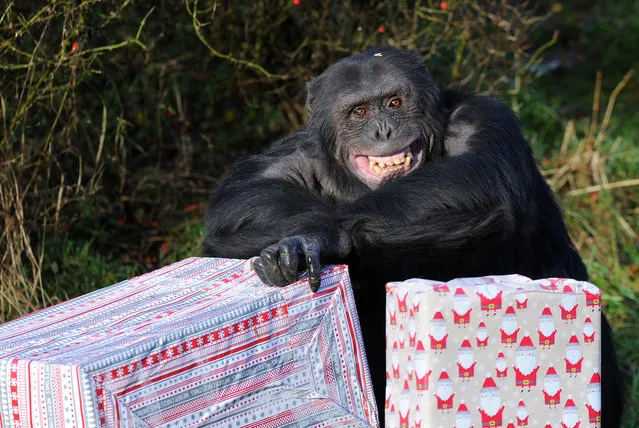
A Chimpanzee opens its Christmas presents at ZSL Whipsnade Zoo on December 17, 2013 in Bedfordshire, England. (Photo by Tony Margiocchi/Barcroft Media)

A Chimpanzee opens its Christmas presents at ZSL Whipsnade Zoo on December 17, 2013 in Bedfordshire, England. (Photo by Tony Margiocchi/Barcroft Media)
Details
26 Dec 2013 11:54:00
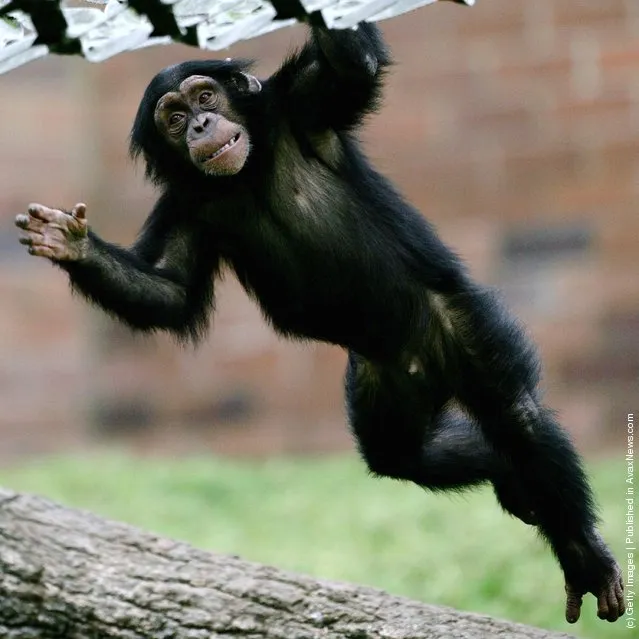
A baby Chimpanzee plays in its enclosure at Taronga Zoo

A baby Chimpanzee plays in its enclosure at Taronga Zoo July 14, 2006 in Sydney, Australia. (Photo by Ian Waldie/Getty Images)
Details
08 Oct 2011 13:22:00