Artists from the Beijing Dance Academy perform to celebrate the Chinese Lunar New Year in Budapest, capital of Hungary, February 6, 2019. (Photo by Attila Volgyi/Xinhua News Agency/Barcroft Media)
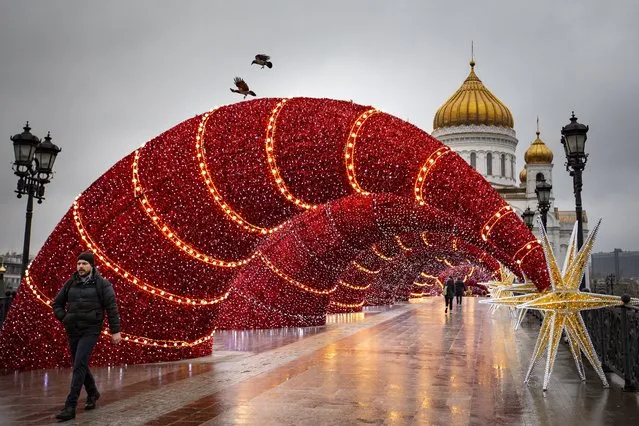
People walk on the Patriarch's bridge decorated for Christmas and New Year celebrations with the Christ the Savior Cathedral in the background in Moscow, Russia, Monday, December 16, 2019. (Photo by Alexander Zemlianichenko/AP Photo)
Rita Ora attends the the GQ Men Of The Year Awards 2019 in association with HUGO BOSS at the Tate Modern on September 3, 2019 in London, England. (Photo by David M. Benett/Dave Benett/Getty Images for HUGO BOSS)
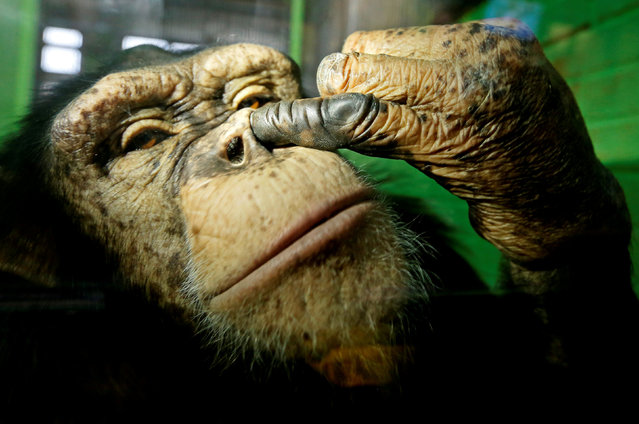
Anfisa, a twelve-year-old female chimpanzee, picks its nose at the Royev Ruchey Zoo in a suburb of the Siberian city of Krasnoyarsk, Russia on October 18, 2017. (Photo by Ilya Naymushin/Reuters)
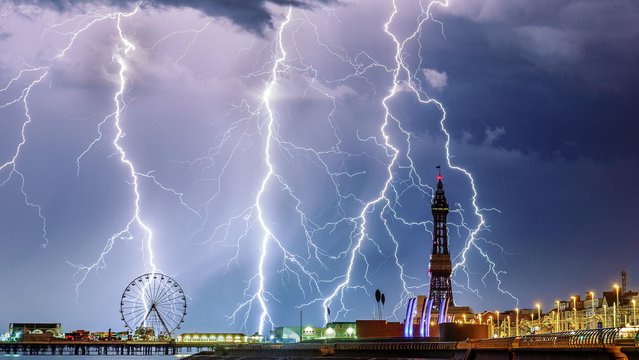
Capturing this picture of lightning striking near Blackpool Tower has earned Stephen Cheatley the UK Weather Photographer of the Year award 2018. (Photo by Stephen Cheatley/Bav Media)
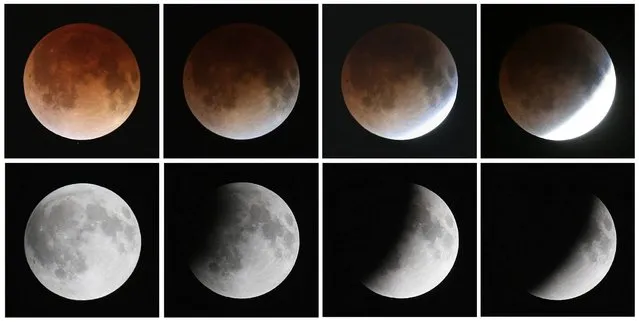
This composite image shows a sequence, from bottom left to top left, of the moon's transition during a total lunar eclipse on April 15, 2014 in Miami, Florida. People in most of north and south America should be able to witness this year's first total lunar eclipse, which will cause a “blood moon” and is the first of four in a rare Tetrad of eclipses over the next two years. (Photo by Joe Raedle/Getty Images)
Foreign tourists join the annual Songkran Festival celebration, the Thai traditional New Year, also known as the water festival in Silom district of Bangkok, Thailand, 13 April 2014. The three-day Songkran Festival runs from 13 to 15 April and is celebrated with splashing water and putting powder on each others faces as a symbolic sign of cleansing and washing away the sins from the old year. (Photo by Narong Sangnak/EPA)
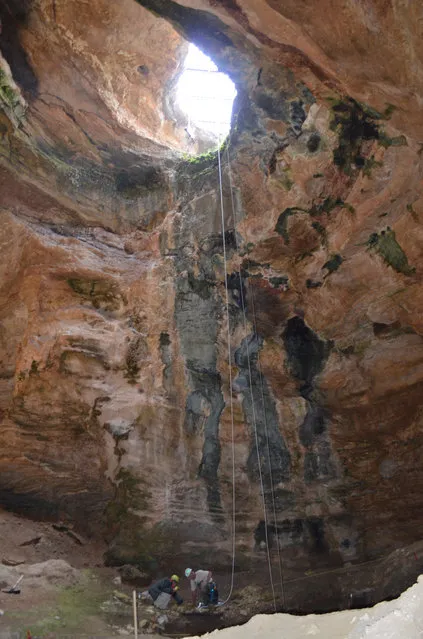
This July 2014 image provided by the Bureau of Land Management shows the interior of the Natural Trap Cave in north-central Wyoming. The cave holds the remains of tens of thousands of animals, including many now-extinct species, from the late Pleistocene period tens of thousands of years ago. Scientists have resumed digging for the first time in more than 30 years. (Photo by AP Photo/Bureau of Land Management)