Loading...
Done


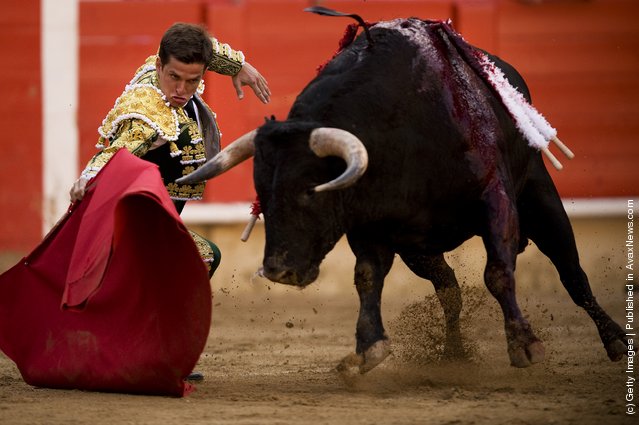
Bullfighter Julian Lopez “El Juli” of Spain performs during the second bullfight of the 2011 season at the Monumental bullring on July 10, 2011 in Barcelona, Spain. This will be the last year for Bull fighting at the Monumental bullring as the parliament of Catalonia has voted to ban bullfighting as of January 1, 2012. (Photo by David Ramos/Getty Images)
Details
11 Jul 2011 10:49:00
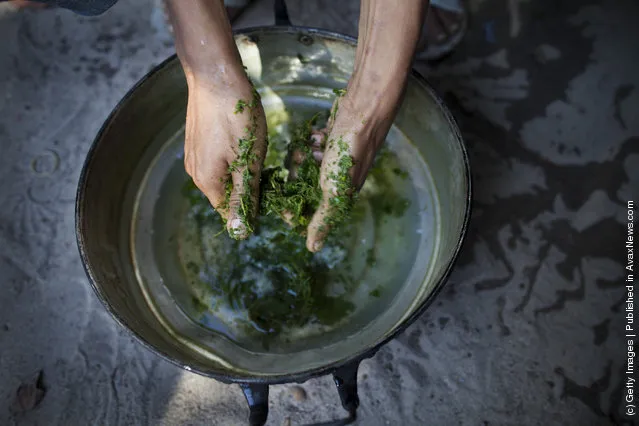
Thai drug user mixes the popular cheap narcotic drink

A Thai drug user mixes the popular cheap narcotic drink as it is cooked over a fire on September 1, 2011 in Narwathiwat, southern Thailand. (Photo by Paula Bronstein/Getty Images)
Details
04 Sep 2011 13:18:00
Chinese Handmade Firecrackers For The Lunar New Year

A Chinese worker makes handmade firecrackers in the traditional way on February 1, 2005 in Liuan, Anhui Province, China. Chinese have the tradition of setting off firecrackers to celebrate the lunar New Year. (Photo by Cancan Chu/GettyImages)
Details
24 Dec 2011 12:57:00
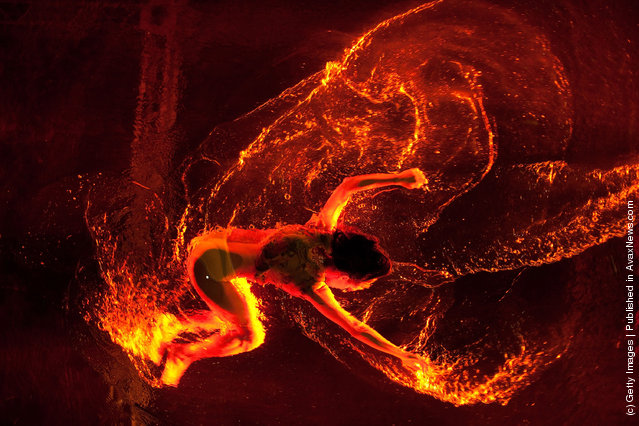
Artists preform on a pool suspended above the audience during the Fuerza Bruta dress rehearsal

Artists preform on a pool suspended above the audience during the Fuerza Bruta dress rehearsal on February 1, 2012 in Tel Aviv, Israel. (Photo by Uriel Sinai/Getty Images)
Details
02 Feb 2012 10:54:00
Rosanna Davison attends the 'Lambertz Monday Night' at Alter Wartesaal

Rosanna Davison attends the “Lambertz Monday Night” at Alter Wartesaal on February 1, 2012 in Cologne, Germany. (Photo by Andreas Rentz/Getty Images)
Details
21 Feb 2012 12:36:00
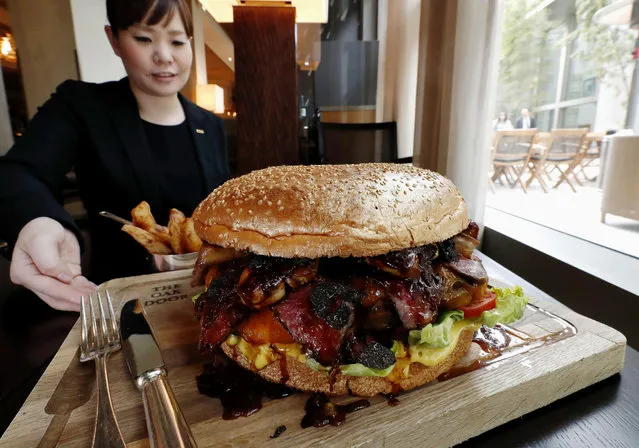
In this Thursday, March 28, 2019, photo, a “golden giant burger” is served at a restaurant of Hotel Grand Hyatt Tokyo in Tokyo. The $900 wagyu (Japanese-produced beef) burger was unveiled to commemorate the era change. What’s in a name? Quite a lot if you’re a Japanese citizen awaiting the official announcement Monday, April 1, 2019 of what the soon-to-be-installed new emperor’s next era will be called. It’s a proclamation that has happened only twice in nearly a century, and the new name will follow Emperor Naruhito, after his May 1 investiture, for the duration of his rule, attaching itself to much of what happens in Japan. (Photo by Kyodo News via AP Photo)

In this Thursday, March 28, 2019, photo, a “golden giant burger” is served at a restaurant of Hotel Grand Hyatt Tokyo in Tokyo. The $900 wagyu (Japanese-produced beef) burger was unveiled to commemorate the era change. What’s in a name? Quite a lot if you’re a Japanese citizen awaiting the official announcement Monday, April 1, 2019 of what the soon-to-be-installed new emperor’s next era will be called. It’s a proclamation that has happened only twice in nearly a century, and the new name will follow Emperor Naruhito, after his May 1 investiture, for the duration of his rule, attaching itself to much of what happens in Japan. (Photo by Kyodo News via AP Photo)
Details
02 Apr 2019 00:05:00
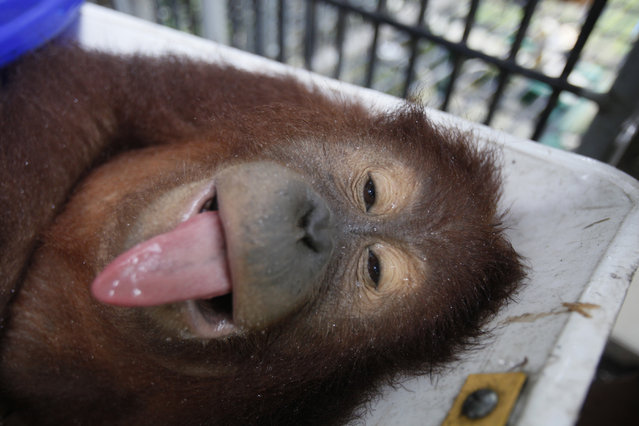
An approximately 8 year-old male orangutan named Siamang reacts under the influence of tranquilizer as it's being prepared to be released into the wild at a rehabilitation center in Kuta Mbelin, North Sumatra, Indonesia, Friday, July 10, 2015. (Photo by Binsar Bakkara/AP Photo)

An approximately 8 year-old male orangutan named Siamang reacts under the influence of tranquilizer as it's being prepared to be released into the wild at a rehabilitation center in Kuta Mbelin, North Sumatra, Indonesia, Friday, July 10, 2015. The orangutans at the center were mostly rescued from palm oil plantations or confiscated from homes where they were kept as pet animals. Orangutan populations in Indonesia's Borneo and Sumatra island are facing severe threats from habitat loss, illegal logging, fires and poaching. Conservationists predicted that without immediate action, orangutans are likely to be the first great ape to become extinct in the wild. (Photo by Binsar Bakkara/AP Photo)
Details
11 Jul 2015 13:57:00
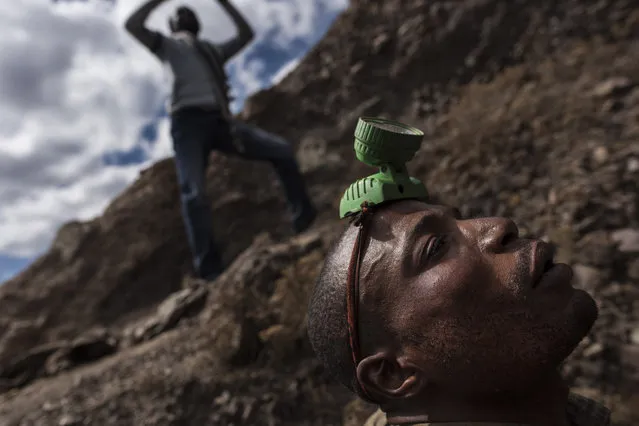
A “creuseur”, or digger, a plastic lantern on his head, readies to enter a copper and cobalt mine in Kawama, Democratic Republic of Congo on June 8, 2016. Cobalt is used in the batteries for electric cars and mobile phones. Working conditions are dangerous, often with no safety equipment or structural support for the tunnels. The diggers say they are paid on average US$2-3/day. (Photo by Michael Robinson Chavez/The Washington Post)

A “creuseur”, or digger, a plastic lantern on his head, readies to enter a copper and cobalt mine in Kawama, Democratic Republic of Congo on June 8, 2016. Cobalt is used in the batteries for electric cars and mobile phones. Working conditions are dangerous, often with no safety equipment or structural support for the tunnels. The diggers say they are paid on average US$2-3/day. (Photo by Michael Robinson Chavez/The Washington Post)
Details
30 Dec 2016 10:29:00