Loading...
Done
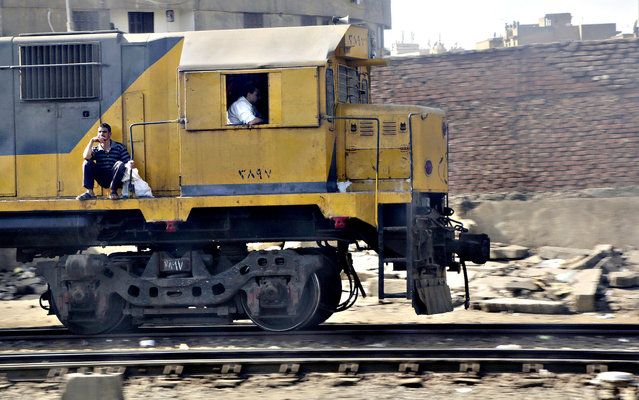
An Egyptian passenger sits on the locomotive of a train as it leaves Cairo train station in Egypt, Wednesday, October 14, 2015. (Photo by Amr Nabil/AP Photo)

An Egyptian passenger sits on the locomotive of a train as it leaves Cairo train station in Egypt, Wednesday, October 14, 2015. (Photo by Amr Nabil/AP Photo)
Details
12 Nov 2015 08:02:00
The rising sun illuminates the sky above the spires of a church in Vienna, Austria, November 17, 2015. (Photo by Heinz-Peter Bader/Reuters)

The rising sun illuminates the sky above the spires of a church in Vienna, Austria, November 17, 2015. (Photo by Heinz-Peter Bader/Reuters)
Details
19 Nov 2015 08:05:00
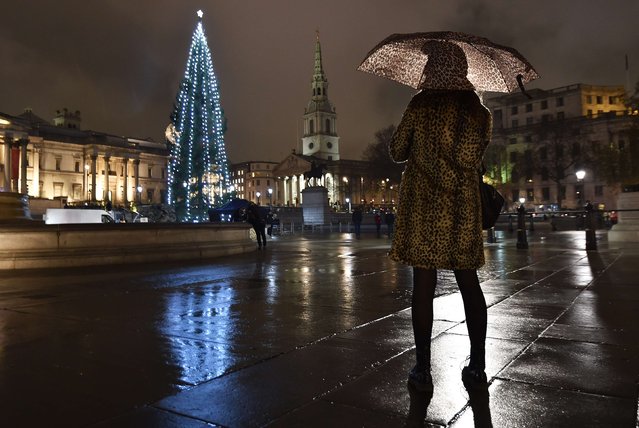
A woman photographs a Norwegian spruce Christmas tree from Oslo after it was lit at Trafalgar Square in central London, December 4, 2014. (Photo by Toby Melville/Reuters)

A woman photographs a Norwegian spruce Christmas tree from Oslo after it was lit at Trafalgar Square in central London, December 4, 2014. (Photo by Toby Melville/Reuters)
Details
16 Dec 2014 12:34:00
A humanoid robot named Kansei, meaning “sensibility” in Japanese, makes a facial expression depicting “happiness”, next to the word “Love” during a demonstration at a laboratory of Meiji University's Robot and Science Institute in Kawasaki, south of Tokyo in this June 4, 2007 file photo. (Photo by Yuriko Nakao/Reuters)

A humanoid robot named Kansei, meaning “sensibility” in Japanese, makes a facial expression depicting “happiness”, next to the word “Love” during a demonstration at a laboratory of Meiji University's Robot and Science Institute in Kawasaki, south of Tokyo in this June 4, 2007 file photo. Three-fourths of robot installations over the next decade are expected to be concentrated in four areas: transportation equipment, including the automotive sector; computer and electronic products; electrical equipment and machinery. Labor costs have climbed in countries such as China that have been popular for outsourcing production, while technological advances for robots allow them to be more flexible and perform more tasks. (Photo by Yuriko Nakao/Reuters)
Details
17 Apr 2015 09:39:00
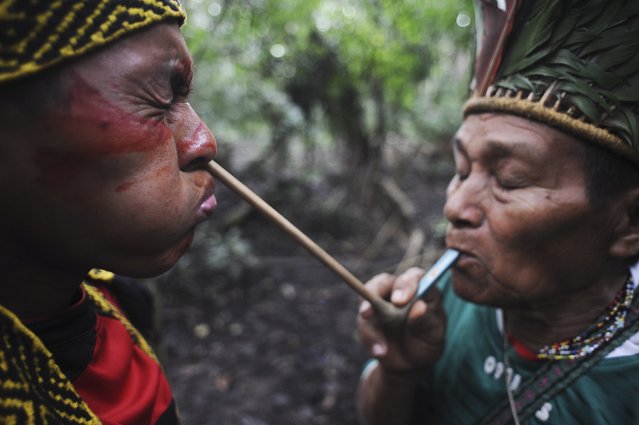
A spiritual leader (R) of the Huni Kui Indian tribe blows an herbal powder into the nose of a tribal member during a ceremony outside the village of Novo Segredo along the Envira river of Brazil's northwestern Acre state, March 9, 2014. (Photo by Lunae Parracho/Reuters)

A spiritual leader (R) of the Huni Kui Indian tribe blows an herbal powder into the nose of a tribal member during a ceremony outside the village of Novo Segredo along the Envira river of Brazil's northwestern Acre state, March 9, 2014. Many indigenous groups, including the Huni Kui, Ashaninka, and Madija, live in villages in the Brazilian rainforest near the border with Peru. (Photo by Lunae Parracho/Reuters)
Details
04 Apr 2014 08:18:00
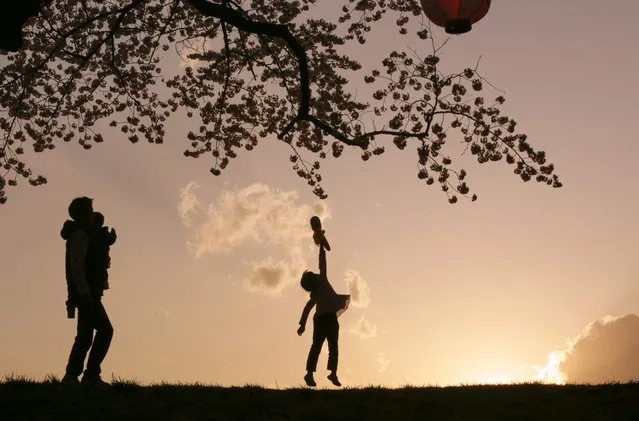
A girl jumps to touch cherry blossoms in full bloom in Fussa, outskirts Tokyo, Japan, 05 April 2014. Temperatures being very constant made blossoms to keep full bloom for holiday makers. (Photo by Kimimasa Mayama/EPA)

A girl jumps to touch cherry blossoms in full bloom in Fussa, outskirts Tokyo, Japan, 05 April 2014. Temperatures being very constant made blossoms to keep full bloom for holiday makers. (Photo by Kimimasa Mayama/EPA)
Details
20 Apr 2014 08:15:00
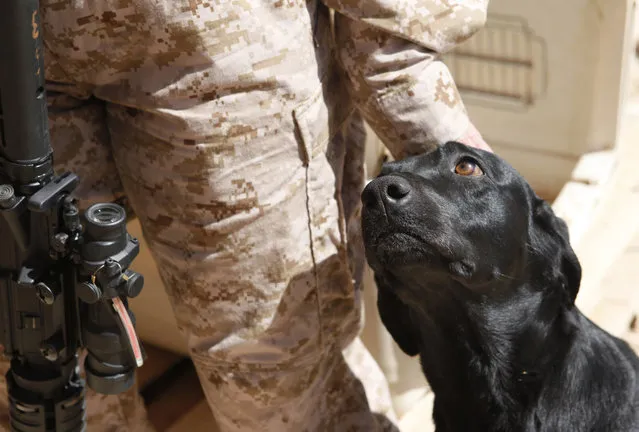
Afghanistan: Dogs of War Part 2

Throughout the course of the long war in Afghanistan, Coalition troops have relied on thousands of military working dogs to help keep them safe, and make their jobs easier. The dogs are trained to detect explosives, to find illegal drugs, to search for missing comrades, or target enemy combatants. Not only are they active on the front lines, but behind the lines they serve as therapy dogs, service dogs, and loyal companions. They also share the same risks as the ground troops, suffering injuries and sometimes death on the battlefields. Gathered here are images of these dogs and their handlers in Afghanistan and back home, from over the past several years, part of the ongoing series here on Afghanistan.
Details
05 Jun 2014 21:10:00
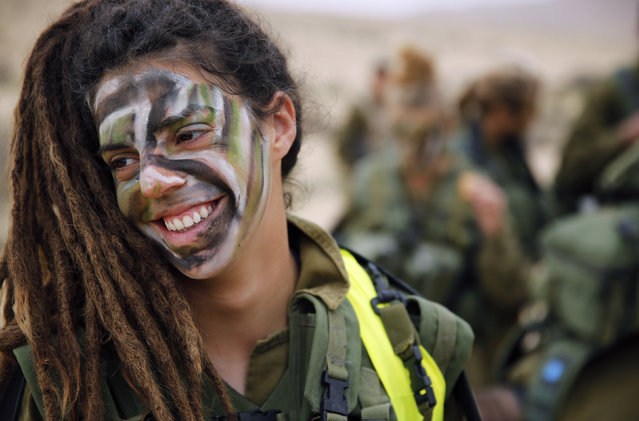
An Israeli soldier of the Caracal battalion smiles during a 23-kilometer march marking the end of their training in Israel's Negev desert, near Kibbutz Sde Boker February 14, 2013. The “Caracal” battalion, two-thirds of whose members are women, was established in 2004 with the purpose of incorporating female soldiers in combat units. The main mission of Caracal is routine patrols on Israel's border with Egypt to intercept infiltrators and smuggling from the Sinai desert. (Photo by Darren Whiteside/Reuters)

An Israeli soldier of the Caracal battalion smiles during a 23-kilometer march marking the end of their training in Israel's Negev desert, near Kibbutz Sde Boker February 14, 2013. The “Caracal” battalion, two-thirds of whose members are women, was established in 2004 with the purpose of incorporating female soldiers in combat units. The main mission of Caracal is routine patrols on Israel's border with Egypt to intercept infiltrators and smuggling from the Sinai desert. (Photo by Darren Whiteside/Reuters)
Details
23 Sep 2014 13:22:00