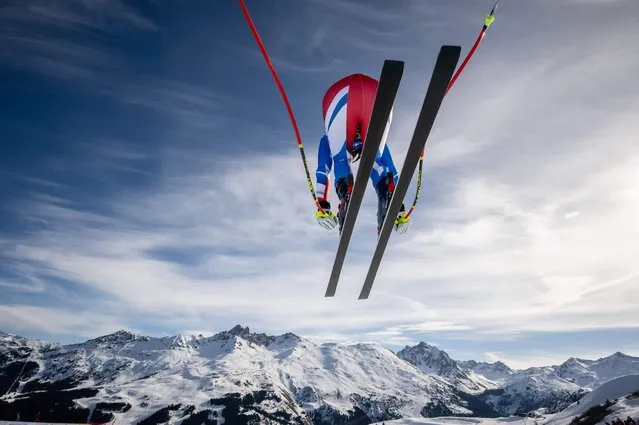
France's Romane Miradoli competes during the Women's Downhill event of the FIS Alpine Ski World Championship 2023 in Meribel, French Alps, on February 11, 2023. (Photo by Lionel Bonaventure/AFP Photo)
The US' winner Mikaela Shiffrin celebrates during a flowers ceremony after the women's Super G event of the 2019 FIS Alpine Ski World Championships at the National Arena in Are, Sweden, on February 5, 2019. (Photo by Denis Balibouse/Reuters)
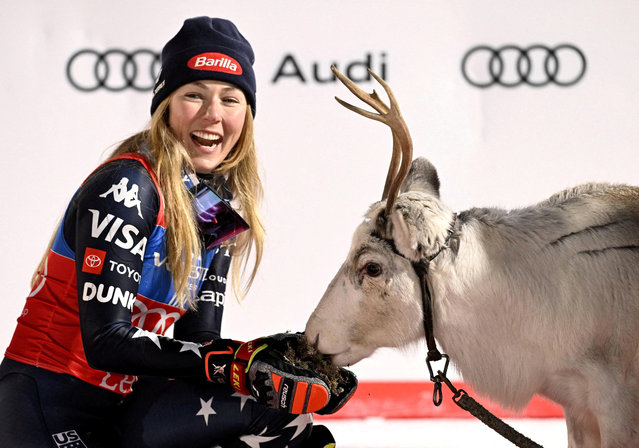
United States' Mikaela Shiffrin feeds a deer on the podium after winning an alpine ski, women's World Cup slalom, in Levi, Finland, Saturday, November 15, 2025. Photo by Roni Rekomaa/Lehtikuva via Reuters)
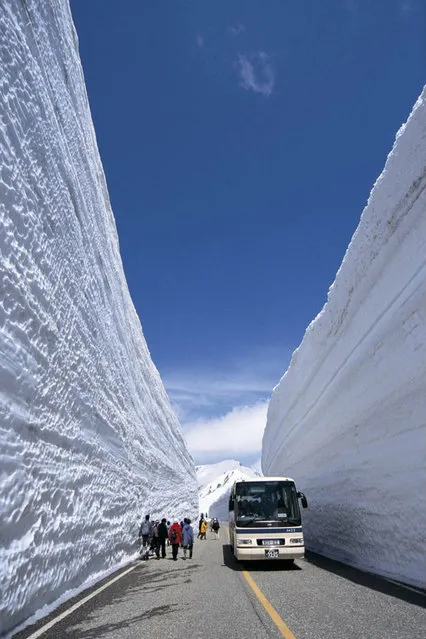
The Tateyama Kurobe Alpine Route is an international mountain sightseeing route some 90 kilometers (56 miles) long. The route goes across the 3,000-meter-high North Alpine mountains, the so-called “roof of Japan,” and connects Toyama and Shinano Omachi. You can enjoy the panorama by taking a train, highland bus, trolley bus, cable car, and ropeway. Since the lines opened in June 1971, the Tateyama mountain area has been transformed from an isolated spot into one of the nation’s best sightseeing areas, where a million guests visit every year.
Women wearing Dirndl, a traditional Alpine folk dress, run to get a place in a tent for the opening of the 185th Oktoberfest beer festival in Munich, Germany, 22 September 2018. The Oktoberfest lasts until October 7 and is the world's largest beer festival. The beer festival typically draws over six million visitors. (Photo by Karl- Josef Hildenbrand/DPA/Alamy Live News)
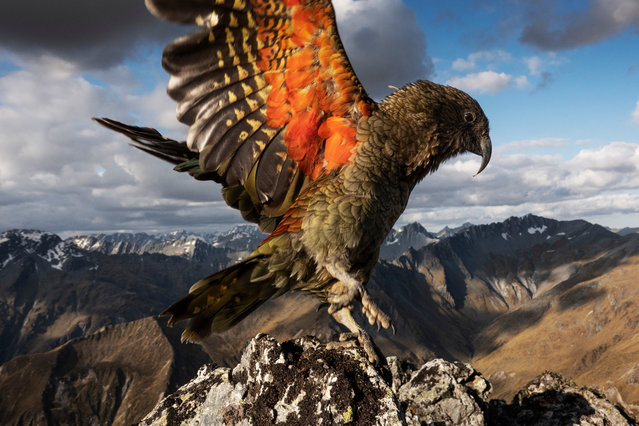
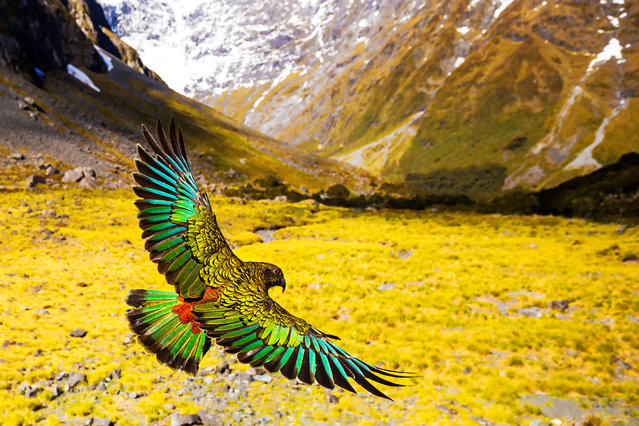
The endangered kea is the world’s only alpine parrot, and one of the most intelligent birds. They show no fear of humans and are thieves and pranksters. The parrot is seen in the Whakaari conservation area, near Glen Orchy in the Otago region of New Zealand, a place where historic huts and mining relics are surrounded by stunning mountains covered in tussock. (Photo by Murdo MacLeod/The Guardian)
Kea are the only true alpine parrots in the world and thrive as cunning opportunists in the freezing conditions of the Southern Alps. Kea are thought to have developed their wide array of food-finding strategies during the last great ice age, where they learned to adapt using their unusual powers of curiosity. (Photo by Tom Walker/BBC Pictures/The Guardian)
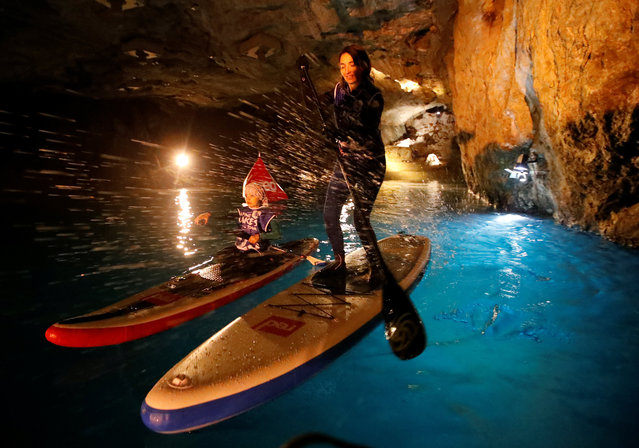
A mother and her daughter paddle during a Stand Up Paddle (SUP) race of the Alpine Lakes Tour, on Europe's biggest underground lake, in St-Leonard, Switzerland, March 10, 2018. SUP is an offshoot of surfing that originated in Hawaii. Unlike traditional surfing where the rider sits until a wave comes, stand up paddle boarders stand on their boards and use a paddle to propel themselves through the water. (Photo by Denis Balibouse/Reuters)