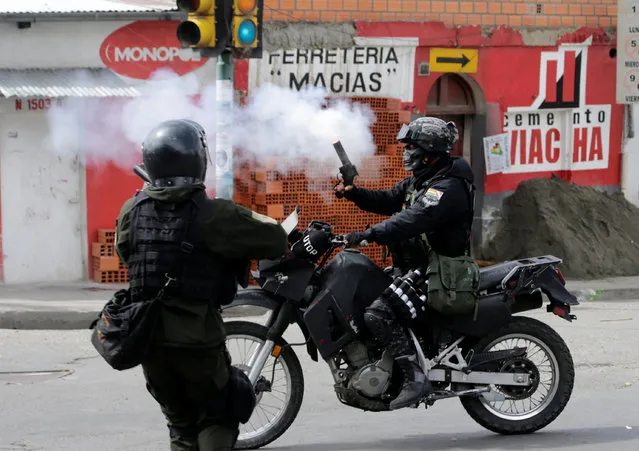
Riot policemen launch tears gas canisters during clashes with coca growers from Yungas in La Paz, Bolivia February 21, 2017. (Photo by David Mercado/Reuters)
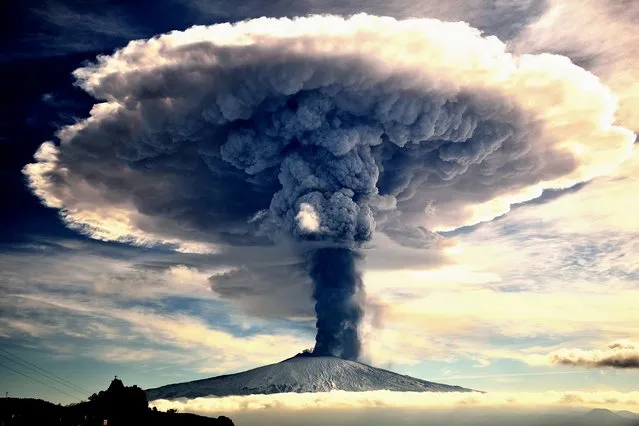
“The power of nature”. Magma, ash and gas erupt from Mount Etna in December 2015, rising to a height of several kilometres. Winner: Nature. (Photo by Giuseppe Mario Famiani/SIPA Contest)
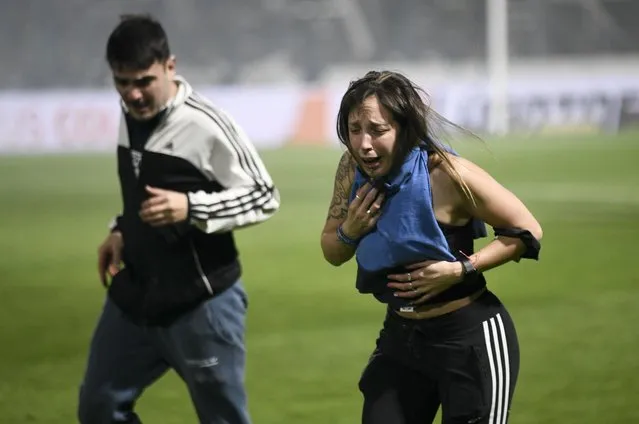
Fans of Gimnasia de La Plata choke on tear gas during a local tournament match between Gimnasia de La Plata and Boca Juniors in La Plata, Argentina, Thursday, October 6, 2022. The match was suspended after tear gas thrown by the police outside the stadium wafted inside affecting the players as well as fans who fled to the field to avoid its effects. (Photo by Gustavo Garello/AP Photo)
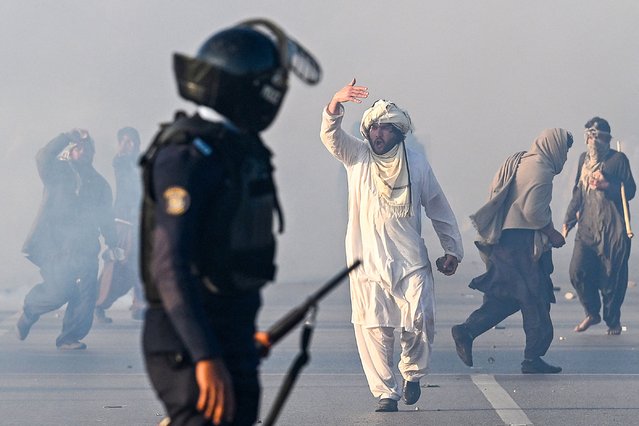
A supporter of Pakistan Tehreek-e-Insaf (PTI) party gestures after tear gas was fired by the police to disperse the crowd during a protest to demand the release of former prime minister Imran Khan in Islamabad on November 26, 2024. Thousands of protestors calling for the release of Pakistan's jailed ex-prime minister Imran Khan defied roadblocks and tear gas to march to the gates of the nation's capital on November 26. (Photo by Aamir Qureshi/AFP Photo)
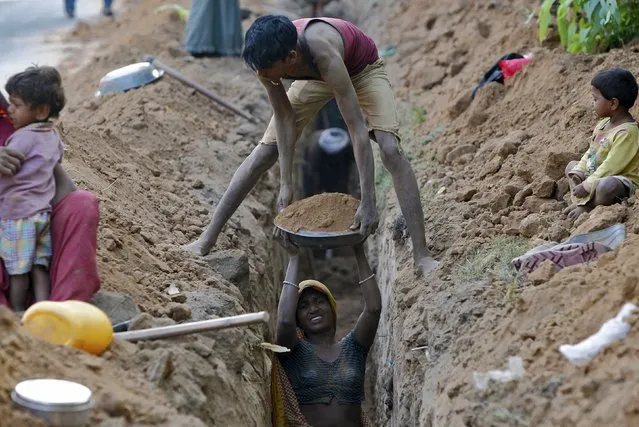
Labourers work at the installation site of Liquefied Petroleum Gas (LPG) pipeline on May Day or Labour Day in Chandigarh, India, May 1, 2015. (Photo by Ajay Verma/Reuters)
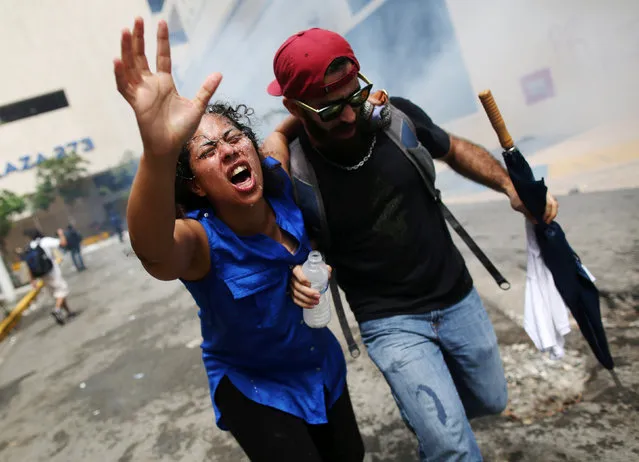
A woman affected by tear gas is assisted during a May Day protest against austerity measures, in San Juan, Puerto Rico May 1, 2018. (Photo by Alvin Baez/Reuters)
Two drivers get into a fight while waiting in line at a gas station amid fuel shortages in Knightdale, North Carolina, May 10, 2021. (Photo by @shaaddeez/Instagram via Reuters)
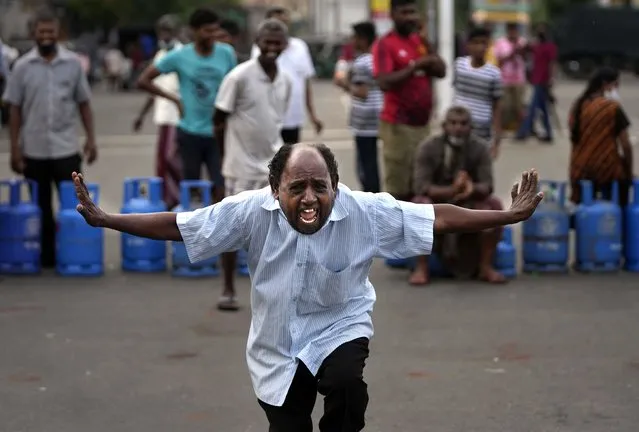
A man shouts slogans demanding cooking gas cylinders as a group of people block an intersection protesting against shortages of essentials in Colombo, Sri Lanka, Saturday, May 7, 2022. (Photo by Eranga Jayawardena/AP Photo)