Loading...
Done
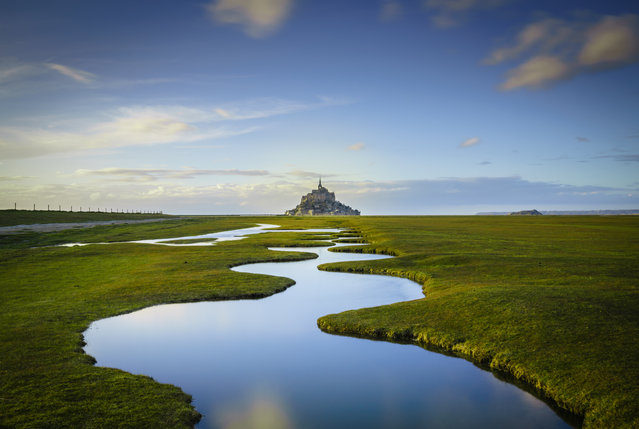
Overall winner. Mont Saint-Michel by Daniel Burton. (Photo by Daniel Burton/The Guardian)

The Historic Photographer of the Year awards celebrate historic places and cultural sites across the globe, from national treasures to hidden gems. Entries were judged on originality, composition and technical proficiency as well as the story that inspired the submission and its historical impact. Here: Overall winner. Mont Saint-Michel by Daniel Burton. (Photo by Daniel Burton/The Guardian)
Details
30 Nov 2018 00:05:00
An image captured by Jasmine Vink, the winner of the wildlife and animal category and overall winner in Australian Photography’s 2018 Photographer of the Year competition. (Photo by Jasmine Vink/Australia's 2018 Photographer of the Year by Panasonic)

An image captured by Jasmine Vink, the winner of the wildlife and animal category and overall winner in Australian Photography’s 2018 Photographer of the Year competition. (Photo by Jasmine Vink/Australia's 2018 Photographer of the Year by Panasonic)
Details
06 Feb 2019 00:03:00
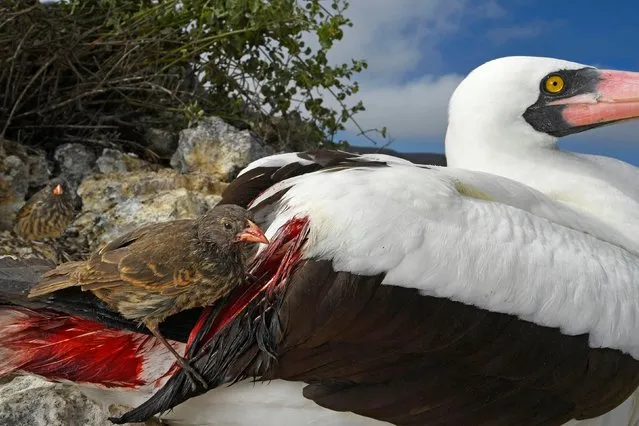
Bloodthirsty by Thomas P Peschak, Germany/South Africa — winner, Behaviour: birds. When rations run short on Wolf Island, in the remote northern Galápagos, the sharp-beaked ground finches become vampires. Their sitting targets are Nazca boobies and other large birds. The finches rely on a scant diet of seeds and insects, which regularly dries up, so they drink blood to survive. ‘I’ve seen more than half a dozen finches drinking from a single Nazca booby,’ says Tom. Rather than leave their nests the boobies tolerate the vampires, and the blood loss doesn’t seem to cause permanent harm. (Photo by Thomas P Peschak/2018 Wildlife Photographer of the Year)

Bloodthirsty by Thomas P. Peschak, Germany/South Africa — winner, Behaviour: birds. When rations run short on Wolf Island, in the remote northern Galápagos, the sharp-beaked ground finches become vampires. Their sitting targets are Nazca boobies and other large birds. The finches rely on a scant diet of seeds and insects, which regularly dries up, so they drink blood to survive. ‘I’ve seen more than half a dozen finches drinking from a single Nazca booby,’ says Tom. Rather than leave their nests the boobies tolerate the vampires, and the blood loss doesn’t seem to cause permanent harm. (Photo by Thomas P. Peschak/2018 Wildlife Photographer of the Year)
Details
19 Oct 2018 00:05:00
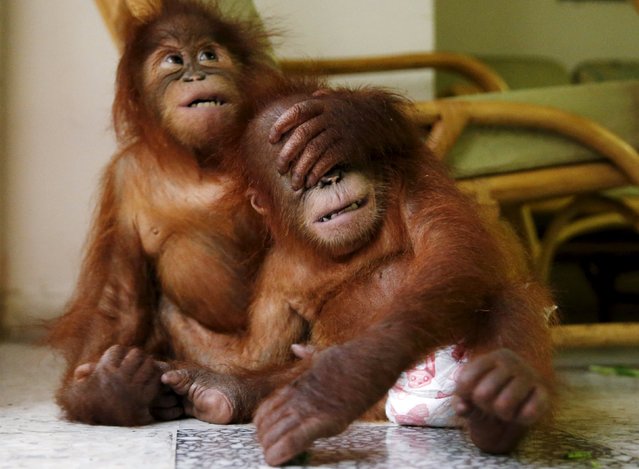
Two baby orangutans play with each other at the wildlife department in Kuala Lumpur, Malayasia, October 19, 2015. The Malaysian wildlife department in July seized two baby Sumatran orangutans, found in duffel bags, from traffickers who were attempting to sell them to buyers in Malaysia. According to local media, the orangutans will be returned to Medan, Indonesia on Tuesday. The illegal wildlife trade is estimated to be $8 billion a year worldwide, according to TRAFFIC, a wildlife trade monitoring network. (Photo by Olivia Harris/Reuters)

Two baby orangutans play with each other at the wildlife department in Kuala Lumpur, Malayasia, October 19, 2015. The Malaysian wildlife department in July seized two baby Sumatran orangutans, found in duffel bags, from traffickers who were attempting to sell them to buyers in Malaysia. According to local media, the orangutans will be returned to Medan, Indonesia on Tuesday. The illegal wildlife trade is estimated to be $8 billion a year worldwide, according to TRAFFIC, a wildlife trade monitoring network. (Photo by Olivia Harris/Reuters)
Details
24 Dec 2015 08:06:00
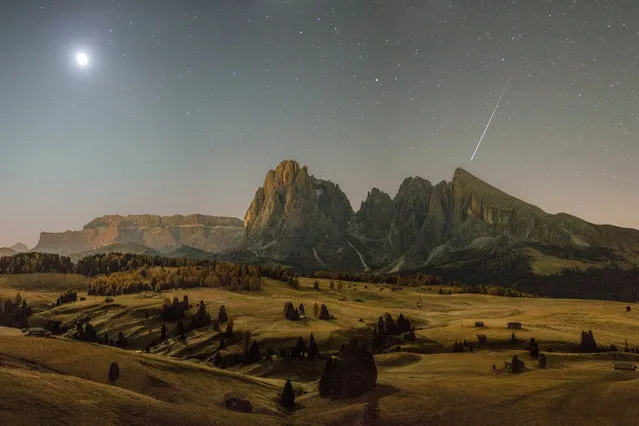
Young category winner. Great autumn morning by Fabian Dalpiaz. (Photo by Fabian Dalpiaz/2018 Astronomy Photographer of the Year)

Young category winner. Great autumn morning by Fabian Dalpiaz. (Photo by Fabian Dalpiaz/2018 Astronomy Photographer of the Year)
Details
26 Oct 2018 00:03:00
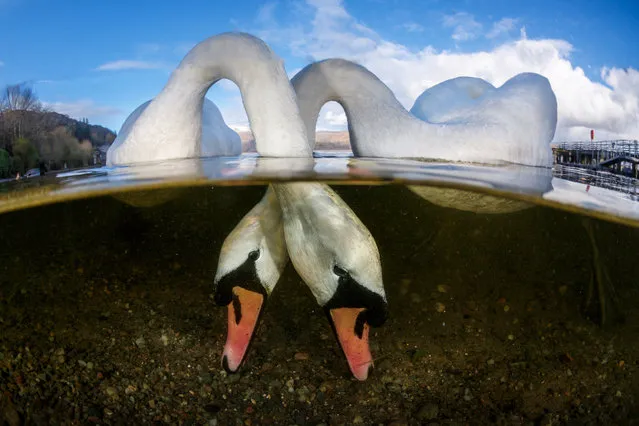
British underwater photographer of the year – winner. “Love Birds” by Grant Thomas (UK). Location: Luss Pier, Loch Lomond, Scotland. Thomas’s initial idea was to frame a split shot of one swan feeding below the surface of the water but when he noticed how comfortable they were around him he was confident, with some patience, he could get that magical shot of the two. (Photo by Grant Thomas/UPY 2018)

British underwater photographer of the year – winner. “Love Birds” by Grant Thomas (UK). Location: Luss Pier, Loch Lomond, Scotland. Thomas’s initial idea was to frame a split shot of one swan feeding below the surface of the water but when he noticed how comfortable they were around him he was confident, with some patience, he could get that magical shot of the two. (Photo by Grant Thomas/UPY 2018)
Details
16 Feb 2018 00:02:00
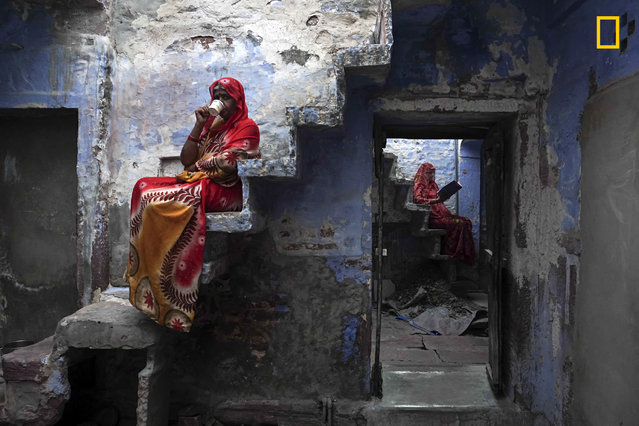
“These Rajasthani sisters were sitting on the staircase inside their house relaxing and enjoy a cup of masala chai”. (Photo by Firdaus Hadzri/National Geographic Travel Photographer of the Year Contest)

“These Rajasthani sisters were sitting on the staircase inside their house relaxing and enjoy a cup of masala chai”. (Photo by Firdaus Hadzri/National Geographic Travel Photographer of the Year Contest)
Details
13 Apr 2018 00:01:00
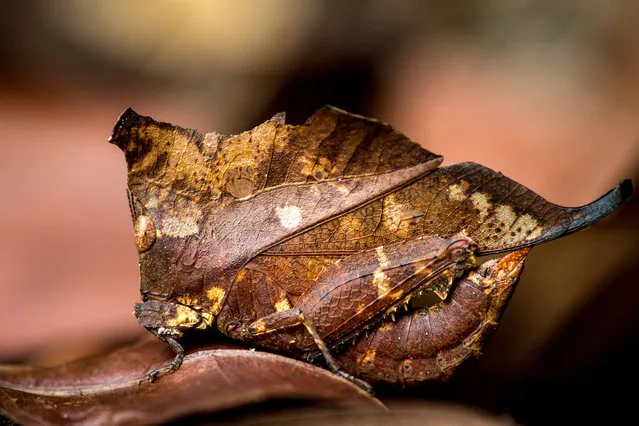
Dead leaf or almost by Guilhem Duvot. Taken in Nován Stráž, Slovakia. Describe what is pictured? A dead leaf grasshopper. How does this image fit with the theme of the competition? The perfect camouflage – nature is amazing. I saw the grasshopper only because it jumped. (Photo by Guilhem Duvot/Royal Society of Biology)

Dead leaf or almost by Guilhem Duvot. Taken in Nován Stráž, Slovakia. Describe what is pictured? A dead leaf grasshopper. How does this image fit with the theme of the competition? The perfect camouflage – nature is amazing. I saw the grasshopper only because it jumped. (Photo by Guilhem Duvot/Royal Society of Biology)
Details
10 Oct 2018 00:05:00