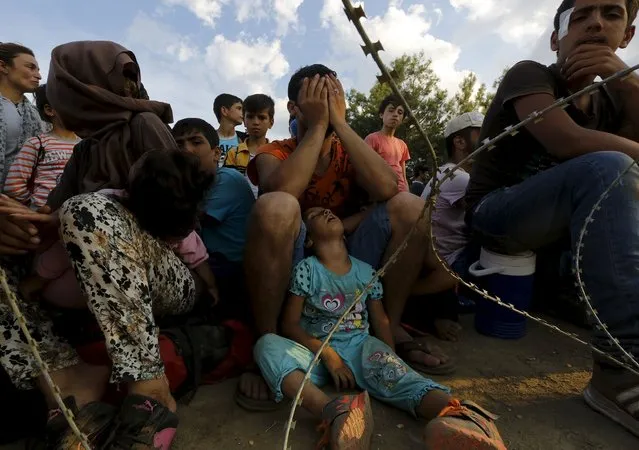
Syrian refugees sit behind barbed wire as they wait to cross into Macedonia at the Greek-Macedonian border, near the village of Idomeni, August 21, 2015. (Photo by Yannis Behrakis/Reuters)
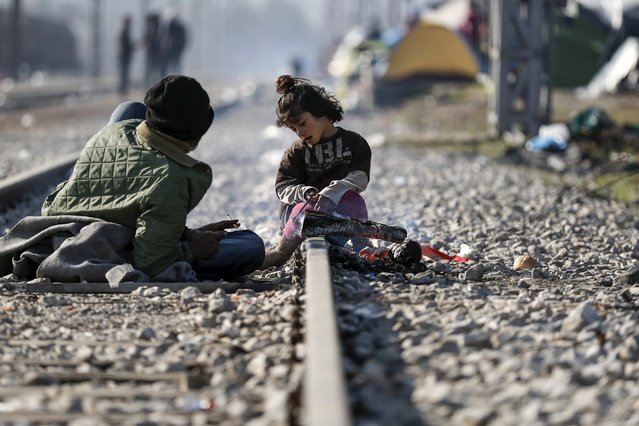
A girl sits on railway tracks at a makeshift camp for refugees and migrants at the Greek-Macedonian border near the village of Idomeni, Greece, March 19, 2016. (Photo by Alkis Konstantinidis/Reuters)
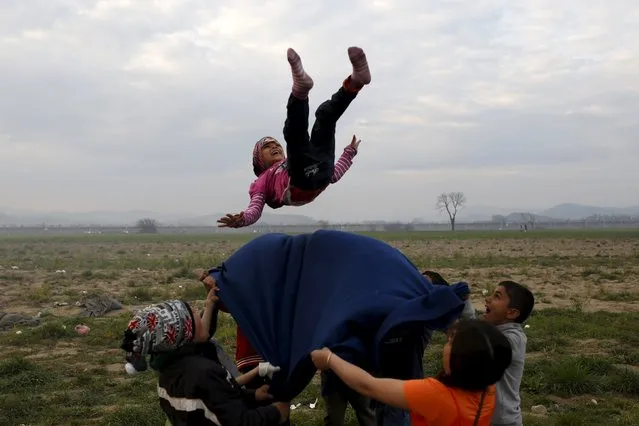
Children play at a makeshift camp for migrants and refugees at the Greek-Macedonian border near the village of Idomeni, Greece, March 29, 2016. (Photo by Marko Djurica/Reuters)
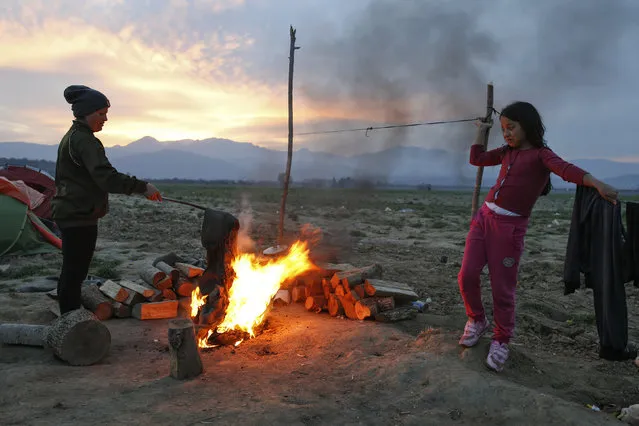
A woman and a child make a bonfire at a makeshift camp for migrants and refugees at the Greek-Macedonian border near the village of Idomeni, Greece, April 1, 2016. (Photo by Marko Djurica/Reuters)
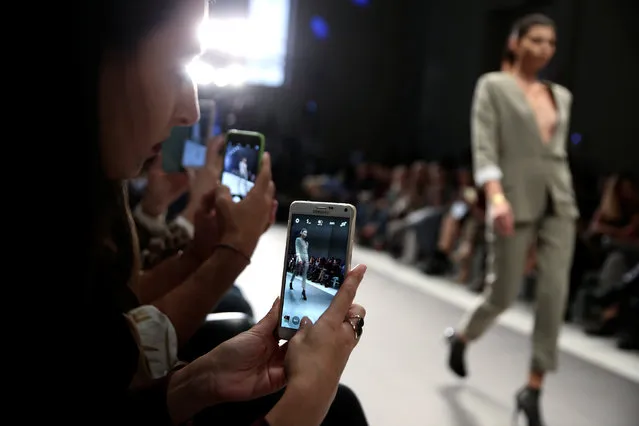
Audience take photos of a model presenting a creation by Greek designer Dimitrios Ordoulidis during the 10th Athens Exclusive Fashion Week in Athens, Greece, October 22, 2016. (Photo by Alkis Konstantinidis/Reuters)
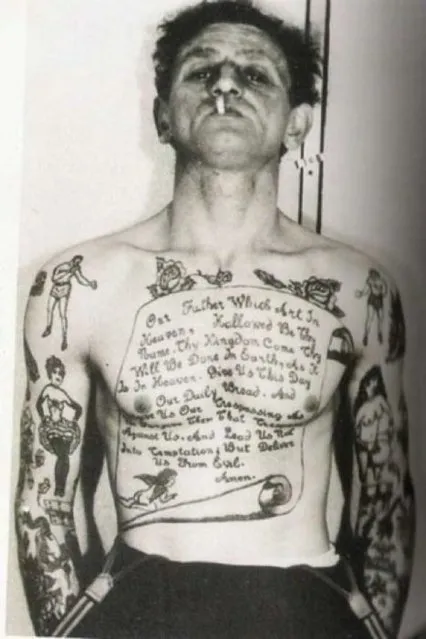
Tattoos are commonly used among criminals to show gang membership and record the wearer's personal history—such as his or her skills, specialties, accomplishments and convictions. They are also used as a means of personal expression. Certain designs have developed recognized coded meanings. The code systems can be quite complex and because of the nature of what they encode, the tattoo designs are not widely recognized.
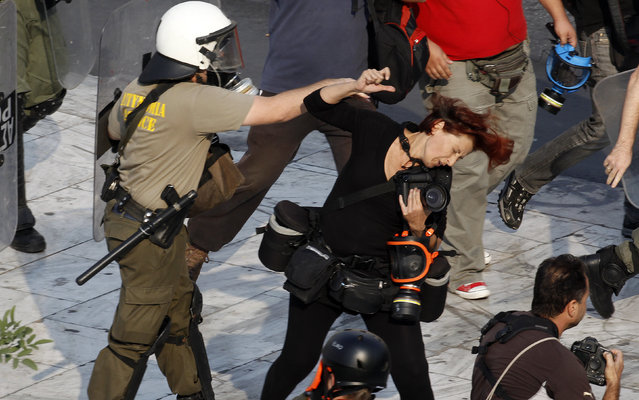
A riot policeman punches Greek photojournalist Tatiana Bolari during a demonstration in Athens' Syntagma (Constitution) square October 5, 2011. Police officers attacked several members of the press covering protests, injuring at least two members of the media. (Photo by Yannis Behrakis/Reuters)
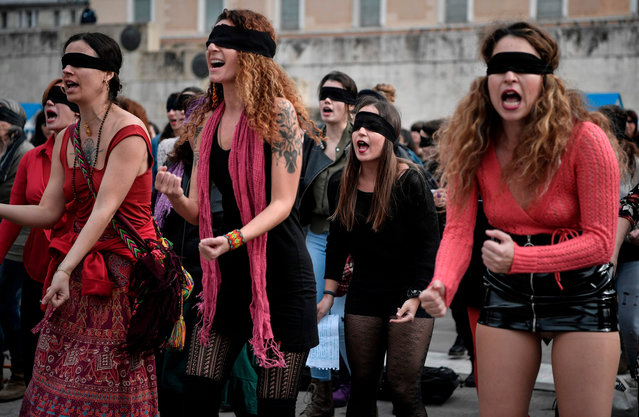
Female activists perform a choreography originated in Chile, and inspired by the Chilean feminist group Las Tesis, to protest against gender violence and patriarchy in front of the Greek parliament at Athens' Syntagma Square on December 22, 2019. (Photo by Louisa Gouliamaki/AFP Photo)