Loading...
Done
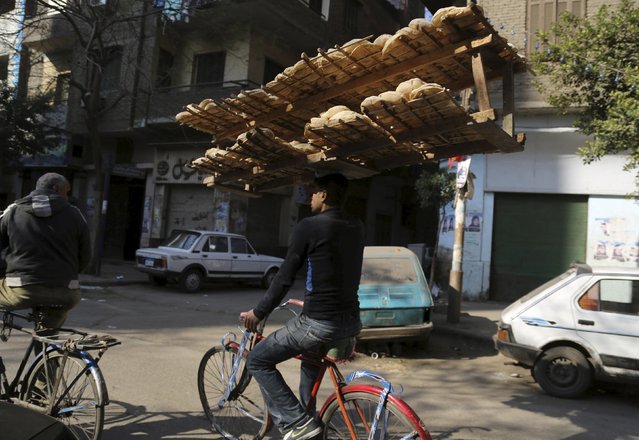
A bakery worker rides a bicycle as he carries fresh bread on his head in Cairo, Egypt, February 9, 2016. (Photo by Asmaa Waguih/Reuters)

A bakery worker rides a bicycle as he carries fresh bread on his head in Cairo, Egypt, February 9, 2016. (Photo by Asmaa Waguih/Reuters)
Details
07 Apr 2016 14:37:00
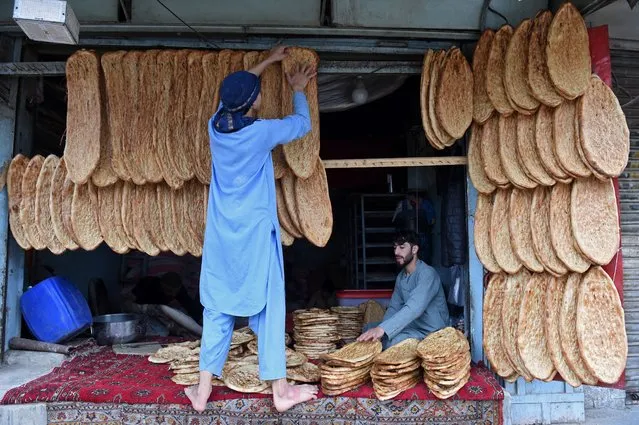
Vendors selling bread wait for customers at a roadside hotel in Quetta on March 25, 2024. (Photo by Banaras Khan/AFP Photo)

Vendors selling bread wait for customers at a roadside hotel in Quetta on March 25, 2024. (Photo by Banaras Khan/AFP Photo)
Details
18 Apr 2024 05:09:00
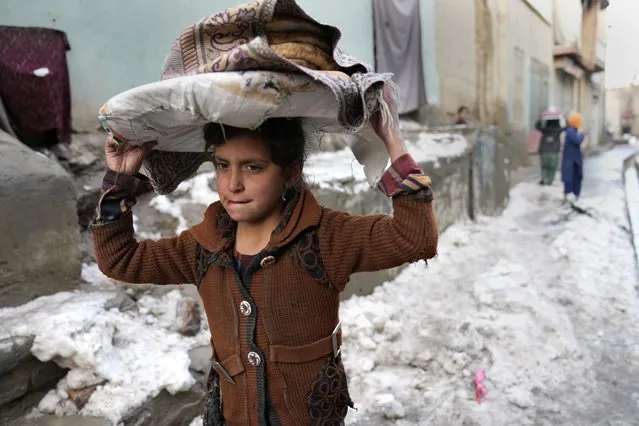
A girl carries breads on her head as she walks in the snow, in Kabul, Afghanistan, Tuesday, February 8, 2022. (Photo by Hussein Malla/AP Photo)

A girl carries breads on her head as she walks in the snow, in Kabul, Afghanistan, Tuesday, February 8, 2022. (Photo by Hussein Malla/AP Photo)
Details
17 Feb 2022 05:37:00
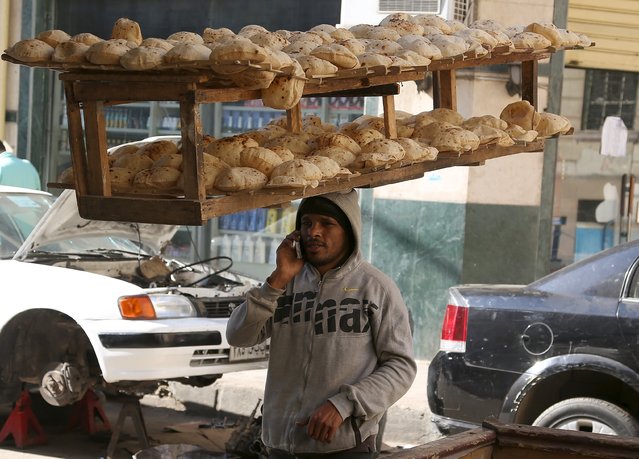
An employee of a bakery talks on his mobile while balancing on his head a tray of freshly baked bread from a local bakery in a street in Cairo, Egypt, January 12, 2016. (Photo by Asmaa Waguih/Reuters)

An employee of a bakery talks on his mobile while balancing on his head a tray of freshly baked bread from a local bakery in a street in Cairo, Egypt, January 12, 2016. (Photo by Asmaa Waguih/Reuters)
Details
13 Jan 2016 11:31:00
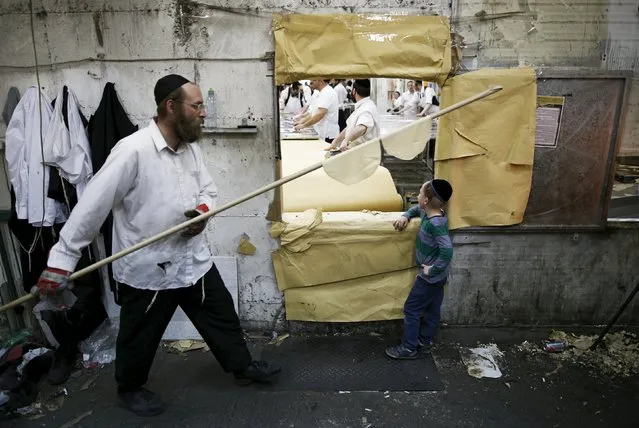
Ultra-Orthodox Jewish men prepare matza, traditional unleavened bread eaten during the upcoming Jewish holiday of Passover, in the southern city of Ashdod April 17, 2016. (Photo by Amir Cohen/Reuters)

Ultra-Orthodox Jewish men prepare matza, traditional unleavened bread eaten during the upcoming Jewish holiday of Passover, in the southern city of Ashdod April 17, 2016. (Photo by Amir Cohen/Reuters)
Details
18 Apr 2016 10:09:00
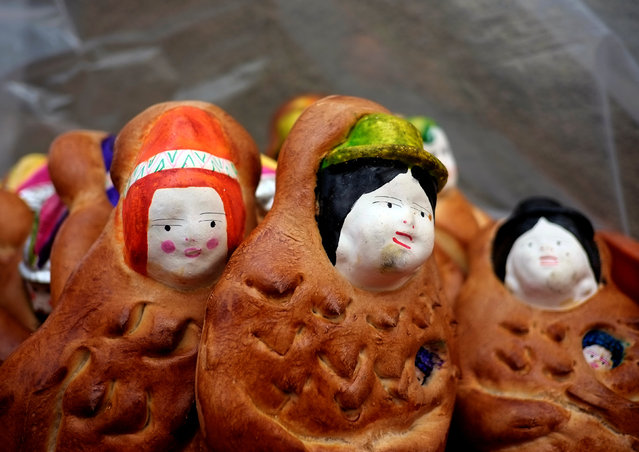
“T'antawawas” (children's bread) are displayed in a popular market to commemorate All Saints Day in La Paz, October 30, 2016. (Photo by David Mercado/Reuters)

“T'antawawas” (children's bread) are displayed in a popular market to commemorate All Saints Day in La Paz, October 30, 2016. (Photo by David Mercado/Reuters)
Details
01 Dec 2016 12:36:00
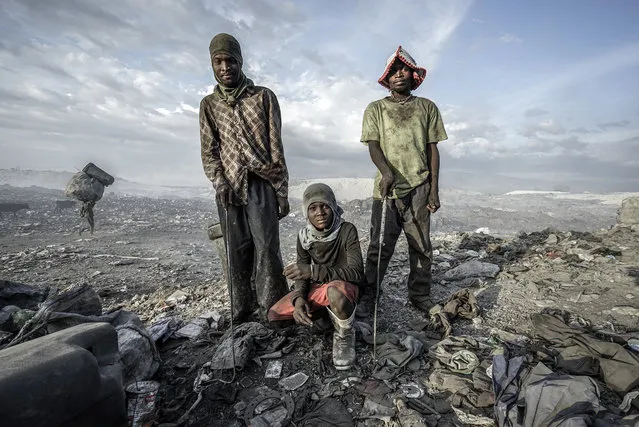
In a 200-acre-plus dump 5 kilometers north of Haiti’s capital, Port-au-Prince, hundreds of men, women and children scavenge day and night through the burning wasteland. They earn $12 to $15 a day – on a good day – for recycling plastics as well as clothing, household items and aluminum (for smelting). Some 5,000 tons of waste is created each day in the Port-au-Prince area. (Photo and caption by Giles Clarke/Getty Images Reportage)

In a 200-acre-plus dump 5 kilometers north of Haiti’s capital, Port-au-Prince, hundreds of men, women and children scavenge day and night through the burning wasteland. They earn $12 to $15 a day – on a good day – for recycling plastics as well as clothing, household items and aluminum (for smelting). Some 5,000 tons of waste is created each day in the Port-au-Prince area. (Photo and caption by Giles Clarke/Getty Images Reportage)
Details
02 Feb 2015 11:21:00
Floralis Generica - Buenos Aires

Floralis Genérica is a sculpture made of steel and aluminum located in Plaza de las Naciones Unidas, Avenida Figueroa Alcorta, Buenos Aires, a gift to the city by the Argentine architect Eduardo Catalano. Catalano once said that the flower "is a synthesis of all the flowers and is both a hope that is reborn every day to open." It was created in 2002. The sculpture moves closing its petals in the evening and opening them in the morning, although this mechanism is currently disabled. The sculpture is located in the center of a park of four acres of wooded boundaries, surrounded by paths that get closer and provide different perspectives of the monument, and placed above a reflecting pool, which apart from fulfilling its aesthetic function, protects it. It represents a large flower made of stainless steel with aluminum skeleton and reinforced concrete, which looks at the sky, extending to it its six petals. Weighs eighteen tons and is 23 meters high.
Details
20 Oct 2013 18:32:00