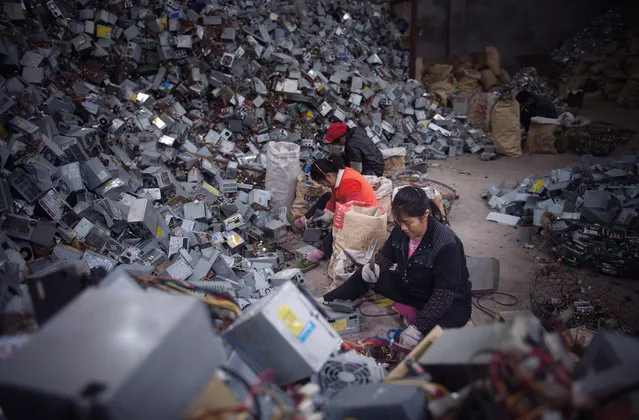
Sustainable development goal target 12.5 is to reduce waste. But with a planet increasingly dependent on technology, is that even possible? As of today, over 30m tonnes of electronic waste has been thrown out so far this year, according to the World Counts. Most e-waste is sent to landfills in Asia and Africa where it is recycled by hand, exposing the people who do it to environmental hazards. Kai Loeffelbein’s photographs of e-waste recycling in Guiyu, southern China show what happens to discarded computers. (Photo by Kai Loeffelbein/laif Agentur)
2016 Rio Olympics, Judo, Final, Women, 48 kg Bronze Medal Contests, Carioca Arena 2, Rio de Janeiro, Brazil on August 6, 2016. Otgontsetseg Galbadrakh (KAZ) of Kazakhstan and Dayaris Mestre Alvarez (CUB) of Cuba react. (Photo by Kai Pfaffenbach/Reuters)
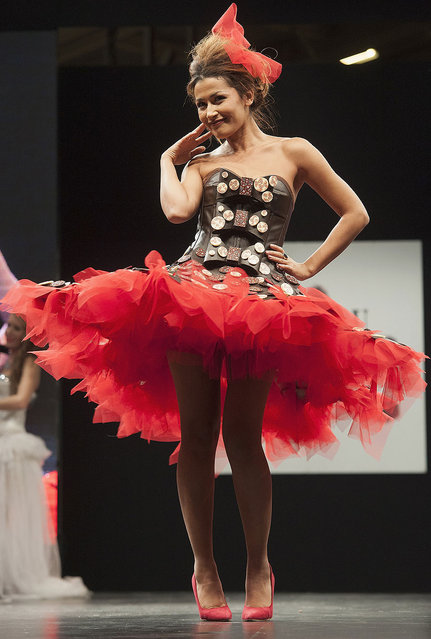
Singer Karima Charni walks the runway during the Chocolate fashion show as a part of the Salon Du Chocolat 2015 – Chocolate Fair at Parc des Expositions Porte de Versailles on October 27, 2015 in Paris, France. (Photo by Kay-Paris Fernandes/WireImage)
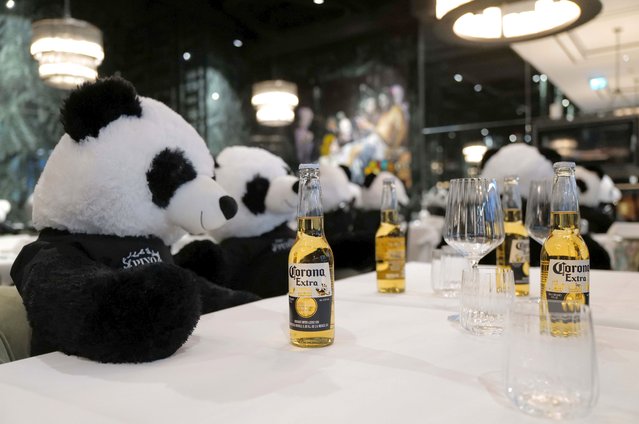
Fluffy toy panda bears as part of the art installation “Panda mie” by Italian restaurant owner Giuseppe “Pino” Fichera sit over beers at his restaurant “Pino's” to raise awareness of the COVID-19 lockdown's business impact on gastronomy in Frankfurt, Germany, November 24, 2020. (Photo by Kai Pfaffenbach/Reuters)
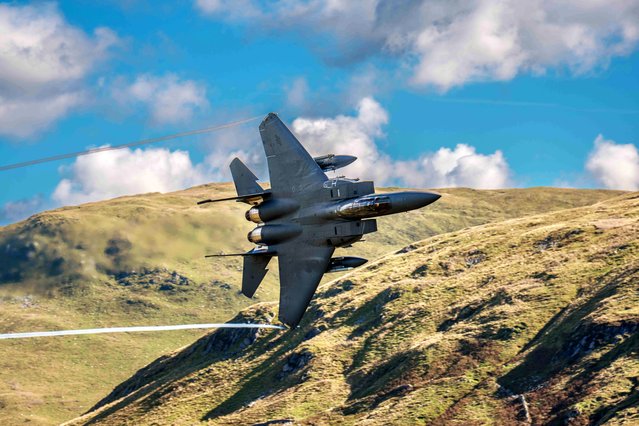
A military aircraft flies low through the Mach Loop in west-central Wales on September 25, 2025 during Cobra Warrior 25-2, one of Nato’s largest multinational air exercises. The operation, running across the UK until October 3, brings together air forces from the UK, US, Canada, Italy and Germany for three weeks of high-intensity training in challenging low-level environments. (Photo by Tony Marsh)
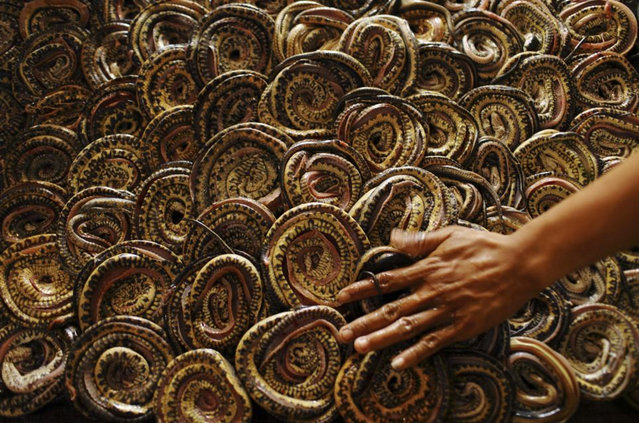
Images from a snake slaughterhouse at Kapetakan village in Indonesia’s West Java province. Wakira, who is known as “Boss Cobra”, owns the slaughterhouse that produces snake meat and skin. Snake meat is believed by some to be a remedy for skin diseases and asthma, as well as an aid to increase virility. The snake skins, measuring in the hundreds of metres, are sold to bag factories in the West and Central Java provinces on a monthly basis. The price of a bag made from snake skin costs between 150,000 rupiah ($ 15.60) and 300,000 rupiah ($31.20), depending on its size. That snakeskin handbag you’ll buy is costing a hell of a lot more.