Loading...
Done
A woman browses through kimonos for sale at Boroichi flea market in Tokyo December 15, 2014. In the 16th century, Boroichi was a place for farmers to buy and sell rags, known as boro, for mending clothes and weaving sandals. Now in its 436th year, the original spirit lingers, with about 700 stands hawking fabric, used clothes and piles of rags. Others sell kitchen tools, pottery, seaweed and spices. (Photo by Thomas Peter/Reuters)

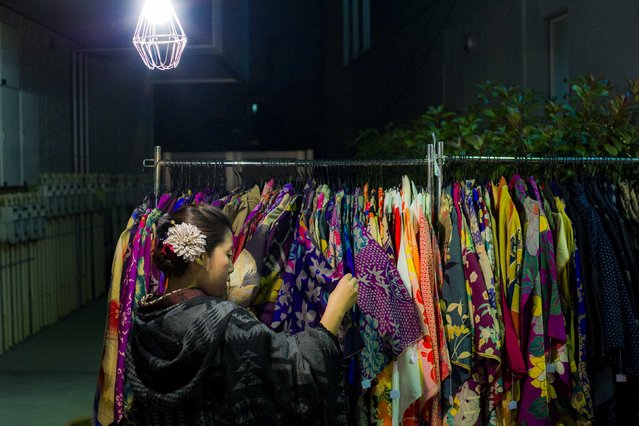
A woman browses through kimonos for sale at Boroichi flea market in Tokyo December 15, 2014. In the 16th century, Boroichi was a place for farmers to buy and sell rags, known as boro, for mending clothes and weaving sandals. Now in its 436th year, the original spirit lingers, with about 700 stands hawking fabric, used clothes and piles of rags. Others sell kitchen tools, pottery, seaweed and spices. About 200,000 people flock to the market, which is only open for four mid-winter days a year – two in December and two in January. (Photo by Thomas Peter/Reuters)
Details
19 Dec 2014 12:50:00
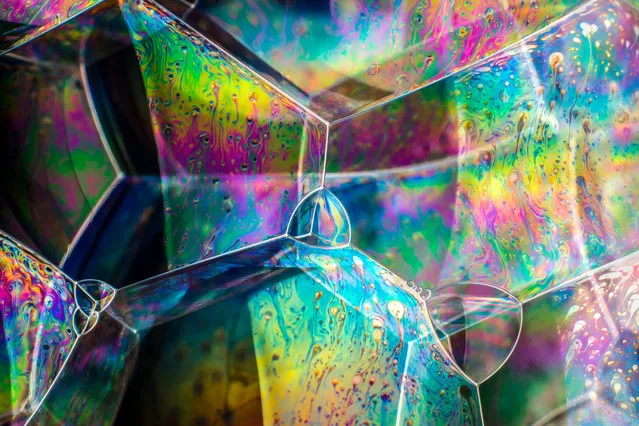
Soap Bubble Structures by Kym Cox. Bubbles optimise space and minimise their surface area for a given volume of air. This phenomenon makes them a useful tool in many areas of research, in particular, materials science and ‘packing’ – how things fit together. Bubble walls drain under gravity, thin at the top, thick at the bottom, which interferes with travelling lightwaves to create bands of colour. Black spots show the wall is too thin for interference colours, indicating the bubble is about to burst. (Photo by Kym Cox/2019 Science Photographer of the Year/RPS)

Soap Bubble Structures by Kym Cox. Bubbles optimise space and minimise their surface area for a given volume of air. This phenomenon makes them a useful tool in many areas of research, in particular, materials science and “packing” – how things fit together. Bubble walls drain under gravity, thin at the top, thick at the bottom, which interferes with travelling lightwaves to create bands of colour. Black spots show the wall is too thin for interference colours, indicating the bubble is about to burst. (Photo by Kym Cox/2019 Science Photographer of the Year/RPS)
Details
15 Aug 2019 00:03:00
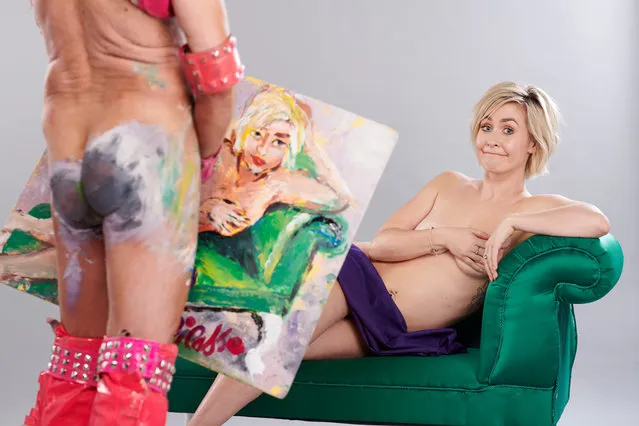
Self-titled Pricasso – real name Tim Patch, 71, – is using his very own pen*s to create his masterpiece – and claims to have made close to £500k from his saucy paintings. Here: Pricasso gets to work with his tools - and paints The Sun's newspaper correspondent Amy Nickell with his bits in London, England on November 5, 2019. (Photo by Stewart Williams/The Sun)

Self-titled Pricasso – real name Tim Patch, 71, – is using his very own pen*s to create his masterpiece – and claims to have made close to £500k from his saucy paintings. Here: Pricasso gets to work with his tools - and paints The Sun's newspaper correspondent Amy Nickell with his bits in London, England on November 5, 2019. (Photo by Stewart Williams/The Sun)
Details
17 Jan 2020 00:05:00


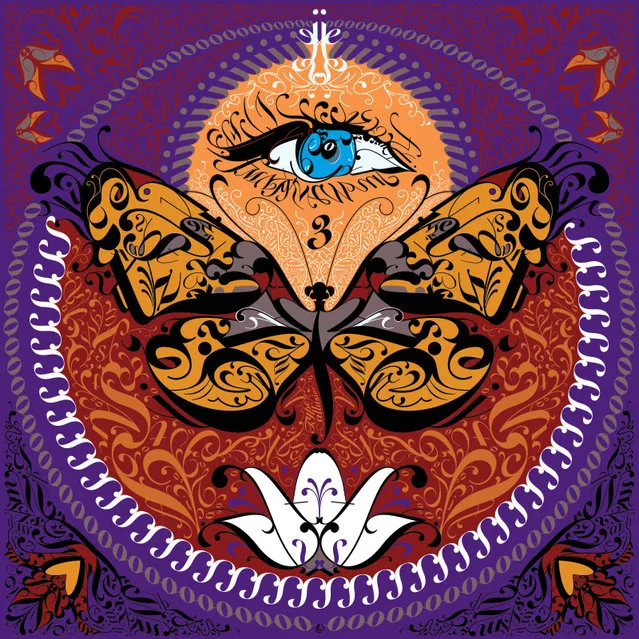
Eugene Lvovsky is a Graphic Designer/Artist from Toronto, Canada who makes art out of type - letterforms, outlines and fragments.
"Each letter, each little piece in my art is perfected by hand and placed very specifically to create a visually pleasing relationship between typographic characters and their unique shapes."
Details
08 Mar 2014 03:04:00
Asile Studio art

Asile is a creative studio composed of Photo retouchers and 3D graphic designers working on the realization of visual for advertising or associations such as Amnesty International. ...
Details
30 Jul 2012 04:50:00
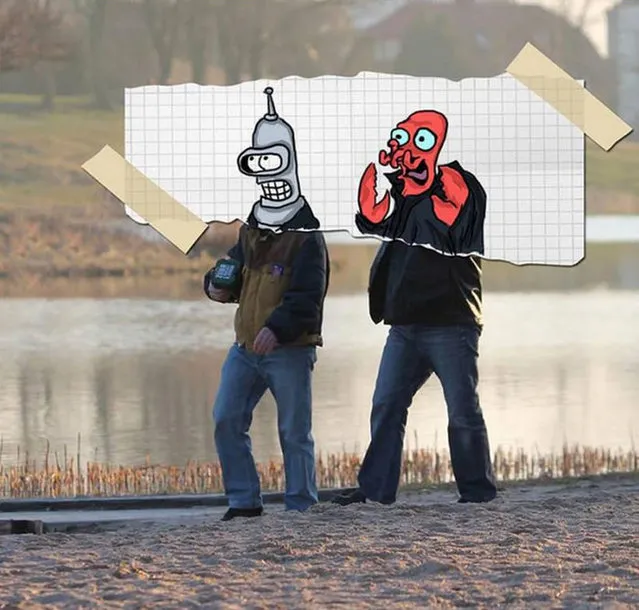
Funny Drawings By Aleks Nocny

How to make the world a brighter using pen? You just have to complement conventional photographs persons toon, and immediately transformed the world. Aleks Nocny uses simple tools: pens, scraps of paper and your imagination. And the most simple pictures of people on the streets are transformed into a work of art.
Details
10 Oct 2014 10:56:00
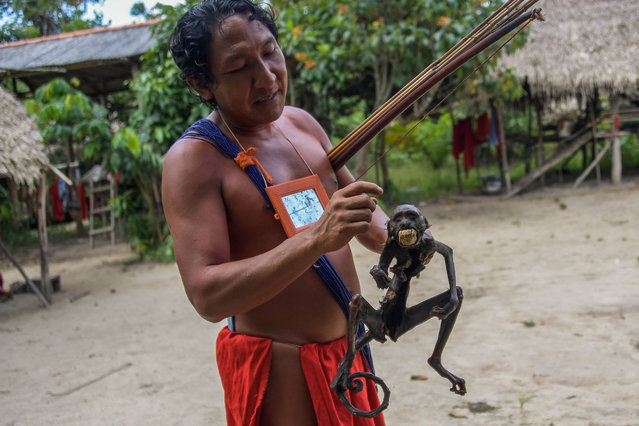
Chieftain Japarupi Waiapi shows a roasted monkey -part of Waiapi's diet, also based in Manioc and fruits- at the reserve in Amapa state in Brazil on October 13, 2017. When Waiapis walks into the Amazon forest surrounding their village, they do not see trees, but a kind of shopping mall providing medicine, food, shelter, tools and weapons  all under the eye of multiple spirits. (Photo by Apu Gomes/AFP Photo)

Chieftain Japarupi Waiapi shows a roasted monkey -part of Waiapi's diet, also based in Manioc and fruits- at the reserve in Amapa state in Brazil on October 13, 2017. When Waiapis walks into the Amazon forest surrounding their village, they do not see trees, but a kind of shopping mall providing medicine, food, shelter, tools and weapons all under the eye of multiple spirits. (Photo by Apu Gomes/AFP Photo)
Details
27 Oct 2017 08:39:00
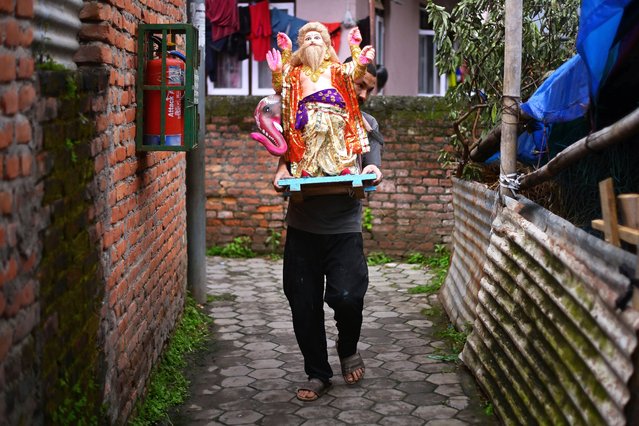
An artist carries a clay statue of Lord Vishwakarma to the market for sale before the Vishwakarma Puja festival in Nepal, Kathmandu on September 16, 2025. The festival, celebrated on September 17 this year, honors Lord Vishwakarma, regarded as the divine engineer and craftsman, and involves prayers for creativity, prosperity, and protection of tools and workplaces. (Photo by Safal Prakash Shrestha/ZUMA Press Wire/Rex Features/Shutterstock)

An artist carries a clay statue of Lord Vishwakarma to the market for sale before the Vishwakarma Puja festival in Nepal, Kathmandu on September 16, 2025. The festival, celebrated on September 17 this year, honors Lord Vishwakarma, regarded as the divine engineer and craftsman, and involves prayers for creativity, prosperity, and protection of tools and workplaces. (Photo by Safal Prakash Shrestha/ZUMA Press Wire/Rex Features/Shutterstock)
Details
29 Oct 2025 03:44:00