Loading...
Done
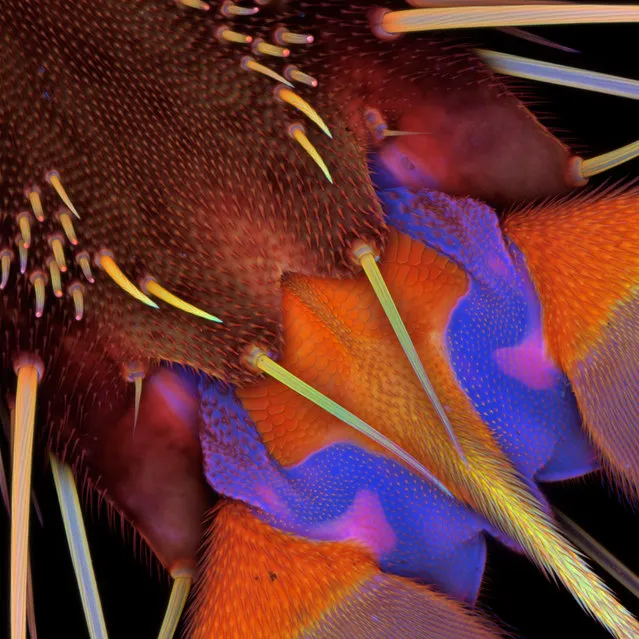
Pretarsus of the third leg of a female drone fly (Eristalis tenax), ventral view, by Dr. Jan Michels, Institute of Zoology, Christian-Albrechts-University of Kiel, Germany. (Photo by Olympus BioScapes)

“Microscope images forge an extraordinary bond between science and art, said Hidenao Tsuchiya, Olympus America's Vice President and General Manager for the Scientific Equipment Group. We founded this competition to focus on the fascinating stories coming out of today's life science research laboratories. The thousands of images that people have shared with the competition over the years reflect some of the most exciting work going on in research today – work that can help shed light on the living universe and ultimately save lives. We look at BioScapes and these beautiful images as sources of education and inspiration to us and the world”. – OlympusBioScapes

Photo: Pretarsus of the third leg of a female drone fly (Eristalis tenax), ventral view, by Dr. Jan Michels, Institute of Zoology, Christian-Albrechts-University of Kiel, Germany. (Photo by Olympus BioScapes)
Details
29 Jul 2012 09:20:00
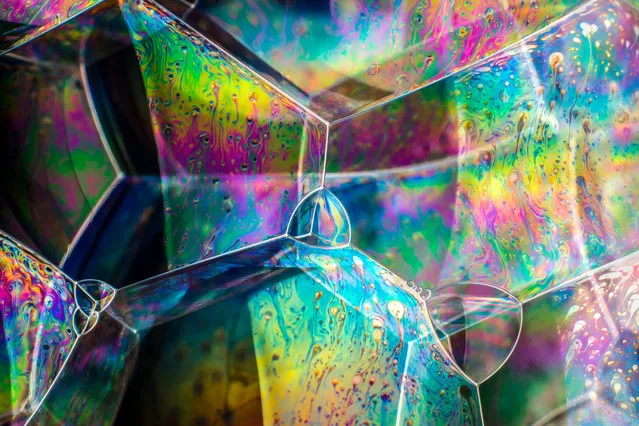
Soap Bubble Structures by Kym Cox. Bubbles optimise space and minimise their surface area for a given volume of air. This phenomenon makes them a useful tool in many areas of research, in particular, materials science and ‘packing’ – how things fit together. Bubble walls drain under gravity, thin at the top, thick at the bottom, which interferes with travelling lightwaves to create bands of colour. Black spots show the wall is too thin for interference colours, indicating the bubble is about to burst. (Photo by Kym Cox/2019 Science Photographer of the Year/RPS)

Soap Bubble Structures by Kym Cox. Bubbles optimise space and minimise their surface area for a given volume of air. This phenomenon makes them a useful tool in many areas of research, in particular, materials science and “packing” – how things fit together. Bubble walls drain under gravity, thin at the top, thick at the bottom, which interferes with travelling lightwaves to create bands of colour. Black spots show the wall is too thin for interference colours, indicating the bubble is about to burst. (Photo by Kym Cox/2019 Science Photographer of the Year/RPS)
Details
15 Aug 2019 00:03:00
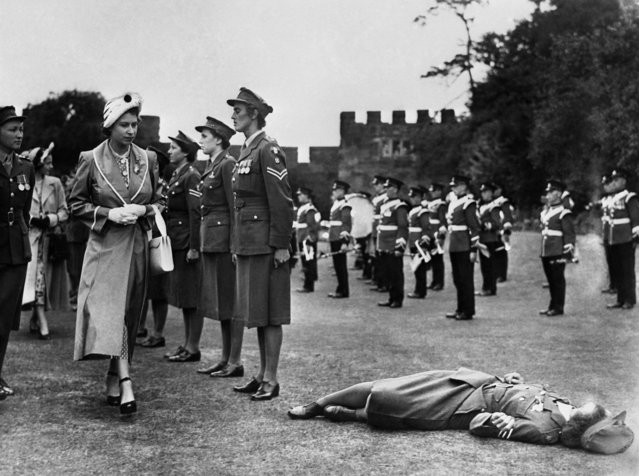
Britain's Princess Elizabeth clasps her hands in sympathy as Sergeant Jean Bayliss faints at her feet during an inspection of the guard of honour of the Women's Royal Army Corps at Shrewsbury Castle, Shropshire, on July 6, 1949. (Photo by AP Photo)

Britain's Princess Elizabeth clasps her hands in sympathy as Sergeant Jean Bayliss faints at her feet during an inspection of the guard of honour of the Women's Royal Army Corps at Shrewsbury Castle, Shropshire, on July 6, 1949. (Photo by AP Photo)
Details
18 Jul 2017 08:54:00


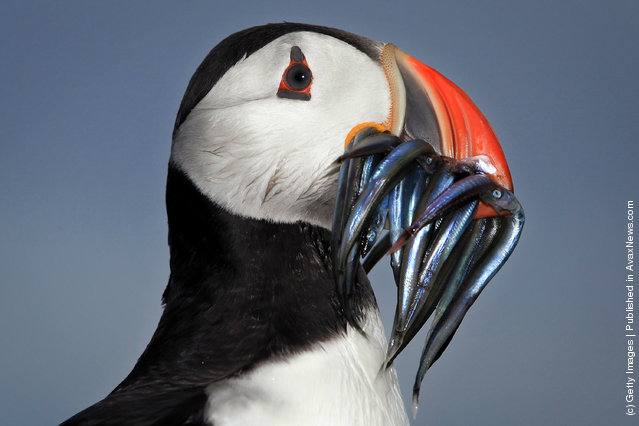
A Puffin returns to it's nest with a beak full of sand eels on June 25, 2011 on Inner Farne, England. The Farne Islands, which are run by the National Trust, are situated two to three miles off the Northumberland coastline. The archipeligo of 16-28 separate islands (depending on the tide) make the summer home to approximately 100,000 pairs of breeding seabirds including around 36,000 Puffins, 32,000 Guillemots and 2,000 pairs of Arctic Terns. The species of birds which nest in internationally important numbers include Shag, Sandwich Tern and Arctic Tern. The coastline around The Farnes are also the breeding ground to one of Europe's largest Grey Seal colonies with around 4,000 adults giving birth to 1500 pups every year. (Photo by Dan Kitwood/Getty Images)
Details
27 Jun 2011 12:58:00
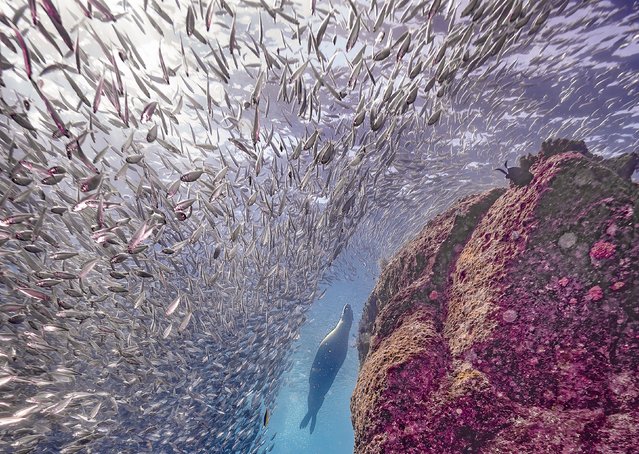
Sea lions make dinner plans in the Gulf of California early July 2024. The gulf is a primary source of sardines and anchovies, two of Mexico’s top marine resources. (Photo by Glenn Ostle/Solent News)

Sea lions make dinner plans in the Gulf of California early July 2024. The gulf is a primary source of sardines and anchovies, two of Mexico’s top marine resources. (Photo by Glenn Ostle/Solent News)
Details
04 Oct 2024 04:04:00
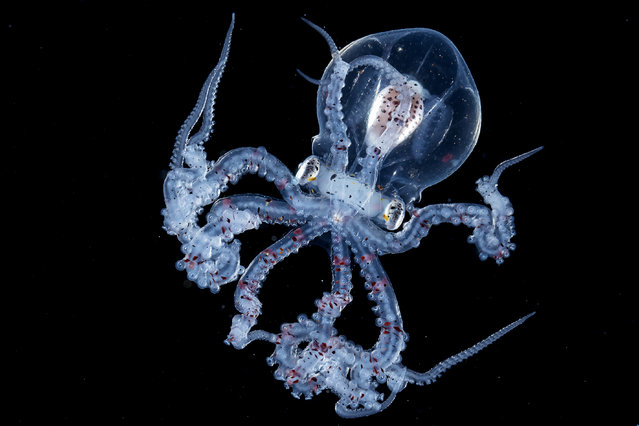
Wunderpus larva. (Photo by Ace Wu/Caters News Agency)

Ace Wu searches the deep to photograph stunning underwater creatures. Against their predominantly black backdrops, Wu’s breathtaking subjects glow with sublime vibrancy. In one, a fearsome fish glares at the camera with rows of sharp teeth showing, while in another, a translucent octopus looks like an extraterrestrial. Here: Wunderpus larva. (Photo by Ace Wu/Caters News Agency)
Details
08 May 2018 00:01:00
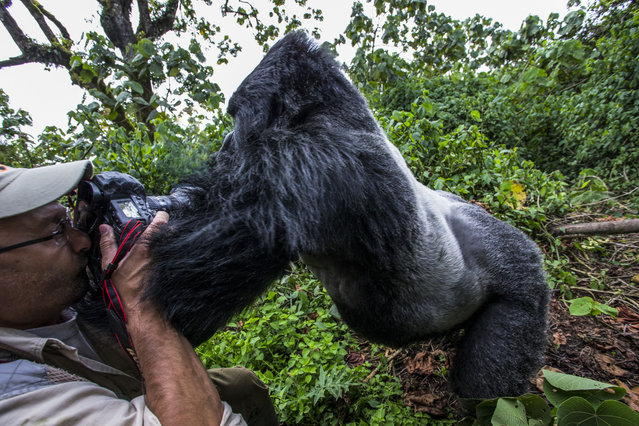
Christophe Vasselin gets pushed over by a gorilla. (Photo by Christophe Vasselin/Caters News Agency)

The snaps show photographers from around the world, who are willing to do just about anything for the perfect picture – whether that be tussling with a seal or withstanding a sharp shove from an angry gorilla. Other brave snappers can be seen getting up close and personal with leopards and great white sharks as they persist in getting the ultimate wildlife shot. Here: Christophe Vasselin gets pushed over by a gorilla. (Photo by Christophe Vasselin/Caters News Agency)
Details
30 Nov 2018 00:03:00
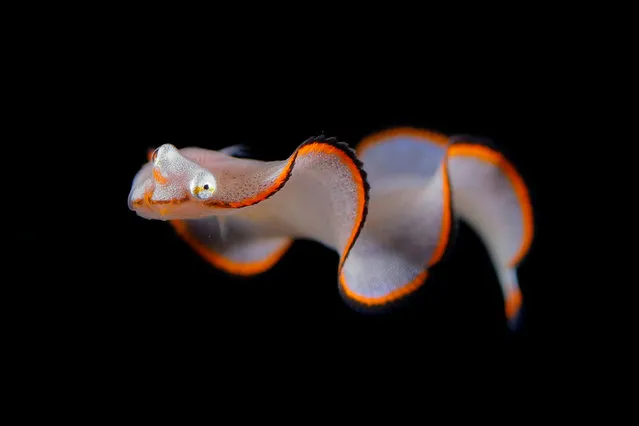
Batesian mimicry by a Soleichthys fish larva. (Photo by Ryo Minemizu/The Guardian)

Ryo Minemizu, one of Japan’s emerging stars in the field of marine life photography and the 2017 winner of the Nikkei National Geographic photography prize, captures the beauty and complexity of plankton that drift in our planet’s oceans and other bodies of water in meticulous detail. Here: Batesian mimicry by a Soleichthys fish larva. (Photo by Ryo Minemizu/The Guardian)
Details
21 Aug 2018 00:05:00