Loading...
Done
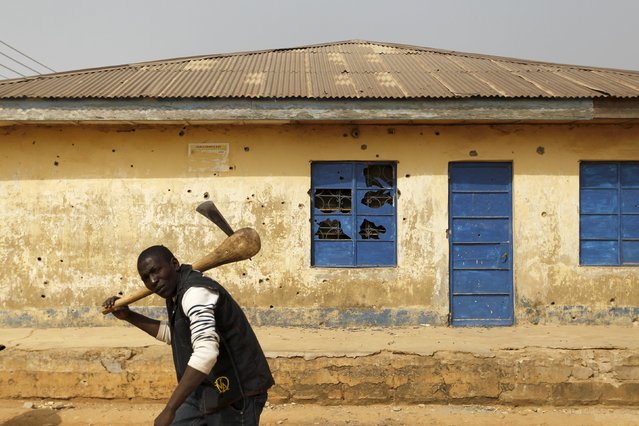
A man carrying an axe walks past a house marked with bullet holes in Gyallesu district after recent clashes between Shi'ites and the army in Zaria, Kaduna state, Nigeria, February 3, 2016. (Photo by Afolabi Sotunde/Reuters)

A man carrying an axe walks past a house marked with bullet holes in Gyallesu district after recent clashes between Shi'ites and the army in Zaria, Kaduna state, Nigeria, February 3, 2016. Sectarian tensions are rising in Nigeria's Muslim north, where hundreds of Shi'ites were killed in clashes with the army in the town of Zaria in December, according to Shi'ites and rights groups. Following the clashes, bulldozers sent by the state levelled Shi'ite shrines, a cemetery and offices in the deeply divided town. The region is already grappling with an insurgency waged by the jihadist Boko Haram group. (Photo by Afolabi Sotunde/Reuters)
Details
12 Feb 2016 12:52:00
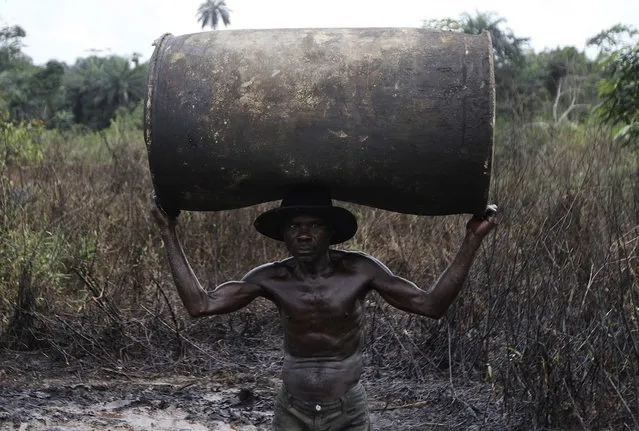
Ebiowei, 48, carries an empty oil container on his head to a place where it would be filled with refined fuel at an illegal refinery site near river Nun in Nigeria's oil state of Bayelsa November 27, 2012. (Photo by Akintunde Akinleye/Reuters)

Ebiowei, 48, carries an empty oil container on his head to a place where it would be filled with refined fuel at an illegal refinery site near river Nun in Nigeria's oil state of Bayelsa November 27, 2012. Locals in the industry say workers can earn $50 to $60 a day. Thousands of people in Nigeria engage in a practice known locally as “oil bunkering” – hacking into pipelines to steal crude then refining it or selling it abroad. The practice, which leaves oil spewing from pipelines for miles around, managed to lift around a fifth of Nigeria's two million barrel a day production last year according to the finance ministry. (Photo by Akintunde Akinleye/Reuters)
Details
18 Jan 2013 14:29:00
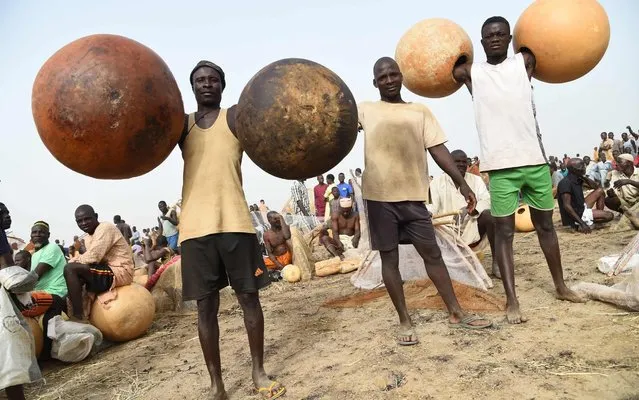
Fishermen carry calabashes to attend Argungu fishing and cultural festival at Argungu Town, Kebbi State in northwestern Nigeria, on March 14, 2020. Argungu fishing and cultural festival is one of the oldest and most widely attended festivals in the country dating back many generations, featuring series of water competitions and traditional games. The festival returned after 10 years suspension due to insecurity in northwest Nigeria. (Photo by Pius Utomi Ekpei/AFP Photo)

Fishermen carry calabashes to attend Argungu fishing and cultural festival at Argungu Town, Kebbi State in northwestern Nigeria, on March 14, 2020. Argungu fishing and cultural festival is one of the oldest and most widely attended festivals in the country dating back many generations, featuring series of water competitions and traditional games. The festival returned after 10 years suspension due to insecurity in northwest Nigeria. (Photo by Pius Utomi Ekpei/AFP Photo)
Details
17 Mar 2020 00:01:00
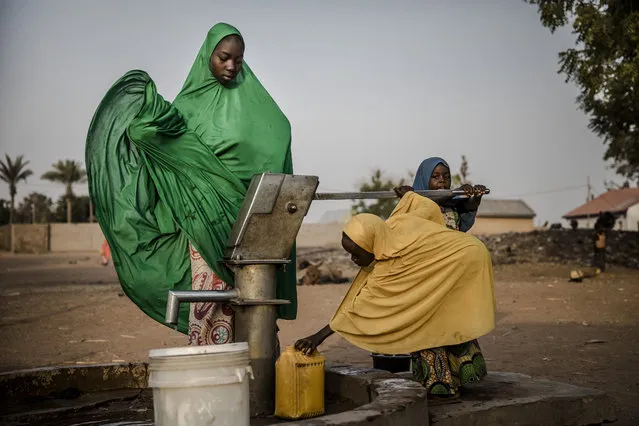
Camp dwellers pump water from a well at Malkohi refugee camp in Jimeta, Adamawa State, Nigeria on February 19, 2019, four days ahead of the country's General elections set for February 23 after a last-minute rescheduling. Malkohi is a camp for internal displaced who fled their homes as Boko Haram insurgents advanced across north-eastern Nigeria. From their homes on the outskirts of Yola, capital of presidential candidate Atiku Abubakar's home state Adamawa, Malkohi residents say they feel forgotten. (Photo by Luis Tato/AFP Photo)

Camp dwellers pump water from a well at Malkohi refugee camp in Jimeta, Adamawa State, Nigeria on February 19, 2019, four days ahead of the country's General elections set for February 23 after a last-minute rescheduling. Malkohi is a camp for internal displaced who fled their homes as Boko Haram insurgents advanced across north-eastern Nigeria. From their homes on the outskirts of Yola, capital of presidential candidate Atiku Abubakar's home state Adamawa, Malkohi residents say they feel forgotten. (Photo by Luis Tato/AFP Photo)
Details
02 Mar 2019 00:05:00
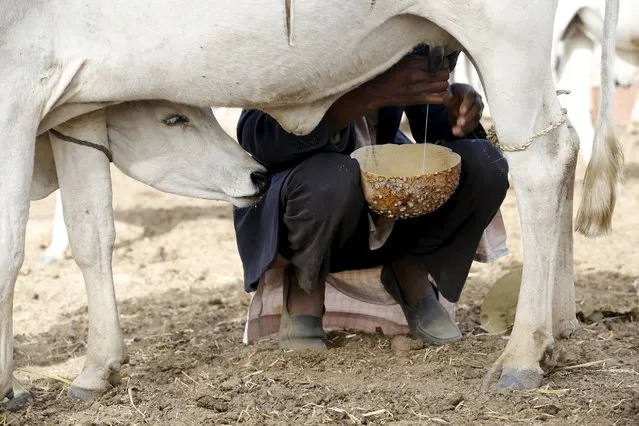
A tribal Fulani man milks a cow at a local milk collecting centre in Dangwala Karfi village on the outskirts of Nigeria's northern city of Kano January 19, 2016. (Photo by Akintunde Akinleye/Reuters)

A tribal Fulani man milks a cow at a local milk collecting centre in Dangwala Karfi village on the outskirts of Nigeria's northern city of Kano January 19, 2016. (Photo by Akintunde Akinleye/Reuters)
Details
21 Jan 2016 08:00:00
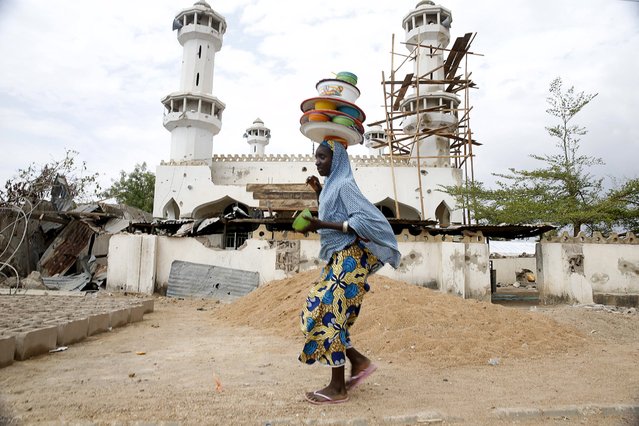
A girl walks past a destroyed mosque in the town of Mararaba, after the Nigerian military recaptured it from Boko Haram, in Adamawa state May 10, 2015. (Photo by Akintunde Akinleye/Reuters)

A girl walks past a destroyed mosque in the town of Mararaba, after the Nigerian military recaptured it from Boko Haram, in Adamawa state May 10, 2015. (Photo by Akintunde Akinleye/Reuters)
Details
12 May 2015 12:32:00
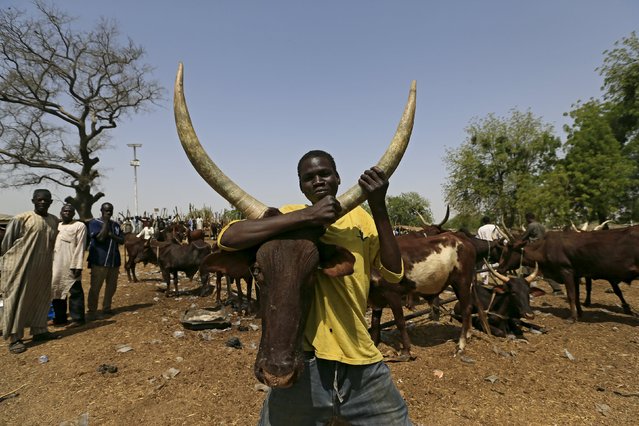
A man holds a cow at the cattle market in Maiduguri, Nigeria, March 9, 2016. (Photo by Afolabi Sotunde/Reuters)

A man holds a cow at the cattle market in Maiduguri, Nigeria, March 9, 2016. A Nigerian government push to strangle the Boko Haram insurgency has shut down the cattle trade that sustained the city of Maiduguri, leaving many residents with no livelihood, including many of the two million people displaced by the war. In recent months the army has taken back much of the territory lost to the jihadists during the five-year insurgency. (Photo by Afolabi Sotunde/Reuters)
Details
16 Mar 2016 14:06:00
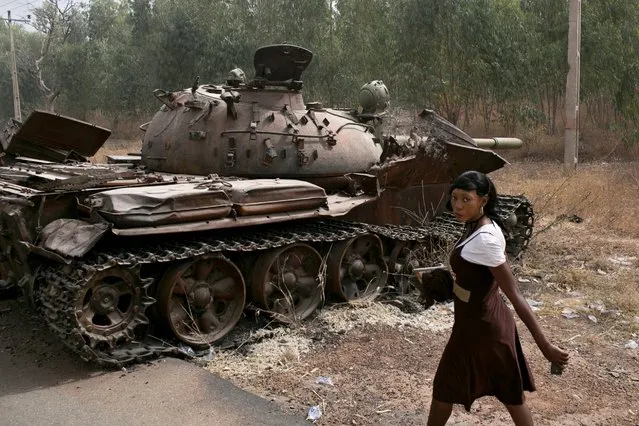
An abandoned tank left by Boko Haram, February 20, 2016, seen on the road to Michika, Nigeria – a town formerly occupied by the insurgents. On April 14, 2014, 300 schoolgirls in the Chibok village in Nigeria were kidnapped by the terrorist group, Boko Haram. Two years later, the majority of these girls are still missing. According to the Global Terrorism Index Report 2015, Boko Haram, which operates mainly in Nigeria, has become the most deadly terrorist group in the world. (Photo by Danielle Villasana)

An abandoned tank left by Boko Haram, February 20, 2016, seen on the road to Michika, Nigeria – a town formerly occupied by the insurgents. On April 14, 2014, 300 schoolgirls in the Chibok village in Nigeria were kidnapped by the terrorist group, Boko Haram. Two years later, the majority of these girls are still missing. According to the Global Terrorism Index Report 2015, Boko Haram, which operates mainly in Nigeria, has become the most deadly terrorist group in the world. (Photo by Danielle Villasana)
Details
22 Apr 2016 13:13:00