Loading...
Done
Nightjars And Pooto Bird

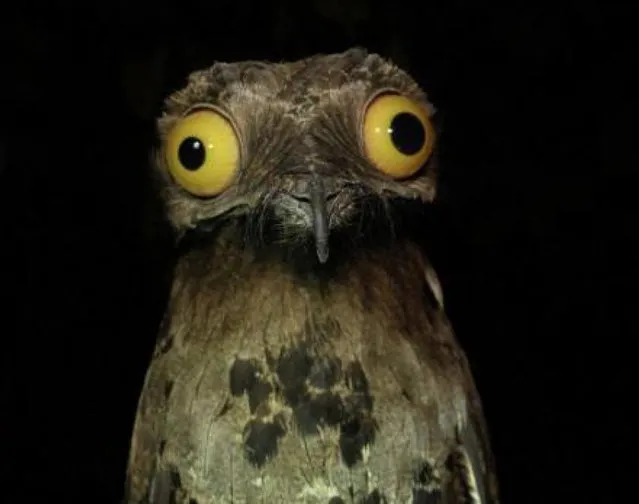
Potoos (family Nyctibiidae) are a group of near passerine birds related to the nightjars and frogmouths. They are sometimes called Poor-me-ones, after their haunting calls. There are seven species in one genus, Nyctibius, in tropical Central and South America.
These are nocturnal insectivores which lack the bristles around the mouth found in the true nightjars. They hunt from a perch like a shrike or flycatcher. During the day they perch upright on tree stumps, camouflaged to look like part of the stump. The single spotted egg is laid directly on the top of a stump.
Details
20 Jan 2014 14:34:00
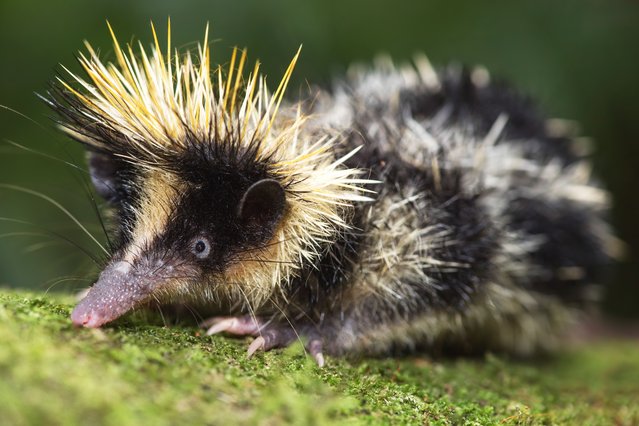
This spiky tenrec was spotted in Madagascar’s Mantadia National Park in the last decade of September 2025. Mostly nocturnal and rarely seen, it puffs out its spines when threatened. Spiky tenrecs are excellent swimmers — unlike most spiny mammals, some species of tenrec can forage in streams and rivers, using their spines for protection while hunting aquatic insects and small prey. (Photo by Dale Morris/Solent News & Photo Agency)

This spiky tenrec was spotted in Madagascar’s Mantadia National Park in the last decade of September 2025. Mostly nocturnal and rarely seen, it puffs out its spines when threatened. Spiky tenrecs are excellent swimmers — unlike most spiny mammals, some species of tenrec can forage in streams and rivers, using their spines for protection while hunting aquatic insects and small prey. (Photo by Dale Morris/Solent News & Photo Agency)
Details
05 Oct 2025 04:02:00
Miniature Worlds by Catherine Nelson

Catherine Nelson is a visual artist who uses the digital medium to paint images together into personal and imaginary landscapes. Trained as a painter in Sydney and London and with years of experience in the creation of visual effects for feature films like Moulin Rouge and Harry Potter, she now has dedicated her skills to her own art work combining the techniques from both these worlds into a new contemporary art medium. Her latest series have been exhibited in Australia, New Zealand, China, Korea, USA and Europe and have captivated audiences and art collectors in cities like Sydney, Paris, Los Angeles, Beijing and Seoul.
Details
26 May 2013 11:00:00
Baby Fennec Fox

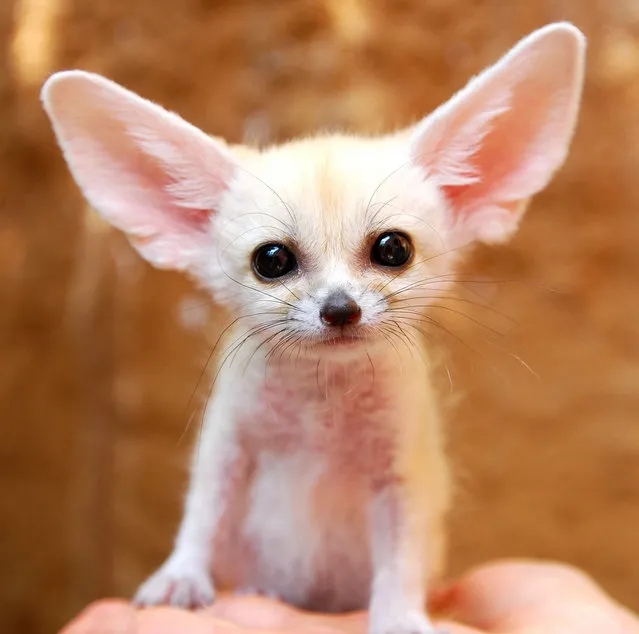
“The fennec fox is a small nocturnal fox found in the Sahara of North Africa. Its most distinctive feature is unusually large ears. The name “fennec” comes from the Arabic word for fox, and the species name zerda has a Greek origin that refers to its habitat. The fennec is the smallest species of canid in the world; coat, ears and kidney functions have adapted to a high-temperature, low-water, desert environment. In addition, its hearing is sensitive enough to hear prey moving underground”. – Wikipedia

Photo: A Baby Fennec is seen at Sunshine International Aquarium on June 24, 2009 in Tokyo, Japan. The small nocturnal fox babies were born on May 17 2009. (Photo by Junko Kimura/Getty Images)
Details
16 Sep 2011 12:02:00
Baby Fennec Fox

“The fennec fox or fennec (Vulpes zerda) is a small nocturnal fox found in the Sahara of North Africa. Its most distinctive feature is its unusually large ears, which serve to dissipate heat”. – Wikipedia. (Photo by In Cherl Kim)
Details
14 Sep 2012 12:15:00


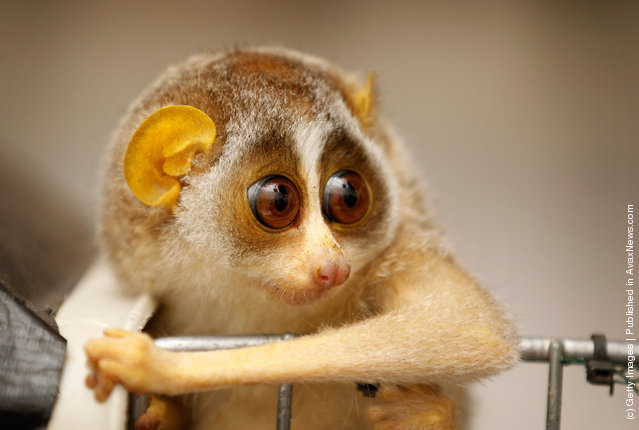
A five-month-old female slender loris waits to be given her first health check by the veterinary team at London Zoo on July 21, 2011 in London, England. Two female baby slender lorises, who are yet to be named, were given health checks, their s*x determined and micro-chipped. Slender Loris is the common name for the strepsirrhine primates who are nocturnal and originate from India, Sri Lanka, and southeast Asia. London Zoo supports conservation of lorises in Sri Lanka, where populations are thought to be under threat from deforestation. (Photo by Christopher Furlong/Getty Images)
Details
22 Jul 2011 11:38:00


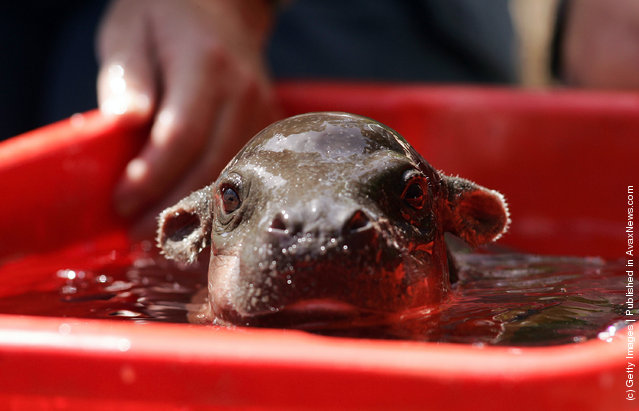
“The pygmy hippopotamus (Choeropsis liberiensis or Hexaprotodon liberiensis) is a large mammal native to the forests and swamps of western Africa (the specific name liberiensis means “of Liberia”, as this is where the vast majority live). The pygmy hippo is reclusive and nocturnal. It is one of only two extant species in the Hippopotamidae family, the other being its much larger cousin the common hippopotamus”. – Wikipedia

Photo: Monifa, a one month old baby Pygmy Hippopotamus takes a morning bath at Taronga Zoo on November 7, 2008 in Sydney, Australia. Monifa is the first Pygmy Hippopotamus to be born at Taronga Zoo in the past twenty three years. (Photo by Sergio Dionisio/Getty Images)
Details
11 Apr 2011 08:11:00
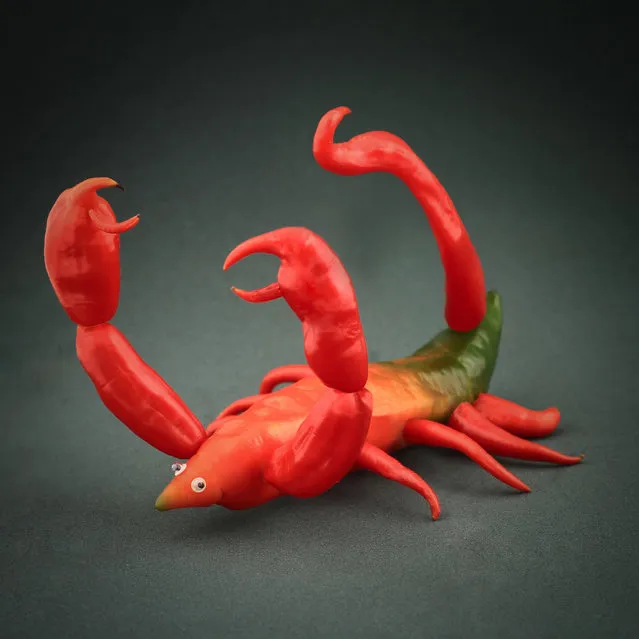
“Red Pepperpion. (Photo by Vanessa Dualib)

“Red Pepperpion. Red Pepperpions are secretive, nocturnal arachilli which can be spotted in kitchens of arid climates all around the world.

Red Pepperpions are equipped with a delicious (and depending on the quantity...deadly!) stinger at the end of its tail. If you happen to get bitten (or if you bite him!) it will produce a burning sensation on your taste nerves.

However, there is no need to worry, since the fact is that his potent stinger is usually only used when hunting or whenever the Pepperpion feels like he might become part of someones meal...

At daylight or when encountering a larger foe, such as a Saucier Chef, they retreat into burrows inside the fridge or hide beneath the oven”. (Photo and comment by Vanessa Dualib)


Details
08 Feb 2013 09:24:00