Loading...
Done
Students of the "Escola de Papai Noel do Brasil" (Brazil's school of Santa Claus)  travel on a ferry through Guanabara bay, during their graduation ceremony in Rio de Janeiro, Brazil, November 10, 2015. (Photo by Pilar Olivares/Reuters)

Students of the "Escola de Papai Noel do Brasil" (Brazil's school of Santa Claus) travel on a ferry through Guanabara bay, during their graduation ceremony in Rio de Janeiro, Brazil, November 10, 2015. The school holds 4 days' lessons in Santa-training, teaching Christmas carols, how to interact with children, and also how to wear the heavy red suit in Rio's typical 104-degree (40 degrees celsius) summer weather that is common around the holidays. (Photo by Pilar Olivares/Reuters)
Details
13 Nov 2015 08:01:00
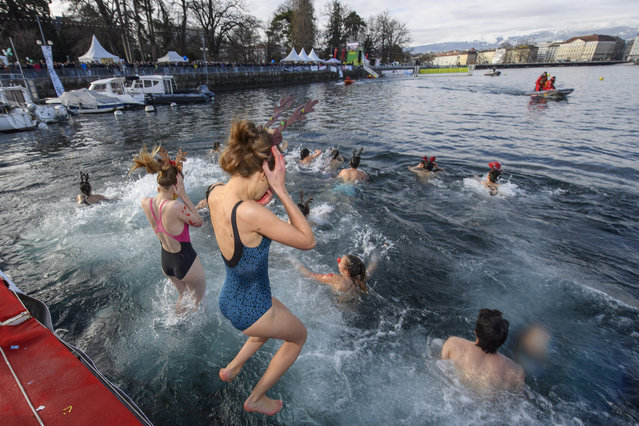
Participants of the 79th edition of the annual Christmas swimming “Coupe de Noel” jump into the Lake Geneva, in Geneva, Switzerland, Sunday, December 17, 2017. More than 2000 men and women swam the 120 meters at the traditional Christmas swimming in Geneva where the water temperature was 6 degrees. (Photo by Martial Trezzini/EPA/EFE/Rex Features/Shutterstock)

Participants of the 79th edition of the annual Christmas swimming “Coupe de Noel” jump into the Lake Geneva, in Geneva, Switzerland, Sunday, December 17, 2017. More than 2000 men and women swam the 120 meters at the traditional Christmas swimming in Geneva where the water temperature was 6 degrees. (Photo by Martial Trezzini/EPA/EFE/Rex Features/Shutterstock)
Details
19 Dec 2017 08:15:00
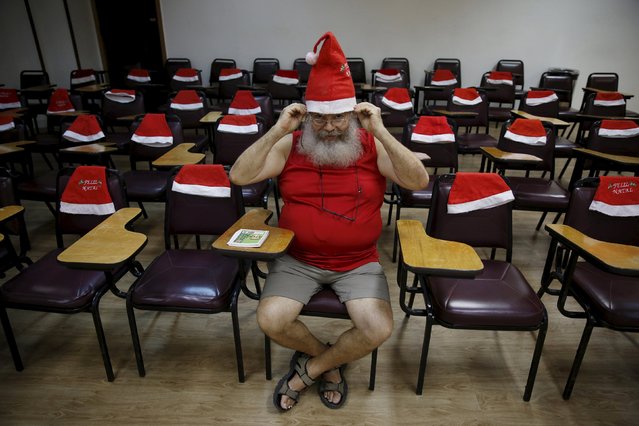
A student of the "Escola de Papai Noel do Brasil" (Brazil's school of Santa Claus) wears his hat before lessons in Rio de Janeiro, Brazil, October 27, 2015. (Photo by Pilar Olivares/Reuters)

A student of the "Escola de Papai Noel do Brasil" (Brazil's school of Santa Claus) wears his hat before lessons in Rio de Janeiro, Brazil, October 27, 2015. The school, which was founded since 1993, prepare men to represent Santa Claus during the Christmas season. Lessons include singing, physical activity, how to dress and how to care for their beard. (Photo by Pilar Olivares/Reuters)
Details
31 Oct 2015 08:03:00
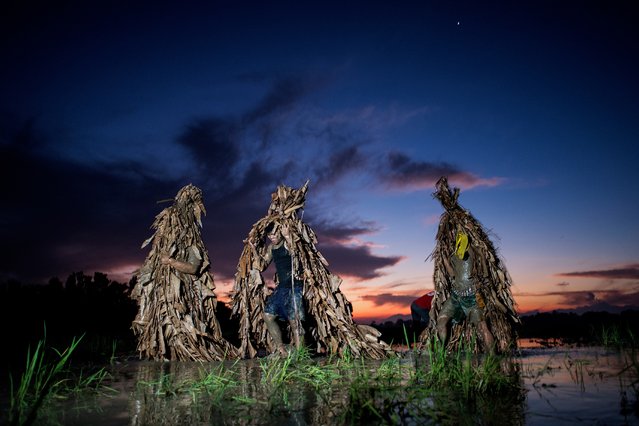
Devotees wear costumes made of banana leaves as they head to church to attend mass as part of a religious festival, in honor of St. John the Baptist, also known locally as the “mud people” festival, in Aliaga town, Nueva Ecija province, north of Manila, on June 24, 2017. Farmers coated in mud paraded in Philippine villages on June 24 to mark one of the Catholic nation's most colourful religious festivals. (Photo by Noel Celis/AFP Photo)

Devotees wear costumes made of banana leaves as they head to church to attend mass as part of a religious festival, in honor of St. John the Baptist, also known locally as the “mud people” festival, in Aliaga town, Nueva Ecija province, north of Manila, on June 24, 2017. Farmers coated in mud paraded in Philippine villages on June 24 to mark one of the Catholic nation's most colourful religious festivals. (Photo by Noel Celis/AFP Photo)
Details
27 Jun 2017 08:30:00
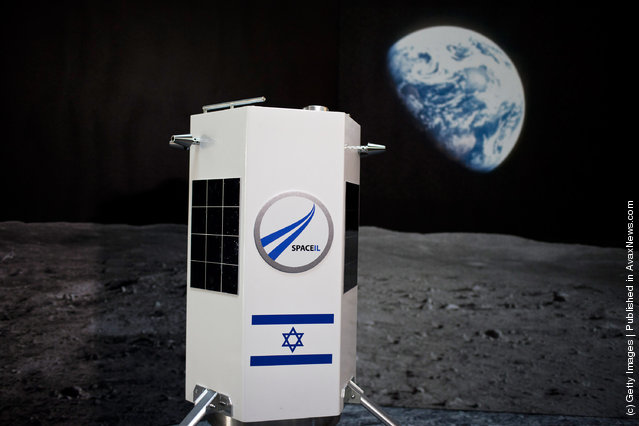
A prototype of a new nano spaceship is displayed during a press conference held by Israel's Space IL organisation

A prototype of a new nano spaceship is displayed during a press conference held by Israel's Space IL organisation on December 8, 2011 in Ehud, Israel. Israeli President Shimon Peres participated in the event unveiling Space IL's latest prototype nano spaceship with the aim of launching a Israeli robotic spacecraft that will land on the moon and raise funds for scientific education in Israel. (Photo by Ilia Yefimovich/Getty Images)
Details
09 Dec 2011 11:27:00
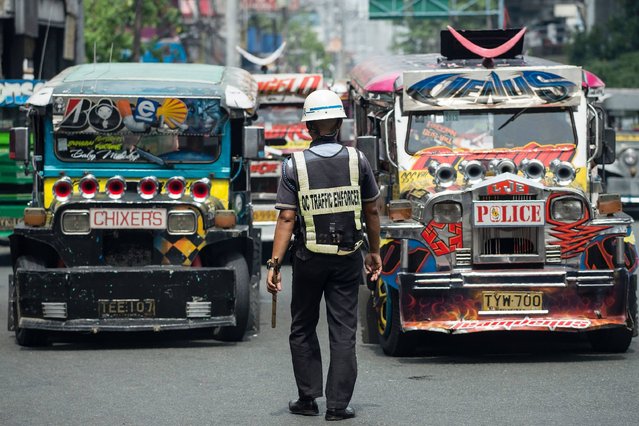
Jeepneys are seen as an enforcer manages traffic at a busy street in Manila on May 30, 2017. Jeepneys, once hailed as the “King of the Road” and a cultural symbol in the Phillipines to rival New York's yellow taxis, may soon disappear from Manila's gridlocked streets, as authorities move to phase out the Philippines' iconic World War II-era minibuses, citing pollution and safety concerns. (Photo by Noel Celis/AFP Photo)

Jeepneys are seen as an enforcer manages traffic at a busy street in Manila on May 30, 2017. Jeepneys, once hailed as the “King of the Road” and a cultural symbol in the Phillipines to rival New York's yellow taxis, may soon disappear from Manila's gridlocked streets, as authorities move to phase out the Philippines' iconic World War II-era minibuses, citing pollution and safety concerns. (Photo by Noel Celis/AFP Photo)
Details
31 May 2017 07:14:00
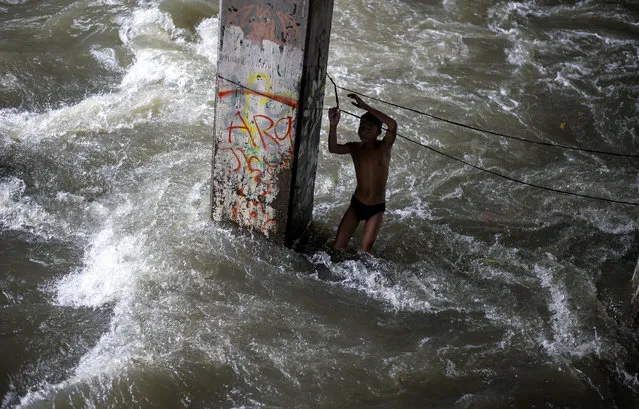
A boy plays in a swollen creek under a bridge in Manila on October 16, 2016. Typhoon Sarika lashed the main Philippine island of Luzon on October 16, flattening homes and toppling trees and power pylons as more than 12,000 people fled to safer ground, officials said. Shanties built beside a river, under a creek are the usual victims of floodings. (Photo by Noel Celis/AFP Photo)

A boy plays in a swollen creek under a bridge in Manila on October 16, 2016. Typhoon Sarika lashed the main Philippine island of Luzon on October 16, flattening homes and toppling trees and power pylons as more than 12,000 people fled to safer ground, officials said. Shanties built beside a river, under a creek are the usual victims of floodings. (Photo by Noel Celis/AFP Photo)
Details
17 Oct 2016 10:00:00
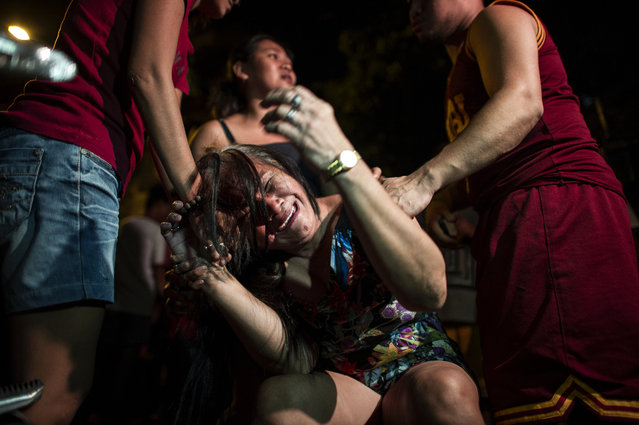
In this picture taken on September 24, 2016, relatives grieve their lost one, an alleged drug user/dealer gunned down by unidentified gunmen in Manila. Philippine President Rodrigo Duterte defended his threat to kill criminals as “perfect” and vowed no let-up in his war on crime, as the death toll surged past 3,700. (Photo by Noel Celis/AFP Photo)

In this picture taken on September 24, 2016, relatives grieve their lost one, an alleged drug user/dealer gunned down by unidentified gunmen in Manila. Philippine President Rodrigo Duterte defended his threat to kill criminals as “perfect” and vowed no let-up in his war on crime, as the death toll surged past 3,700. (Photo by Noel Celis/AFP Photo)
Details
04 Jan 2017 08:00:00