Loading...
Done
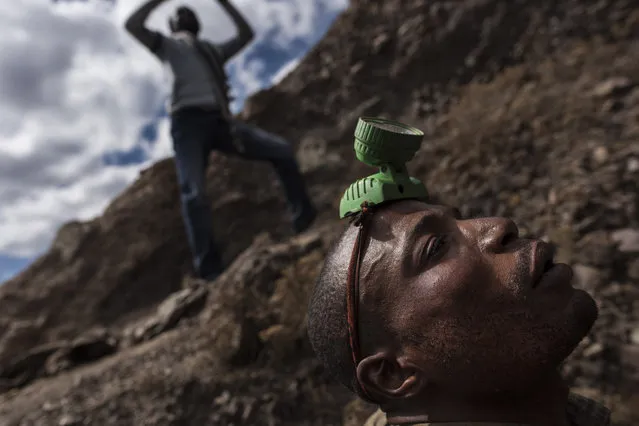
A “creuseur”, or digger, a plastic lantern on his head, readies to enter a copper and cobalt mine in Kawama, Democratic Republic of Congo on June 8, 2016. Cobalt is used in the batteries for electric cars and mobile phones. Working conditions are dangerous, often with no safety equipment or structural support for the tunnels. The diggers say they are paid on average US$2-3/day. (Photo by Michael Robinson Chavez/The Washington Post)

A “creuseur”, or digger, a plastic lantern on his head, readies to enter a copper and cobalt mine in Kawama, Democratic Republic of Congo on June 8, 2016. Cobalt is used in the batteries for electric cars and mobile phones. Working conditions are dangerous, often with no safety equipment or structural support for the tunnels. The diggers say they are paid on average US$2-3/day. (Photo by Michael Robinson Chavez/The Washington Post)
Details
30 Dec 2016 10:29:00
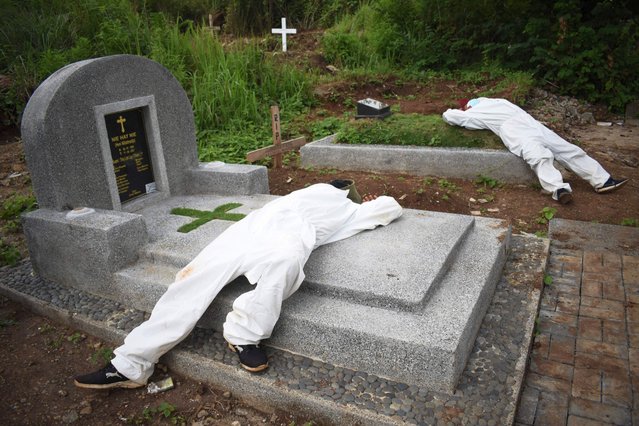
Exhausted grave diggers rest in between funerals at a cemetery designated for Covid-19 victims in Bandung on June 15, 2021, as infection numbers soar in Indonesia. (Photo by Timur Matahari/AFP Photo)

Exhausted grave diggers rest in between funerals at a cemetery designated for Covid-19 victims in Bandung on June 15, 2021, as infection numbers soar in Indonesia. (Photo by Timur Matahari/AFP Photo)
Details
16 Jun 2021 10:33:00
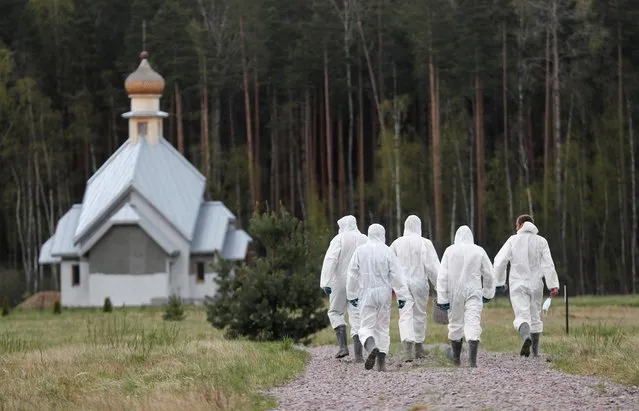
Grave diggers wearing personal protective equipment (PPE) walk away after burying a person, who presumably died of the coronavirus disease (COVID-19), in the special purpose section of a graveyard on the outskirts of Saint Petersburg, Russia on May 13, 2020. (Photo by Anton Vaganov/Reuters)

Grave diggers wearing personal protective equipment (PPE) walk away after burying a person, who presumably died of the coronavirus disease (COVID-19), in the special purpose section of a graveyard on the outskirts of Saint Petersburg, Russia on May 13, 2020. (Photo by Anton Vaganov/Reuters)
Details
23 May 2020 00:05:00
Marieke van der Meer from the Netherlands works on her sculpture “Flora” at the sand sculpture show in Binz on Ruegen island, Germany, 09 March 2016. With the motto “Fascination Nature”, 50 sand artists have created oversized sculptures. The sculptors use 16,000 tons of special sand that is pressed into big blocks first and then formed. The 7th sand sculpture show on 5,600 square meters of exhibition ground opens on 12 March 2016. (Photo by Ens Buettner/EPA)

Marieke van der Meer from the Netherlands works on her sculpture “Flora” at the sand sculpture show in Binz on Ruegen island, Germany, 09 March 2016. With the motto “Fascination Nature”, 50 sand artists have created oversized sculptures. The sculptors use 16,000 tons of special sand that is pressed into big blocks first and then formed. The 7th sand sculpture show on 5,600 square meters of exhibition ground opens on 12 March 2016. (Photo by Ens Buettner/EPA)
Details
10 Mar 2016 13:03:00
Beachgoers pass a snowman made from sand on Christmas Day at Bondi Beach in Sydney on December 25, 2023. (Photo by David Gray/AFP Photo)

Beachgoers pass a snowman made from sand on Christmas Day at Bondi Beach in Sydney on December 25, 2023. (Photo by David Gray/AFP Photo)
Details
13 Feb 2025 03:16:00
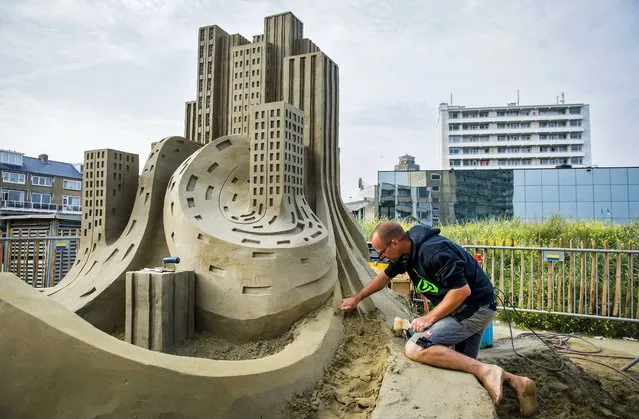
Dutch artist Maxim Gazendam works on his sand sculpture during the third edition of the European Championship Sand Sculpting 2014 in Zandvoort aan Zee, The Netherlands, 08 August 2014. Eight sculptors from different European countries will each create an impressive sculpture on the main theme “Music and Dance”. (Photo by Remko De Waal/EPA)

Dutch artist Maxim Gazendam works on his sand sculpture during the third edition of the European Championship Sand Sculpting 2014 in Zandvoort aan Zee, The Netherlands, 08 August 2014. Eight sculptors from different European countries will each create an impressive sculpture on the main theme “Music and Dance”. (Photo by Remko De Waal/EPA)
Details
09 Aug 2014 10:57:00
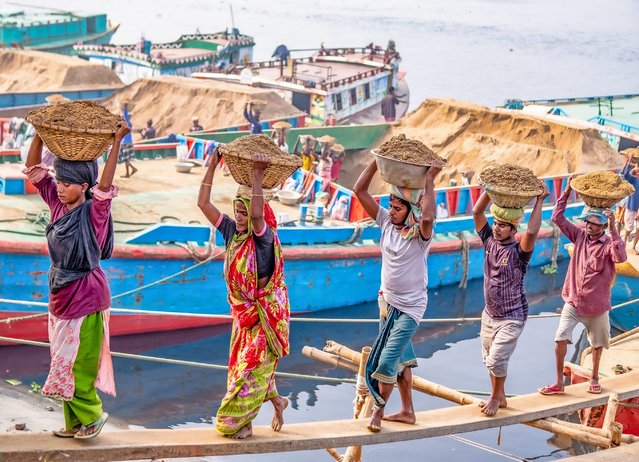
Workers unload baskets of sand from ships in Gabtoli Launch Ghat, Dhaka, Bangladesh in the first decade of February 2025. (Photo by Rakibul alam Khan/Solent News)

Workers unload baskets of sand from ships in Gabtoli Launch Ghat, Dhaka, Bangladesh in the first decade of February 2025. (Photo by Rakibul alam Khan/Solent News)
Details
14 May 2025 03:01:00
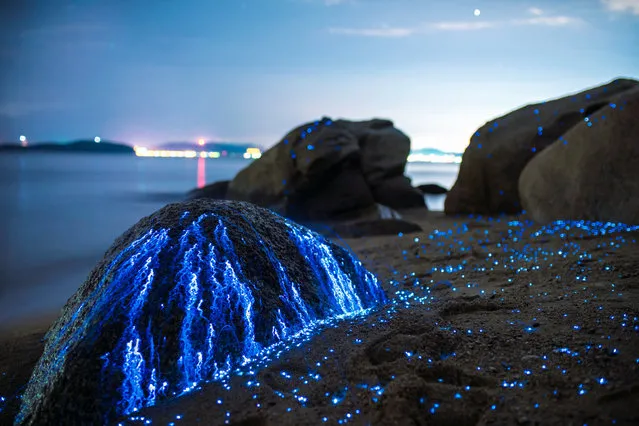
Bioluminescent sea fireflies glittering like diamonds on the rocks and sand. Okayama, Japan. July 2016. (Photo by Trevor Williams/Jonathan Galione/Getty Images)

Those lights are actually bioluminescent shrimp, better known as sea fireflies, or, in Japan, as “umibotaru”. Visible every year from May until the end of October, they live in the sand around very shallow sea water and are often seen floating between the extremes of high and low tides. Here: Bioluminescent sea fireflies glittering like diamonds on the rocks and sand. Okayama, Japan. July 2016. (Photo by Trevor Williams/Jonathan Galione/Getty Images)
Details
23 Aug 2016 10:13:00