Loading...
Done
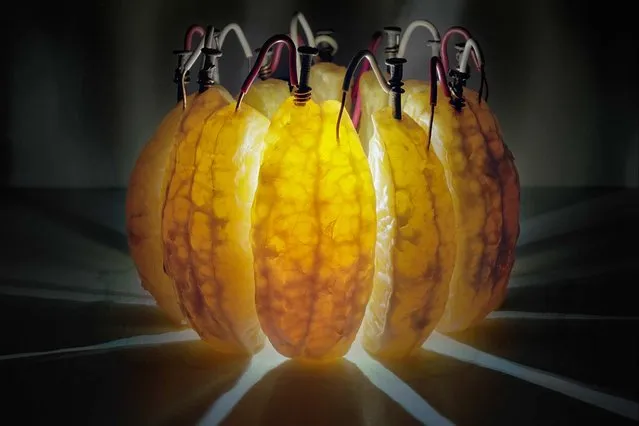
Wedges of an orange generate enough current and electrical juice – 3.5 volts – to power an LED. The fruit’s citric acid helps electrons flow from galvanized nails to copper wire in this 14-hour exposure. This image was published in September’s Visions of Earth, a trio of photos that appear in each issue of National Geographic. (Photo by Caleb Charland/National Geographic)

Wedges of an orange generate enough current and electrical juice – 3.5 volts – to power an LED. The fruit’s citric acid helps electrons flow from galvanized nails to copper wire in this 14-hour exposure. This image was published in September’s Visions of Earth, a trio of photos that appear in each issue of National Geographic. (Photo by Caleb Charland/National Geographic)
Details
06 Jan 2014 12:09:00
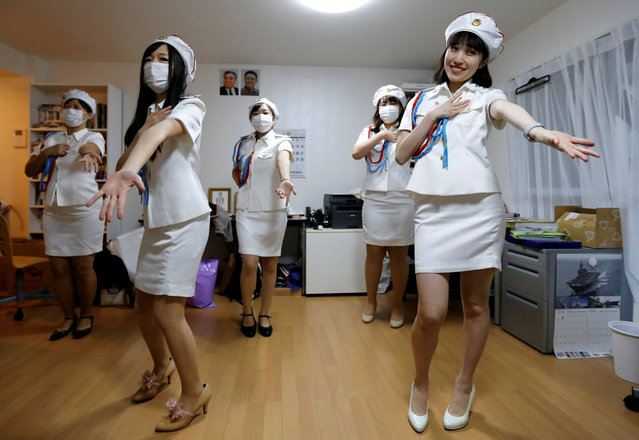
Chunhun (R), the leader of Japan's North Korea fan club called sengun-joshi, or military-first girls, and other members practice a Moranbong Band dance in Tokyo, Japan on November 2, 2017. (Photo by Toru Hanai/Reuters)

Chunhun (R), the leader of Japan's North Korea fan club called sengun-joshi, or military-first girls, and other members practice a Moranbong Band dance in Tokyo, Japan on November 2, 2017. (Photo by Toru Hanai/Reuters)
Details
03 Nov 2017 07:34:00
Chaos Computer Club 28th Congress

A participant works on a laptop on the first day of the 28th Chaos Communication Congress (28C3) – Behind Enemy Lines computer hacker conference on December 27, 2011 in Berlin, Germany. The Chaos Computer Club is Europe's biggest network of computer hackers and its annual congress draws up to 3,000 participants. (Photo by Adam Berry/Getty Images)
Details
28 Dec 2011 07:22:00
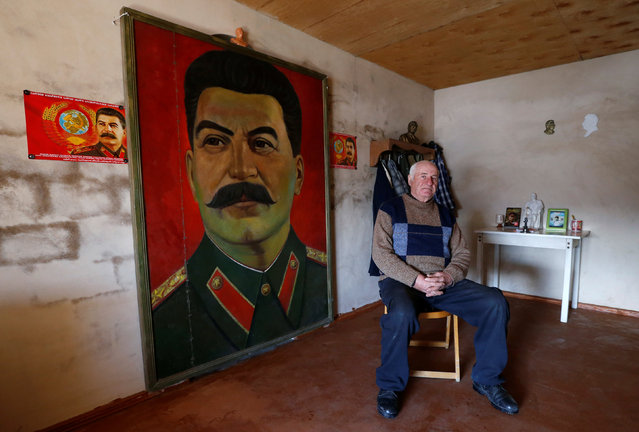
Retired builder Vasili Sidamonidze, 70, poses for a portrait at his home in Gori, Georgia, December 6, 2016. “Unfortunately, Stalin is not popular nowadays. Our people don't respect him. Only we, members of the (Communist) Party, respect him”, Sidamonidze said. “I always try to attend Stalin's birthday anniversaries in Gori. Unfortunately many people don't want to join us even if they live nearby. They look at us from their windows”. Stalin, who was born in Gori in 1878 and died in 1953, is largely reviled today in Georgia, which regained its independence during the 1991 collapse of the Soviet Union. Over the years, his memorials have been dismantled, most recently in 2010 when authorities removed a statue of the dictator from Gori's central square. But Stalin is still revered by a small group of mainly elderly supporters who stress his role in the industrialisation of the Soviet Union and in defeating Nazi Germany in World War Two. Each Dec. 21, a few dozen people mark his birthday by gathering outside a Gori museum dedicated to Stalin, where they make speeches and walk to the square where a 6-meter-high bronze statue of him once stood, calling for it to be reinstated. Opponents say it was a symbol of Moscow's still lingering shadow. In 2008, Russia fought a brief war with Georgia and recognised its breakaway regions of Abkhazia and South Ossetia as independent states. (Photo by David Mdzinarishvili/Reuters)

Retired builder Vasili Sidamonidze, 70, poses for a portrait at his home in Gori, Georgia, December 6, 2016. “Unfortunately, Stalin is not popular nowadays. Our people don't respect him. Only we, members of the (Communist) Party, respect him”, Sidamonidze said. “I always try to attend Stalin's birthday anniversaries in Gori. Unfortunately many people don't want to join us even if they live nearby. They look at us from their windows”. (Photo by David Mdzinarishvili/Reuters)
Details
17 Dec 2016 07:59:00
A woman attends a boxing class at Princess Women's Boxing Club in Shanghai December 3, 2014. Women have boxed as long as the sport has existed but for years they were relegated out of national and international competitions in many countries around the world. Female boxers entered the ring in an exhibition match at the 1904 Olympic Games, but it was more than a century later when they were given the green light to make their Olympic debut in London in 2012. (Photo by Carlos Barria/Reuters)

A woman attends a boxing class at Princess Women's Boxing Club in Shanghai December 3, 2014. Women have boxed as long as the sport has existed but for years they were relegated out of national and international competitions in many countries around the world. Female boxers entered the ring in an exhibition match at the 1904 Olympic Games, but it was more than a century later when they were given the green light to make their Olympic debut in London in 2012. (Photo by Carlos Barria/Reuters)
Details
10 Dec 2014 12:46:00
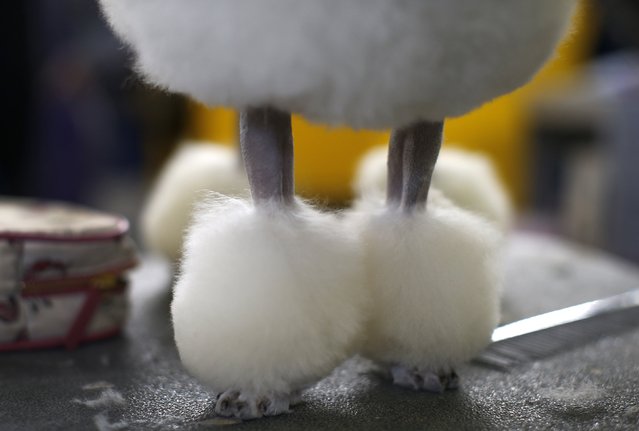
A Toy Poodle is groomed at the benching area before competition at the 139th Westminster Kennel Club's Dog Show in the Manhattan borough of New York February 16, 2015. (Photo by Mike Segar/Reuters)

A Toy Poodle is groomed at the benching area before competition at the 139th Westminster Kennel Club's Dog Show in the Manhattan borough of New York February 16, 2015. (Photo by Mike Segar/Reuters)
Details
18 Feb 2015 13:59:00
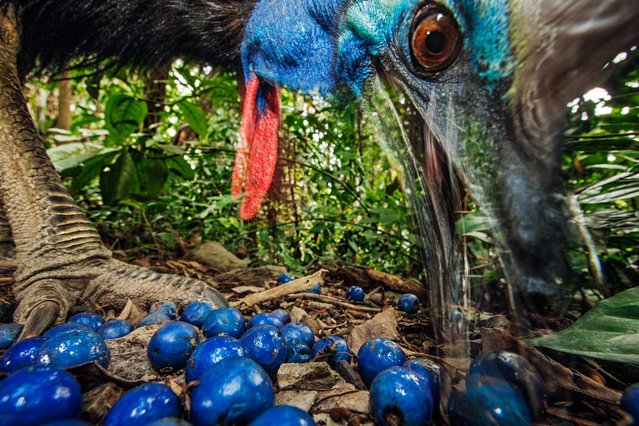
“Cassowaries are large, flightless birds related to emus and (more distantly) to ostriches, rheas, and kiwis”, writes Olivia Judson in the September issue of National Geographic magazine. (Photo by Christian Ziegler/National Geographic)

“Cassowaries are large, flightless birds related to emus and (more distantly) to ostriches, rheas, and kiwis”, writes Olivia Judson in the September issue of National Geographic magazine. How large? People-size: Adult males stand well over five foot five and top 110 pounds. Females are even taller, and can weigh more than 160 pounds. Dangerous when roused, they’re shy and peaceable when left alone. But even birds this big and tough are prey to habitat loss. The dense New Guinea and Australia rain forests where they live have dwindled. Today cassowaries might number 1,500 to 2,000. And because they help shape those same forests – by moving seeds from one place to another – “if they vanish”, Judson writes, “the structure of the forest would gradually change” too. (Photo by Christian Ziegler/National Geographic)
Details
06 Jan 2014 12:21:00
Charlotte fights a monster with a “wand” in her bedroom in Laure Fauvel's “Terreurs”, 2014, in Paris, France. An imaginative photographer has brought to life monsters that haunt children's nightmares. Armed with sticks, wands and swords the eight and nine year-olds appear to be getting the upper-hand against the villains. Parisian photographer Laure Fauvel, 22, said: I wanted the children not be victims and to fight the monsters. (Photo by Laure Fauvel/Barcroft Media)

Charlotte fights a monster with a “wand” in her bedroom in Laure Fauvel's “Terreurs”, 2014, in Paris, France. An imaginative photographer has brought to life monsters that haunt children's nightmares. Armed with sticks, wands and swords the eight and nine year-olds appear to be getting the upper-hand against the villains. Parisian photographer Laure Fauvel, 22, said: I wanted the children not be victims and to fight the monsters. (Photo by Laure Fauvel/Barcroft Media)
Details
25 Jul 2014 11:53:00