Loading...
Done
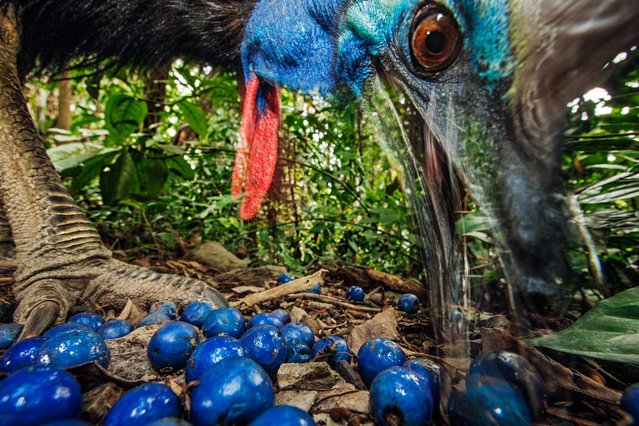
“Cassowaries are large, flightless birds related to emus and (more distantly) to ostriches, rheas, and kiwis”, writes Olivia Judson in the September issue of National Geographic magazine. (Photo by Christian Ziegler/National Geographic)

“Cassowaries are large, flightless birds related to emus and (more distantly) to ostriches, rheas, and kiwis”, writes Olivia Judson in the September issue of National Geographic magazine. How large? People-size: Adult males stand well over five foot five and top 110 pounds. Females are even taller, and can weigh more than 160 pounds. Dangerous when roused, they’re shy and peaceable when left alone. But even birds this big and tough are prey to habitat loss. The dense New Guinea and Australia rain forests where they live have dwindled. Today cassowaries might number 1,500 to 2,000. And because they help shape those same forests – by moving seeds from one place to another – “if they vanish”, Judson writes, “the structure of the forest would gradually change” too. (Photo by Christian Ziegler/National Geographic)
Details
06 Jan 2014 12:21:00
Youths play a traditional pillow fight game on a bamboo pole during festivities marking the 69th anniversary of Myanmar Independence Day on the outskirts of Yangon on January 4, 2017. Various traditional and local events were held on the holiday which marks the 69th anniversary of the country known before as Burma when British colonial rule ended on January 4, 1948. (Photo by Ye Aung Thu/AFP Photo)

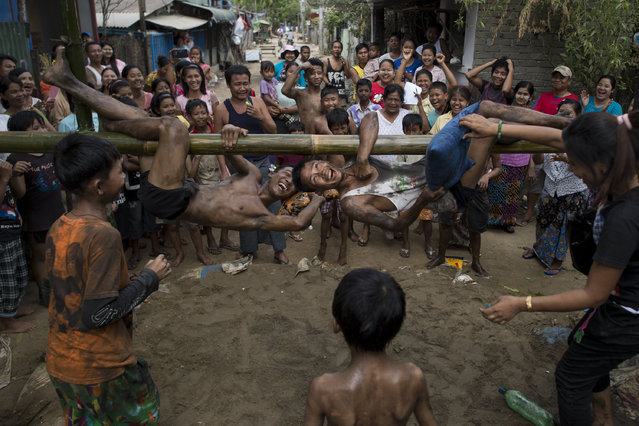
Youths play a traditional pillow fight game on a bamboo pole during festivities marking the 69th anniversary of Myanmar Independence Day on the outskirts of Yangon on January 4, 2017. Various traditional and local events were held on the holiday which marks the 69th anniversary of the country known before as Burma when British colonial rule ended on January 4, 1948. (Photo by Ye Aung Thu/AFP Photo)
Details
05 Jan 2017 13:23:00
“YagYang”. The Apatani are tribal people living in north east of India in the region of Arunachal Pradesh. Tattooing and stuffing of large nose plugs is the particularity of these women. YagYang 75 years old, her husband passed away few months ago and she feels very alone, during my visit I was very fond of this woman and I wanted to spend some more time with her, so I asked her which was her favorite dish. Photo location: India. (Photo and caption by Passarini Mattia/National Geographic Photo Contest)

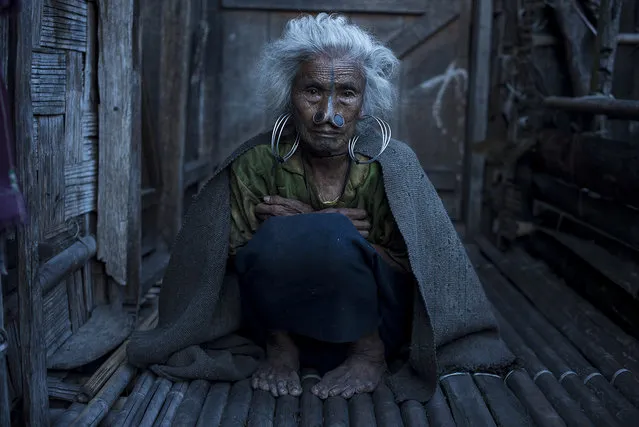
“YagYang”. The Apatani are tribal people living in north east of India in the region of Arunachal Pradesh. Tattooing and stuffing of large nose plugs is the particularity of these women. YagYang 75 years old, her husband passed away few months ago and she feels very alone, during my visit I was very fond of this woman and I wanted to spend some more time with her, so I asked her which was her favorite dish. The next day i returned with the fresh fish, as she mentioned, and when she saw me she was very happy and welcomed me with a big smile. Photo location: India. (Photo and caption by Passarini Mattia/National Geographic Photo Contest)
Details
05 Nov 2014 11:55:00
A member of the South African National Defense Force (SANDF) stands on a military vehicle during a joint South African Police Services (SAPS) and SANDF patrol on day 31 of the national lockdown as a result of the ongoing coronavirus COVID-19 pandemic in Johannesburg, South Africa, 26 April 2020. The patrol was in the high density areas of Hillbrow and Yoeville where civilians are still breaking the strict lockdown rules. Those that where breaking the rules where arrested. South Africa's Stage 5 lockdown is due to end 30 April 2020 when stage 4 will be implemented. (Photo by Kim Ludbrook/EPA/EFE)

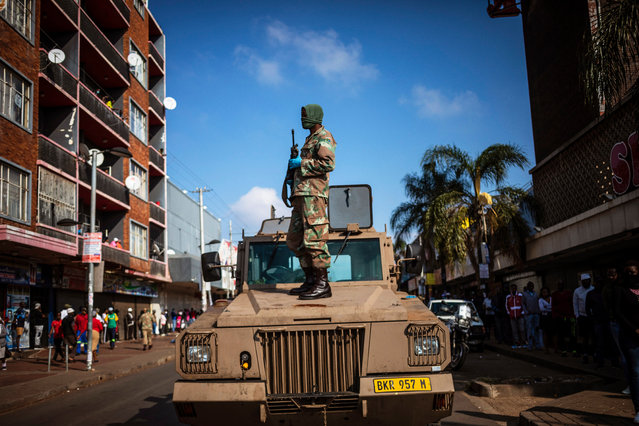
A member of the South African National Defense Force (SANDF) stands on a military vehicle during a joint South African Police Services (SAPS) and SANDF patrol on day 31 of the national lockdown as a result of the ongoing coronavirus COVID-19 pandemic in Johannesburg, South Africa, 26 April 2020. The patrol was in the high density areas of Hillbrow and Yoeville where civilians are still breaking the strict lockdown rules. Those that where breaking the rules where arrested. South Africa's Stage 5 lockdown is due to end 30 April 2020 when stage 4 will be implemented. (Photo by Kim Ludbrook/EPA/EFE)
Details
06 May 2020 00:01:00
The picture dated September 19. 2024 shows a female Kingfisher feeding on small fish near Lancaster, UK. Kingfishers need to eat regularly and eat their own bodyweight in food each day. They primarily eat fish, such as minnows, and when they spot a fish they dive headfirst into the water and seize it with their sharp bills. (Photo by Brendan McGee/Bav Media)

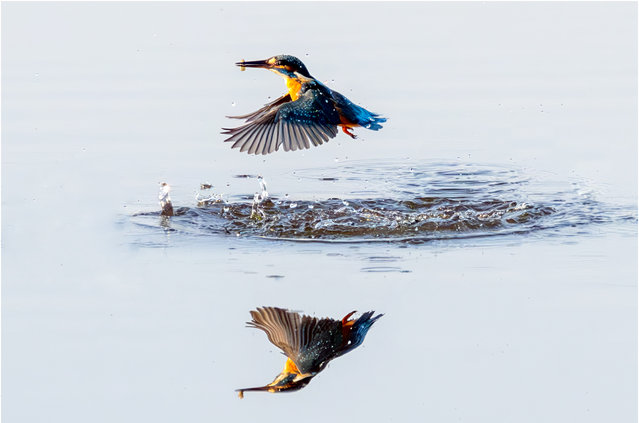
The picture dated September 19. 2024 shows a female Kingfisher feeding on small fish near Lancaster, UK. Kingfishers need to eat regularly and eat their own bodyweight in food each day. They primarily eat fish, such as minnows, and when they spot a fish they dive headfirst into the water and seize it with their sharp bills. (Photo by Brendan McGee/Bav Media)
Details
15 Nov 2024 03:16:00
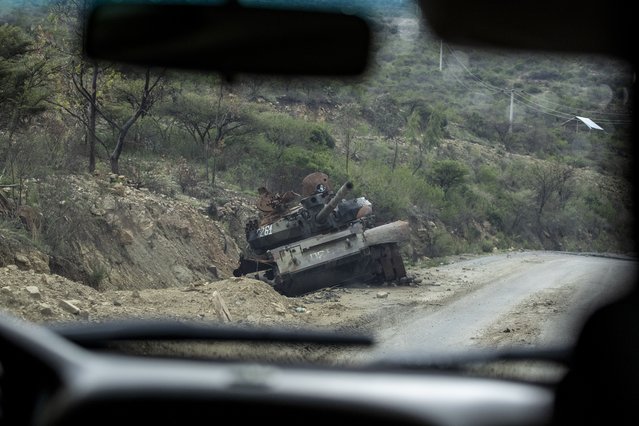
A destroyed tank sits by the side of a road leading to Abi Adi, in the Tigray region of northern Ethiopia, on Tuesday, May 11, 2021. The Tigray People’s Liberation Front was on top of a coalition that ruled Ethiopia for nearly three decades. That changed in 2018, when Prime Minister Abiy Ahmed rose to power as a reformist. Abiy alienated the TPLF with efforts to make peace with its archenemy, Eritrea, and rid the federal government of corruption. (Photo by Ben Curtis/AP Photo)

A destroyed tank sits by the side of a road leading to Abi Adi, in the Tigray region of northern Ethiopia, on Tuesday, May 11, 2021. The Tigray People’s Liberation Front was on top of a coalition that ruled Ethiopia for nearly three decades. That changed in 2018, when Prime Minister Abiy Ahmed rose to power as a reformist. Abiy alienated the TPLF with efforts to make peace with its archenemy, Eritrea, and rid the federal government of corruption. (Photo by Ben Curtis/AP Photo)
Details
09 Jun 2021 10:29:00
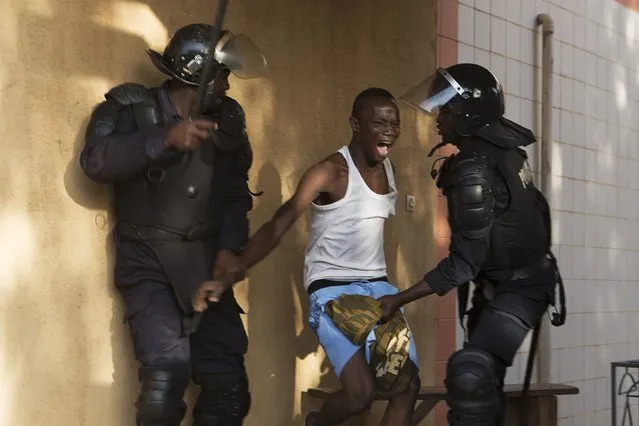
Riot police arrest an anti-government protester in Ouagadougou, capital of Burkina Faso, October 30, 2014. Thousands of protesters marched on Burkina Faso's presidential palace after burning the parliament building and ransacking state television offices on Thursday, forcing President Blaise Compaore to scrap a plan to extend his 27-year rule. (Photo by Joe Penney/Reuters)

Riot police arrest an anti-government protester in Ouagadougou, capital of Burkina Faso, October 30, 2014. Thousands of protesters marched on Burkina Faso's presidential palace after burning the parliament building and ransacking state television offices on Thursday, forcing President Blaise Compaore to scrap a plan to extend his 27-year rule. Emergency services said at least three protesters were shot dead and several others wounded by security forces when the crowd tried to storm the home of Compaore's brother. Security forces also fired live rounds and tear gas at protesters near the presidency in the Ouaga 2000 neighborhood. (Photo by Joe Penney/Reuters)
Details
02 Nov 2014 10:43:00
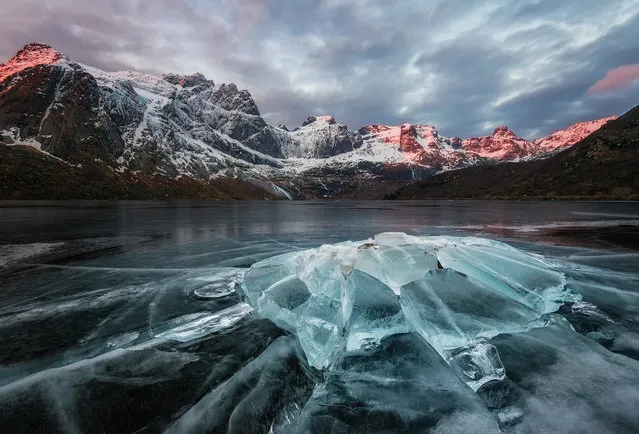
“Lofoten Glow”. I was desperately searching a good sunrise spot this particular morning. Normally Storvatnet Lake is completely covered in snow, so you can only imagine my surprise when I saw these crazy ice formations almost being shot out of the frozen lake. I put my crampons on and took a big risk walking out. Photo location: Storvatnet, Lofoten Islands in Northern Norway. (Photo and caption by Stian Klo/National Geographic Photo Contest)

“Lofoten Glow”. I was desperately searching a good sunrise spot this particular morning. Normally Storvatnet Lake is completely covered in snow, so you can only imagine my surprise when I saw these crazy ice formations almost being shot out of the frozen lake. I put my crampons on and took a big risk walking out. I could hear the ice cracking underneath my feet, and when you’re all alone in a fjord/canyon like this – the cracks are echoed and sound really frightening. Was it worth it? I sure think so! Photo location: Storvatnet, Lofoten Islands in Northern Norway. (Photo and caption by Stian Klo/National Geographic Photo Contest)
Details
08 Apr 2014 09:40:00