Loading...
Done
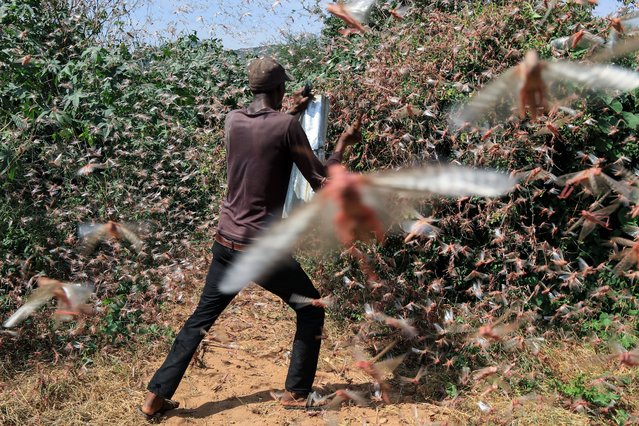
A man uses iron sheet to make noises, as a way of trying to disperse desert locusts that had invaded their farms during the second wave invasion in Kakongo village, in Nuu-Mwingi East, in Kitui, Kenya, 06 February 2021. The second wave invasion of the desert locusts in the country comes at a time where most famers are expecting to harvest their farm produce in the country. According to the United Nations Food and Agriculture Organization (FAO), on 04 February, warned numerous immature desert locust swarms persist in southern Ethiopia and Kenya. Some of the swarms are in community areas and therefore cannot be treated. In Kenya, immature swarms continue to spread westwards across northern and central counties where there are currently about 20 small swarms present, mostly about 50 hectares in size, it said. (Photo by Daniel Irungu/EPA/EFE)

A man uses iron sheet to make noises, as a way of trying to disperse desert locusts that had invaded their farms during the second wave invasion in Kakongo village, in Nuu-Mwingi East, in Kitui, Kenya, 06 February 2021. The second wave invasion of the desert locusts in the country comes at a time where most famers are expecting to harvest their farm produce in the country. (Photo by Daniel Irungu/EPA/EFE)
Details
25 Feb 2021 08:17:00
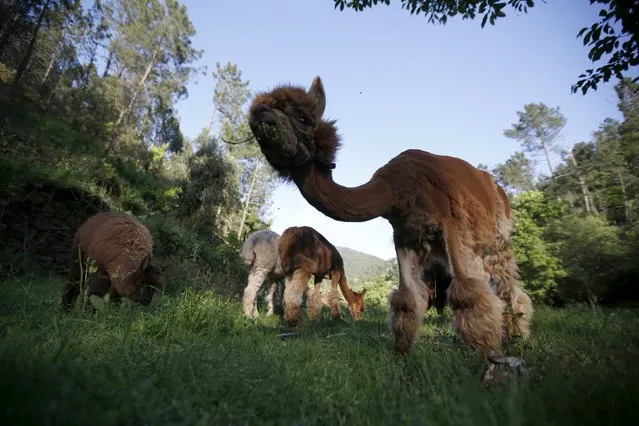
Alpacas of Lisa Vella-Gatt (not pictured) graze at her farm near Benfeita, Portugal May 11, 2015. (Photo by Rafael Marchante/Reuters)

Alpacas of Lisa Vella-Gatt (not pictured) graze at her farm near Benfeita, Portugal May 11, 2015. Lisa came to Portugal from England in 2009 to set up Monte Frio Alpacas, a project where she breeds alpacas, which produce wool. Lisa's 14 alpacas produce about 50 kilos (110 pounds) of wool annually. (Photo by Rafael Marchante/Reuters)
Details
20 May 2015 08:33:00
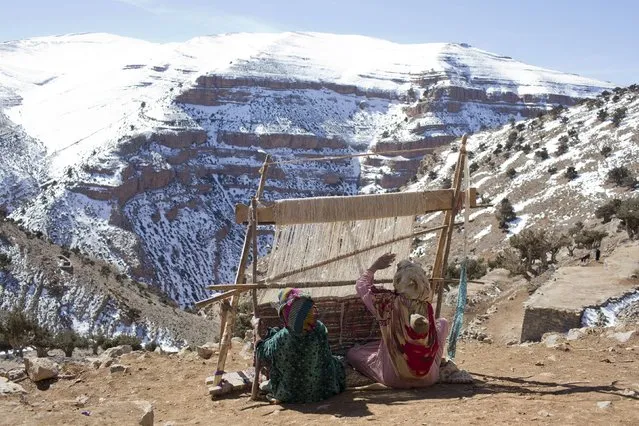
Berber women weave traditional carpets in the village of Ait Sghir in the High Atlas region of Morocco February 15, 2015. The snowy foothills of the High Atlas mountains in Morocco are home to several Berber villages where the inhabitants make their living by farming, baking bread in traditional ovens, herding cattle, and the making and selling of honey, olive oil and pottery. Extreme weather fluctuations and erosion that causes flooding and landslides have led to a drop in agricultural productivity, the United Nations said. (Photo by Youssef Boudlal/Reuters)

Berber women weave traditional carpets in the village of Ait Sghir in the High Atlas region of Morocco February 15, 2015. The snowy foothills of the High Atlas mountains in Morocco are home to several Berber villages where the inhabitants make their living by farming, baking bread in traditional ovens, herding cattle, and the making and selling of honey, olive oil and pottery. Extreme weather fluctuations and erosion that causes flooding and landslides have led to a drop in agricultural productivity, the United Nations said. (Photo by Youssef Boudlal/Reuters)
Details
26 Feb 2015 06:07:00


An young exhibitor chases his wayward pig during the Great Yorkshire Show on July 12, 2011 in Harrogate, England. The annual Great Yorkshire Show has attracted a record number of 12,700 livestock entries over the three day event. The show now in its 153rd year is Britain's leading agricultural gathering, where over 125,000 visitors come to celebrate the farming community and their way of life. (Photo by Christopher Furlong/Getty Images)
Details
13 Jul 2011 09:52:00
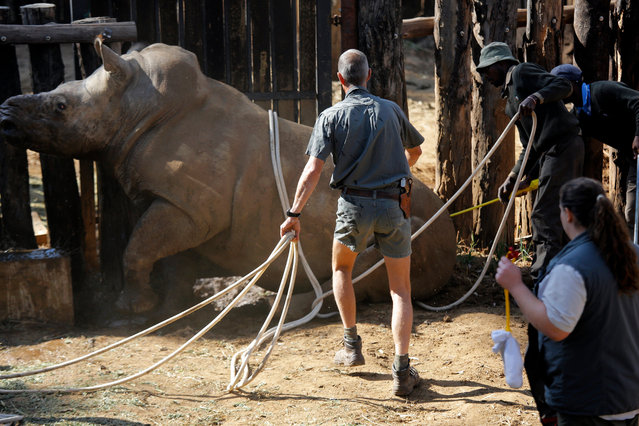
Conservation staff members move the eight-years-old White Rhino Seha into a truck in Johannesburg, South Africa, 28 July 2017. (Photo by Kim Ludbrook/EPA/EFE)

Conservation staff members move the eight-years-old White Rhino Seha into a truck in Johannesburg, South Africa, 28 July 2017. Seha is the only survivor after five rhinos where poached on the same game farm. South Africa has the world's largest population of Rhinos in the world. (Photo by Kim Ludbrook/EPA/EFE)
Details
06 Oct 2017 06:36:00
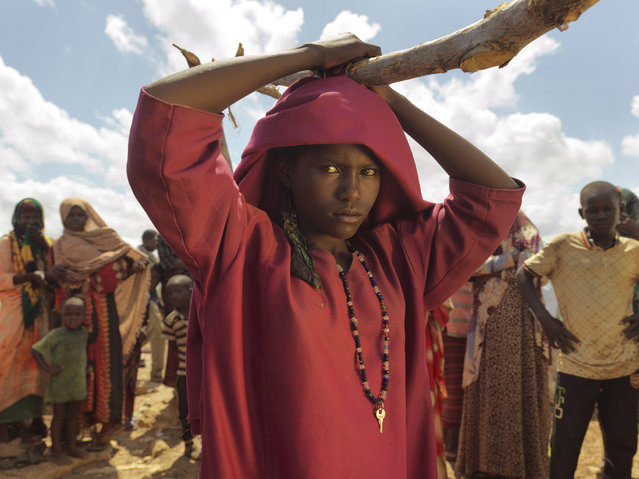
Fadumo Nunow Abdillow, 15, lives at Muuri camp. The UN has appealed for $1.5bn to address the crisis. Just 40% of the money ($611.m) has been received so far. (Photo by Peter Caton/Mercy Corps)

The worst drought in 40 years has a cruel grip on Somalia. A struggling young government and militant violence have compounded to bring crisis to 6.7 million lives. The town of Baidoa is facing some of the harshest conditions. Surrounded by territory controlled by al-Shabaab militants and amid ongoing attacks, 160,000 people have had to leave their farms and are surviving in camps where hunger, thirst and cholera await them. (Photo by Peter Caton/Mercy Corps)
Details
12 Aug 2017 05:47:00
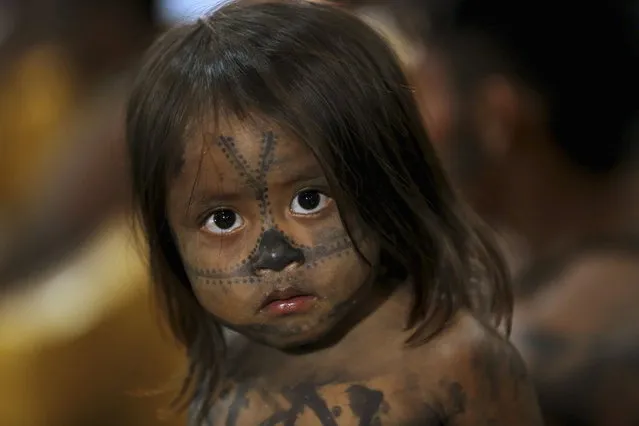
A Munduruku Indian child is pictured at the Planalto Palace, where a meeting with Minister of the General Secretariat of the Presidency of Brazil Gilberto Carvalho was being held with other Munduruku Indians, in Brasilia, June 4, 2013. (Photo by Ueslei Marcelino/Reuters)

A Munduruku Indian child is pictured at the Planalto Palace, where a meeting with Minister of the General Secretariat of the Presidency of Brazil Gilberto Carvalho was being held with other Munduruku Indians, in Brasilia, June 4, 2013. President Dilma Rousseff's government sought on Tuesday to defuse mounting conflicts with indigenous groups over its decision to stop setting aside farm land for Indians and plans to build more hydroelectric dams in the Amazon. The government flew 144 Munduruku Indians to Brasilia for talks to end a week-long occupation of the controversial Belo Monte dam on the Xingu river, a huge project aimed at feeding Brazil's fast-growing demand for electricity. (Photo by Ueslei Marcelino/Reuters)
Details
06 Jun 2013 09:25:00
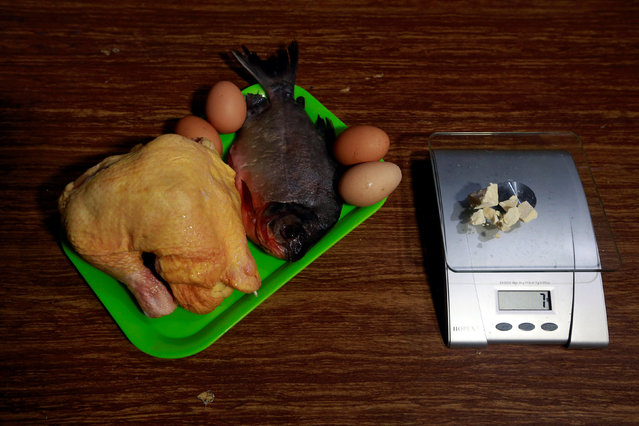
Chicken, fish and eggs lie next to coca paste worth $14,000 Colombian pesos at a local store in Guyabero Region, Guaviare, Colombia, May 24, 2016. (Photo by John Vizcaino/Reuters)

Chicken, fish and eggs lie next to coca paste worth $14,000 Colombian pesos at a local store in Guyabero Region, Guaviare, Colombia, May 24, 2016. As the government nears a historic peace deal with the rebels of the Revolutionary Armed Forces of Colombia (FARC), the nation's authorities are struggling to tame an increase in farming of coca, the raw material used to make cocaine. In the Guyabero Region, where many people work on coca plantations, locals barter coca paste to buy groceries at the local shop. (Photo by John Vizcaino/Reuters)
Details
03 Jun 2016 12:46:00