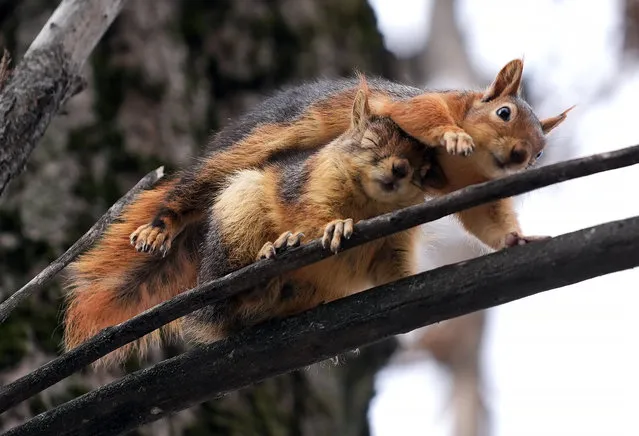
Squirrels are seen on a tree branch at a park as temperatures rise with the arrival of spring season in Ankara, Turkiye on March 27, 2024. (Photo by Evrim Aydin/Anadolu via Getty Images)
American singer-songwriter and businesswoman Beyoncé, 43, looks like she means business as she promotes her whisky brand in the first decade of October 2024. (Photo by Instagram)
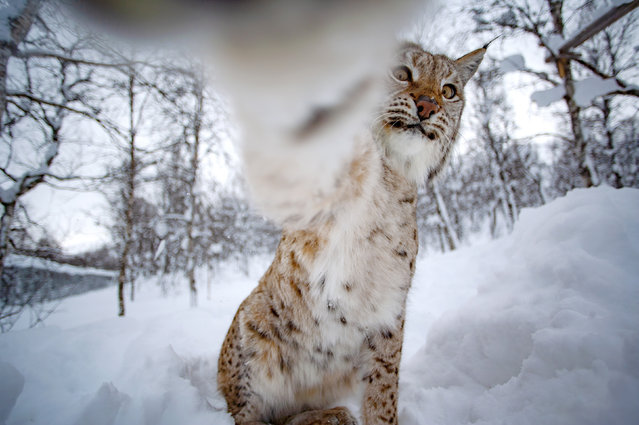
A lynx in a wintry forest investigates a remote camera in the last decade of January 2025. Four lynx were recently illegally released into the Cairngorms, in the Scottish Highlands, and were rescued by the Royal Zoological Society of Scotland, although one subsequently died. (Photo by Brian Matthews/Solent News)
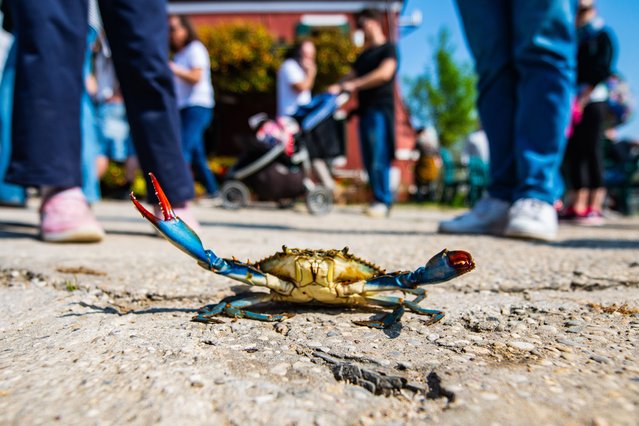
A blue crab, a highly invasive alien species, is seen at Lio Piccolo during the reforestation day on April 05, 2025 in Venice, Italy. The island of Lio Piccolo in the northern lagoon of Venice is being replanted with 16,000 new trees that will protect the salt marsh ecosystem that is fundamental to the natural health of Venice and the lagoon by WOWnature project, an Etifor initiative. (Photo by Simone Padovani/Getty Images)
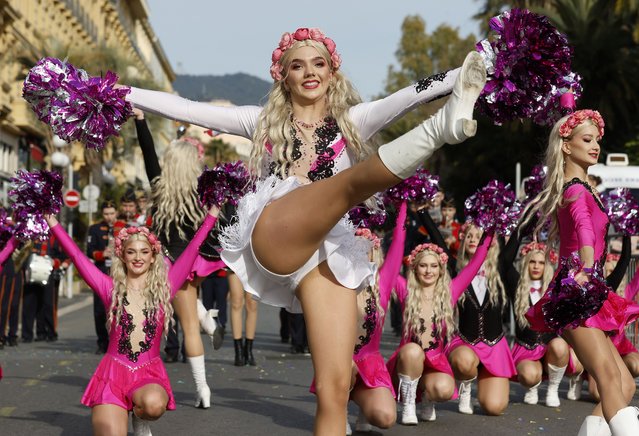
Participants wearing colorful costumes take part in the Flowers Parade of the 151th annual Carnival of Nice, in Nice, France, 20 March 2024. The annual Carnival of Nice run from 17 February to 03 March 2024, and the main theme will be “King of Pop Culture”. (Photo by Sebastien Nogier/EPA)
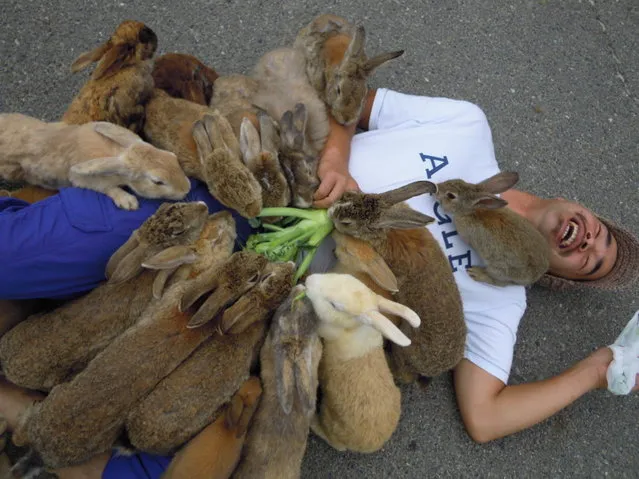
Only after World War II did the secret spill: Ōkunoshima, located in the Inland Sea of Japan between Hiroshima and Shikoku, was the top-secret site for manufacturing chemical warfare. When the factories were closed down, a number of exotic wild rabbits were seen freely roaming the island. They were assumed to have been the test subjects for the chemical weapons, which the military failed to eradicate when the factory was demolished.
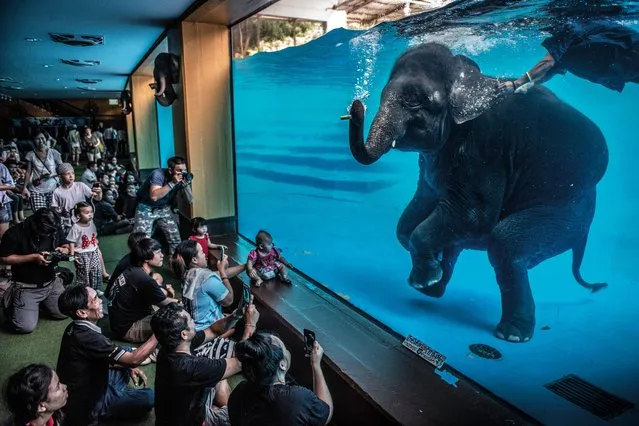
Winner, photojournalism. Elephant in the room, by Adam Oswell, Australia Zoo. Visitors watch a young elephant performing underwater. Oswell was disturbed by this scene, and organisations concerned with the welfare of captive elephants say performances like this encourage unnatural behaviour. In Thailand, there are now more elephants in captivity than in the wild. With the Covid pandemic causing tourism to collapse, elephant sanctuaries are becoming overwhelmed with animals that can no longer be looked after by their owners. (Photo by Adam Oswell/Wildlife Photographer of the Year 2021)