Loading...
Done
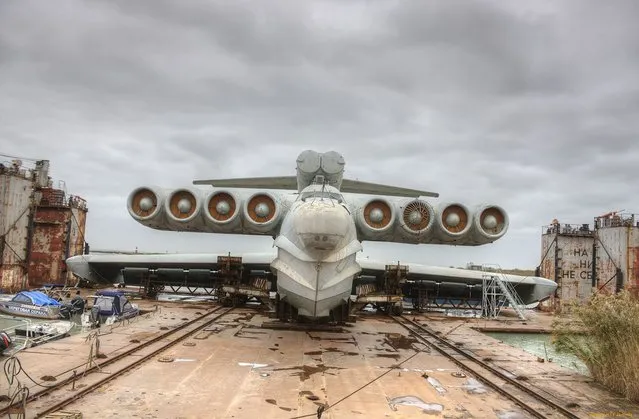
The Lun-class Ekranoplane was used by the Soviet Navy starting in 1987, and wasn't retired until the late 1990s, after the Soviet Union's fall. (Igor113)

“The Lun-class ekranoplan (NATO reporting name Duck) was a ground effect vehicle (GEV) designed by Rostislav Evgenievich Alexeev and used by the Soviet and Russian navies from 1987 until sometime in the late 1990s. It “flew” using the lift generated by the ground effect of its large wings when close to the surface of the water – about four metres or less. Although they might look similar and/or have related technical characteristics, ekranoplans like the Lun are not aircraft, seaplanes, hovercraft, or hydrofoils – ground effect is a separate technology altogether. The International Maritime Organization classifies these vehicles as maritime ships. The name Lun comes from the Russian for harrier”. – Wikipedia (Photo by Igor113)
Details
08 Aug 2014 10:51:00
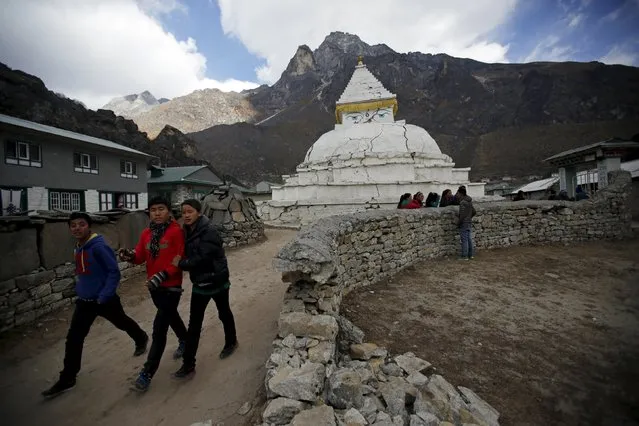
Children walk past the partially collapsed boundary wall of a school and a Buddhist shrine that were damaged during the earthquake earlier this year at Khumjung, a typical Sherpa village in Solukhumbu district also known as the Everest region, in this picture taken November 30, 2015. (Photo by Navesh Chitrakar/Reuters)

Children walk past the partially collapsed boundary wall of a school and a Buddhist shrine that were damaged during the earthquake earlier this year at Khumjung, a typical Sherpa village in Solukhumbu district also known as the Everest region, in this picture taken November 30, 2015. (Photo by Navesh Chitrakar/Reuters)
Details
23 Dec 2015 08:05:00
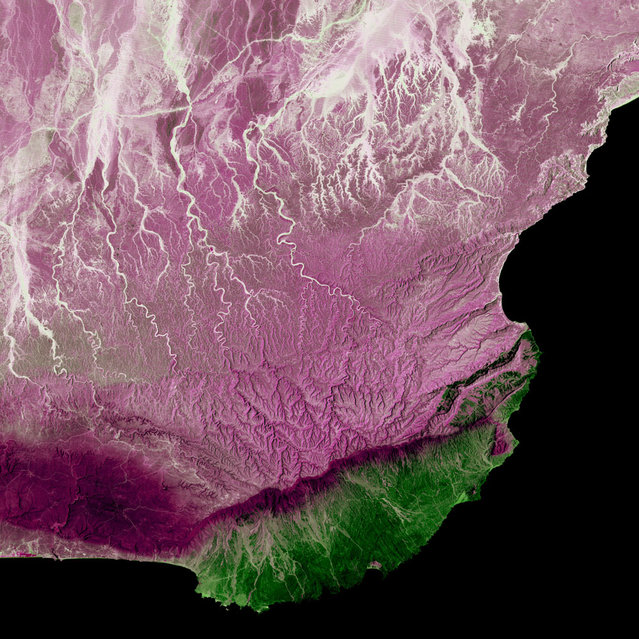
Dhofar Region, Oman. Much of Oman is desert, but the Arabian Sea coast in the Dhofar region represents a startling difference in climate. This coastal region catches the monsoon rains, or khareef, during the summer months. Drenching rains fall primarily on the mountainous ridge that separates the lush, fertile areas along the coast from the arid interior, recharging streams, waterfalls and springs that provide plentiful water supplies in the fertile lowlands for the remainder of the year. Image taken by Landsat 5 on April 2, 2005. (Photo by USGS/NASA)

Dhofar Region, Oman. Much of Oman is desert, but the Arabian Sea coast in the Dhofar region represents a startling difference in climate. This coastal region catches the monsoon rains, or khareef, during the summer months. Drenching rains fall primarily on the mountainous ridge that separates the lush, fertile areas along the coast from the arid interior, recharging streams, waterfalls and springs that provide plentiful water supplies in the fertile lowlands for the remainder of the year. Image taken by Landsat 5 on April 2, 2005. (Photo by USGS/NASA)
Details
25 Dec 2012 11:13:00
A tribesman loyal to the Houthi movement carries his rifle as he leaves a gathering held to show support for the group, in Yemen's capital Sanaa December 15, 2015. (Photo by Khaled Abdullah/Reuters)

A tribesman loyal to the Houthi movement carries his rifle as he leaves a gathering held to show support for the group, in Yemen's capital Sanaa December 15, 2015. (Photo by Khaled Abdullah/Reuters)
Details
17 Dec 2015 08:00:00
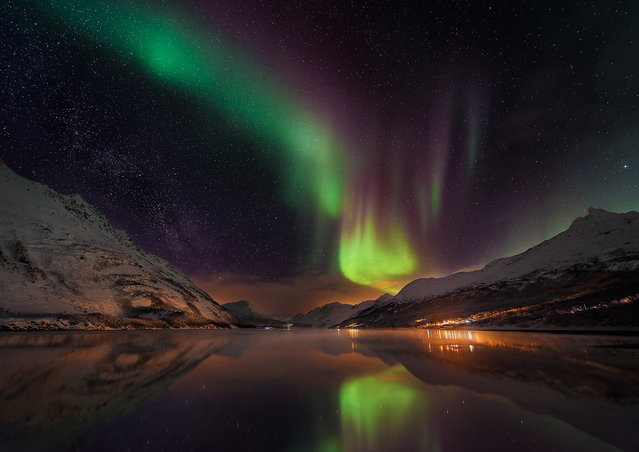
Some of the best entries so far in the 2016 Insight Astronomy Photographer of the Year competition. There are two weeks left to enter, and the winners will be announced in September. Here: Aurora over Laksvatn Fjord, Laksvatn, Norway. The aurora borealis dances in the skies over the town of Laksvatn, with the Milky Way to the left. The image is a single shot with no compositing, only post-processing to bring out the aurora, and some colour corrections. (Photo by Matt Walford/National Maritime Museum)

Some of the best entries so far in the 2016 Insight Astronomy Photographer of the Year competition. There are two weeks left to enter, and the winners will be announced in September. Here: Aurora over Laksvatn Fjord, Laksvatn, Norway. The aurora borealis dances in the skies over the town of Laksvatn, with the Milky Way to the left. The image is a single shot with no compositing, only post-processing to bring out the aurora, and some colour corrections. The photographer Matt Walford said: “I love the way the northern lights look like they are just wistfully dancing over the fjord, framed by the mountains on either side”. (Photo by Matt Walford/National Maritime Museum)
Details
01 Jul 2016 12:13:00
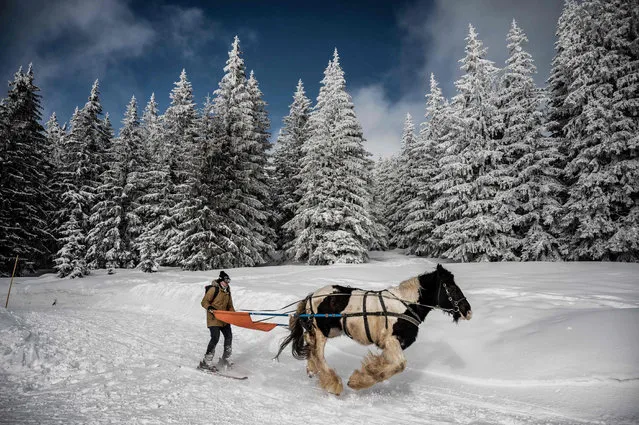
A person practices ski-joering at the Avoriaz resort in the French Alps on February 11, 2021. (Photo by Jeff Pachoud/AFP Photo)

A person practices ski-joering at the Avoriaz resort in the French Alps on February 11, 2021. (Photo by Jeff Pachoud/AFP Photo)
Details
08 Apr 2021 10:41:00
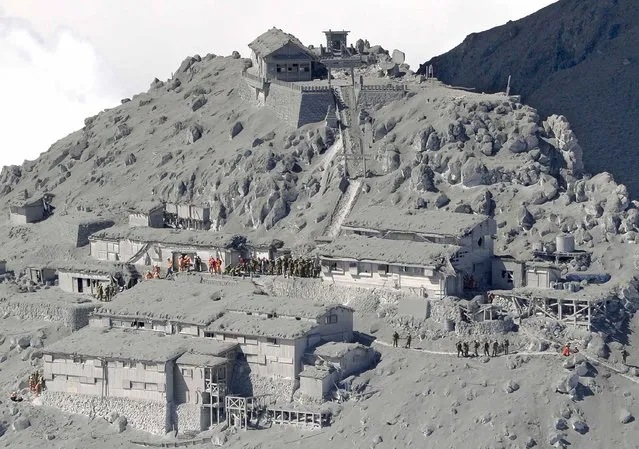
Japan Self-Defense Force (JSDF) soldiers and firefighters make rescue works among mountain lodges, covered with volcanic ash near the peak of Mt. Ontake, which straddles Nagano and Gifu prefectures in this September 28, 2014 photo taken and released by Kyodo. (Photo by Reuters/Kyodo News)

Japan Self-Defense Force (JSDF) soldiers and firefighters make rescue works among mountain lodges, covered with volcanic ash near the peak of Mt. Ontake, which straddles Nagano and Gifu prefectures in this September 28, 2014 photo taken and released by Kyodo. More than 30 people were feared dead on Sunday near the peak of the Japanese volcano that erupted a day earlier, sending a huge cloud of ash and rock tumbling down its slopes, while packed with hikers. (Photo by Reuters/Kyodo News)
Details
28 Sep 2014 11:08:00
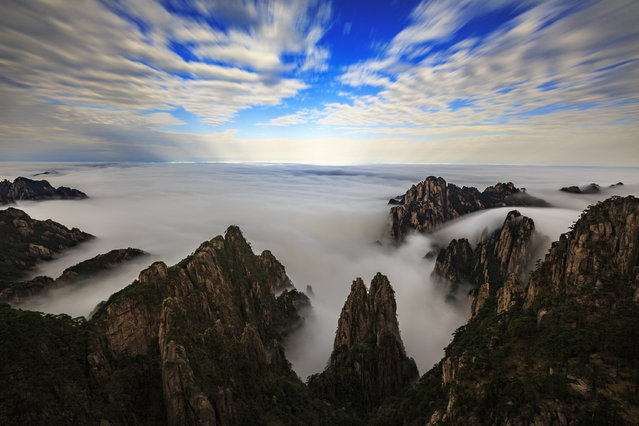
Sea of clouds is seen after a rainfall at the Huangshan Mountain scenic spot on April 10, 2019 in Huangshan, Anhui Province of China. (Photo by Fang Lihua/Qianlong.com/VCG via Getty Images)

Sea of clouds is seen after a rainfall at the Huangshan Mountain scenic spot on April 10, 2019 in Huangshan, Anhui Province of China. (Photo by Fang Lihua/Qianlong.com/VCG via Getty Images)
Details
25 Oct 2019 00:03:00