South African model Candice Swanepoel walks the runway at the 2018 Victoria's Secret Fashion Show on November 8, 2018 at Pier 94 in New York City. (Photo by Matt Baron/Rex Features/Shutterstock)
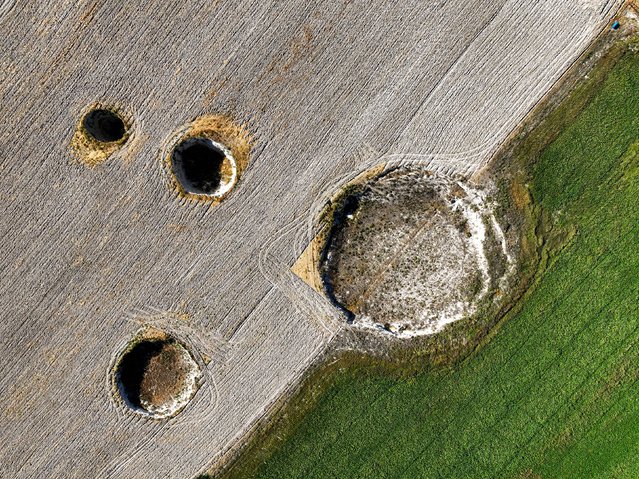
An aerial view of sinkholes (obruk), caused by some form of collapse of the surface layer, in Konya, Turkiye on September 17, 2024. Many sinkholes are observed in the fields of Eseli Plateau located within the borders of Resadiye Neighborhood in the north-west of Karapinar district, where sinkhole formation has increased rapidly in recent years. (Photo by Serhat Cetinkaya/Anadolu via Getty Images)
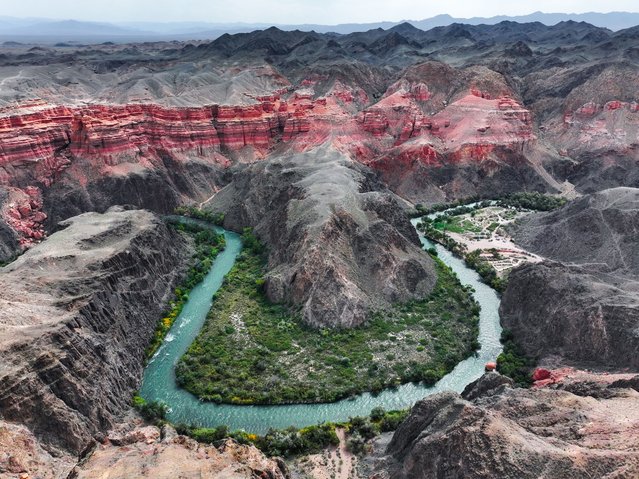
An aerial view of Charyn Canyon located about 200 kilometers east of Almaty city in Kazakhstan on September 22, 2024. The canyon, visited by more than 50,000 people each year, was placed under protection in 1964 and became part of the Charyn National Park, established on February 23, 2004. (Photo by Muhammed Enes Yildirim/Anadolu via Getty Images)
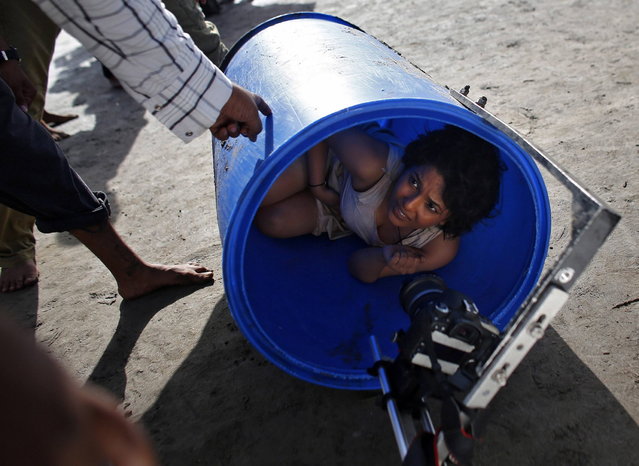
Bollywood actress Chitrashi Rawat lies in a plastic drum as she is briefed by a crew member during the shoot for the film “Black Home” at a beach on the outskirts of Mumbai April 26, 2013. (Photo by Danish Siddiqui/Reuters)
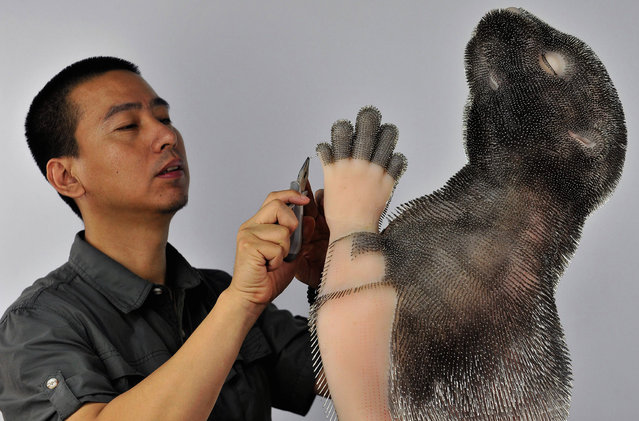
Professor Xie Yong works on an art installation of a beaver, which is made out of plastic and around 300,000 needles, in Shenyang, Liaoning province, July 23, 2013. The needles, according to Xie, represent the pain felt by animals when their fur is taken off to produce clothing. (Photo by Reuters/Stringer)
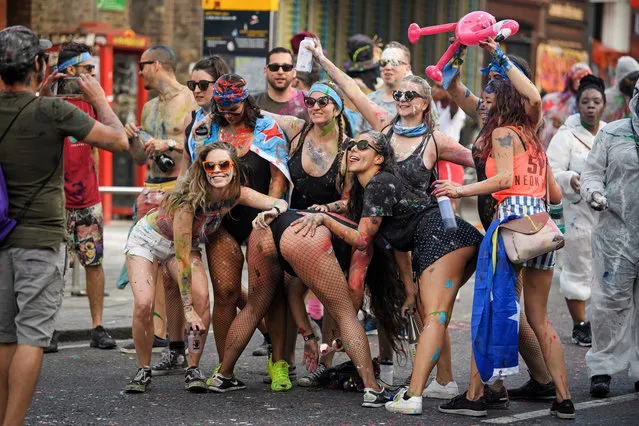
Boozed up revellers dressed up in fluorescent colours during the opening day of the 2019 Notting Hill Carnival on August 25, 2019 in London, England. Up to a million people are expected to pack the streets of Notting Hill and surrounding areas over the course of the two day event. The annual celebration of Afro-Caribbean culture takes place each August bank holiday weekend. (Photo by London News Pictures)
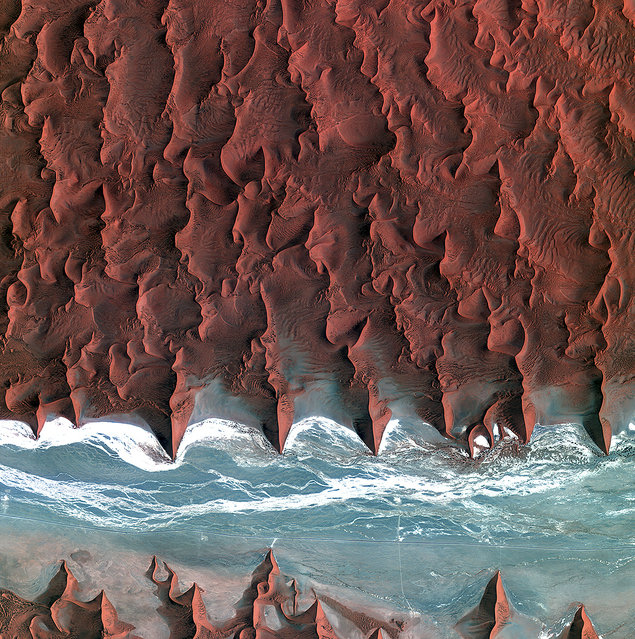
These are the dunes of the Namib Desert, taken by Korea's Kompstat-2 satellite. The blue and white area is the dried riverbed of the Tsauchab river. (Photo by The European Space Agency)
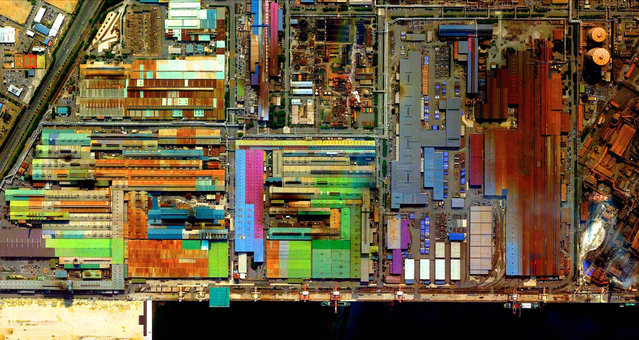
This series of pictures shot by satellite, show the man-made world as astronauts see it. Artist Benjamin Grant uses Google Earth to find the most compelling satellite images of human civilization. The stunning pictures of sprawling metropolises and vast reservoirs are sometimes unidentifiable until zoomed in. In order to find an extraordinary picture in the practically endless supply of satellite data, Benjamin focuses on the themes of current events or environmental issues. Here: Industrial Sector, Tokai, Japan. (Photo by Benjamin Grant/Digital Globe/Caters News)