Loading...
Done
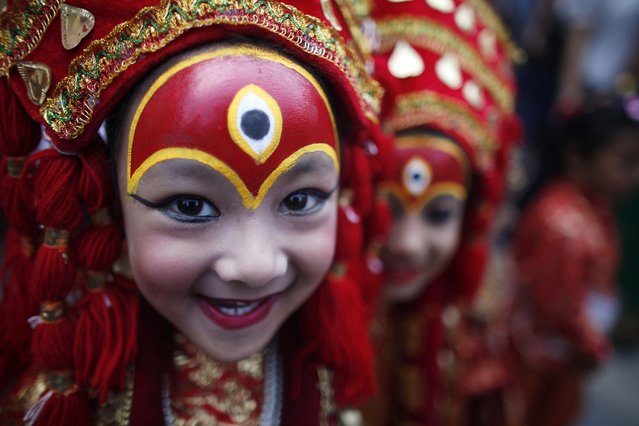
A young Nepalese girl dressed as a Kumari or living Goddess, smiles for camera as she waits for Kumari puja at Hanuman Dhoka, Basantapur Durbar Square in Katmandu, Nepal, Tuesday, Sept 17, 2013. More than hundred girls under the age of nine gathered for Kumari puja, a tradition of worshiping young pre-pubescent girls as manifestations of the divine female energy. The ritual holds a strong religious significance in Newar community. It is a community affair held primarily to save small girls from diseases and bad luck in the years to come. (AP Photo/Niranjan Shrestha)

The festival marks the end of the monsoon season and beginning of autumn. More than hundred girls under the age of nine gathered for the tradition of worshiping young pre-pubescent girls as manifestations of the divine female energy. The ritual holds a strong religious significance in Newar community. It is a community affair held primarily to save small girls from diseases and bad luck in the years to come. Photo: A young Nepalese girl dressed as a Kumari or living Goddess, smiles for camera as she waits for Kumari puja at Hanuman Dhoka, Basantapur Durbar Square in Katmandu, Nepal, Tuesday, September 17, 2013. (Photo by Niranjan Shrestha/AP Photo)
Details
18 Sep 2013 09:33:00
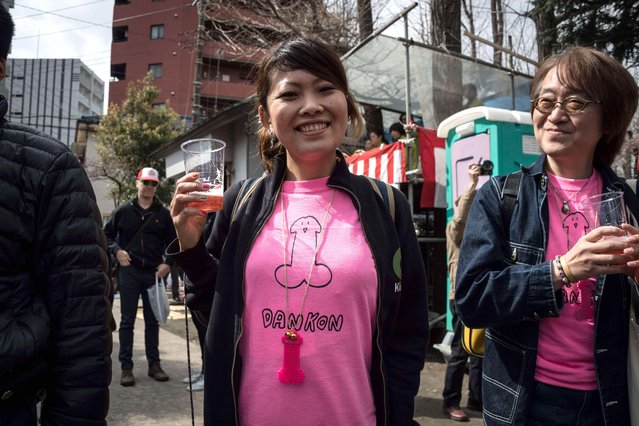
Festival goer with phallus logo t-shirt during the Kanamara Matsuri Steel Phallus Festival at Kawasaki, Japan on April 2, 2017. The Kanamara Matsuri or Festival of the Steel Phallus is held on the first Sunday of April at the Kanayama shrine. The shrine celebrates a legend of a steel pen*s and was frequented by prostitutes who wished to pray for protection from sexually transmitted diseases. Visitors now wish for easy delivery, marriage and matrimonial harmony. Because of the large steel phallus the unusual festival has become a tourist attraction attracting many overseas visitors and is used to raise money for HIV charities. Phallus shaped candy, carved vegetables, decorations, and a big parade are all part of the festival. (Photo by DELETREE/SIPA Press/Rex Features/Shutterstock)

Festival goer with phallus logo t-shirt during the Kanamara Matsuri Steel Phallus Festival at Kawasaki, Japan on April 2, 2017. The Kanamara Matsuri or Festival of the Steel Phallus is held on the first Sunday of April at the Kanayama shrine. The shrine celebrates a legend of a steel pen*s and was frequented by prostitutes who wished to pray for protection from sexually transmitted diseases. Visitors now wish for easy delivery, marriage and matrimonial harmony. Because of the large steel phallus the unusual festival has become a tourist attraction attracting many overseas visitors and is used to raise money for HIV charities. Phallus shaped candy, carved vegetables, decorations, and a big parade are all part of the festival. (Photo by DELETREE/SIPA Press/Rex Features/Shutterstock)
Details
04 Apr 2017 09:48:00
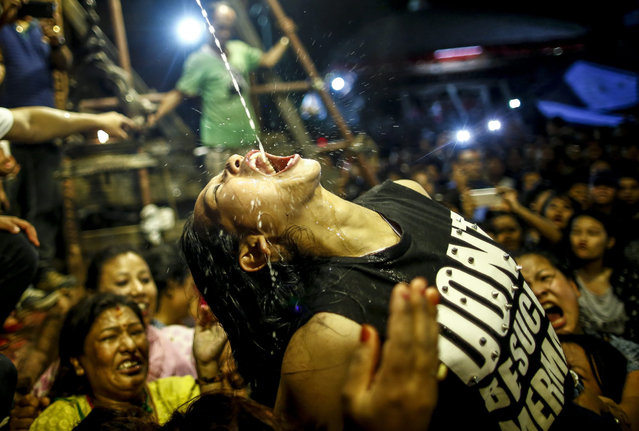
Nepalese women and young girls struggle to drink homemade alcohol poured through a pipe sticking out of the mouth of Swet Bhairab, a god of Power, during the Indra Jatra festival at Basantapur Durbar Square in Kathmandu, Nepal, 17 September 2016. Hundreds of women and young girls gathered to drink alcohol as a blessing from idol of Swet Bhairab which they believes will keep them free from all diseases. The Indra Jatra festival is celebrated to honor Indra, the king of gods and god of rains. The festival also marks the end of the monsoon. (Photo by Narendra Shrestha/EPA)

Nepalese women and young girls struggle to drink homemade alcohol poured through a pipe sticking out of the mouth of Swet Bhairab, a god of Power, during the Indra Jatra festival at Basantapur Durbar Square in Kathmandu, Nepal, 17 September 2016. Hundreds of women and young girls gathered to drink alcohol as a blessing from idol of Swet Bhairab which they believes will keep them free from all diseases. The Indra Jatra festival is celebrated to honor Indra, the king of gods and god of rains. The festival also marks the end of the monsoon. (Photo by Narendra Shrestha/EPA)
Details
18 Sep 2016 08:31:00
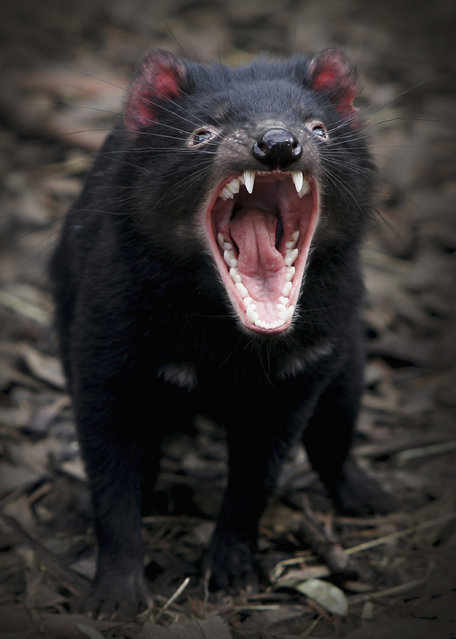
A Tasmanian Devil bears it's teeth at a quarantine facility August 31, 2005 in Hobart, Australia. The Devil, a native marsupial unique to Tasmania, is under threat from Devil Facial Tumor Disease (DFTD) which is decimating numbers throughout Tasmania. (Photo by Ian Waldie/Getty Images)

“The Tasmanian devil (Sarcophilus harrisii) is a carnivorous marsupial of the family Dasyuridae now found in the wild only in the Australian island state of Tasmania. The size of a small dog, it became the largest carnivorous marsupial in the world following the extinction of the thylacine in 1936. It is characterised by its stocky and muscular build, black fur, pungent odour, extremely loud and disturbing screech, keen sense of smell, and ferocity when feeding”. – Wikipedia. Photo: A Tasmanian Devil bears it's teeth at a quarantine facility August 31, 2005 in Hobart, Australia. (Photo by Ian Waldie/Getty Images)
Details
27 Jan 2014 09:45:00
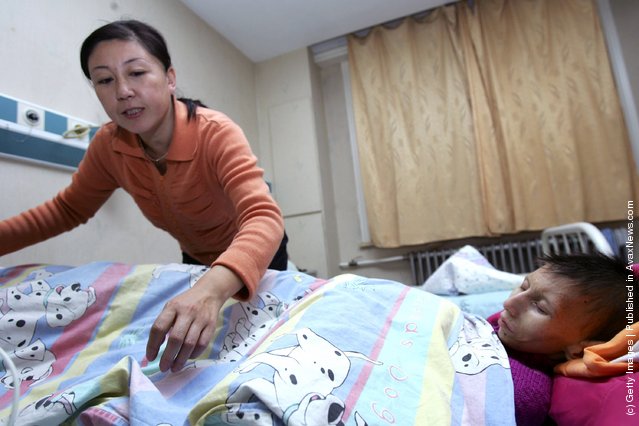
12-year-old Chinese girl Sun Yangyang suffering from Cockayne syndrome

“Cockayne syndrome (also called Weber-Cockayne syndrome, or Neill-Dingwall Syndrome) is a rare autosomal recessive congenital disorder characterized by growth failure, impaired development of the nervous system, abnormal sensitivity to sunlight (photosensitivity), and premature aging. Hearing loss and eye abnormalities (pigmentary retinopathy) are other common features, but problems with any or all of the internal organs are possible. It is associated with a group of disorders called leukodystrophies. The underlying disorder is a defect in a DNA repair mechanism. It is named after English physician Edward Alfred Cockayne (1880–1956)”. – Wikipedia

Photo: Mother of 12-year-old Chinese girl Sun Yangyang suffering from Cockayne syndrome, tends her at the First Affiliated Hospital of Jilin University on November 11, 2006 in Changchun of Jilin Province, China. The disease results in the senile appearance of Yangyang and also causes eyesight, hearing weakness and other problems. Doctors failed to cure the girl... (Photo by China Photos/Getty Images)
Details
08 Aug 2011 11:17:00
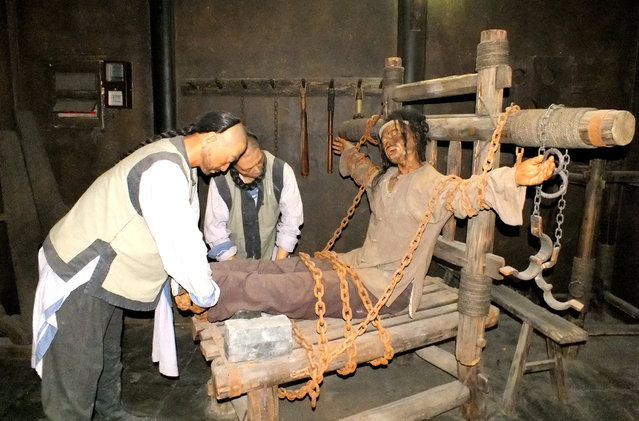
Wax figures with torture instrument named “torture-rack” are seen on October 25, 2014 in Huai'an, Jiangsu province of China. The exhibition, which opened last year at an educational center in the eastern city of Huai'an, includes reenactments of prisoners being hung over a fire, flayed and being tortured on what is known as a “Tiger Bench” – pictured above – a Qing dynasty (1644-1912) device that contorted victims' legs and arms in high pressure positions that could break bones or tear apart joints. (Photo by ChinaFotoPress)

Organizers of an exhibition of ancient instruments of torture in Huai'an, Jiangsu province, have suggested that children, heart disease patients and people with high blood pressure stay away because of the vivid depictions of shocking cruelty. The exhibition has more than 200 instruments of torture on display in the 50,000-square-meter exhibition halls of a restored ancient building. Wax figures, along with sound and light techniques, are incorporated for scary effect. The local government said the exhibition is for tourists and historians to research ancient torture practices. (Photo by ChinaFotoPress)
Details
29 Oct 2014 12:22:00
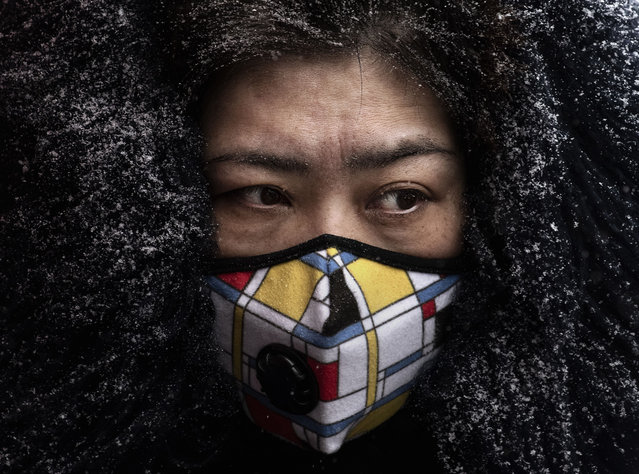
A Chinese woman wears a protective mask as she shops in a market on February 6, 2020 in Beijing, China. The number of cases of a deadly new coronavirus rose to more than 28000 in mainland China Thursday, days after the World Health Organization (WHO) declared the outbreak a global public health emergency. China continued to lock down the city of Wuhan in an effort to contain the spread of the pneumonia-like disease which medicals experts have confirmed can be passed from human to human. In an unprecedented move, Chinese authorities have put travel restrictions on the city which is the epicenter of the virus and municipalities in other parts of the country affecting tens of millions of people. The number of those who have died from the virus in China climbed to over 564 on Thursday, mostly in Hubei province, and cases have been reported in other countries including the United States, Canada, Australia, Japan, South Korea, India, the United Kingdom, Germany, France and several others. The World Health Organization has warned all governments to be on alert and screening has been stepped up at airports around the world. Some countries, including the United States, have put restrictions on Chinese travelers entering and advised their citizens against travel to China. (Photo by Kevin Frayer/Getty Images)

A Chinese woman wears a protective mask as she shops in a market on February 6, 2020 in Beijing, China. The number of cases of a deadly new coronavirus rose to more than 28000 in mainland China Thursday, days after the World Health Organization (WHO) declared the outbreak a global public health emergency. (Photo by Kevin Frayer/Getty Images)
Details
09 Feb 2020 00:07:00
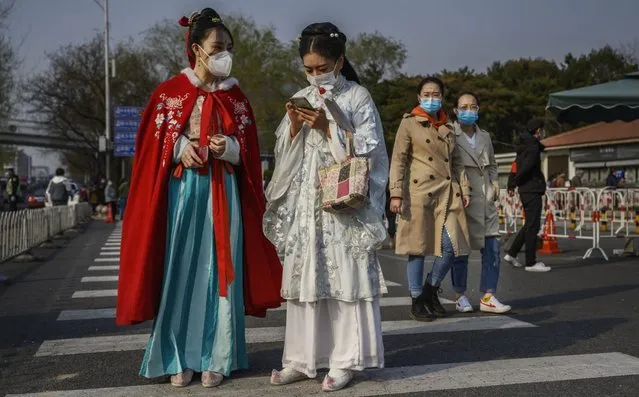
Chinese women wear protective masks as they are dressed in traditional clothing from the Qing Dynasty era outside a park on March 29, 2020 in Beijing, China. A limited section of the iconic tourist site was re-opened to the public this week allowing a smaller number of visitors to reserve tickets online in advance and to enter after passing health screening. With the pandemic hitting hard across the world, China recorded its first day with no new domestic cases of the coronavirus last week, since the government imposed sweeping measures to keep the disease from spreading. For two months, millions of people across China have been restricted in how they move from their homes, while other cities have been locked down in ways that appeared severe at the time but are now being replicated in other countries trying to contain the virus. Officials believe the worst appears to be over in China, though there are concerns of another wave of infections as the government attempts to reboot the worlds second largest economy. In Beijing, it is mandatory to wear masks outdoors, retail stores operate on reduced hours, restaurants employ social distancing among patrons, and tourist attractions at risk of drawing large crowds remain closed. Monitoring and enforcement of virus-related measures and the quarantine of anyone arriving to Beijing is carried out by neighborhood committees and a network of Communist Party volunteers who wear red arm bands. A primary concern for Chinese authorities remains the arrival of flights from Europe and elsewhere, given the exposure of passengers in regions now regarded as hotbeds for transmission. Since January, China has recorded more than 81,000 cases of COVID-19 and at least 3200 deaths, mostly in and around the city of Wuhan, in central Hubei province, where the outbreak first started. (Photo by Kevin Frayer/Getty Images)

Chinese women wear protective masks as they are dressed in traditional clothing from the Qing Dynasty era outside a park on March 29, 2020 in Beijing, China. A limited section of the iconic tourist site was re-opened to the public this week allowing a smaller number of visitors to reserve tickets online in advance and to enter after passing health screening. (Photo by Kevin Frayer/Getty Images)
Details
01 Apr 2020 00:05:00