Loading...
Done
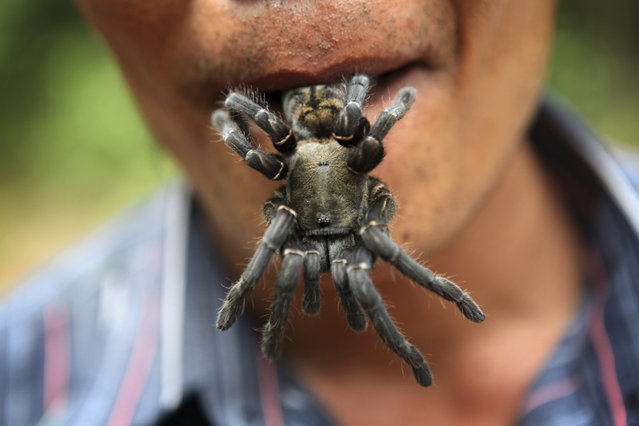
A Cambodian tuk tuk driver and guide with a tarantula in his mouth shortly after is was dug from the ground on June 7, 2010 in Skuon, Kampong Cham Province, Cambodia. The trade for spiders and other insects as food and for medicinal purposes has been in effect since the 1970's in Cambodia but only very recently have tourists been finding a way to see where the spiders are hunted in the nearby countryside. One guide, who can be found in Kampong Cham Town has started offering tours to tourists who can find him. (Photo by Tim Whitby/Getty Images)

A Cambodian tuk tuk driver and guide with a tarantula in his mouth shortly after is was dug from the ground on June 7, 2010 in Skuon, Kampong Cham Province, Cambodia. The trade for spiders and other insects as food and for medicinal purposes has been in effect since the 1970's in Cambodia but only very recently have tourists been finding a way to see where the spiders are hunted in the nearby countryside. One guide, who can be found in Kampong Cham Town has started offering tours to tourists who can find him. (Photo by Tim Whitby/Getty Images)
Details
04 Sep 2016 09:27:00
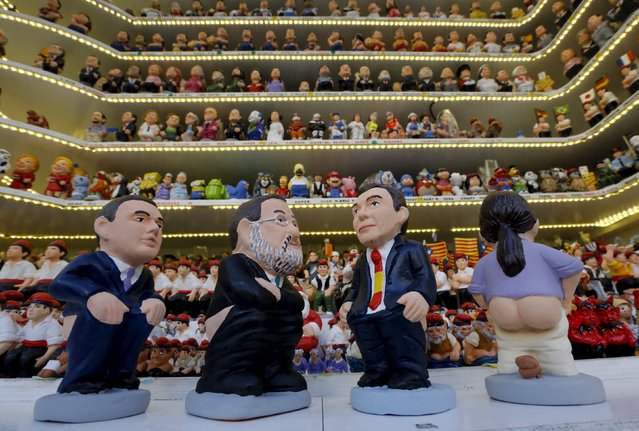
Clay "caganers" representing Spanish Prime Minister Mariano Rajoy (2nd L), Podemos's candidate Pablo Iglesias (R), Socialist Party (PSOE) leader Pedro Sanchez (2nd R) and Ciudadanos party leader Albert Rivera (L) are seen on display at the Santa Llucia Christmas market in central Barcelona, Spain, December 16, 2015. Catalans hide "caganers" or defecators, in Christmas Nativity scenes to let friends hunt for them during Christmas celebrations. The "caganers", which symbolise defecation and fertilization of the earth, are believed to bring prosperity and luck for the coming year. (Photo by Albert Gea/Reuters)

Clay "caganers" representing Spanish Prime Minister Mariano Rajoy (2nd L), Podemos's candidate Pablo Iglesias (R), Socialist Party (PSOE) leader Pedro Sanchez (2nd R) and Ciudadanos party leader Albert Rivera (L) are seen on display at the Santa Llucia Christmas market in central Barcelona, Spain, December 16, 2015. Catalans hide “caganers” or defecators, in Christmas Nativity scenes to let friends hunt for them during Christmas celebrations. The “caganers”, which symbolise defecation and fertilization of the earth, are believed to bring prosperity and luck for the coming year. (Photo by Albert Gea/Reuters)
Details
18 Dec 2015 08:00:00
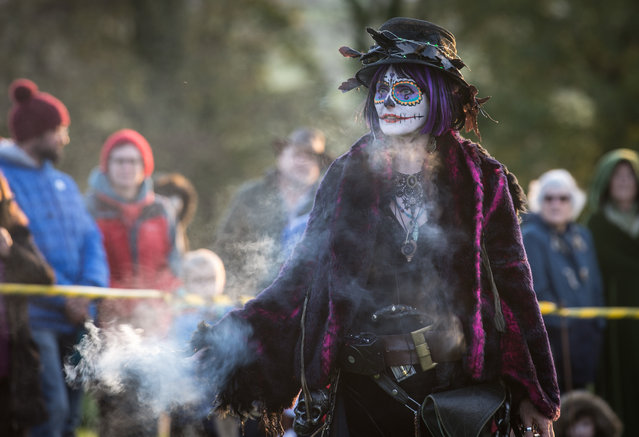
People take part in a sunset ceremony on the lower slopes of Glastonbury Tor as they celebrate Samhain at the Glastonbury Dragons Samhain Wild Hunt 2017 in Glastonbury on November 4, 2017 in Somerset, England. To celebrate Samhain, the Glastonbury Dragons, alongside Gwythyr Ap Greidal, the Summer King and the Winter King, Gwyn Ap Nudd, were paraded through the town to the lower slopes of Glastonbury Tor where the event was marked with ritual theatre, dancing and a fire to honour the dead. The Celtic festival of Samhain, which was later adopted by Christians and became Halloween, is a very important date in the Pagan calendar as it marks the division of the year between the lighter half (summer) and the darker half (winter). Pagans believe at Samhain, the division between this world and the otherworld was at its thinnest, allowing spirits to pass through. Many of the traditions of this ancient Celtic feast of the dead were later incorporated into the Christian calendar and Irish immigrants to America in the 19th century carried their customs, such as the wearing of costumes and masks to ward of harmful spirits and the harvest tradition of carving pumpkins, which have now blended into modern day Hallowee. (Photo by Matt Cardy/Getty Images)

People take part in a sunset ceremony on the lower slopes of Glastonbury Tor as they celebrate Samhain at the Glastonbury Dragons Samhain Wild Hunt 2017 in Glastonbury on November 4, 2017 in Somerset, England. To celebrate Samhain, the Glastonbury Dragons, alongside Gwythyr Ap Greidal, the Summer King and the Winter King, (Photo by Matt Cardy/Getty Images)
Details
07 Nov 2017 07:50:00
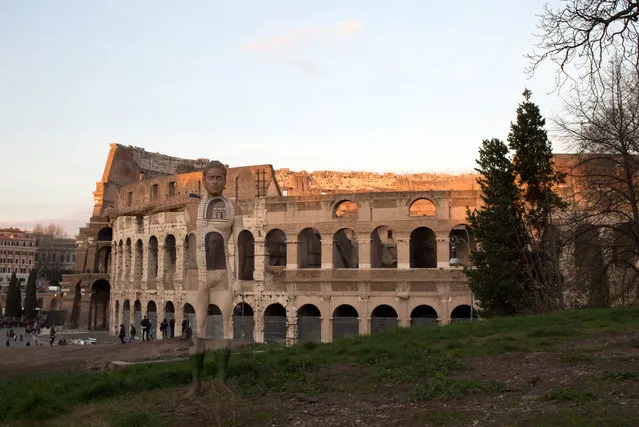
This artist has put together an amazing picture set of a man blending into the Seven Wonders of the World with her incredible body art. New York artist Trina Merry is known for her unique style that blends body art with photography but in her Lost in Wonder series shes painted a models body to blend into some of the worlds most iconic locations. She had her subject, UK model Kyle James, pose fully painted in front of the Great Pyramid of Giza, the Great Wall of China, Petra, The Colosseum, Machu Picchu, Stone Henge and Easter Island. Here: Colusseum. (Photo by Trina Merry/Caters News)

This artist has put together an amazing picture set of a man blending into the Seven Wonders of the World with her incredible body art. New York artist Trina Merry is known for her unique style that blends body art with photography but in her Lost in Wonder series shes painted a models body to blend into some of the worlds most iconic locations. She had her subject, UK model Kyle James, pose fully painted in front of the Great Pyramid of Giza, the Great Wall of China, Petra, The Colosseum, Machu Picchu, Stone Henge and Easter Island. Here: Colusseum. (Photo by Trina Merry/Caters News)
Details
10 Oct 2016 10:20:00
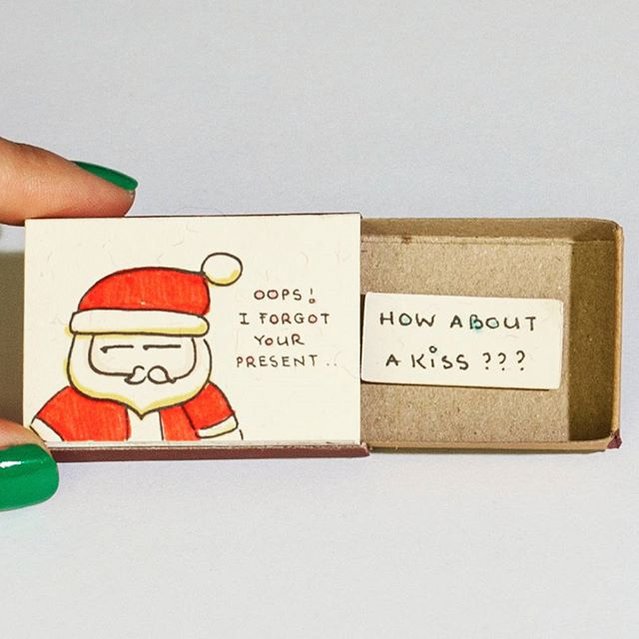
Handmade Matchbox-Cards By Shop3xu
Cute handmade matchbox-cards for all occasions – great alternative to traditional greeting cards! You can even send these lovely message boxes directly.
Details
24 Nov 2016 08:06:00
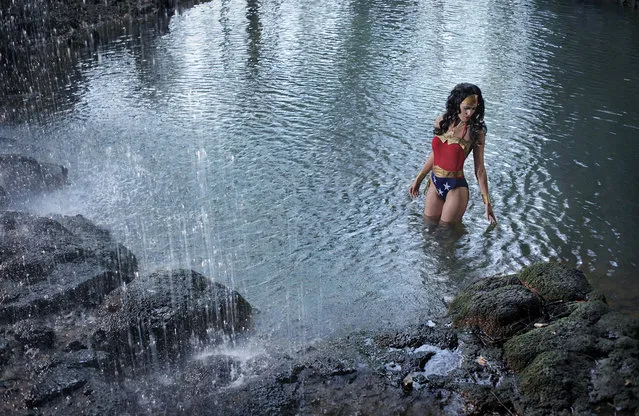
Lonely Superheroes By Benoit Lapray

What do superheroes do when they’re not busy fighting bad guys and saving the world from destruction? Perhaps they’re drawing strength alone in the peace and quiet of the great outdoors. That’s the premise of French photographer Benoit Lapray‘s photo-manipulation series “The Quest for the Absolute.”
Details
23 Sep 2014 10:50:00
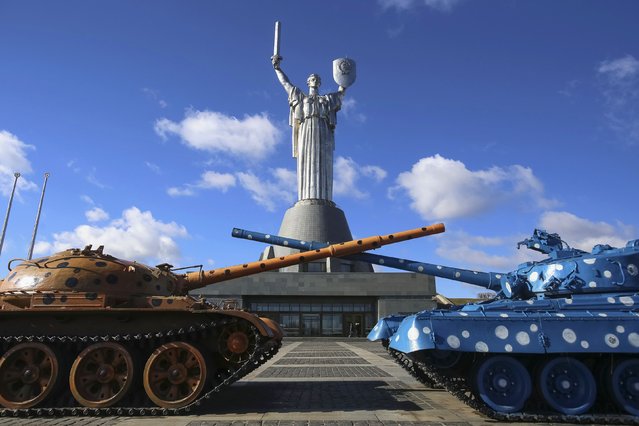
The 100-metre (300-foot), sword-wielding statue of “The Motherland” is seen in the National Museum of the History of the Great Patriotic War in Kiev March 17, 2014. On a blustery day on the banks of the Dnieper, the statue of “The Motherland”, a Soviet hammer and sickle on her shield, towered overhead, a reminder of the common cause Ukrainians and Russians died for side by side in their millions in World War Two and which Russian President Vladimir Putin thinks Ukraine has betrayed by turning to “fascism” and the West. (Photo by Konstantin Grishin/Reuters)

The 100-metre (300-foot), sword-wielding statue of “The Motherland” is seen in the National Museum of the History of the Great Patriotic War in Kiev March 17, 2014. On a blustery day on the banks of the Dnieper, the statue of “The Motherland”, a Soviet hammer and sickle on her shield, towered overhead, a reminder of the common cause Ukrainians and Russians died for side by side in their millions in World War Two and which Russian President Vladimir Putin thinks Ukraine has betrayed by turning to “fascism” and the West. (Photo by Konstantin Grishin/Reuters)
Details
22 Mar 2014 13:47:00
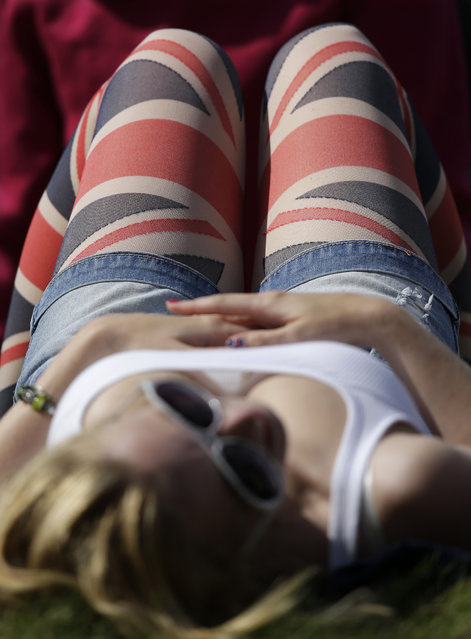
A fan wearing leggings marked with the stripes of Great Britain's flag rests on the grass at the rowing venue in Eton Dorney, near Windsor, England, at the 2012 Summer Olympics, Monday, July 30, 2012. (Photo by Natacha Pisarenko/AP Photo)

“Natacha Pisarenko was born in Buenos Aires and studied photography at that city’s School of Photographic Arts. Pisarenko currently works out of Buenos Aires, Argentina. She started her career in 1988 as a photographer for La Nación, one of Argentina’s largest newspapers, then joined the AP in Buenos Aires in 2002”. – Associated Press. Photo: A fan wearing leggings marked with the stripes of Great Britain's flag rests on the grass at the rowing venue in Eton Dorney, near Windsor, England, at the 2012 Summer Olympics, Monday, July 30, 2012. (Photo by Natacha Pisarenko/AP Photo)
Details
25 May 2014 13:11:00