Loading...
Done
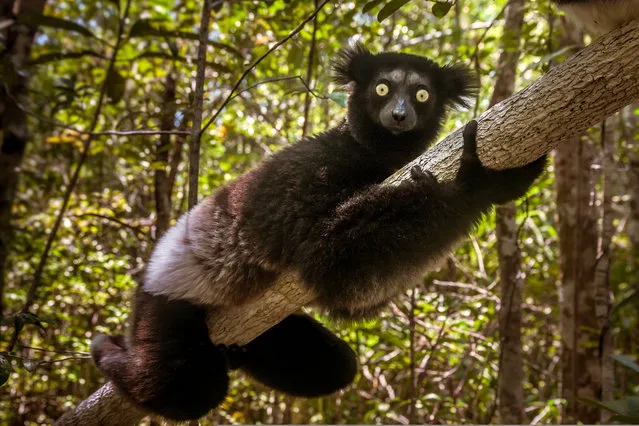
The secretive indri (Indri indri) of Madagascar, the largest living lemur. It is also critically endangered and highly evolutionarily distinct with no close relatives, which makes its branch one of most precarious on the mammal evolutionary tree. In the likely event that the indri goes extinct, we will lose 19m years of unique evolutionary history from the mammal tree of life. (Photo by Pierre-Yves Babelon/Aarhus University)

The secretive indri (Indri indri) of Madagascar, the largest living lemur. It is also critically endangered and highly evolutionarily distinct with no close relatives, which makes its branch one of most precarious on the mammal evolutionary tree. In the likely event that the indri goes extinct, we will lose 19m years of unique evolutionary history from the mammal tree of life. (Photo by Pierre-Yves Babelon/Aarhus University)
Details
18 Nov 2018 00:02:00
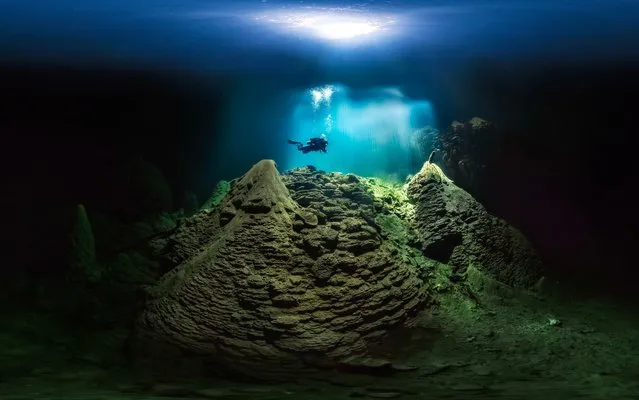
Cave Diver, Anhumas Abyss, Bonito, Brazil: The Anhumas Abyss is an underground cavern with a crystal-clear lake below, more than 260 feet (79 m) deep. A visitor must enter through a narrow opening at the top of the chamber and rappel into the cave. Snorkeling and scuba diving in the lake reveal amazing scenery. Distinctive, conical limestone stalagmites and stalactites occupy the lake and the surrounding area, some reaching 65 feet (20 m) high. “One must rappel about 235 feet (72 m) to get down into this deep lake. The photo was taken at a depth of 50 feet (15 m). It was a challenge to create the image because of the high contrast, plus the diver could not see into the darkness, making communication impossible”. (Photo by Marcio Cabral/Nature’s Best Photography Awards 2017)

Cave Diver, Anhumas Abyss, Bonito, Brazil: The Anhumas Abyss is an underground cavern with a crystal-clear lake below, more than 260 feet (79 m) deep. A visitor must enter through a narrow opening at the top of the chamber and rappel into the cave. Snorkeling and scuba diving in the lake reveal amazing scenery. Distinctive, conical limestone stalagmites and stalactites occupy the lake and the surrounding area, some reaching 65 feet (20 m) high. (Photo by Marcio Cabral/Nature’s Best Photography Awards 2017)
Details
26 Oct 2017 08:10:00
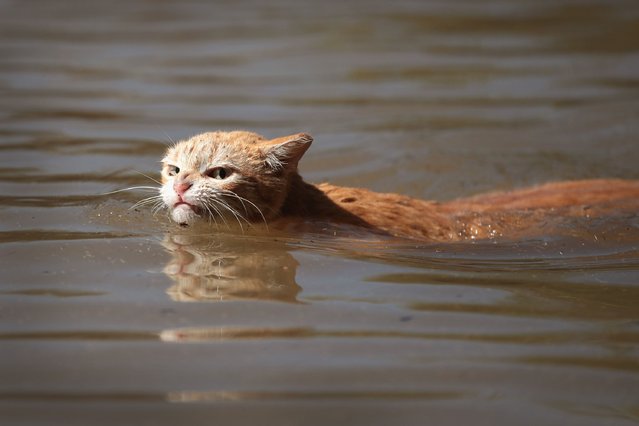
A cat tries to find dry ground around an apartment complex in Houston after Hurricane Harvey hit on Aug. 30. Harvey made landfall in South Texas on August 25, leading to days of downpours that dumped more than 50 inches of rain. Harvey damaged or destroyed about 200,000 homes as the storm system flooded much of Houston and smaller coastal communities. (Photo by Scott Olson/Getty Images)

A cat tries to find dry ground around an apartment complex in Houston after Hurricane Harvey hit on Aug. 30. Harvey made landfall in South Texas on August 25, leading to days of downpours that dumped more than 50 inches of rain. Harvey damaged or destroyed about 200,000 homes as the storm system flooded much of Houston and smaller coastal communities. (Photo by Scott Olson/Getty Images)
Details
26 Dec 2017 08:19:00
A sacrificial camel gets a haircut with patterns at the animal market on the outskirts of Karachi, Pakistan September 22, 2015. (Photo by Akhtar Soomro/Reuters)

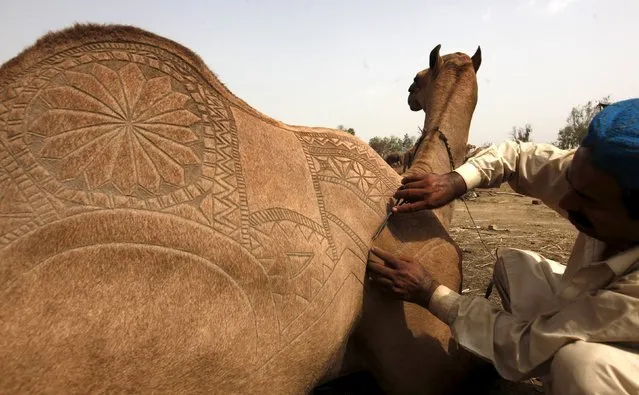
A sacrificial camel gets a haircut with patterns at the animal market on the outskirts of Karachi, Pakistan September 22, 2015. Muslims across the world are preparing to celebrate the annual festival of Eid al-Adha or the Feast of the Sacrifice, which marks the end of the annual haj pilgrimage, by slaughtering goats, sheep, cows and camels in commemoration of the Prophet Abraham's readiness to sacrifice his son to show obedience to Allah. Eid al-Adha in India falls on September 25. (Photo by Akhtar Soomro/Reuters)
Details
24 Sep 2015 08:05:00
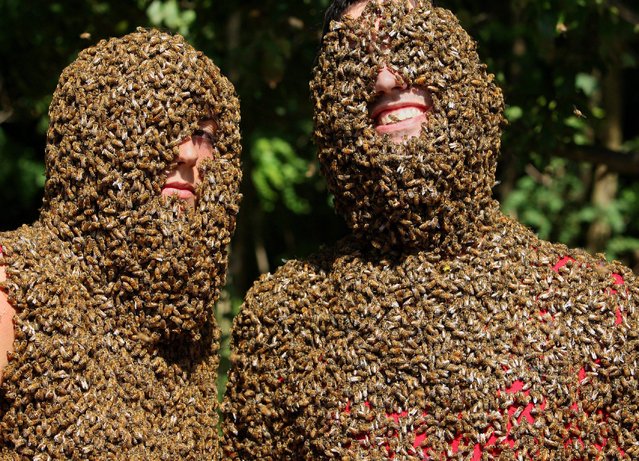
Marenda Schipper and Patrick Boelsterli show of their bee beards at an annual competition at Clovermead Adventure Farm, Saturday August 10, 2013 in Aylmer, Ontario, Canada. (Photo by Dave Chidley/AP Photo/The Canadian Press)

Marenda Schipper and Patrick Boelsterli show of their bee beards at an annual competition at Clovermead Adventure Farm, Saturday August 10, 2013 in Aylmer, Ontario, Canada. (Photo by Dave Chidley/AP Photo/The Canadian Press)
Details
12 Aug 2013 06:42:00


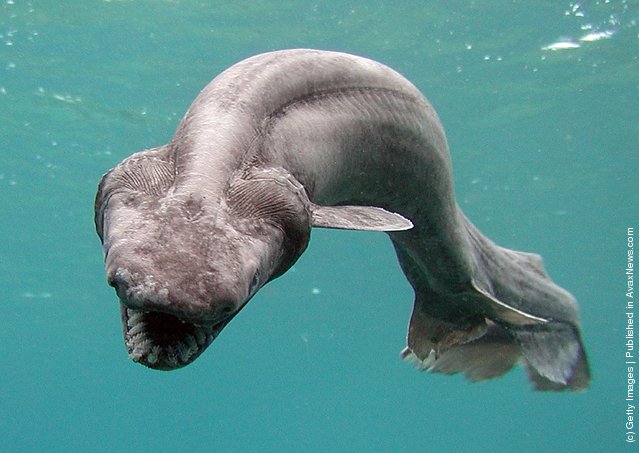
“The frilled shark (Chlamydoselachus anguineus) is one of two extant species of shark in the family Chlamydoselachidae, with a wide but patchy distribution in the Atlantic and Pacific Oceans. This uncommon species is found over the outer continental shelf and upper continental slope, generally near the bottom though there is evidence of substantial upward movements. It has been caught as deep as 1,570 m (5,150 ft), whereas in Suruga Bay, Japan it is most common at depths of 50–200 m (160–660 ft). Exhibiting several “primitive” features, the frilled shark has often been termed a «living fossil»”. – Wikipedia

Photo: A 1.6 meter long Frill shark swims in a tank after being found by a fisherman at a bay in Numazu, on January 21, 2007 in Numazu, Japan. The frill shark, also known as a Frilled shark usually lives in waters of a depth of 600 meters and so it is very rare that this shark is found alive at sea-level. It's body shape and the number of gill are similar to fossils of sharks which lived 350,000,000 years ago. (Photo by Awashima Marine Park/Getty Images)

Details
05 May 2011 10:01:00


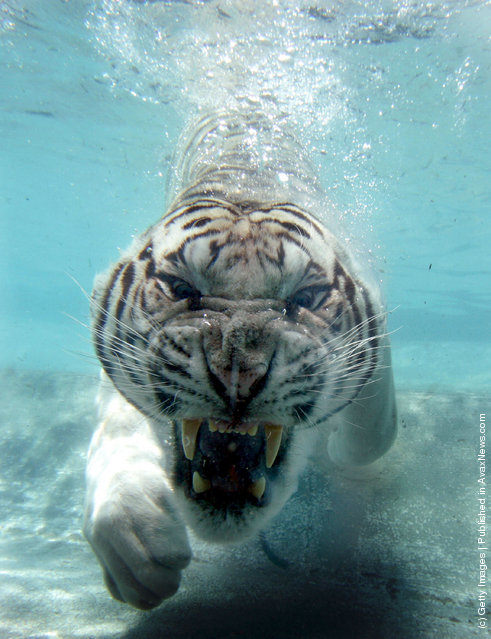
Odin, a five year-old White Bengal Tiger dives for a piece of meat thrown to him by a trainer during a big cat show at Six Flags Discovery Kingdom June 1, 2007 in Vallejo, California. Unlike most cats that are afraid of water, Odin loves diving in the pool to retrieve bits of meat fed to him by his trainers. (Photo by Justin Sullivan/Getty Images)
Details
25 Apr 2011 10:32:00
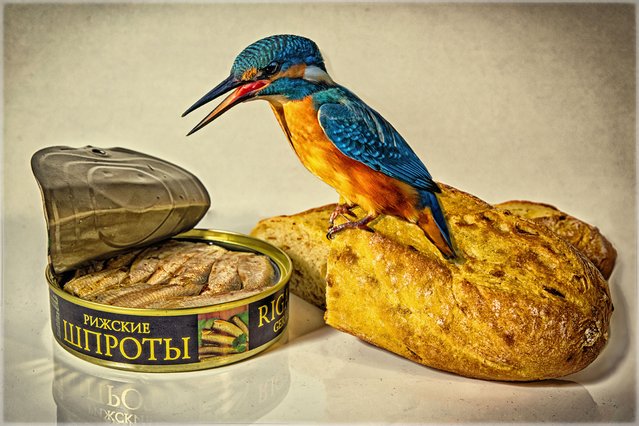
Creative imagery, gold winner: Sprats and Bread, Ruediger Schulz, Germany. (Photo by Ruediger Schulz/2021 Bird Photographer of the Year)

Creative imagery, gold winner: Sprats and Bread, Ruediger Schulz, Germany. (Photo by Ruediger Schulz/2021 Bird Photographer of the Year)
Details
26 Sep 2021 02:43:00