Loading...
Done
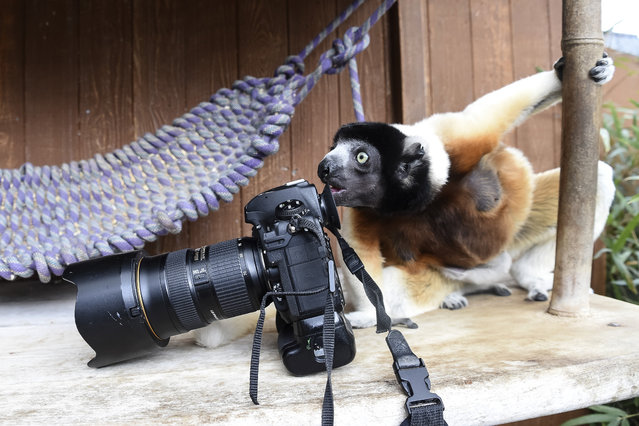
Poppy, a female Crowned sifaka, inspects a photographer's camera in the enclosure at the zoo of Mulhouse, eastern France, on March 5, 2019. The Crowned sifaka is a critically endangered species from Madagascar. (Photo by Sebastien Bozon/AFP Photo)

Poppy, a female Crowned sifaka, inspects a photographer's camera in the enclosure at the zoo of Mulhouse, eastern France, on March 5, 2019. The Crowned sifaka is a critically endangered species from Madagascar. (Photo by Sebastien Bozon/AFP Photo)
Details
10 Mar 2019 00:03:00
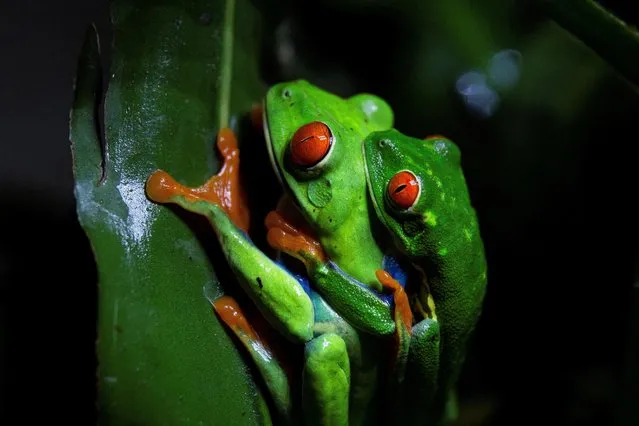
Two Red-eyed Tree frogs (Agalychnis callidryas) mate at “Exotic Fauna” breeding zoo, where exotic animals are reproduced to be marketed as pets in U.S., Canada and Asia, in Ticuantepe, on the outskirts of Managua, Nicaragua on July 17, 2022. (Photo by Maynor Valenzuela/Reuters)

Two Red-eyed Tree frogs (Agalychnis callidryas) mate at “Exotic Fauna” breeding zoo, where exotic animals are reproduced to be marketed as pets in U.S., Canada and Asia, in Ticuantepe, on the outskirts of Managua, Nicaragua on July 17, 2022. (Photo by Maynor Valenzuela/Reuters)
Details
09 Mar 2024 07:10:00
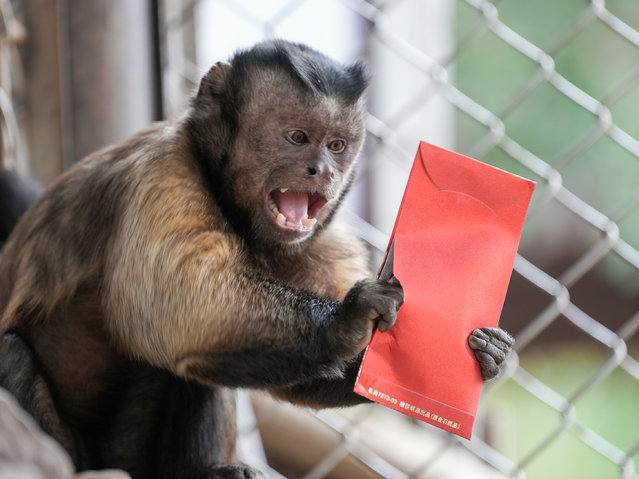
Tufted capuchin (Sapajus apella) receives a special red envelope containing delicious food to celebrate Chinese New Year at the Chongqing Zoo on January 28, 2025 in Chongqing, China. (Photo by Wang Chengjie/VCG via Getty Images)

Tufted capuchin (Sapajus apella) receives a special red envelope containing delicious food to celebrate Chinese New Year at the Chongqing Zoo on January 28, 2025 in Chongqing, China. (Photo by Wang Chengjie/VCG via Getty Images)
Details
02 Feb 2025 03:59:00
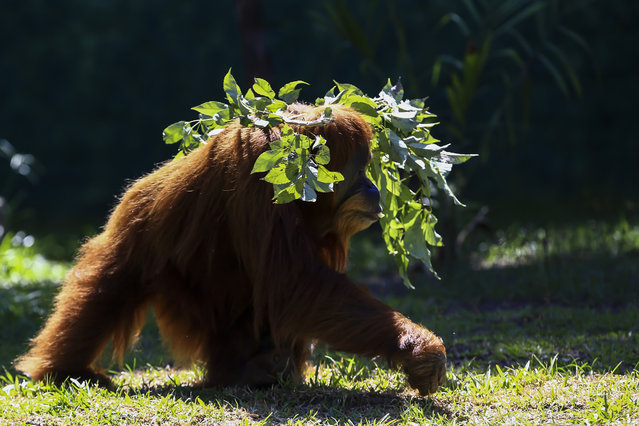
An Orangutan named Elze walks in the Biopark of Rio during a media tour in Rio de Janeiro, Brazil, Thursday, March 18, 2021. The park was closed to the public for renovations to convert the city zoo into a center for biodiversity conservation and will reopen to the general public at the end of March. (Photo by Bruna Prado/AP Photo)

An Orangutan named Elze walks in the Biopark of Rio during a media tour in Rio de Janeiro, Brazil, Thursday, March 18, 2021. The park was closed to the public for renovations to convert the city zoo into a center for biodiversity conservation and will reopen to the general public at the end of March. (Photo by Bruna Prado/AP Photo)
Details
28 Mar 2021 09:55:00


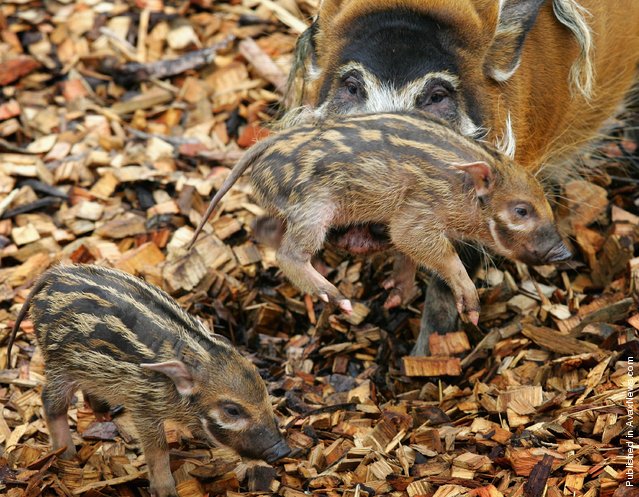
“The Red River Hog (Potamochoerus porcus), also known as the Bush Pig (but not to be confused with P. larvatus, common name “Bushpig”), is a wild member of the pig family living in Africa, with most of its distribution in the Guinean and Congolian forests. It is rarely seen away from rainforests, and generally prefers areas near rivers or swamps.

Red River Hogs eat grass, berries, roots, insects, molluscs, small vertebrates and carrion. They are capable of causing damage to plantations. Red River Hogs typically live in herds of 6-20 members led by a dominant boar. Sows rear 3-6 piglets at a time.”

Photo: Two 17 day old red river hoglet twins forage for food next to their mother Bahiti at London Zoo on August 23, 2007 in London, England. Red River hoglets inhabit the forests and swamps of West and Central Africa. The recent additions to the London Zoo pig pen have been eagerly awaited by zoo keepers. (Photo by Chris Jackson/Getty Images)

Details
18 Mar 2011 15:15:00
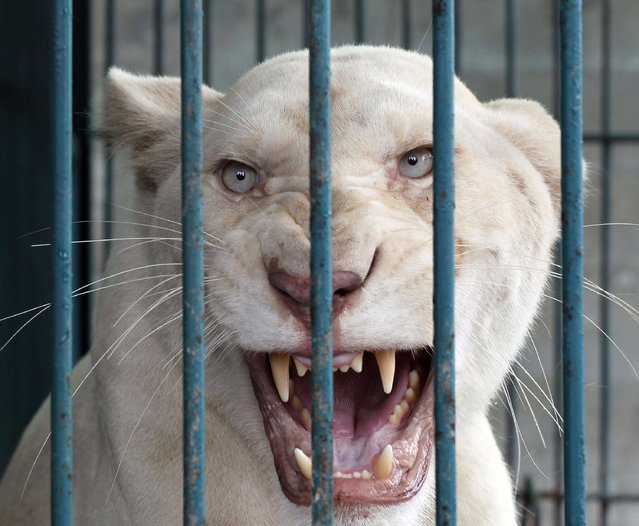
A lioness bares its teeth inside an enclosure after a raid at a zoo-like house on the outskirts of Bangkok, Thailand Monday, June 10, 2013. Thai police and forestry officials searched and seized a number of imported and endangered animals including 14 lions from Africa and arrested the house's owner. (Photo by Apichart Weerawong/AP Photo)

A lioness bares its teeth inside an enclosure after a raid at a zoo-like house on the outskirts of Bangkok, Thailand Monday, June 10, 2013. Thai police and forestry officials searched and seized a number of imported and endangered animals including 14 lions from Africa and arrested the house's owner. (Photo by Apichart Weerawong/AP Photo)
Details
13 Jun 2013 09:30:00
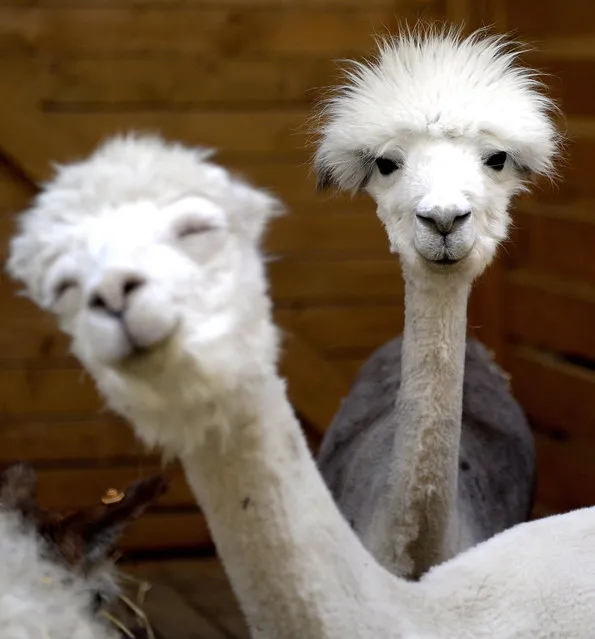
Alpacas peek out of their box in Kielnarowa, Poland, June 11, 2014. A total of 35 female and 3 male alpacas were imported from Chile by the Rzeszow University of Information Technology and Management Center Zoo to be used for the therapy of children. Alpacas also provide one of the most expensive wools. (Photo by Darek Demanowicz/EPA)

Alpacas peek out of their box in Kielnarowa, Poland, June 11, 2014. A total of 35 female and 3 male alpacas were imported from Chile by the Rzeszow University of Information Technology and Management Center Zoo to be used for the therapy of children. Alpacas also provide one of the most expensive wools. (Photo by Darek Demanowicz/EPA)
Details
14 Jun 2014 12:13:00
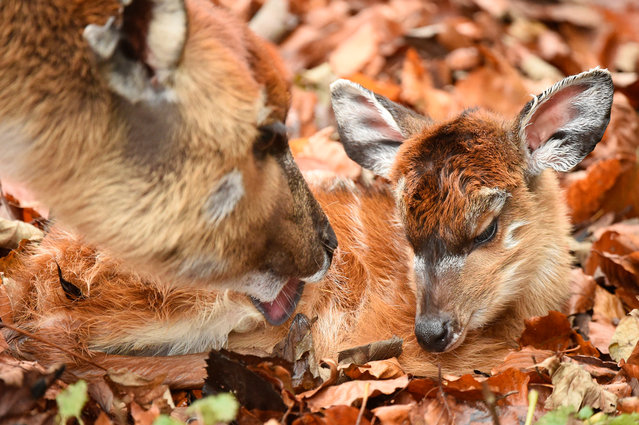
A newly born Sitatunga calf seen at ZSL Whipsnade Zoo on November 24, 2016 in Whipsnade, England. The swamp-dwelling species, also known as a marshbuck, is Africa's only true amphibious antelope. It was snuggled up in the leaves and almost perfectly camouflaged as it mother tended it. (Photo by Tony Margiocchi/Barcroft Images)

A newly born Sitatunga calf seen at ZSL Whipsnade Zoo on November 24, 2016 in Whipsnade, England. The swamp-dwelling species, also known as a marshbuck, is Africa's only true amphibious antelope. It was snuggled up in the leaves and almost perfectly camouflaged as it mother tended it. (Photo by Tony Margiocchi/Barcroft Images)
Details
27 Nov 2016 09:19:00