Loading...
Done
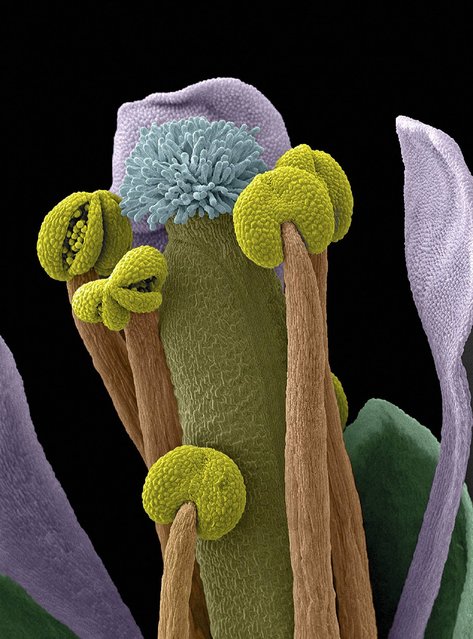
Scanning electron micrograph (SEM) of an Arabidopsis thaliana flower, also commonly known as thale cress. Some of the anthers are open, revealing pollen grains ready for dispersal. Arabidopsis was the first plant to have its entire genome sequenced and is widely used as a model organism in molecular and plant biology. Horizontal width of image is 1200 microns. Magnification 100x. (Photo by Stefan Eberhard/Wellcome Images)

Beautiful, strange and occasionally alarming pictures from the shortlist for this year’s Wellcome image awards – which celebrate the very best in science photography and imaging – from an x-ray of a bat to a micrograph of a kidney stone. The exhibition opens on 12 March at three science centres and the Museum of Science and Industry in Manchester. Photo: Scanning electron micrograph (SEM) of an Arabidopsis thaliana flower, also commonly known as thale cress. Some of the anthers are open, revealing pollen grains ready for dispersal. Arabidopsis was the first plant to have its entire genome sequenced and is widely used as a model organism in molecular and plant biology. Horizontal width of image is 1200 microns. Magnification 100x. (Photo by Stefan Eberhard/Wellcome Images)
Details
11 Mar 2014 05:58:00
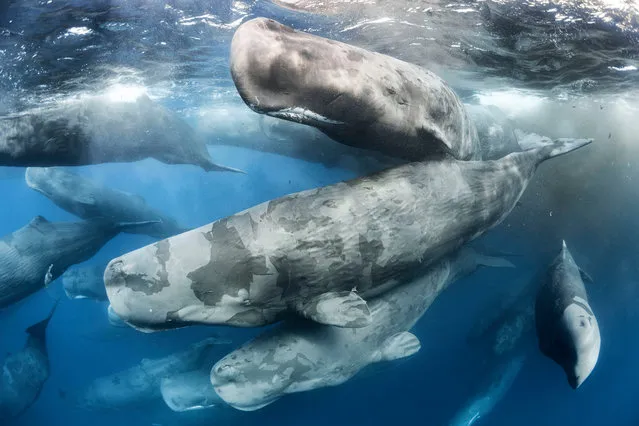
Behaviour: Mammals category. Giant Gathering by Tony Wu, USA. Dozens of sperm whales mingled noisily off Sri Lanka’s northeast coast, stacked as far down as Tony could see. This was a congregation of dozens of social units, like a gathering of the clans. Aggregations like this could be a critical part of the whales’ rich social lives but are rarely reported. Some two thirds of the population was wiped out before commercial whaling was banned in 1986. This kind of major gathering could be “a sign that populations are recovering”, says Tony. (Photo by Tony Wu/Wildlife Photographer of the Year 2017)

Behaviour: Mammals category. Giant Gathering by Tony Wu, USA. Dozens of sperm whales mingled noisily off Sri Lanka’s northeast coast, stacked as far down as Tony could see. This was a congregation of dozens of social units, like a gathering of the clans. Aggregations like this could be a critical part of the whales’ rich social lives but are rarely reported. Some two thirds of the population was wiped out before commercial whaling was banned in 1986. This kind of major gathering could be “a sign that populations are recovering”, says Tony. (Photo by Tony Wu/Wildlife Photographer of the Year 2017)
Details
19 Oct 2017 09:38:00
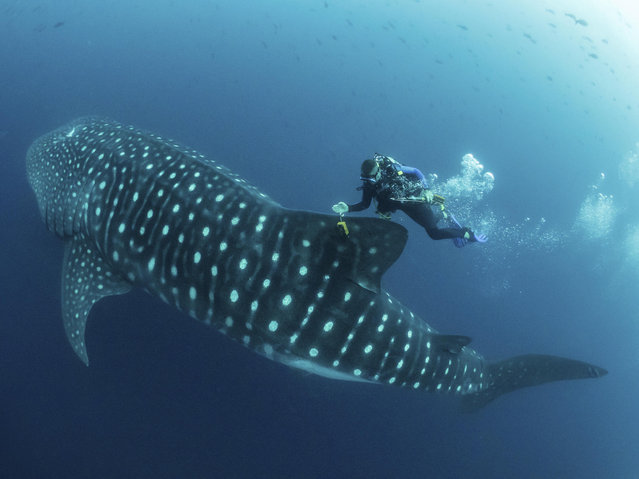
In this 2017 photo provided by Simon Pierce, Jonathan Green checks on a fin-mounted satellite tag on a whale shark in the Galapagos Islands area of Ecuador.  Despite typically being bigger than a double-decker bus, the elusive whale shark has only tiny, almost useless teeth. It's also one of the least understood animals in the ocean. (Photo by Simonjpierce.com via AP Photo)

In this 2017 photo provided by Simon Pierce, Jonathan Green checks on a fin-mounted satellite tag on a whale shark in the Galapagos Islands area of Ecuador. Despite typically being bigger than a double-decker bus, the elusive whale shark has only tiny, almost useless teeth. It's also one of the least understood animals in the ocean. (Photo by Simonjpierce.com via AP Photo)
Details
02 Mar 2018 00:03:00
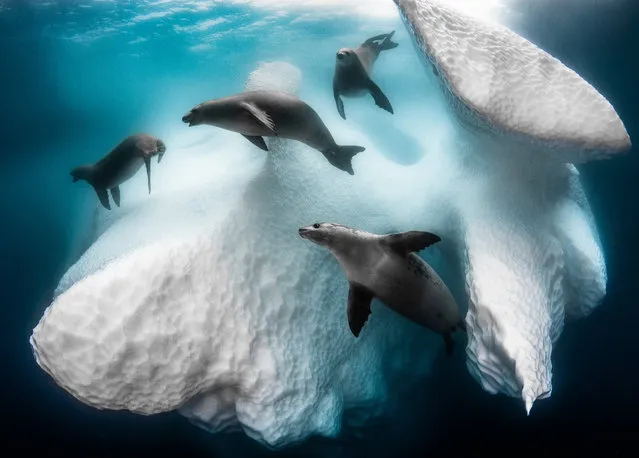
Underwater photographer of the year 2020 and wide angle category winner: Frozen Mobile Home by Greg Lecoeur (France) in the Antarctic peninsula, Antarctica. Crabeater seals swim around an iceberg. These massive and mysterious habitats are dynamic kingdoms that support marine life. As they swing and rotate slowly through polar currents, icebergs fertilise the oceans by carrying nutrients from land that spark blooms of phytoplankton, fundamental to the carbon cycle. (Photo by Greg Lecoeur/Underwater Photographer of the Year 2020)

Underwater photographer of the year 2020 and wide angle category winner: Frozen Mobile Home by Greg Lecoeur (France) in the Antarctic peninsula, Antarctica. Crabeater seals swim around an iceberg. These massive and mysterious habitats are dynamic kingdoms that support marine life. As they swing and rotate slowly through polar currents, icebergs fertilise the oceans by carrying nutrients from land that spark blooms of phytoplankton, fundamental to the carbon cycle. (Photo by Greg Lecoeur/Underwater Photographer of the Year 2020)
Details
28 Feb 2020 00:05:00
Sеx worker Moira Mona wears a mask at her studio where she creates videos near Amsterdam, Netherlands on June 30, 2020. (Photo by Piroschka van de Wouw/Reuters)

Sеx worker Moira Mona wears a mask at her studio where she creates videos near Amsterdam, Netherlands on June 30, 2020. (Photo by Piroschka van de Wouw/Reuters)
Details
12 Jul 2020 00:01:00
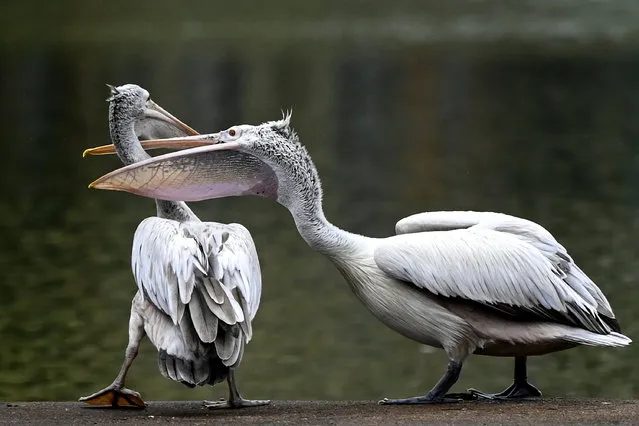
Spot-billed pelican interact on the banks of an artificial lake in Colombo on September 28, 2021. (Photo by Ishara S. Kodikara/AFP Photo)

Spot-billed pelican interact on the banks of an artificial lake in Colombo on September 28, 2021. (Photo by Ishara S. Kodikara/AFP Photo)
Details
11 Nov 2021 08:34:00
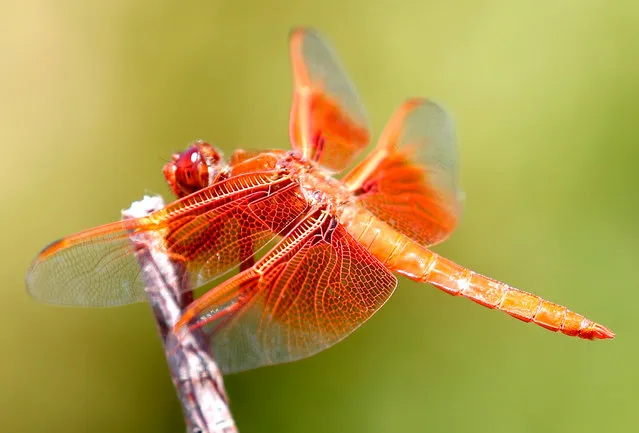
A Flame Skimmer or Firecracker Skimmer dragonfly (Libellula saturata) rests on a small branch in Topanga, California, USA, 18 June 2018. The Flame Skimmer dragonfly is found in the Western United States near ponds and creeks. (Photo by Mike Nelson/EPA/EFE)

A Flame Skimmer or Firecracker Skimmer dragonfly (Libellula saturata) rests on a small branch in Topanga, California, USA, 18 June 2018. The Flame Skimmer dragonfly is found in the Western United States near ponds and creeks. (Photo by Mike Nelson/EPA/EFE)
Details
24 Jun 2018 00:03:00
A black-winged stilt patrols a reservoir in Jezreel Valley in Israel early April 2023. Their eggs are a golden colour mottled with brown. (Photo by Itamar Procaccia/Solent News)

A black-winged stilt patrols a reservoir in Jezreel Valley in Israel early April 2023. Their eggs are a golden colour mottled with brown. (Photo by Itamar Procaccia/Solent News)
Details
16 Apr 2023 03:43:00