Loading...
Done
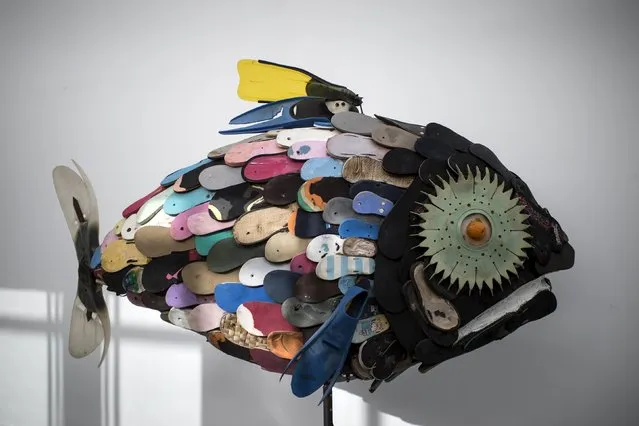
A sculpture of a fish made from waste products collected from the sea is displayed during the exhibition Keep The Oceans Clean by art collective Skeleton Sea, at the Torre Madariaga Biodiversity Centre in Busturia, Spain, May 17, 2015. (Photo by Vincent West/Reuters)

A sculpture of a fish made from waste products collected from the sea is displayed during the exhibition Keep The Oceans Clean by art collective Skeleton Sea, at the Torre Madariaga Biodiversity Centre in Busturia, Spain, May 17, 2015. Skeleton Sea, a group of surfers and artists, recycle waste collected from the world's oceans to create artworks and draw attention to the dangers faced from overfishing, pollution and oil spills. (Photo by Vincent West/Reuters)
Details
19 May 2015 11:16:00
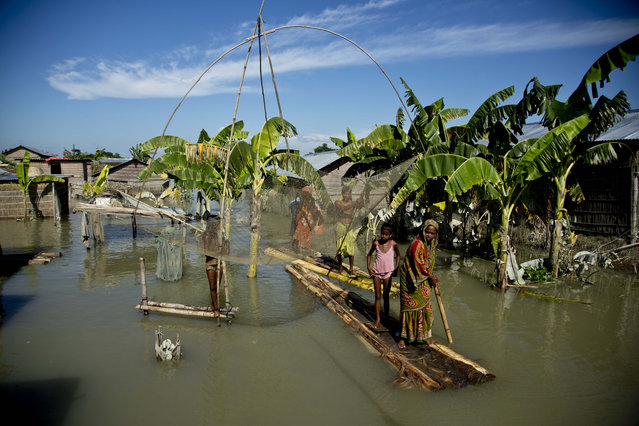
A flood affected family moves on a banana raft past a fishing net in Morigaon district, east of Gauhati, northeastern Assam state, India, Sunday, July 31, 2016. A week of heavy rain has killed dozens of people and uprooted tens of thousands of others from their homes. Floods are an annual occurrence in Assam and many parts of India during the June-September monsoon season. (Photo by Anupam Nath/AP Photo)

A flood affected family moves on a banana raft past a fishing net in Morigaon district, east of Gauhati, northeastern Assam state, India, Sunday, July 31, 2016. A week of heavy rain has killed dozens of people and uprooted tens of thousands of others from their homes. Floods are an annual occurrence in Assam and many parts of India during the June-September monsoon season. (Photo by Anupam Nath/AP Photo)
Details
01 Aug 2016 10:30:00
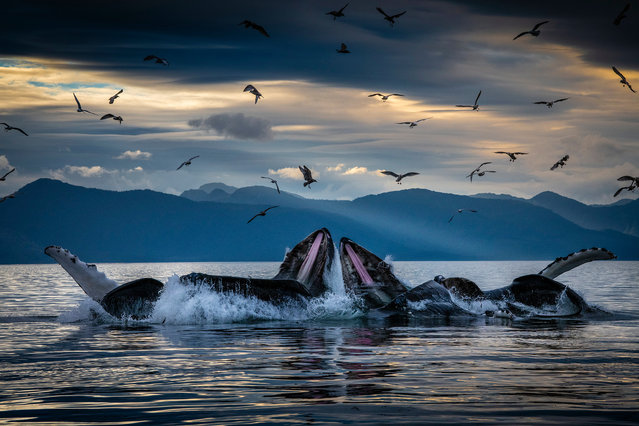
“Secrets of the Whales”. Skerry’s photographs celebrate the lives and culture of whales, illuminating recent research and their diverse behaviours. His latest work focuses on four key species: sperm whales, humpbacks, orca and beluga whales. Humpback whales bubble-net feeding off the coast of Alaska. They work cooperatively to feed on herring by blowing a perfect ring of bubbles underwater to form a net encircling the fish. The whales then swim up through the centre of the bubble net with their mouths open. (Photo by Brian Skerry/National Geographic Photo/Visa pour l'Image)

“Secrets of the Whales”. Skerry’s photographs celebrate the lives and culture of whales, illuminating recent research and their diverse behaviours. His latest work focuses on four key species: sperm whales, humpbacks, orca and beluga whales. Humpback whales bubble-net feeding off the coast of Alaska. They work cooperatively to feed on herring by blowing a perfect ring of bubbles underwater to form a net encircling the fish. The whales then swim up through the centre of the bubble net with their mouths open. (Photo by Brian Skerry/National Geographic Photo/Visa pour l'Image)
Details
04 Sep 2021 09:02:00


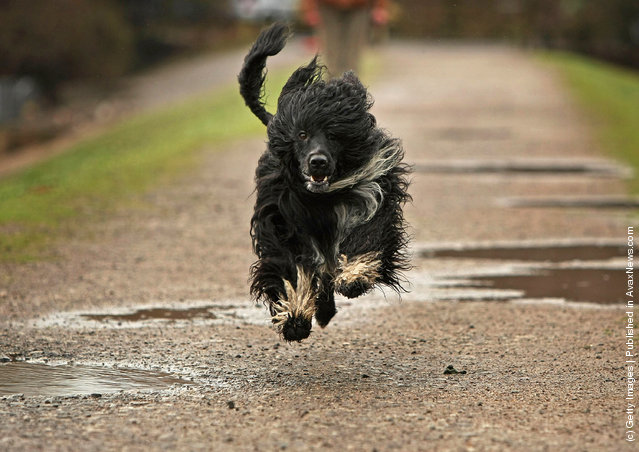
“The Portuguese Water Dog is a breed of working dog as classified by the American Kennel Club. Portuguese Water Dogs are originally from the Portuguese region of the Algarve, from where the breed expanded to all around Portugal's coast, where they were taught to herd fish into fishermen's nets, to retrieve lost tackle or broken nets, and to act as couriers from ship to ship, or ship to shore. Portuguese Water Dogs rode in bobbing fishing trawlers as they worked their way from the warm Atlantic waters of Portugal to the frigid fishing waters off the coast of Iceland where the fleets caught cod to bring home. Portuguese Water Dogs were often taken with sailors during the Portuguese discoveries”. – Wikipedia

Photo: Kix, a Portuguese Water Dog , enjoys a walk around the muddy fields near his home before the grooming and preparation starts for this years Crufts on March 3, 2009 in Telford, England. (Photo by Christopher Furlong/Getty Images)
Details
26 Jul 2011 11:27:00
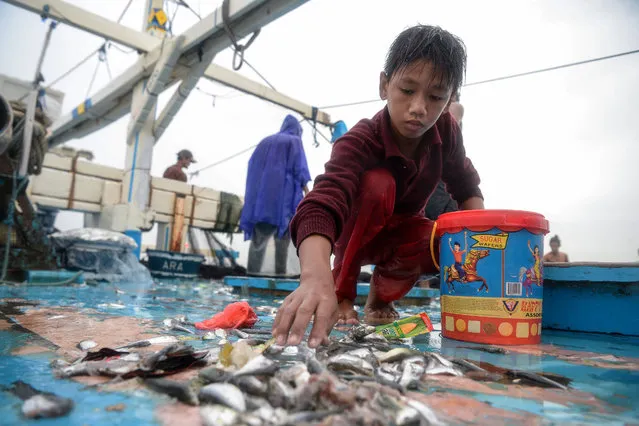
In this photo taken on March 16, 2019, 13-year-old Reymark Cavesirano collects left over herring onboard a fishing boat anchored at the mouth of Manila Bay off Navotas City in suburban Manila. (Photo by Ted Aljibe/AFP Photo)

In this photo taken on March 16, 2019, 13-year-old Reymark Cavesirano collects left over herring onboard a fishing boat anchored at the mouth of Manila Bay off Navotas City in suburban Manila. Cavesirano, a grade five student, paddles to the anchored fishing boats and helps crew clean their nets, and in exchange collects leftover herring still tangled in the nets. Across the Philippines, there are 5 million child labourers, aged between five and 17, many of them working in dangerous conditions. About 22 million people – a fifth of the population – live below the national poverty line. (Photo by Ted Aljibe/AFP Photo)
Details
12 Apr 2019 00:03:00
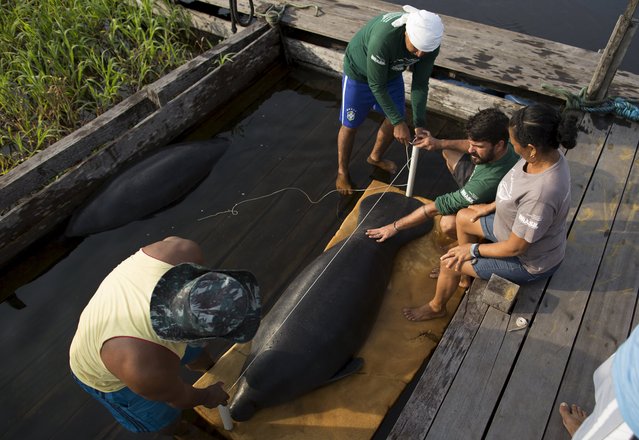
Veterinarian William Guerra Neto (2nd R) and an assistant take measurements of two Amazonian manatees who are being rehabilitated after sustaining injuries from hunting and fishing nets at the Center of Amazonian Manatees at Amana Lake in Maraa, Amazonas state, Brazil, September 21, 2015. (Photo by Bruno Kelly/Reuters)

Veterinarian William Guerra Neto (2nd R) and an assistant take measurements of two Amazonian manatees who are being rehabilitated after sustaining injuries from hunting and fishing nets at the Center of Amazonian Manatees at Amana Lake in Maraa, Amazonas state, Brazil, September 21, 2015. (Photo by Bruno Kelly/Reuters)
Details
30 Sep 2015 08:05:00
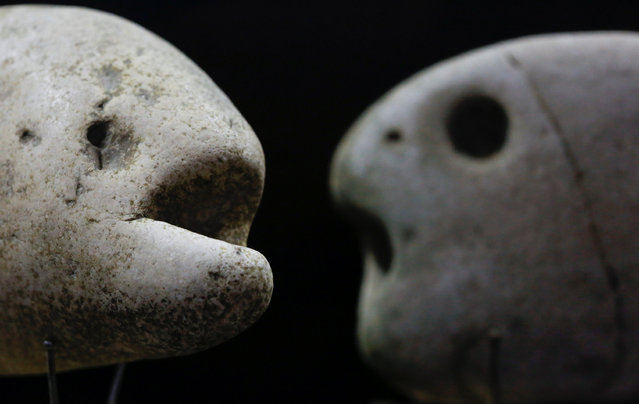
Stones collected and categorised by shape (fish) are seen at the home workshop of Luigi Lineri in Zevio, near Verona, Italy, June 10, 2016. (Photo by Alessandro Bianchi/Reuters)

Stones collected and categorised by shape (fish) are seen at the home workshop of Luigi Lineri in Zevio, near Verona, Italy, June 10, 2016. Luigi Lineri's home workshop is covered in stones – tens of thousands of them. They resemble animal heads, human faces and other forms, and the artist and poet believes may have been shaped by prehistoric humans. (Photo by Alessandro Bianchi/Reuters)
Details
17 Aug 2016 11:23:00
Fishermen move a fishing boat to a safer place along the shore ahead of cyclone Hudhud at Ganjam district in Odisha October 11, 2014. (Photo by Reuters/Stringer)

Fishermen move a fishing boat to a safer place along the shore ahead of cyclone Hudhud at Ganjam district in Odisha October 11, 2014. The India Meteorological Department described Cyclone Hudhud as a “very severe” storm that could pack winds of 195 kilometers (120 miles) per hour and cause torrential rains when it makes landfall near the port city of Visakhapatnam around noon Sunday. (Photo by Reuters/Stringer)
Details
13 Oct 2014 10:43:00