(L-R) Chris Diamantopoulos, AnnaLynne McCord, Matt Jones and Jane Seymour visit the Build Series at Build Studio on January 23, 2018 in New York City, United States. (Photo by Brad Barket/Getty Images)
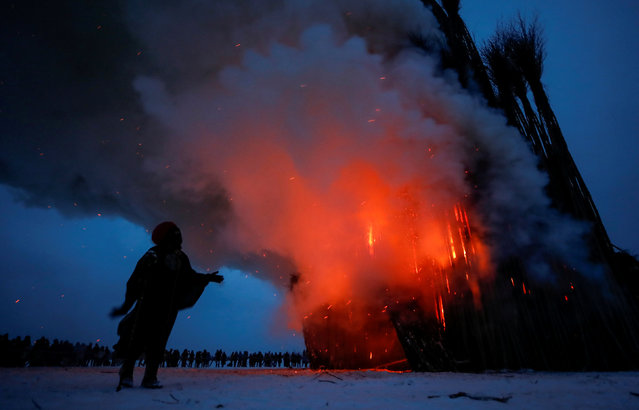
Artist German Vinogradov acts in the performance of the burning of installation, devoted to Maslenitsa, or Pancake Week, a pagan holiday marking the end of winter, in the village of Nikola-Lenivets, Kaluga region, Russia, February 17, 2018. (Photo by Maxim Shemetov/Reuters)
Skiers take part in the Skicolor event where they are sprayed with biodegradable color powders as part of carnival celebrations in the alpine resort of La Tzoumaz, Switzerland on February 23, 2020. (Photo by Valentin Flauraud/EPA/EFE/Rex Features/Shutterstock)
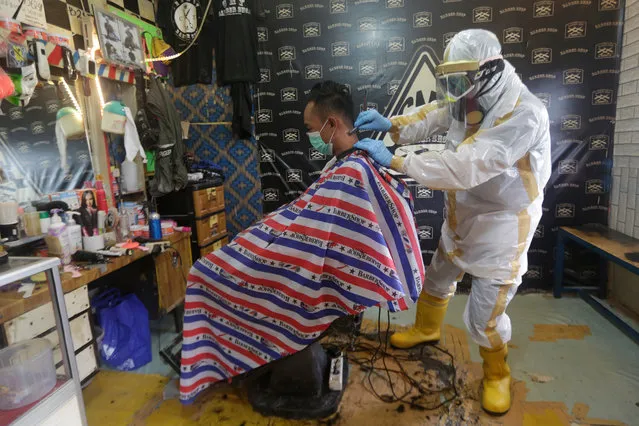
Barber Herman Mulyana (R) gives a haircut to a customer while wearing protective attire made from plastic garbage bags at a barbershop in Bogor, Indonesia, 06 April 2020. The Trade Ministry of Indonesia issued a regulation temporarily recinding all requirements for the import of protective gear and medical equipment, to counter shortages of many items used to treat COVID-19 patients and prevent the further spread of the disease. (Photo by Adi Weda/EPA/EFE)
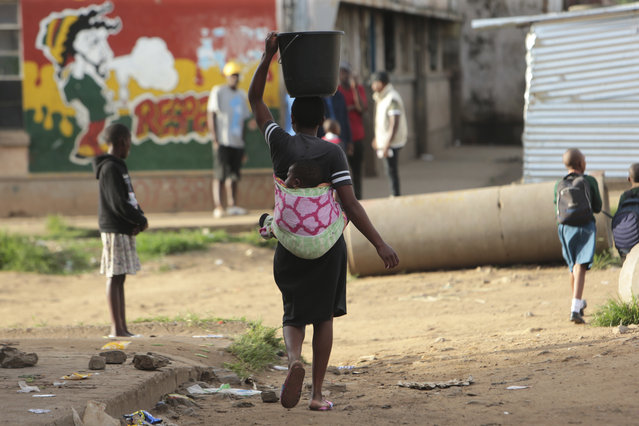
In this Monday, April 6, 2020 photo, a woman carries a her baby and a bucket of water in Harare. Lockdowns imposed to curb the coronavirus’ spread have put millions of women in Africa, Asia and elsewhere out of reach of birth control and other sexual and reproductive health needs. Confined to their homes with husbands and others, they face unwanted pregnancies and little idea of when they can reach the outside world again. (Photo by Tsvangirayi Mukwazhi/AP Photo)
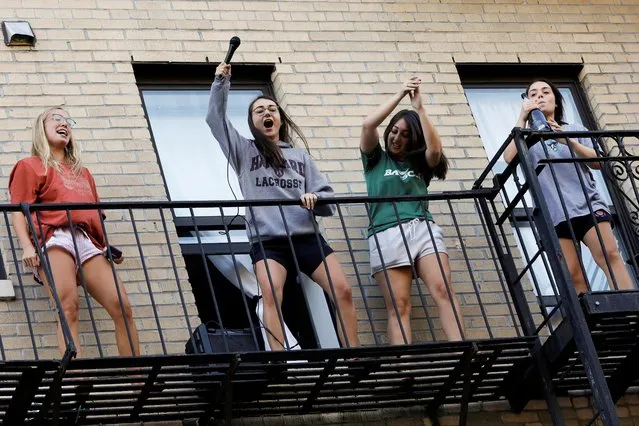
People celebrate media announcing that Democratic U.S. presidential nominee Joe Biden has won the 2020 U.S. presidential election in Alphabet City neighborhood of Manhattan, in New York City, U.S. November 7, 2020. (Photo by Andrew Kelly/Reuters)
For her series “Japanese Whispers”, Belgian photographer Zaza Bertrand headed inside the intimate world of rabuhos – Japanese love hotels. Love hotels became popular in Japan from the 1960s onwards, due to a lack of privacy in many family homes. There are now around 37,000 of these hotels in Japan, allowing short daytime “rests” or overnight stays. (Photo by Zaza Bertrand/The Guardian)