Loading...
Done


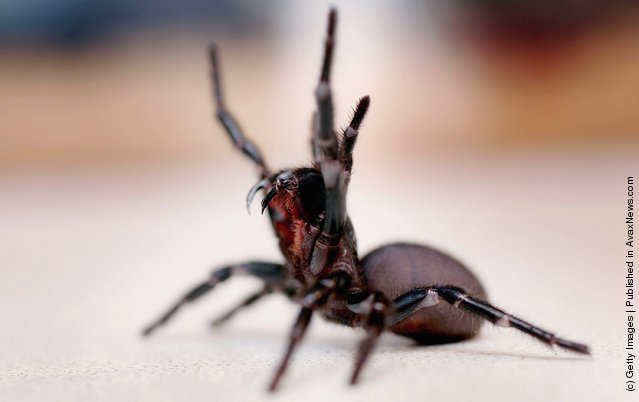
A Funnel Web spider is pictured at the Australian Reptile Park January 23, 2006 in Sydney, Australia. The Funnel Web is one of Australia's deadliest animals, with a venom that is packed with at least 40 different toxic proteins. A bite from a Funnel Web causes massive electrical over-load in the body's nervous system. Finally, fatalities occur from either heart attack or a pulmonary oedema, where the capillaries around the lungs begin to leak fluid and the patient effectively drowns. Death can come as quickly as two hours after a bite if no medical treatment is sought. Due to advances in anti-venom, there has been no death from a Funnel Web bite in Australia since 1980. Australia is home to some of the most deadly and poisonous animals on earth. (Photo by Ian Waldie/Getty Images)
Details
25 Apr 2011 07:49:00
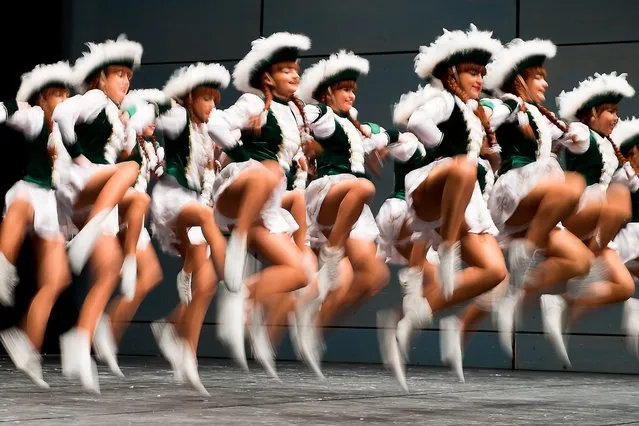
A picture taken with slow shutter speed shows members of the group “The Kattfiller” from Attendorn taking part during the Norddeutsche Championship carnivalesque dance sport in Kassel (Hessen), Germany, 28 February 2016. About 1,100 qualified dancers show in different disciplines their skills. (Photo by Swen Pfoertner/EPA)

A picture taken with slow shutter speed shows members of the group “The Kattfiller” from Attendorn taking part during the Norddeutsche Championship carnivalesque dance sport in Kassel (Hessen), Germany, 28 February 2016. About 1,100 qualified dancers show in different disciplines their skills. (Photo by Swen Pfoertner/EPA)
Details
29 Feb 2016 12:00:00
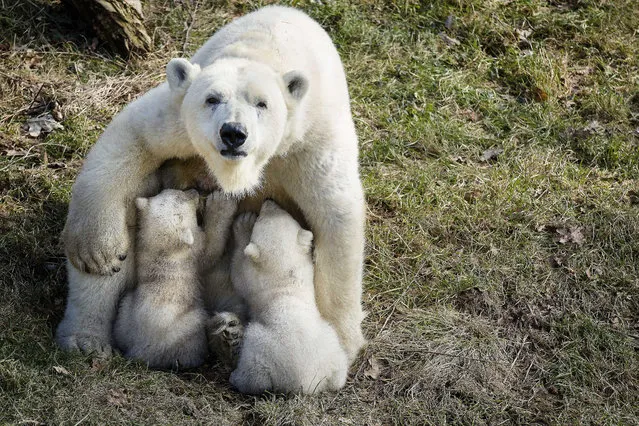
Polar bear twins make their first public appearance with their mother “Freedom” at Ouwehands Zoo Rhenen, in Rhenen, The Netherlands, 19 February 2015. The twins, who were born in November 2014, have not been named because their gender has not yet been determined. (Photo by Bart Maat/EPA)

Polar bear twins make their first public appearance with their mother “Freedom” at Ouwehands Zoo Rhenen, in Rhenen, The Netherlands, 19 February 2015. The twins, who were born in November 2014, have not been named because their gender has not yet been determined. (Photo by Bart Maat/EPA)
Details
21 Feb 2015 11:58:00
Animal rights activists covered with fake blood sit on the floor during a protest against the use of animals in research to mark World Day for Animals in Laboratories in central Madrid April 24, 2014. The sign reads, “How many rabbits do your shampoo kill?”. (Photo by Andrea Comas/Reuters)

Animal rights activists covered with fake blood sit on the floor during a protest against the use of animals in research to mark World Day for Animals in Laboratories in central Madrid April 24, 2014. The sign reads, “How many rabbits do your shampoo kill?”. (Photo by Andrea Comas/Reuters)
Details
26 Apr 2014 11:44:00
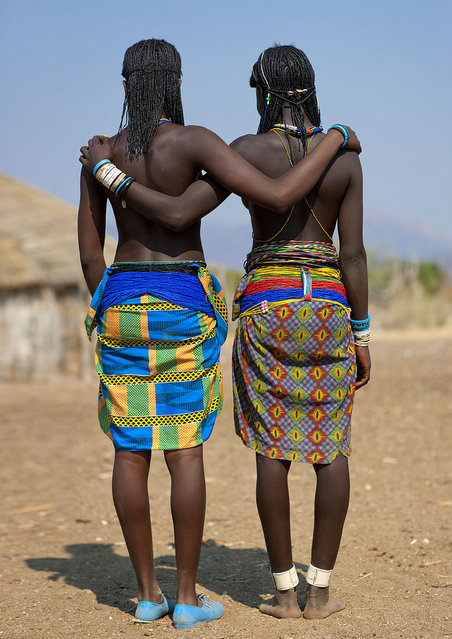
“Show us our butts! Mucawana tribe – Angola. In Soba village, the Muhacaona (Mucawana) tribe, perhaps the best place i have visited. They use cow dung and fat to make this so nice haircut, and love the beads. They asked me to make pictures of their backs... and butts to see on the camera screen if everything was perfect!”. (Eric Lafforgue)

“Show us our butts! Mucawana tribe – Angola. In Soba village, the Muhacaona (Mucawana) tribe, perhaps the best place i have visited. They use cow dung and fat to make this so nice haircut, and love the beads. They asked me to make pictures of their backs... and butts to see on the camera screen if everything was perfect!”. (Photo and comments by Eric Lafforgue)
Details
09 Nov 2012 15:04:00
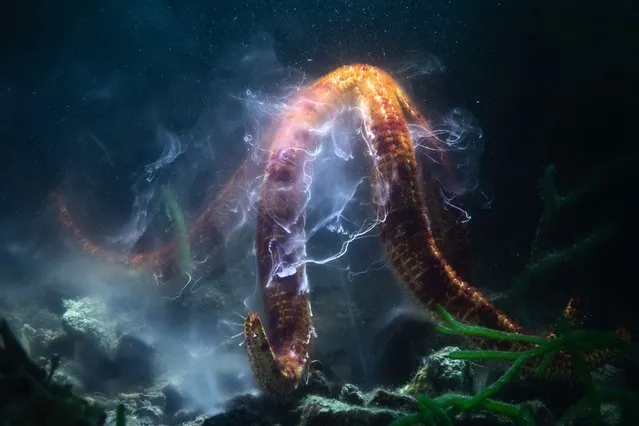
Shooting star by Tony Wu, US/Japan. Winner, underwater. The electrifying reproductive dance of a giant sea star. As the surrounding water filled with sperm and eggs from spawning sea stars, Wu faced several challenges. Stuck in a small, enclosed bay with only a macro lens for photographing small subjects, he backed up to squeeze the undulating sea star into his field of view. The dancing posture of spawning sea stars rising and swaying may help release eggs and sperm, or may help sweep the eggs and sperm into the currents where they fertilise together in the water. Kinko Bay, Japan. (Photo by Tony Wu/Wildlife Photographer of the Year)

Shooting star by Tony Wu, US/Japan. Winner, underwater. The electrifying reproductive dance of a giant sea star. As the surrounding water filled with sperm and eggs from spawning sea stars, Wu faced several challenges. Stuck in a small, enclosed bay with only a macro lens for photographing small subjects, he backed up to squeeze the undulating sea star into his field of view. The dancing posture of spawning sea stars rising and swaying may help release eggs and sperm, or may help sweep the eggs and sperm into the currents where they fertilise together in the water. Kinko Bay, Japan. (Photo by Tony Wu/Wildlife Photographer of the Year)
Details
15 Oct 2022 03:50:00
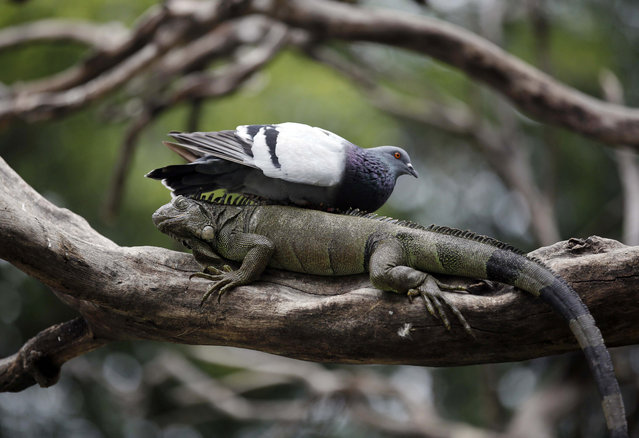
A pigeon rests on a wild iguana in a tree inside Seminario Park in Guayaquil, Ecuador, Thursday, April 3, 2014. Pigeons coexist with the wild iguanas at this park in the middle of the city surrounded by savannah. (Photo by Dolores Ochoa/AP Photo)

A pigeon rests on a wild iguana in a tree inside Seminario Park in Guayaquil, Ecuador, Thursday, April 3, 2014. Pigeons coexist with the wild iguanas at this park in the middle of the city surrounded by savannah. (Photo by Dolores Ochoa/AP Photo)
Details
05 Apr 2014 14:04:00
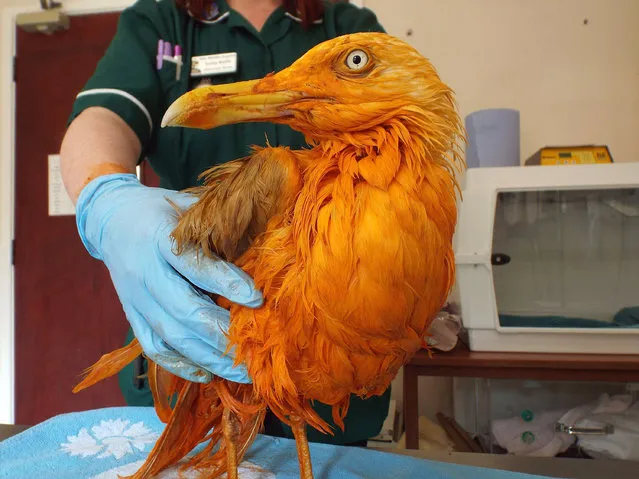
A seagull who turned bright orange after he plunged into a vat of chicken tikka masala in Beckford, England on June 9, 2016. The bird fell into a container of the food while trying to scavenge a piece of meat from a food factory bin in Wales. (Photo by Vale Wildlife Hospital/PA Wire)

A seagull who turned bright orange after he plunged into a vat of chicken tikka masala in Beckford, England on June 9, 2016. The bird fell into a container of the food while trying to scavenge a piece of meat from a food factory bin in Wales. (Photo by Vale Wildlife Hospital/PA Wire)
Details
12 Jun 2016 10:11:00