Loading...
Done
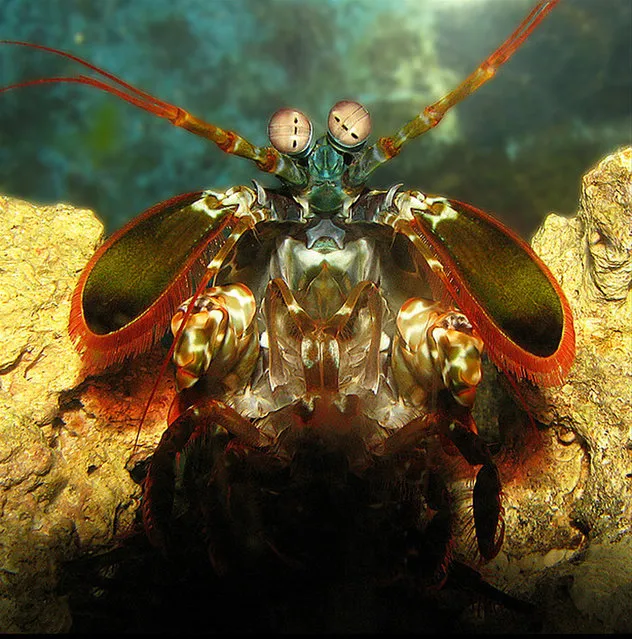
Peacock Mantis Shrimp

Odontodactylus scyllarus, known as the peacock mantis shrimp, harlequin mantis shrimp or painted mantis shrimp, is a large mantis shrimp native to the Indo-Pacific from Guam to East Africa.

Details
22 Jan 2013 12:29:00
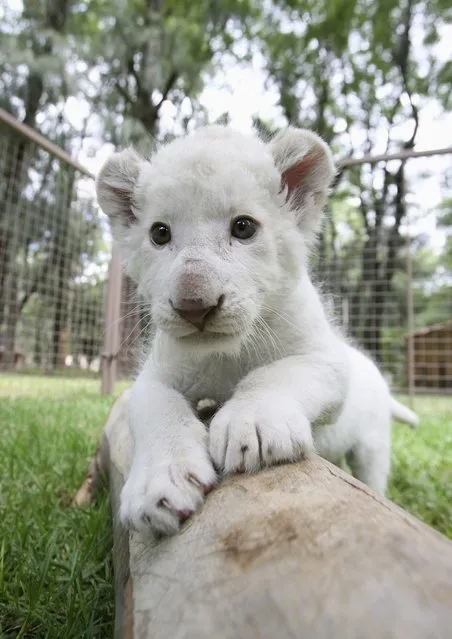
Rare White Lion Cub Debut

A rare snow-white lion cub was born on September 14 at Leon’s Zoo in Guanajuato, Mexico. White lions are not albinos. They are color mutations of a certain subspecies of lion, and very rare. When they occurred in the wild in South Africa, the locals regarded them as divine.
Details
28 Oct 2012 11:44:00
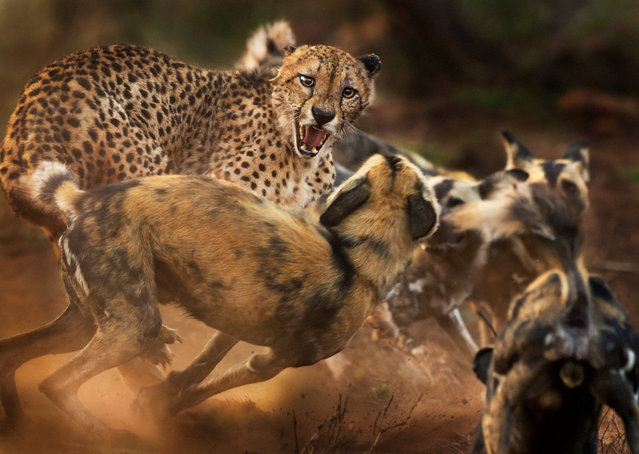
A lone male cheetah is set upon by a pack of African wild dogs. Peter Haygarth had been following the dogs as they hunted in Zimanga Private Game Reserve in KwaZulu-Natal, South Africa. On first encountering the cheetah, the dogs were wary, but as the rest of the pack arrived, their confidence grew and they began to encircle the cat. Peter kept his focus on the cat’s face. In a few minutes the spat was over as the cheetah fled. (Behaviour: mammals category). (Photo by Peter Haygarth)

A lone male cheetah is set upon by a pack of African wild dogs. Peter Haygarth had been following the dogs as they hunted in Zimanga Private Game Reserve in KwaZulu-Natal, South Africa. On first encountering the cheetah, the dogs were wary, but as the rest of the pack arrived, their confidence grew and they began to encircle the cat. Peter kept his focus on the cat’s face. In a few minutes the spat was over as the cheetah fled. (Behaviour: mammals category). (Photo by Peter Haygarth)
Details
10 Sep 2019 00:03:00
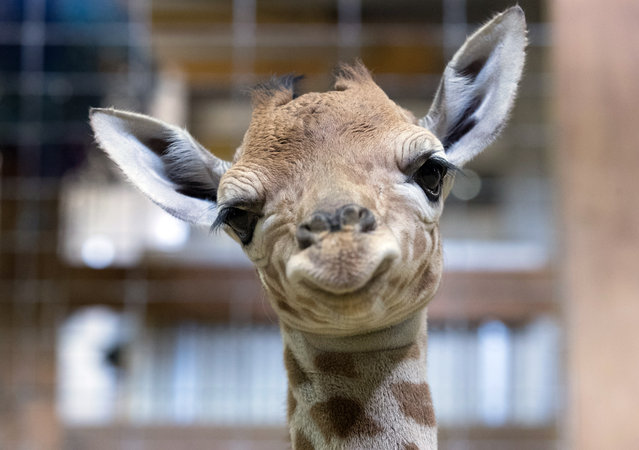
One-day-old baby giraffe calf Gus looks at the camera at Noah's Ark farm on May 12, 2017 in Bristol, England. The baby giraffe was born yesterday at the zoo farm in North Somerset. In the wild, populations of giraffes are suffering from a continuing decline, with 97,500 estimated in Africa in 2015. Since 1985 the total giraffe population has fallen by 35%. New arrival Gus joins brothers George, 4 and Geoffrey, 2. (Photo by Matt Cardy/Getty Images)

One-day-old baby giraffe calf Gus looks at the camera at Noah's Ark farm on May 12, 2017 in Bristol, England. The baby giraffe was born yesterday at the zoo farm in North Somerset. In the wild, populations of giraffes are suffering from a continuing decline, with 97,500 estimated in Africa in 2015. Since 1985 the total giraffe population has fallen by 35%. New arrival Gus joins brothers George, 4 and Geoffrey, 2. (Photo by Matt Cardy/Getty Images)
Details
14 May 2017 08:05:00
In this photo taken Wednesday, November 26, 2014 attack dogs and their handlers apprehend a “rhino poacher” center, after alighting from a helicopter into water,  in a simulation exercise showing training at an academy run by the Paramount Group, near Rustenburg, South Africa. (Photo by Denis Farrell/AP Photo)

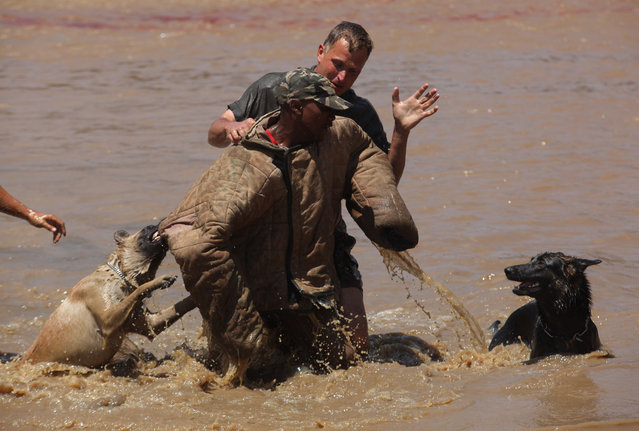
In this photo taken Wednesday, November 26, 2014 attack dogs and their handlers apprehend a “rhino poacher” center, after alighting from a helicopter into water, in a simulation exercise showing training at an academy run by the Paramount Group, near Rustenburg, South Africa. The course prepares canine units to find firearms or contraband, track suspects in the undergrowth and abseil in harnesses from helicopters in pursuit of poachers. Dogs and handlers learn to trust each other and fine tune a relationship balancing control and aggression. (Photo by Denis Farrell/AP Photo)
Details
01 Dec 2014 14:14:00


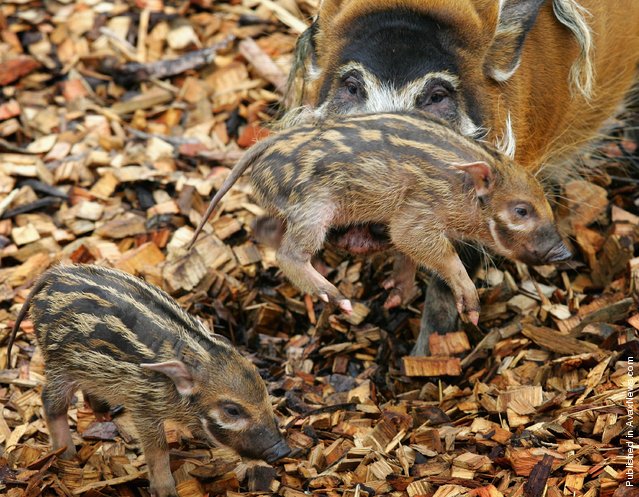
“The Red River Hog (Potamochoerus porcus), also known as the Bush Pig (but not to be confused with P. larvatus, common name “Bushpig”), is a wild member of the pig family living in Africa, with most of its distribution in the Guinean and Congolian forests. It is rarely seen away from rainforests, and generally prefers areas near rivers or swamps.

Red River Hogs eat grass, berries, roots, insects, molluscs, small vertebrates and carrion. They are capable of causing damage to plantations. Red River Hogs typically live in herds of 6-20 members led by a dominant boar. Sows rear 3-6 piglets at a time.”

Photo: Two 17 day old red river hoglet twins forage for food next to their mother Bahiti at London Zoo on August 23, 2007 in London, England. Red River hoglets inhabit the forests and swamps of West and Central Africa. The recent additions to the London Zoo pig pen have been eagerly awaited by zoo keepers. (Photo by Chris Jackson/Getty Images)
Details
18 Mar 2011 15:15:00
Omar Gamal, a 28-year-old pigeon keeper, stands next to his pigeon coop on his rooftop in the Egyptian capital's twin city of Giza on February 21, 2021, with the Pyramids of (R to L) Khufu (Cheops), Khafre (Chephren), and Menkaure (Menkheres) in the background. An ancient tradition handed down through the generations, the practice of domesticating pigeons stretches across borders from the banks of the Nile to north Africa and beyond, with people not only training birds for competitions, but also serving them up as a dining delicacy. (Photo by Khaled Desouki/AFP Photo)

Omar Gamal, a 28-year-old pigeon keeper, stands next to his pigeon coop on his rooftop in the Egyptian capital's twin city of Giza on February 21, 2021, with the Pyramids of (R to L) Khufu (Cheops), Khafre (Chephren), and Menkaure (Menkheres) in the background. An ancient tradition handed down through the generations, the practice of domesticating pigeons stretches across borders from the banks of the Nile to north Africa and beyond, with people not only training birds for competitions, but also serving them up as a dining delicacy. (Photo by Khaled Desouki/AFP Photo)
Details
27 Mar 2021 09:11:00
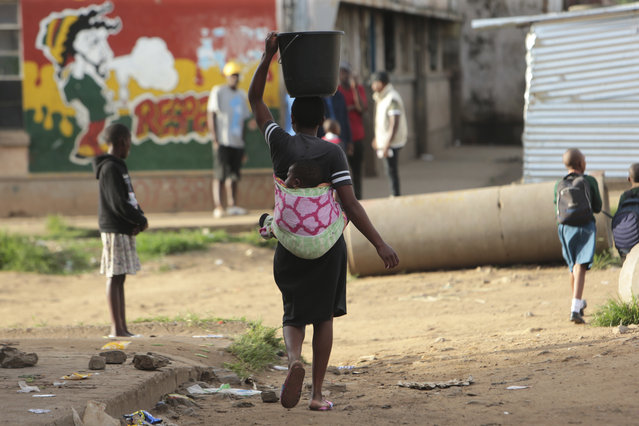
In this Monday, April 6, 2020 photo, a woman carries a her baby and a bucket of water in Harare. Lockdowns imposed to curb the coronavirus’ spread have put millions of women in Africa, Asia and elsewhere out of reach of birth control and other sexual and reproductive health needs. Confined to their homes with husbands and others, they face unwanted pregnancies and little idea of when they can reach the outside world again. (Photo by Tsvangirayi Mukwazhi/AP Photo)

In this Monday, April 6, 2020 photo, a woman carries a her baby and a bucket of water in Harare. Lockdowns imposed to curb the coronavirus’ spread have put millions of women in Africa, Asia and elsewhere out of reach of birth control and other sexual and reproductive health needs. Confined to their homes with husbands and others, they face unwanted pregnancies and little idea of when they can reach the outside world again. (Photo by Tsvangirayi Mukwazhi/AP Photo)
Details
30 May 2020 00:01:00