Loading...
Done
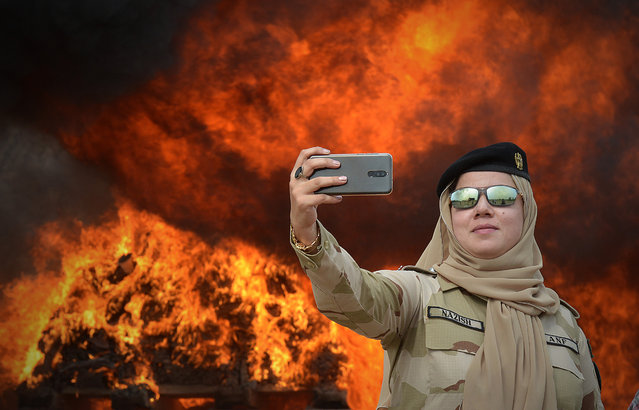
A member of the Pakistani Anti-Narcotic Force (ANF) takes a selfie beside a pile of burning drugs and liquor during a ceremony at the Kacha Ghari army firing range, on the outskirts of Peshawar on October 16, 2018, after the contraband was seized in raids across the province. (Photo by Abdul Majeed/AFP Photo)

A member of the Pakistani Anti-Narcotic Force (ANF) takes a selfie beside a pile of burning drugs and liquor during a ceremony at the Kacha Ghari army firing range, on the outskirts of Peshawar on October 16, 2018, after the contraband was seized in raids across the province. (Photo by Abdul Majeed/AFP Photo)
Details
20 Oct 2018 00:07:00
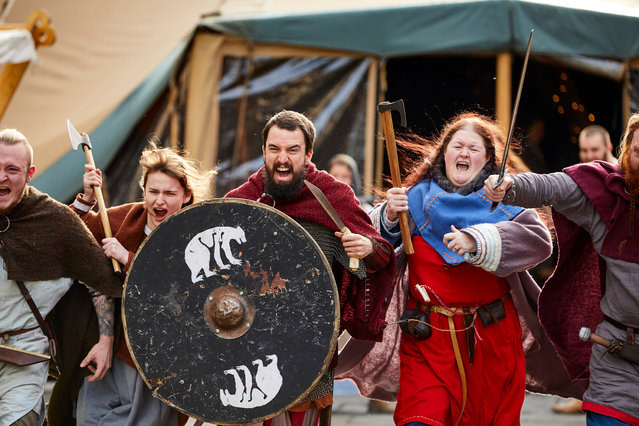
Viking re-enactors representing the rival armies of the Vikings and Anglo-Saxons skirmish near Clifford’s Tower during the Jorvik Viking Festival on February 23, 2019 in York, England. (Photo by Christopher Thomond/The Guardian)

Viking re-enactors representing the rival armies of the Vikings and Anglo-Saxons skirmish near Clifford’s Tower during the Jorvik Viking Festival on February 23, 2019 in York, England. The annual Jorvik Viking Festival held in York is recognised as the largest event of its kind in Europe. This year the festival remembers the role that the Viking women played during those turbulent times. (Photo by Christopher Thomond/The Guardian)
Details
26 Feb 2019 00:05:00
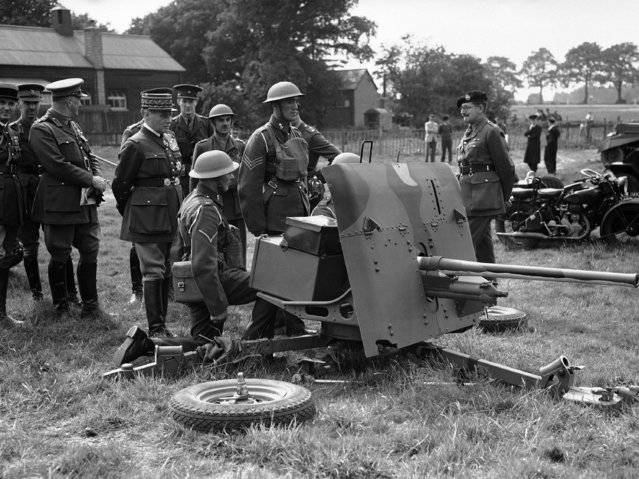
General Maurice Gamelin, General Officer commanding the French Armies, is on a four day visit to England. He went to the staff college at Minley and is seen inspecting an anti-tank gun at Aldershot, on June 7, 1939. (Photo by AP Photo)

General Maurice Gamelin, General Officer commanding the French Armies, is on a four day visit to England. He went to the staff college at Minley and is seen inspecting an anti-tank gun at Aldershot, on June 7, 1939. (Photo by AP Photo)
Details
16 Jan 2018 06:25:00
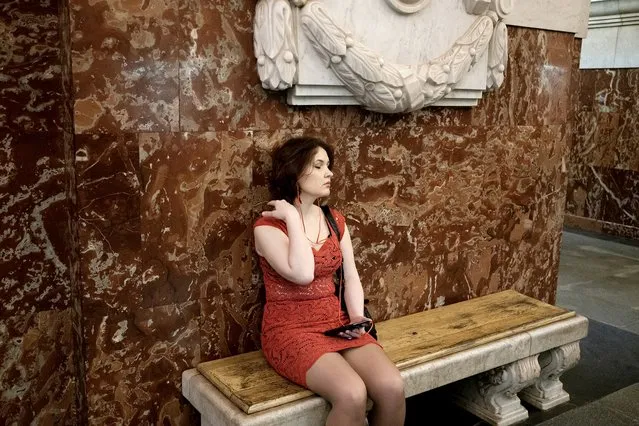
At the Krasnopresnenskaya station, the benches come from the Cathedral of Christ-Sauveur, which was built from 1839 to 1883 in memory of the victory of Russia against the army of Napoleon I. The cathedral was destroyed under Stalin in 1931, but the benches remained intact. Metro architects decided to install them in some stations. (Photo by Didier Bizet/The Washington Post)

At the Krasnopresnenskaya station, the benches come from the Cathedral of Christ-Sauveur, which was built from 1839 to 1883 in memory of the victory of Russia against the army of Napoleon I. The cathedral was destroyed under Stalin in 1931, but the benches remained intact. Metro architects decided to install them in some stations. (Photo by Didier Bizet/The Washington Post)
Details
24 Jan 2018 06:23:00
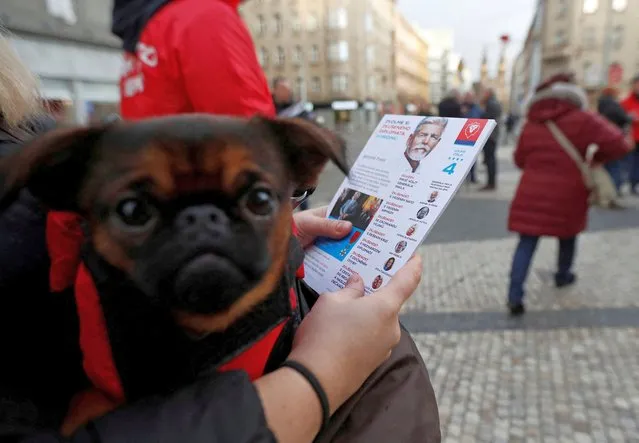
A supporter of presidential candidate and former chairman of the NATO Military Committee and Czech Army General Petr Pavel hands out leaflets, ahead of a direct presidential election that will start on January 13, in Prague, Czech Republic on January 5, 2023. (Photo by David W. Cerny/Reuters)

A supporter of presidential candidate and former chairman of the NATO Military Committee and Czech Army General Petr Pavel hands out leaflets, ahead of a direct presidential election that will start on January 13, in Prague, Czech Republic on January 5, 2023. (Photo by David W. Cerny/Reuters)
Details
01 Apr 2024 05:55:00
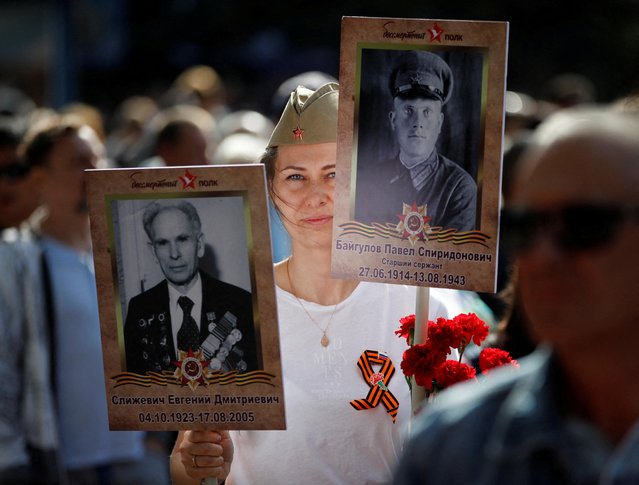
A woman carries portraits of Red Army soldiers during the celebrations of Victory Day, which marks the 78th anniversary of the victory over Nazi Germany in World War Two, in Almaty, Kazakhstan on May 9, 2023. (Photo by Pavel Mikheyev/Reuters)

A woman carries portraits of Red Army soldiers during the celebrations of Victory Day, which marks the 78th anniversary of the victory over Nazi Germany in World War Two, in Almaty, Kazakhstan on May 9, 2023. (Photo by Pavel Mikheyev/Reuters)
Details
24 Aug 2024 04:38:00
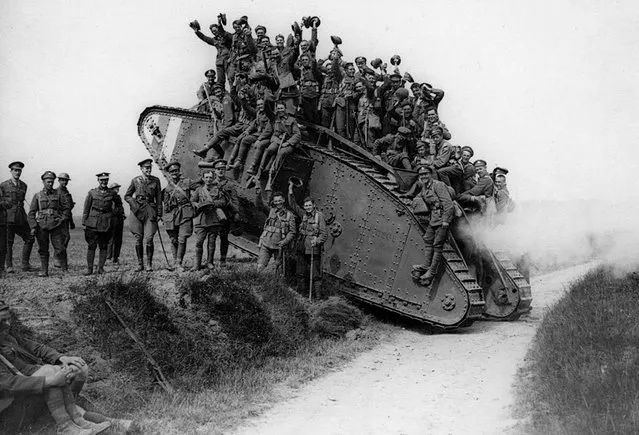
These black-and-white photos are taken from the new book “Armoured Warfare in the First World War 1916 – 1918” by Anthony Tucker-Jones and published by Pen & Sword Military. “Interestingly the British, French and Germans took completely different approaches with varying results”. The British military produced “Little Willie” in Autumn 1915 weighing 18 tonnes, which had a crew of two plus four gunners. “Inspired by a tracked artillery tractor “Little Willie” was referred to as a water tank – hence the name tank – to ensure secrecy”, said Anthony. “This led to the strange looking Mark I with its peculiar rhomboid shape, designed to cross trenches with guns in sponsons on either side. The Germans saw the tank as unchivalrous and were slow to grasp its utility. They favoured the Stormtrooper (specialist soldiers used to infiltrate enemy trenches) and artillery, not the tank”, said Anthony. “However, they didn’t hesitate to make use of captured British tanks. Although the tank helped secure victory and German soldiers dubbed it “Germany’s Downfall” the country was ultimately brought to its knees by the Allies blockade”. Here: British troops hitch a ride on a Mark IV after the massed tank fleet spearheading attack at Cambrai on November 20, 1917. (Photo by Anthony Tucker-Jones/Mediadrumworld.com)

These black-and-white photos are taken from the new book “Armoured Warfare in the First World War 1916 – 1918” by Anthony Tucker-Jones and published by Pen & Sword Military. Here: British troops hitch a ride on a Mark IV after the massed tank fleet spearheading attack at Cambrai on November 20, 1917. (Photo by Anthony Tucker-Jones/Mediadrumworld.com)
Details
23 Feb 2017 00:02:00
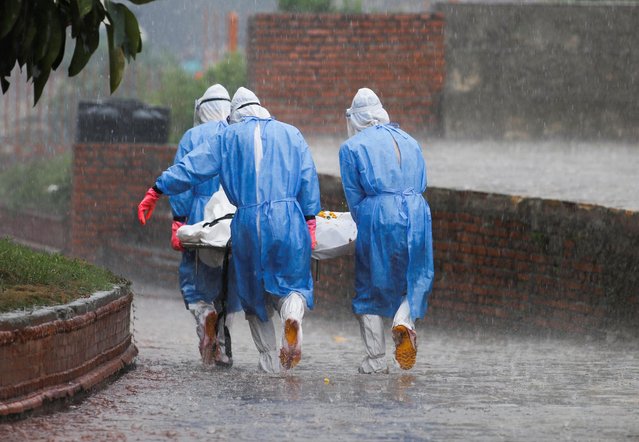
Members of Nepal Army wearing personal protective equipment (PPE) carry the body of a person, who died from the coronavirus disease (COVID-19), in the rain at the crematorium, in Kathmandu, Nepal on May 11, 2021. (Photo by Navesh Chitrakar/Reuters)

Members of Nepal Army wearing personal protective equipment (PPE) carry the body of a person, who died from the coronavirus disease (COVID-19), in the rain at the crematorium, in Kathmandu, Nepal on May 11, 2021. (Photo by Navesh Chitrakar/Reuters)
Details
11 Jun 2021 09:51:00