Loading...
Done
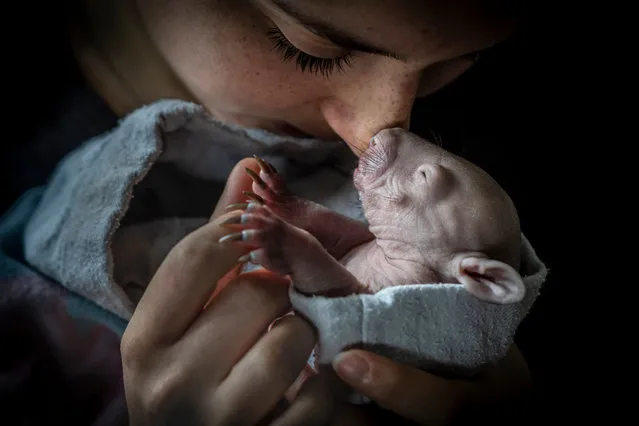
Nose to Nose; Human/Nature winner. “Doug Gimesy was documenting work at the Joey and Bat Sanctuary near Melbourne when he met a wombat (Vombatus ursinus) whose mother had been killed by a car. Gimesy watched as a young veterinary student bottle-fed the orphaned joey, then touched her nose to the joey’s in a tender moment of interspecies bonding”. (Photo by Doug Gimesy/BigPicture)

Nose to Nose; Human/Nature winner. “Doug Gimesy was documenting work at the Joey and Bat Sanctuary near Melbourne when he met a wombat (Vombatus ursinus) whose mother had been killed by a car. Gimesy watched as a young veterinary student bottle-fed the orphaned joey, then touched her nose to the joey’s in a tender moment of interspecies bonding”. (Photo by Doug Gimesy/BigPicture)
Details
25 Jun 2023 05:33:00
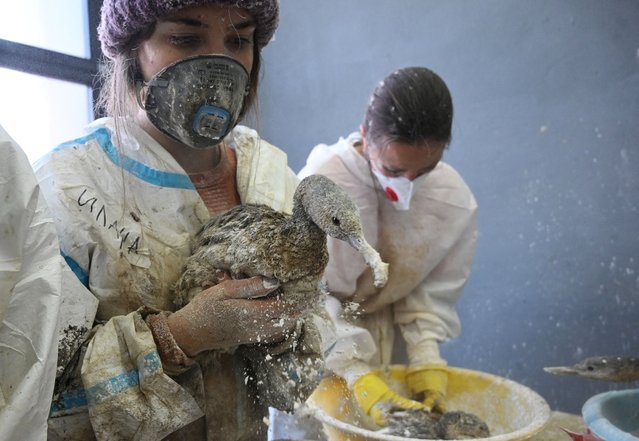
Volunteers use flour to clean birds following an oil spill caused by an incident involving two tankers damaged in a storm in the Kerch Strait, in the village of Vityazevo near the Black Sea resort of Anapa, Russia on December 20, 2024. (Photo by Sergey Pivovarov/Reuters)

Volunteers use flour to clean birds following an oil spill caused by an incident involving two tankers damaged in a storm in the Kerch Strait, in the village of Vityazevo near the Black Sea resort of Anapa, Russia on December 20, 2024. (Photo by Sergey Pivovarov/Reuters)
Details
24 Dec 2024 04:11:00
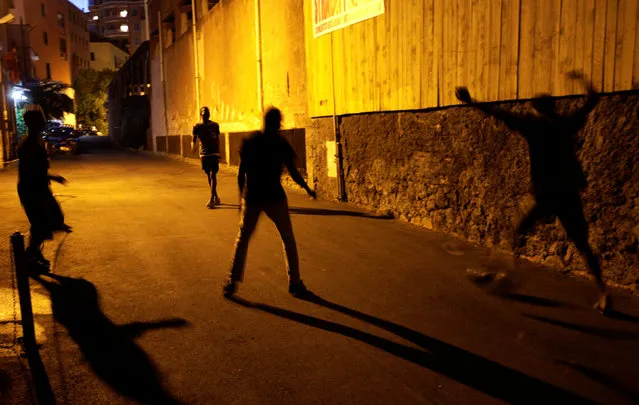
Migrants play soccer at makeshift camp in Via Cupa (Gloomy Street) in downtown Rome, Italy, August 2, 2016. Italy is taking in thousands of boat migrants every week for a third year in a row, and friction is common between them and those who live along the path many take on their journey towards northern Europe. Set up by volunteers, the Baobab centre, by Rome's Tiburtina train station, was shut down by police in December in the wake of the Paris attacks and because the European Union wants Italy to stop migrants from moving on, not help them to do so. B(Photo by Max Rossi/Reuters)

Migrants play soccer at makeshift camp in Via Cupa (Gloomy Street) in downtown Rome, Italy, August 2, 2016. Italy is taking in thousands of boat migrants every week for a third year in a row, and friction is common between them and those who live along the path many take on their journey towards northern Europe. (Photo by Max Rossi/Reuters)
Details
11 Aug 2016 14:31:00
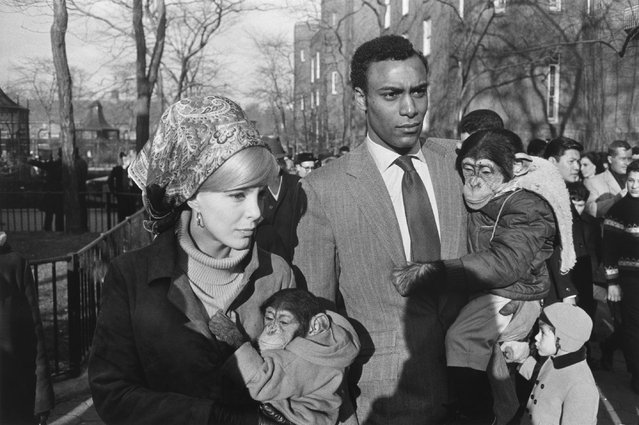
Central Park Zoo, New York, 1967. (Photo by Garry Winogrand)

Central Park Zoo, New York, 1967. (Photo by Garry Winogrand)
Details
28 Nov 2015 08:02:00
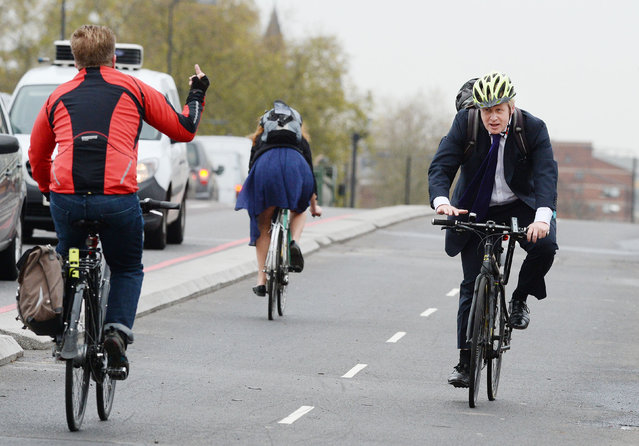
A commuter gestures to Boris Johnson as he rides across Vauxhall Bridge in London, England on November 19, 2015. The London mayor was opening a cycle superhighway. (Photo by John Stillwell/PA Wire)

A commuter gestures to Boris Johnson as he rides across Vauxhall Bridge in London, England on November 19, 2015. The London mayor was opening a cycle superhighway. (Photo by John Stillwell/PA Wire)
Details
20 Nov 2015 08:07:00
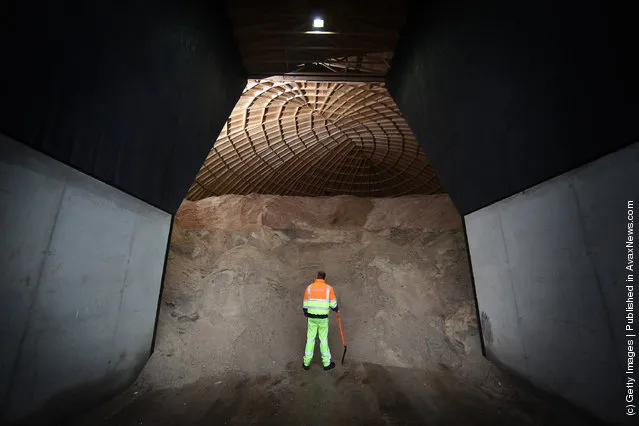
A pile of road salt

Route engineer Richard Winter stands in front of a pile of road salt at the Birchanger Depot on November 8, 2011 near Bishop's Stortford, England. (Photo by Peter Macdiarmid/Getty Images)
Details
10 Nov 2011 09:52:00
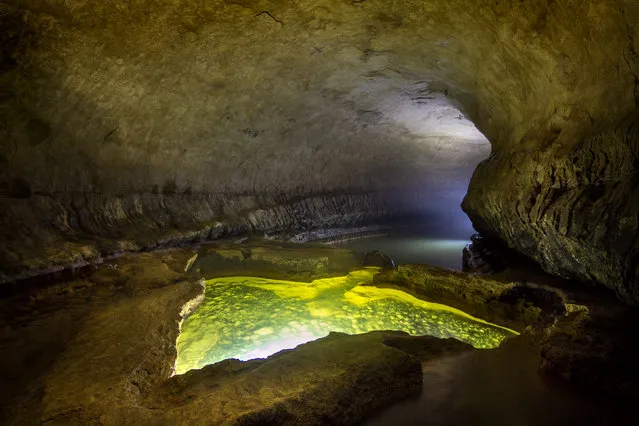
A large pool of water inside one of the tunnels. (Photo by Vladimir Mulde/Caters News)

These otherworldly images give a rare glimpse inside caves barely ever seen by the human eye. With its peculiar pools of water and strange colored sediments, the bizarre looking tunnels of the Shakuranskaya cave could be a set straight out of a science fiction film. Found in the disputed region of Abkhazia, around 75 miles outside of Sochi, Russia, it is rumored the incredible underground chambers were formed after a huge earthquake struck the area in 1892. After causing part of a nearby mountain to collapse into the Amtkel River, it is thought the dam-like affect has created a series of interconnecting underground tunnels. Here: a large pool of water inside one of the tunnels. (Photo by Vladimir Mulde/Caters News)
Details
07 Nov 2014 12:45:00
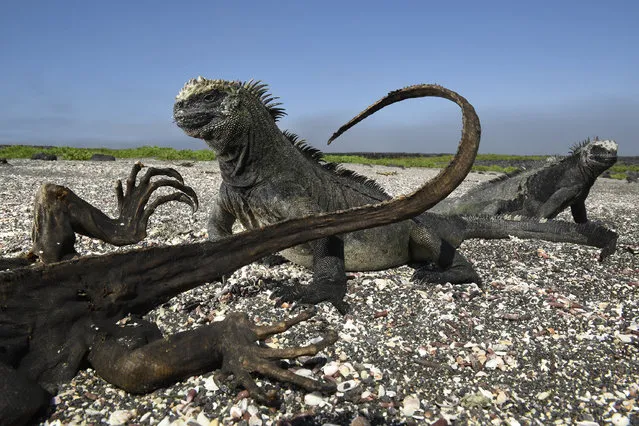
Galapagos – Rocking the Cradle: Four major ocean currents converge along the Galapagos archipelago, creating the conditions for an extraordinary diversity of animal life, April 25, 2016. The islands are home to at least 7,000 flora and fauna species, of which 97 percent of the reptiles, 80 percent of the land birds, 50 percent of the insects and 30 percent of the plants are endemic. The local ecosystem is highly sensitive to the changes in temperature, rainfall and ocean currents that characterize the climatic events known as El Niño and La Niña. These changes cause marked fluctuations in weather and food availability. Many scientists expect the frequency of El Niño and La Niña to increase as a result of climate change, making the Galapagos a possible early-warning location for its effects. (Photo by Thomas P. Peschak for National Geographic/World Press Photo)

Galapagos – Rocking the Cradle: Four major ocean currents converge along the Galapagos archipelago, creating the conditions for an extraordinary diversity of animal life, April 25, 2016. The islands are home to at least 7,000 flora and fauna species, of which 97 percent of the reptiles, 80 percent of the land birds, 50 percent of the insects and 30 percent of the plants are endemic. (Photo by Thomas P. Peschak for National Geographic/World Press Photo)
Details
16 Apr 2018 00:01:00