Loading...
Done
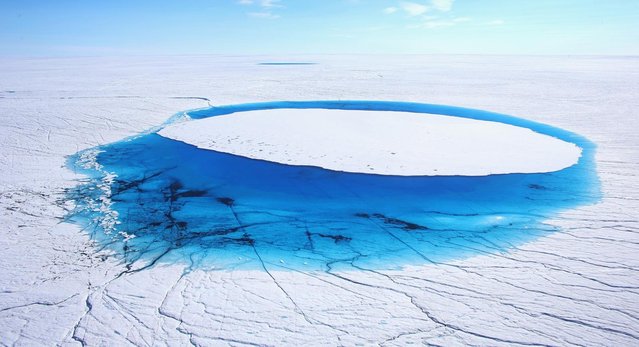
Water is seen on part of the glacial ice sheet that covers about 80 percent of the country is seen on July 17, 2013 on the Glacial Ice Sheet, Greenland. (Photo by Joe Raedle/Getty Images via The Atlantic)

Water is seen on part of the glacial ice sheet that covers about 80 percent of the country is seen on July 17, 2013 on the Glacial Ice Sheet, Greenland. As the sea levels around the globe rise, researchers affilitated with the National Science Foundation and other organizations are studying the phenomena of the melting glaciers and its long-term ramifications. The warmer temperatures that have had an effect on the glaciers in Greenland also have altered the ways in which the local populace farm, fish, hunt and even travel across land. In recent years, sea level rise in places such as Miami Beach has led to increased street flooding and prompted leaders such as New York City Mayor Michael Bloomberg to propose a $19.5 billion plan to boost the citys capacity to withstand future extreme weather events by, among other things, devising mechanisms to withstand flooding. (Photo by Joe Raedle)
Details
02 Aug 2013 10:51:00
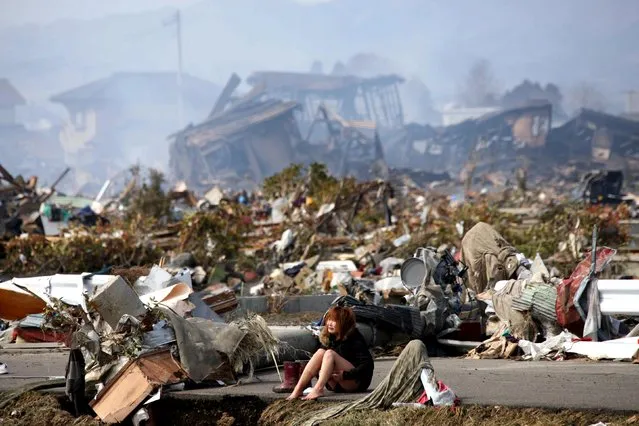
A woman cries while sitting on a road amid the destroyed city of Natori, Miyagi Prefecture in northern Japan March 13, 2011, after a massive earthquake and tsunami that are feared to have killed more than 10,000 people. (Photo by Asahi Shimbun/Reuters)

A woman cries while sitting on a road amid the destroyed city of Natori, Miyagi Prefecture in northern Japan March 13, 2011, after a massive earthquake and tsunami. Five years on from the tsunami that triggered meltdowns at Japan's Fukushima nuclear plant, the page is anything but turned. A magnitude 9 earthquake and towering tsunami on March 11, 2011 killed nearly 16,000 people along Japan's northeastern coast and left more than 2,500 missing. The 10-metre (33-foot) tsunami swept away everything in its path, including houses, ships, cars and farm buildings. (Photo by Asahi Shimbun/Reuters)
Details
09 Mar 2016 12:40:00
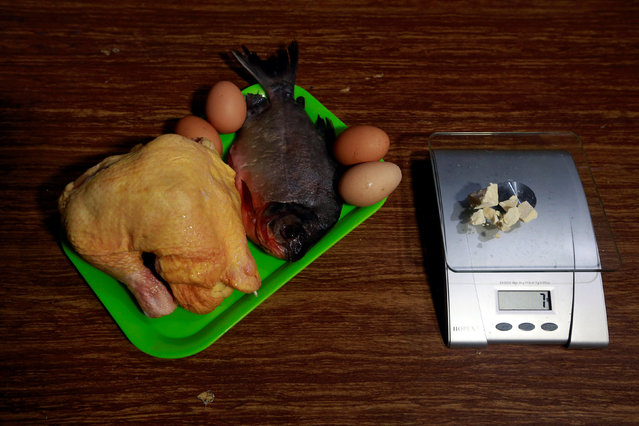
Chicken, fish and eggs lie next to coca paste worth $14,000 Colombian pesos at a local store in Guyabero Region, Guaviare, Colombia, May 24, 2016. (Photo by John Vizcaino/Reuters)

Chicken, fish and eggs lie next to coca paste worth $14,000 Colombian pesos at a local store in Guyabero Region, Guaviare, Colombia, May 24, 2016. As the government nears a historic peace deal with the rebels of the Revolutionary Armed Forces of Colombia (FARC), the nation's authorities are struggling to tame an increase in farming of coca, the raw material used to make cocaine. In the Guyabero Region, where many people work on coca plantations, locals barter coca paste to buy groceries at the local shop. (Photo by John Vizcaino/Reuters)
Details
03 Jun 2016 12:46:00
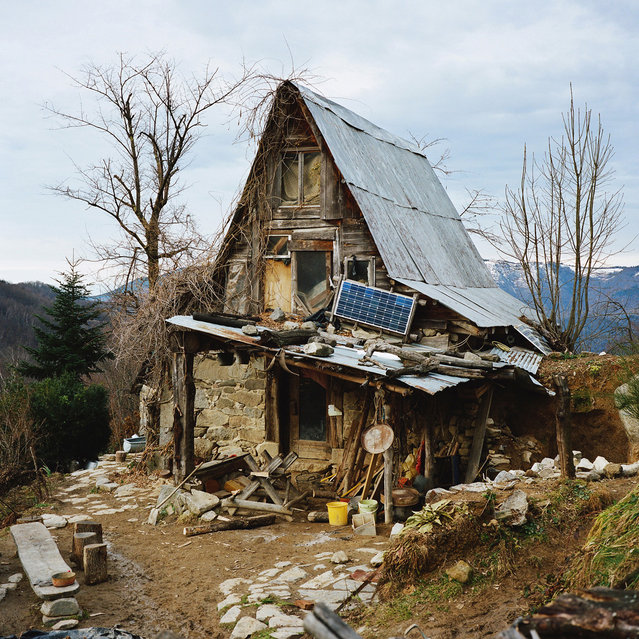
This property in the French Pyrenees is owned by a German man, who moved with his family here 25 years ago. He has since renovated the shack to be a completely self-sufficient house. There are no electrical appliances, but the solar panel powers small lights in the house. (Photo by Antoine Bruy)

Back in 2010, French photographer Antoine Bruy began hitchhiking around Europe without any fixed route. Along his travels, he met people who had entirely abandoned city life in favour of an isolated country existence they found more fulfilling. Bruy began seeking out people who lived off-the-grid. After three years on the road, staying in makeshift houses and on community farms, he has released Scrublands, a documentation of the lifestyle. While each living situation is different, Bruy found that all the people he met shared a common desire to escape the rat race and achieve a quieter life in harmony with nature. (Photo by Antoine Bruy)
Details
13 Aug 2014 09:45:00
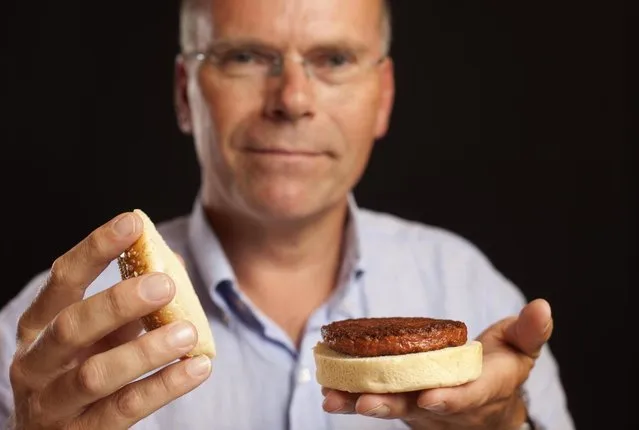
In this handout image provided by Ogilvy, a burger made from cultured beef, which has been developed by Professor Mark Post of Maastricht University in the Netherlands (pictured) is shown to the media during a press conference on August 5, 2013 in London, England. Cultured Beef could help solve the coming food crisis and combat climate change with commercial production of Cultured Beef beginning within ten to twenty years. (Photo by David Parry via Getty Images)

In this handout image provided by Ogilvy, a burger made from cultured beef, which has been developed by Professor Mark Post of Maastricht University in the Netherlands (pictured) is shown to the media during a press conference on August 5, 2013 in London, England. The in-vitro burger, cultured from cattle stem cells, the first example of what its creator says could provide an answer to global food shortages and help combat climate change, was fried in a pan and tasted by two volunteers. The burger is the result of years of research by Dutch scientist Mark Post, a vascular biologist at the University of Maastricht, who is working to show how meat grown in petri dishes might one day be a true alternative to meat from livestock.The meat in the burger has been made by knitting together around 20,000 strands of protein that has been cultured from cattle stem cells in Post's lab. (Photo by David Parry)
Details
06 Aug 2013 08:48:00
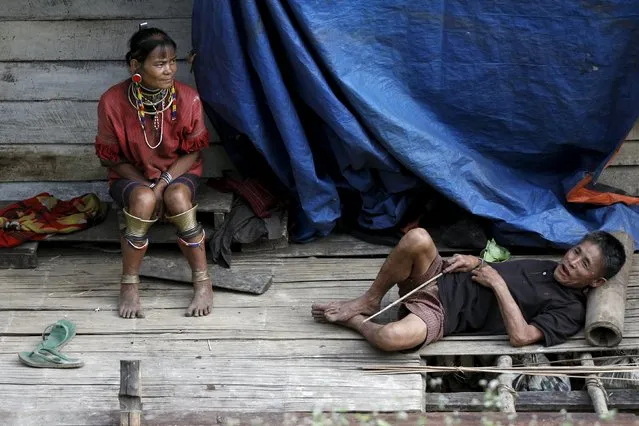
An ethnic Kayaw couple Mu Htoo and her husband Htaw Eili rest at their home at Htaykho village in the Kayah state, Myanmar September 12, 2015. (Photo by Soe Zeya Tun/Reuters)

An ethnic Kayaw couple Mu Htoo and her husband Htaw Eili rest at their home at Htaykho village in the Kayah state, Myanmar September 12, 2015. With about 30,000 members, the Kayaw are one of the smallest ethnic minorities among Myanmar's 135 groups. Their village has for decades been off-limits, as armed rebels fought the military before a recent ceasefire stopped the bloody conflict here. The rebels in the area have put down their guns and taken to the hills to grow rice and corn, but slash-and-burn cultivation methods mean they struggle to find new places to farm. (Photo by Soe Zeya Tun/Reuters)
Details
21 Oct 2015 08:03:00
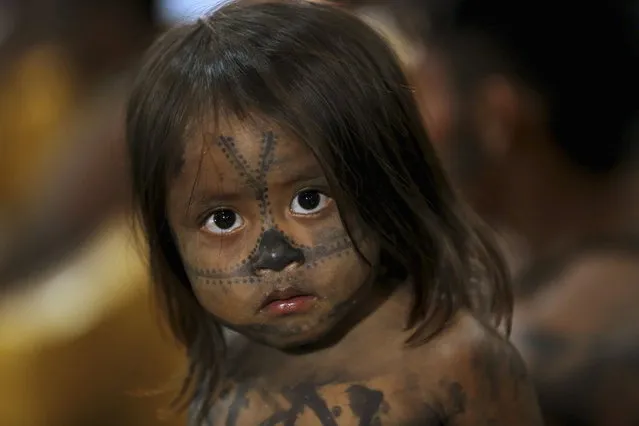
A Munduruku Indian child is pictured at the Planalto Palace, where a meeting with Minister of the General Secretariat of the Presidency of Brazil Gilberto Carvalho was being held with other Munduruku Indians, in Brasilia, June 4, 2013. (Photo by Ueslei Marcelino/Reuters)

A Munduruku Indian child is pictured at the Planalto Palace, where a meeting with Minister of the General Secretariat of the Presidency of Brazil Gilberto Carvalho was being held with other Munduruku Indians, in Brasilia, June 4, 2013. President Dilma Rousseff's government sought on Tuesday to defuse mounting conflicts with indigenous groups over its decision to stop setting aside farm land for Indians and plans to build more hydroelectric dams in the Amazon. The government flew 144 Munduruku Indians to Brasilia for talks to end a week-long occupation of the controversial Belo Monte dam on the Xingu river, a huge project aimed at feeding Brazil's fast-growing demand for electricity. (Photo by Ueslei Marcelino/Reuters)
Details
06 Jun 2013 09:25:00
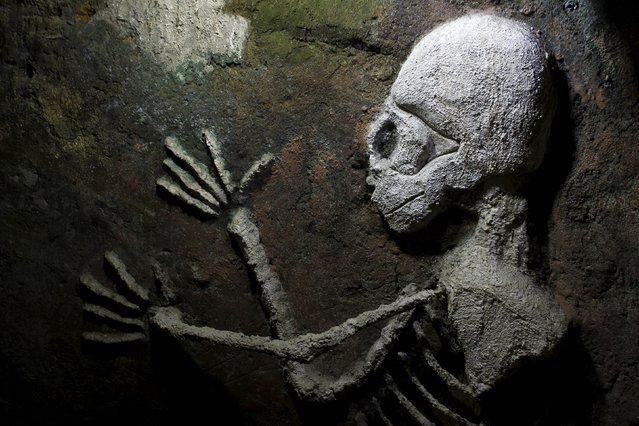
A figure of a skeleton is seen painted in a hallway of the house built underground by Manuel Barrantes in San Isidro de Perez Zeledon, Costa Rica, March 14, 2016. (Photo by Juan Carlos Ulate/Reuters)

A figure of a skeleton is seen painted in a hallway of the house built underground by Manuel Barrantes in San Isidro de Perez Zeledon, Costa Rica, March 14, 2016. Barrantes started digging through red soil and volcanic rock on his farm 12 years ago to build his subterranean house, between 15 and 63 feet (4.57 and 19.2m) underground. The dwelling, which Barrantes says provides a peaceful and comfortable home for him and his family away from noise pollution and the effects of climate change, now covers about 2,000 square feet (185.8 square metres). (Photo by Juan Carlos Ulate/Reuters)
Details
17 Mar 2016 15:34:00