Loading...
Done
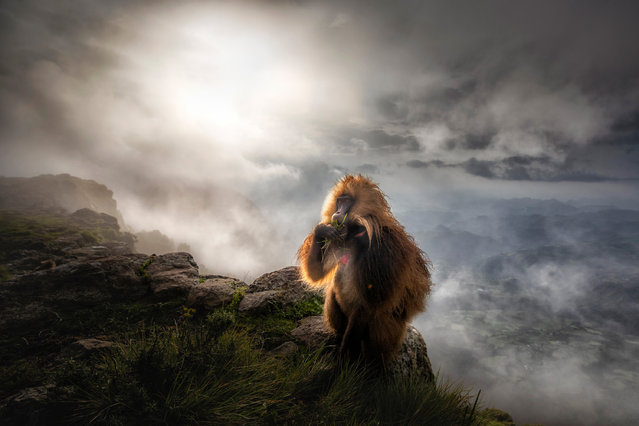
Highly commended, mammals: Gelada after the storm – Marco Gaiotti (Italy). “Gelada baboons are the only monkey species in the world that feed on grasses. They are native to the tableland of Ethiopia. Every morning large family groups wander from their sleeping places in the steep rock face, up to 1,000 metres high, to the feeding grounds at the tablelands. This image clearly depicts their feeding strategy: they pull out bunches of grass, sort the stalks and then lift them to their mouth. This shot was taken towards the end of the rainy season after a heavy storm”. (Photo by Marco Gaiotti/2019 GDT European Wildlife Photographer of the Year)

Highly commended, mammals: Gelada after the storm – Marco Gaiotti (Italy). “Gelada baboons are the only monkey species in the world that feed on grasses. They are native to the tableland of Ethiopia. Every morning large family groups wander from their sleeping places in the steep rock face, up to 1,000 metres high, to the feeding grounds at the tablelands. This image clearly depicts their feeding strategy: they pull out bunches of grass, sort the stalks and then lift them to their mouth. This shot was taken towards the end of the rainy season after a heavy storm”. (Photo by Marco Gaiotti/2019 GDT European Wildlife Photographer of the Year)
Details
31 Oct 2019 00:03:00
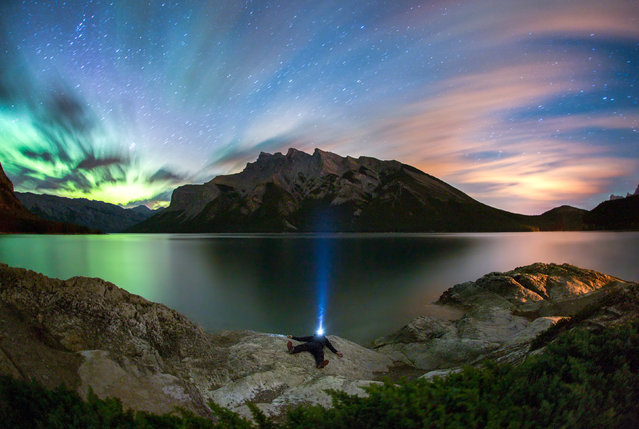
A photographer has shot this series of scenic selfies – scaling freezing mountain tops to snap himself in front of stunning scenery. Paul Zizkas breath-taking work features himself in front of beautiful backdrops such as shimmering lakes, snowy mountains and vibrant auroras. He has travelled to a number of different locations worldwide including Canada, New Zealand, Niue the South Pacific and French Polynesia. (Photo by Paul Zizkas/Caters News)

A photographer has shot this series of scenic selfies – scaling freezing mountain tops to snap himself in front of stunning scenery. Paul Zizkas breath-taking work features himself in front of beautiful backdrops such as shimmering lakes, snowy mountains and vibrant auroras. He has travelled to a number of different locations worldwide including Canada, New Zealand, Niue the South Pacific and French Polynesia. Explorer Paul, from Banff, Alberta, Canada, saw his selfies go viral early in 2014 – and has now unveiled his latest work. He said: I find that sometimes including a person in a landscape scene adds to the photograph – that it conveys a different story. Here: lake Minnewanka, Banff National Park, Alberta, Canada. (Photo by Paul Zizkas/Caters News)
Details
14 Dec 2014 12:18:00
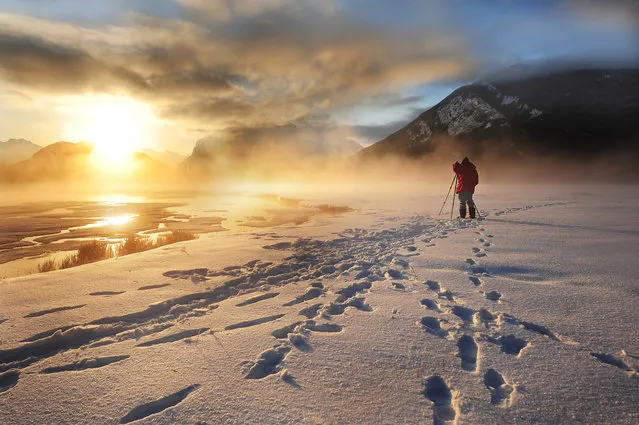
“Artist of the light”. While shooting sunrise in the Vermilion lakes area of Banff national park, Canada, I met a fellow photographer on the scene. Most of the time, we tried not to get in each other's way, however, just by accident, I snapped a picture with him in it working on his tripod settings, and it turned out to be a great photo compared to my sunrise shots. (Photo and caption by Victor Liu/National Geographic Traveler Photo Contest)

“Artist of the light”. While shooting sunrise in the Vermilion lakes area of Banff national park, Canada, I met a fellow photographer on the scene. Most of the time, we tried not to get in each other's way, however, just by accident, I snapped a picture with him in it working on his tripod settings, and it turned out to be a great photo compared to my sunrise shots. (Photo and caption by Victor Liu/National Geographic Traveler Photo Contest)

ATTENTION! All pictures are presented in high resolution. To see Hi-Res images – just TWICE click on any picture. In other words, click small picture – opens the BIG picture. Click BIG picture – opens VERY BIG picture.
Details
27 Jun 2013 13:11:00
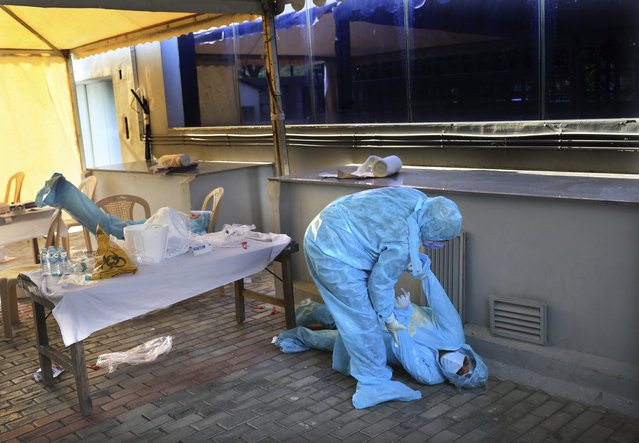
In this April 27, 2020 photo, a health worker helps another as she fainted because of exhaustion and long working hours during a swab test drive for COVID 19, in New Delhi, India. Two and a half months of nationwide lockdown kept numbers of infections relatively low in India. But with restrictions easing in recent weeks, cases have shot up, raising questions about whether authorities have done enough to avert catastrophe. Half of Delhi’s 8,200 hospital beds dedicated to COVID-19 patients are already full and officials are projecting more than half a million cases in the city alone by July 31. (Photo by Manish Swarup/AP Photo)

In this April 27, 2020 photo, a health worker helps another as she fainted because of exhaustion and long working hours during a swab test drive for COVID 19, in New Delhi, India. Two and a half months of nationwide lockdown kept numbers of infections relatively low in India. But with restrictions easing in recent weeks, cases have shot up, raising questions about whether authorities have done enough to avert catastrophe. Half of Delhi’s 8,200 hospital beds dedicated to COVID-19 patients are already full and officials are projecting more than half a million cases in the city alone by July 31. (Photo by Manish Swarup/AP Photo)
Details
08 Jan 2021 00:01:00
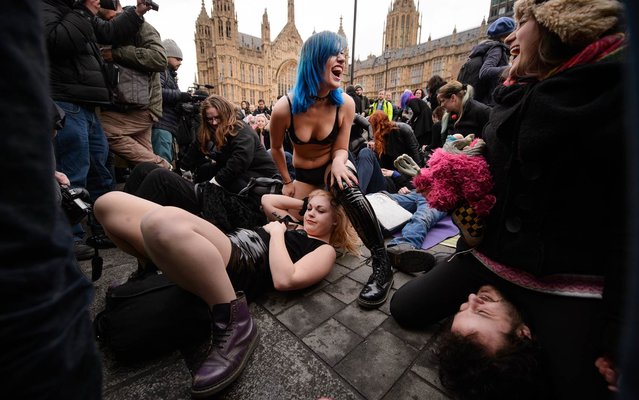
Demonstrators take part in a mass “face-sitting protest” outside the Houses of Parliament in central London on December 12, 2014, as they protest against changes to p*rnography regulations. (Photo by Leon Neal/AFP Photo)

Demonstrators take part in a mass “face-sitting protest” outside the Houses of Parliament in central London on December 12, 2014, as they protest against changes to p*rnography regulations. An amendment to the 2003 Communities Act applies the same strict rules to p*rn bought online as those included in the guidelines set out by the British Board of Film Censors for DVDs. The new laws ban films that feature s*x acts, such as spanking, caning, strangulation, aggressive whipping, humiliation, and face-sitting. Ministers say the rules have been brought in to protect s*x workers. But campaigners say it is an attempt to censor and control the internet. Paid-for videos shot overseas and viewed online in the UK are not affected by the new rules, which were introduced on December 2, 2014. (Photo by Leon Neal/AFP Photo)
Details
14 Dec 2014 11:31:00
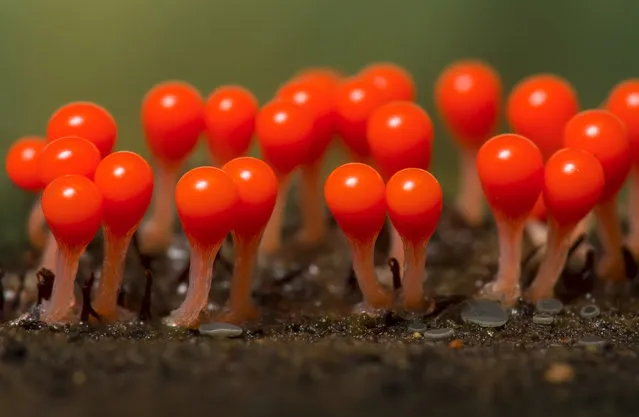
These may look like alien creatures from another planet, but the odd organisms are, in fact, colorful, microscopic life forms found in our forests. The bizarre slime molds, known as mycetozoa or fungus animals, were captured by geologist Valeriya Zvereva. (Photo by Valeriya Zvereva/Caters News)

These may look like alien creatures from another planet, but the odd organisms are, in fact, colorful, microscopic life forms found in our forests. The bizarre slime molds, known as mycetozoa or fungus animals, were captured by geologist Valeriya Zvereva. She spent months documenting the common life forms that are found beneath our feet – but are rarely seen. Incredibly, the organisms can move and hunt for other microscopic life forms on which to feed. Zvereva, who is from Moscow, used a special macro lens to capture the vibrant and up-close shots, which show off the organisms’ unlikely beauty. (Photo by Valeriya Zvereva/Caters News)
Details
20 Apr 2015 13:27:00
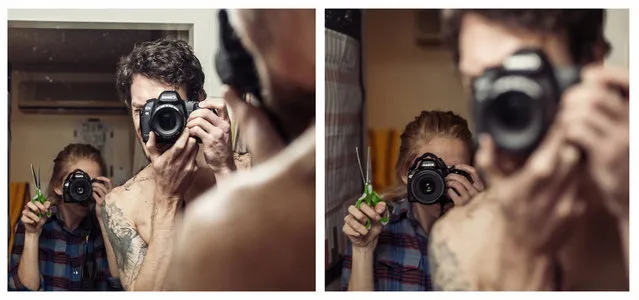
Globe-trotting photographer couple Peter Sedlacik and Zuzu Galova have found a fun way to document their travels around the world. Wherever they are, they face each other, frame up a great composition, and take a picture of each other… taking a picture of each other. Thus was born the photo series/project “Lens Between Us”. (Photo by Peter Sedlacik/Zuzu Galova)

Globe-trotting photographer couple Peter Sedlacik and Zuzu Galova have found a fun way to document their travels around the world. Wherever they are, they face each other, frame up a great composition, and take a picture of each other… taking a picture of each other. Thus was born the photo series/project “Lens Between Us”, which is quickly scooping up followers on Tumblr, Facebook and Instagram alike. The resulting diptychs are creative, well-composed, and whimsical in the best way. A tribute to how their focus is always on each other, the images are part travel photography, part portraiture, and challenging to boot since each shot requires that they figure out not one, but two compositions. (Photo by Peter Sedlacik/Zuzu Galova)
Details
11 Aug 2014 11:30:00
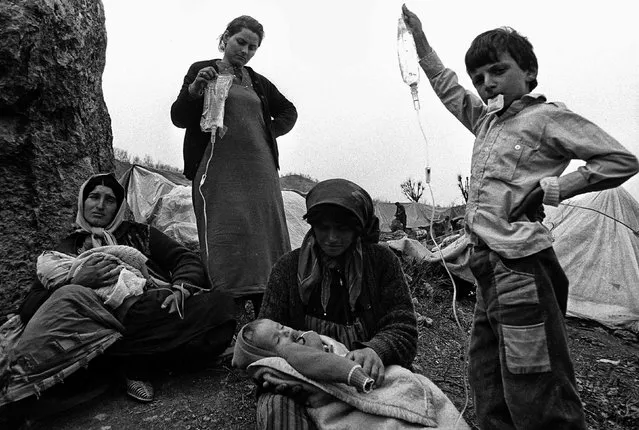
Iraqi Kurdish refugees wait with children in Cukurca refugee camp in Turkey April 8, 1991. Reuters photographers have chronicled Kurdish refugee crises over the years. In 1991 Srdjan Zivulovic documented refugees in Cukurca who had escaped a military operation by Saddam Hussein's government in Iraq aimed at “Arabising” Kurdish areas in the north. (Photo by Srdjan Zivulovic/Reuters)

Iraqi Kurdish refugees wait with children in Cukurca refugee camp in Turkey April 8, 1991. Reuters photographers have chronicled Kurdish refugee crises over the years. In 1991 Srdjan Zivulovic documented refugees in Cukurca who had escaped a military operation by Saddam Hussein's government in Iraq aimed at “Arabising” Kurdish areas in the north. Hundreds of thousands fled into Turkey and Iran. Images shot in recent months show familiar scenes as crowds of people flee Islamic State militants in Syria. There are as many as 30 million Kurds, spread through Turkey, Iraq, Syria and Iran. Most Kurds are Sunni Muslims, but tend to feel more loyalty to their Kurdishness, rather than their religion. (Photo by Srdjan Zivulovic/Reuters)
Details
14 Nov 2014 14:09:00