Loading...
Done


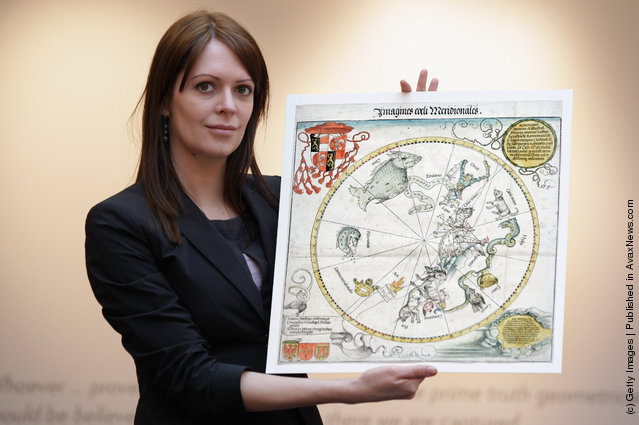
Head of European Prints, Severine Nackers holds a celestial Map of the Southern Sky by Albrecht Durer, at Sotheby's Auction House on March 25, 2011 in London, England. The two woodcut maps depicting the Northern and Southern skies circa 1515, are the earliest printed star charts of their kind ever published in Europe, and are expected to fetch between Ј120,000-180,000 GBP when they go on sale at the “London sale of Old Master, Modern and Contemporary prints” at Sotheby's Auction house on March 30, 2011. (Photo by Dan Kitwood/Getty Images)
Details
25 Mar 2011 14:57:00
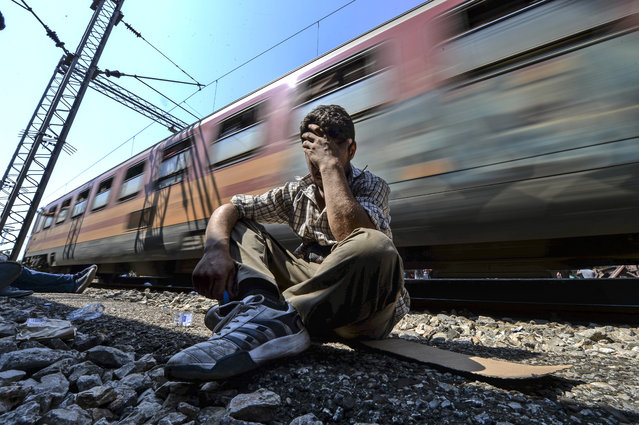
An exhausted and frustated migrant holds his head after he missed to get a place on a train heading to the Serbian border at the train station in Gevgelija, The Former Yugoslav Republic of Macedonia, August 13, 2015. (Photo by Georgi Licovski/EPA)

An exhausted and frustated migrant holds his head after he missed to get a place on a train heading to the Serbian border at the train station in Gevgelija, The Former Yugoslav Republic of Macedonia, August 13, 2015. From the beginning of the year to mid-June 2015, nearly 160,000 migrants landed in the southern European countries, mainly Greece and Italy, on their way to wealthier countries in Western and Northern Europe, according to estimates by the International Organization for Migration (IOM). (Photo by Georgi Licovski/EPA)
Details
14 Aug 2015 13:56:00
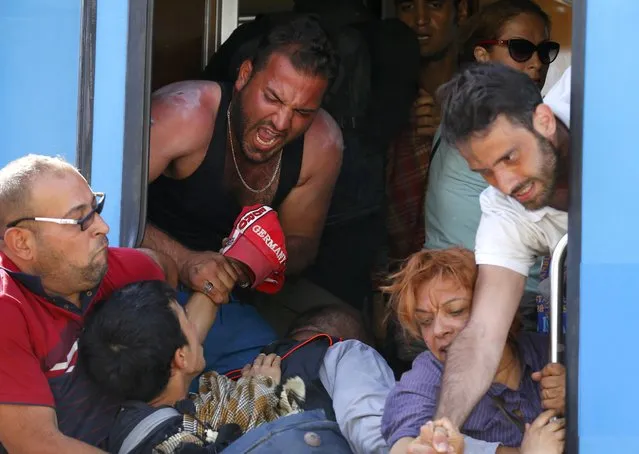
Migrants scramble aboard a train at the station in Beli Manastir, Croatia September 18, 2015. (Photo by Laszlo Balogh/Reuters)

Migrants scramble aboard a train at the station in Beli Manastir, Croatia September 18, 2015. Migrant numbers in Europe will build up in coming days and their flows may fragment further into new routes, the U.N. refugee agency said on Friday, urging the European Union to grasp a last chance to resolve the refugee crisis next week. (Photo by Laszlo Balogh/Reuters)
Details
19 Sep 2015 12:39:00
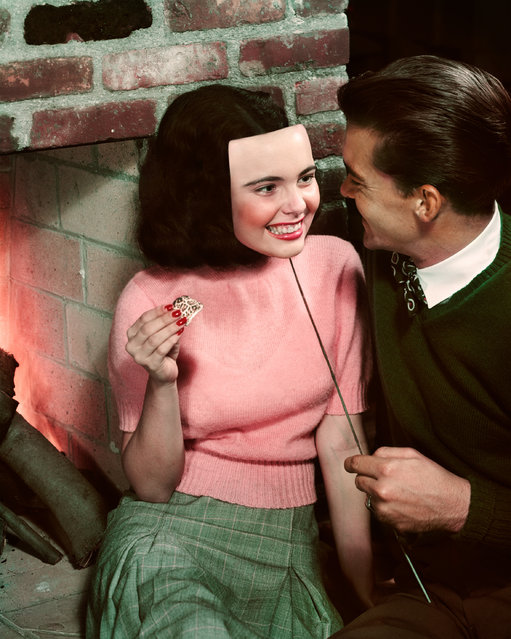
“Untitled #5”. “Family scenes, vacation souvenirs, everyday life, suspended anywhere between truth and fiction. It is hard to figure out whether they are spontaneous or entirely staged”. (Photo by Weronika Gęsicka/The Guardian)

In Weronika Gęsicka’s unsettling images, American archive photography gets distorted into scenes that are both nightmarish yet somehow entirely plausible. Gęsicka is a guest artist at the Circulations festival for young European photographers, Paris, until 5 March. Here: “Untitled #5”. (Photo by Weronika Gęsicka/The Guardian)
Details
23 Jan 2017 10:15:00
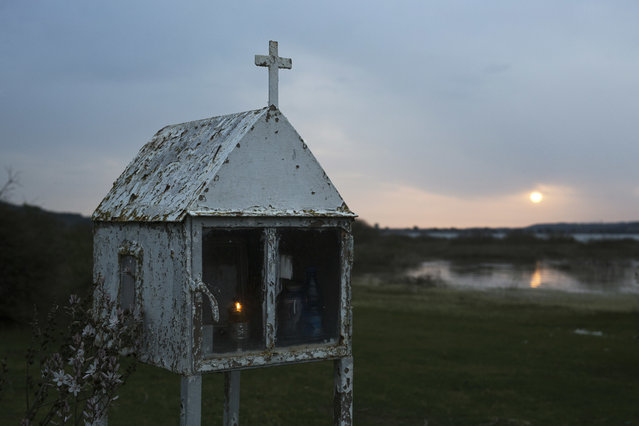
In this photo taken on Saturday, April 29, 2017, a candle is lit in a roadside shrine as the sun sets across a nearby lake of Pineia in the village of Souli, in the Peloponnese region of southern Greece. (Photo by Petros Giannakouris/AP Photo)

In this photo taken on Saturday, April 29, 2017, a candle is lit in a roadside shrine as the sun sets across a nearby lake of Pineia in the village of Souli, in the Peloponnese region of southern Greece. Made of iron sheeting, stone, wood, concrete or marble, tens of thousands of such shrines punctuate Greece’s roadside scenery, a common sight in a country that has one of the European Union’s worst road fatality rates. (Photo by Petros Giannakouris/AP Photo)
Details
13 May 2017 09:19:00
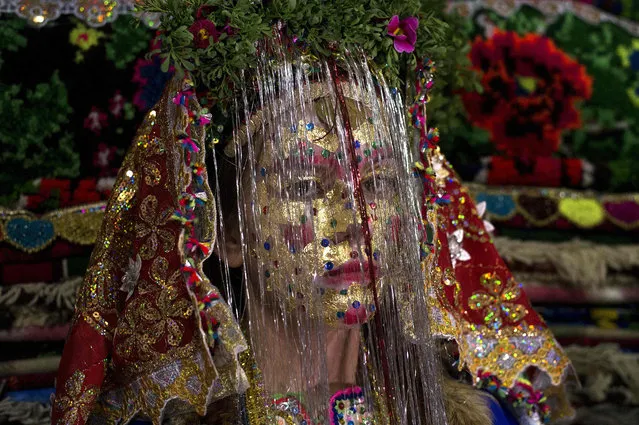
Emilia Pechinkova, a 24-years-old Bulgarian Pomak (Bulgarian speaking Muslims) bride poses for a photograph following the “gelina” or face painting ceremony carried out by female guests and relatives in preparation for her three-day wedding ceremony in the village of Draginovo, 100 kms southeast of Sofia on April 22, 2016. Bulgaria's Muslim population is one of the highest in the European Union. (Photo by Nikolay Doychinov/AFP Photo)

Emilia Pechinkova, a 24-years-old Bulgarian Pomak (Bulgarian speaking Muslims) bride poses for a photograph following the “gelina” or face painting ceremony carried out by female guests and relatives in preparation for her three-day wedding ceremony in the village of Draginovo, 100 kms southeast of Sofia on April 22, 2016. Bulgaria's Muslim population is one of the highest in the European Union. During the Communist regime religious rituals were not tolerated, and Muslims were forced to abandon wearing their traditional wedding outfits. Recently, more young Pomak women want to include traditional wedding customs that were forbidden during the regime, regardless of their secular lifestyles and the high cost of such a wedding. (Photo by Nikolay Doychinov/AFP Photo)
Details
25 Apr 2016 09:55:00
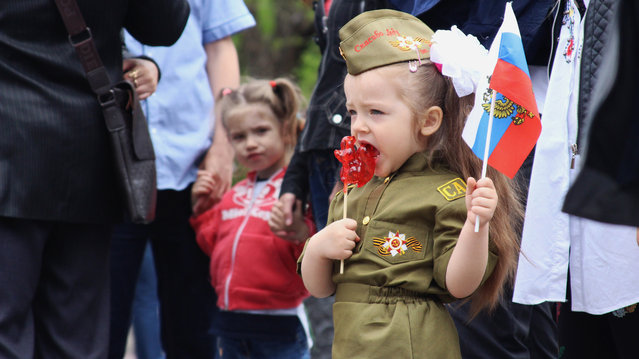
A young Crimean girl wears military-type clothes during a Victory Day celebration in Sevastopol on May 9, 2018. (Photo by Oleksandra Surgan/Radio Free Europe/Radio Liberty)

Children carrying guns and flags or wearing Soviet-style uniforms have become a common sight at Victory Day parades and other events in Russian-controlled Crimea. Russian and Ukrainian human rights activists have warned that such displays point to a growing trend of promoting Russian patriotism among kids on the Crimean peninsula, annexed from Ukraine in 2014. Here: A young Crimean girl wears military-type clothes during a Victory Day celebration in Sevastopol on May 9, 2018. (Photo by Oleksandra Surgan/Radio Free Europe/Radio Liberty)
Details
18 May 2019 00:03:00
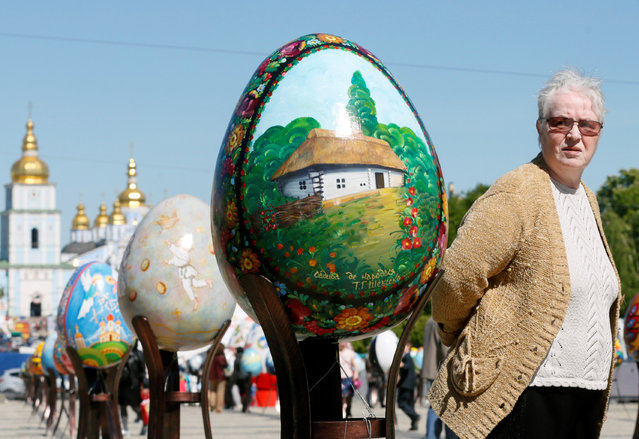
A woman looks at traditional Ukrainian Easter eggs “Pysanka”, installed as part of the upcoming celebrations of Easter, in central Kiev, Ukraine, April 29, 2016. A pysanka is a Ukrainian Easter egg, decorated with traditional Ukrainian folk designs using a wax-resist (batik) method. The word pysanka comes from the verb pysaty, “to write”, as the designs are not painted on, but written with beeswax. Many other eastern European ethnic groups decorate eggs using wax resist for Easter. These include the Belarusians, Bulgarians, Croats, Czechs, Hungarians, Lithuanians, Poles, Romanians, Serbs, Slovaks, Slovenes and Sorbs. (Photo by Valentyn Ogirenko/Reuters)

A woman looks at traditional Ukrainian Easter eggs “Pysanka”, installed as part of the upcoming celebrations of Easter, in central Kiev, Ukraine, April 29, 2016. A pysanka is a Ukrainian Easter egg, decorated with traditional Ukrainian folk designs using a wax-resist (batik) method. The word pysanka comes from the verb pysaty, “to write”, as the designs are not painted on, but written with beeswax. Many other eastern European ethnic groups decorate eggs using wax resist for Easter. These include the Belarusians, Bulgarians, Croats, Czechs, Hungarians, Lithuanians, Poles, Romanians, Serbs, Slovaks, Slovenes and Sorbs. (Photo by Valentyn Ogirenko/Reuters)
Details
30 Apr 2016 09:00:00