Loading...
Done
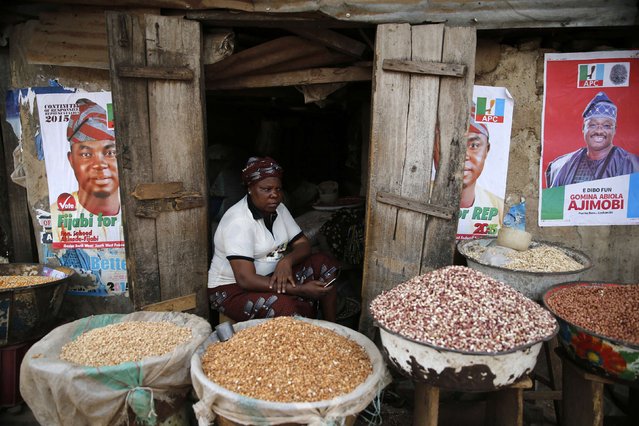
Latefat Alao, 56, a ethnic Yoruba Muslim woman, waits for customers in front of her in Beere market in Ibadan, southwest Nigeria, January 29, 2015. Much of the grain and wheat traders like Alao sell comes from the north and Boko Haram's campaign has negatively affected farmers and food markets. (Photo by Akintunde Akinleye/Reuters)

Latefat Alao, 56, a ethnic Yoruba Muslim woman, waits for customers in front of her in Beere market in Ibadan, southwest Nigeria, January 29, 2015. Much of the grain and wheat traders like Alao sell comes from the north and Boko Haram's campaign has negatively affected farmers and food markets. Reuters photographer Akintunde Akinleye photographed Nigerians and asked them about their views on the elections as well as their hopes and concerns for the country. (Photo by Akintunde Akinleye/Reuters)
Details
12 Feb 2015 12:44:00
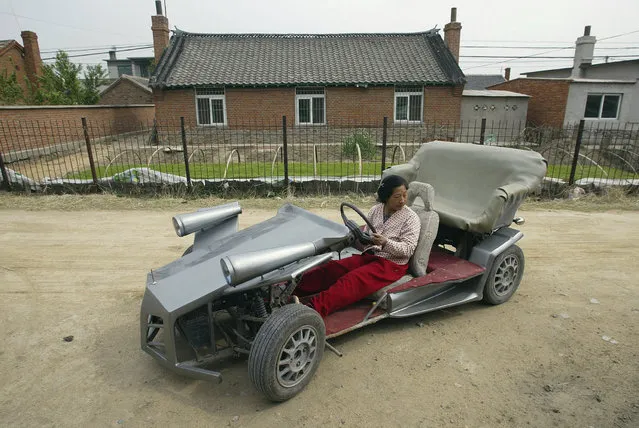
Zhang Jinduo's wife tries on a self-made racing car on the outskirts of Shenyang, Liaoning province May 10, 2008. Zhang, the 53-year-old local farmer made the racing car with the help of his son who is a car mechanic. The car is equipped with a rear-mounted motorcycle engine and can achieve 60-80 km per hour, according to local media. (Photo by Reuters/Stringer)

Zhang Jinduo's wife tries on a self-made racing car on the outskirts of Shenyang, Liaoning province May 10, 2008. Zhang, the 53-year-old local farmer made the racing car with the help of his son who is a car mechanic. The car is equipped with a rear-mounted motorcycle engine and can achieve 60-80 km per hour, according to local media. (Photo by Reuters/Stringer)
Details
17 Sep 2013 08:46:00
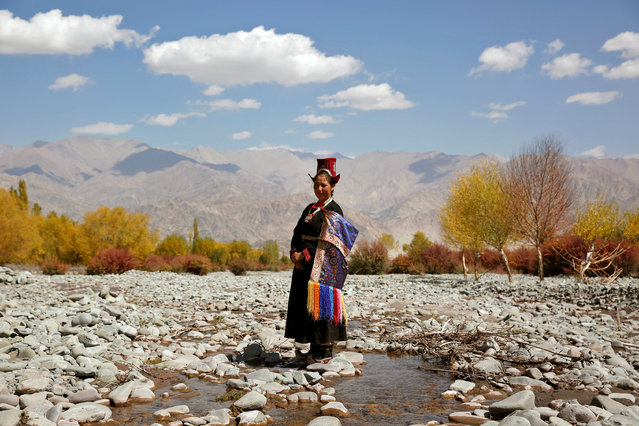
Tsewang Dolma, 33, a farmer and housewife poses for a photograph in Matho, a village nestled high in the Indian Himalayas, India September 29, 2016. When asked how living in the world's fastest growing major economy had affected life, Dolma replied: “Our culture is spoiled now. We don't wear our traditional dress”. (Photo by Cathal McNaughton/Reuters)

Tsewang Dolma, 33, a farmer and housewife poses for a photograph in Matho, a village nestled high in the Indian Himalayas, India September 29, 2016. When asked how living in the world's fastest growing major economy had affected life, Dolma replied: “Our culture is spoiled now. We don't wear our traditional dress”. (Photo by Cathal McNaughton/Reuters)
Details
13 Oct 2016 11:32:00
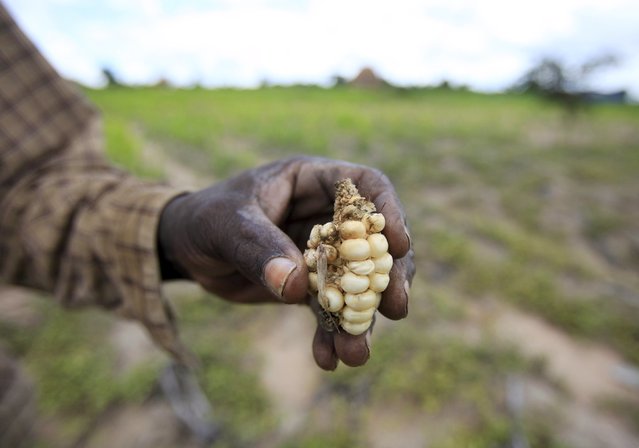
A Zimbabwean subsistence farmer holds a stunted maize cob in his field outside Harare, January 20, 2016. About 14 million people face hunger in Southern Africa because of a drought that has been exacerbated by an El Nino weather pattern, the United Nations World Food Programme (WFP) said on Monday. In Zimbabwe, 1.5 million people, more than 10 percent of the population, face hunger, WFP said. (Photo by Philimon Bulawayo/Reuters)

A Zimbabwean subsistence farmer holds a stunted maize cob in his field outside Harare, January 20, 2016. About 14 million people face hunger in Southern Africa because of a drought that has been exacerbated by an El Nino weather pattern, the United Nations World Food Programme (WFP) said on Monday. In Zimbabwe, 1.5 million people, more than 10 percent of the population, face hunger, WFP said. (Photo by Philimon Bulawayo/Reuters)
Details
22 Jan 2016 10:06:00
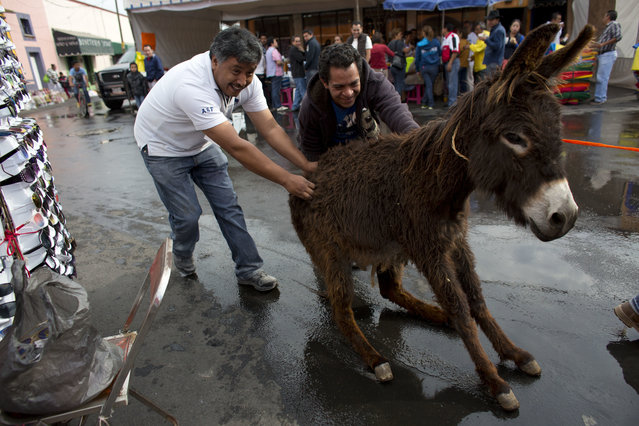
In this May 1, 2016 photo, a reluctant donkey is alternately pushed and pulled and enticed with carrots toward town hall in order to be dressed for the costume competition at the annual donkey festival in Otumba, Mexico state, Mexico. Otumba was an important donkey market during Spanish colonial times, standing at the crossroads of major roads leading to Mexico City, where the beasts pulled heavy loads and carried travelers. Today, however, farmers use tractors and pickup trucks, and the donkey population is in decline. (Photo by Rebecca Blackwell/AP Photo)

In this May 1, 2016 photo, a reluctant donkey is alternately pushed and pulled and enticed with carrots toward town hall in order to be dressed for the costume competition at the annual donkey festival in Otumba, Mexico state, Mexico. Otumba was an important donkey market during Spanish colonial times, standing at the crossroads of major roads leading to Mexico City, where the beasts pulled heavy loads and carried travelers. Today, however, farmers use tractors and pickup trucks, and the donkey population is in decline. (Photo by Rebecca Blackwell/AP Photo)
Details
04 May 2016 11:55:00
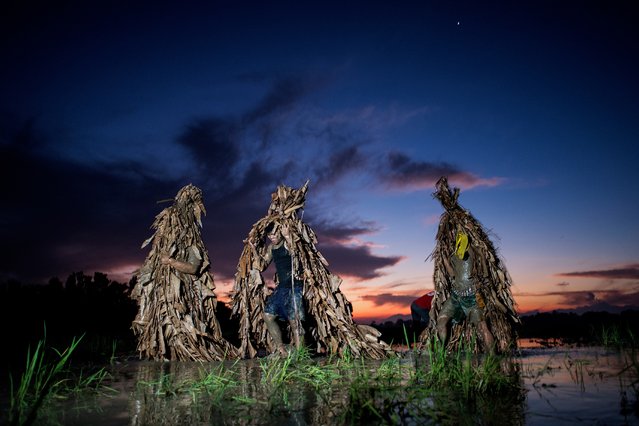
Devotees wear costumes made of banana leaves as they head to church to attend mass as part of a religious festival, in honor of St. John the Baptist, also known locally as the “mud people” festival, in Aliaga town, Nueva Ecija province, north of Manila, on June 24, 2017. Farmers coated in mud paraded in Philippine villages on June 24 to mark one of the Catholic nation's most colourful religious festivals. (Photo by Noel Celis/AFP Photo)

Devotees wear costumes made of banana leaves as they head to church to attend mass as part of a religious festival, in honor of St. John the Baptist, also known locally as the “mud people” festival, in Aliaga town, Nueva Ecija province, north of Manila, on June 24, 2017. Farmers coated in mud paraded in Philippine villages on June 24 to mark one of the Catholic nation's most colourful religious festivals. (Photo by Noel Celis/AFP Photo)
Details
27 Jun 2017 08:30:00


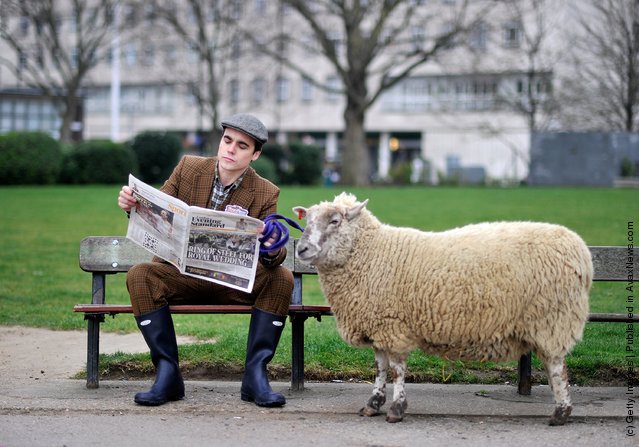
A sheep and a gentleman farmer take to the streets of London today to mark the launch the new English Countryside chapter of Farmville, Zynga's global social gaming phenomenon on March 29, 2011 in London, England. Farmville English Countryside gives players all-new crops, buildings and decorations located in the beautiful English Countryside. (Photo by Gareth Cattermole/Getty Images for Farmville)
Details
30 Mar 2011 11:04:00
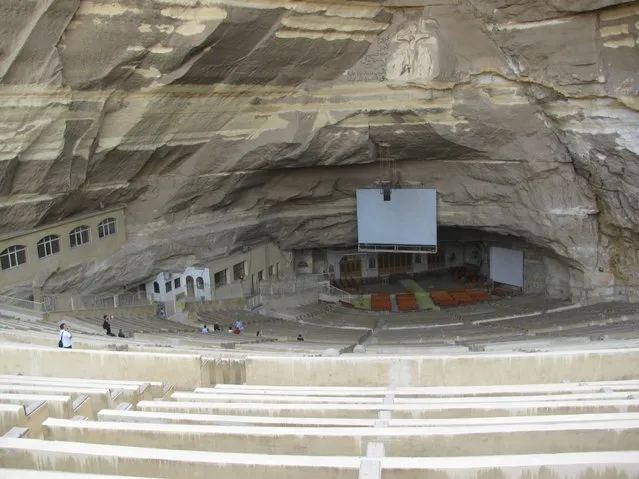
Cave Church Mountain

Located in the Mokattam Mountain in southeastern Cairo, Egypt, the Monastery of Saint Simon or the Cave Church is a beautiful and mystical location. The area is also known under the name of the “garbage city” because of the large population of garbage collectors or Zabbaleen that live here and who are the descendants of farmers who started migrating from Upper Egypt to Cairo in the 1940s.
Details
25 Sep 2013 12:58:00