Loading...
Done
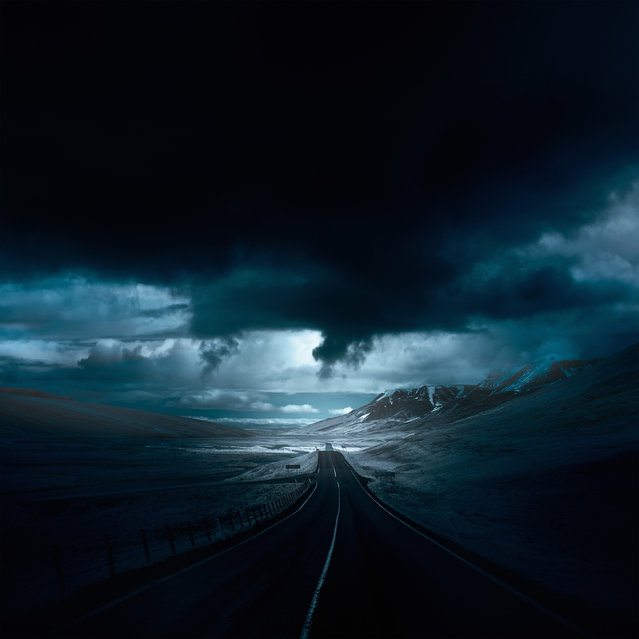
A globe-trotting photographer has captured some of the worlds most beautiful roads. Andy Lee's roads series features picturesque routes running through the likes of Iceland, Wales, England and Scotland. Here: moon sky over Hvammstangi, Iceland. (Photo by Andy Lee/Caters News)

A globe-trotting photographer has captured some of the worlds most beautiful roads. Andy Lee's roads series features picturesque routes running through the likes of Iceland, Wales, England and Scotland. The photographer, 46, began taking pictures for this series in 2013. And since then Andy, from Stackpole, Pembrokeshire, has been travelling the world for the most stunning drives. In searching for the ideal road he often drives miles upon miles in order to find a suitable, remote area. Here: moon sky over Hvammstangi, Iceland. (Photo by Andy Lee/Caters News)
Details
24 Jan 2015 14:19:00
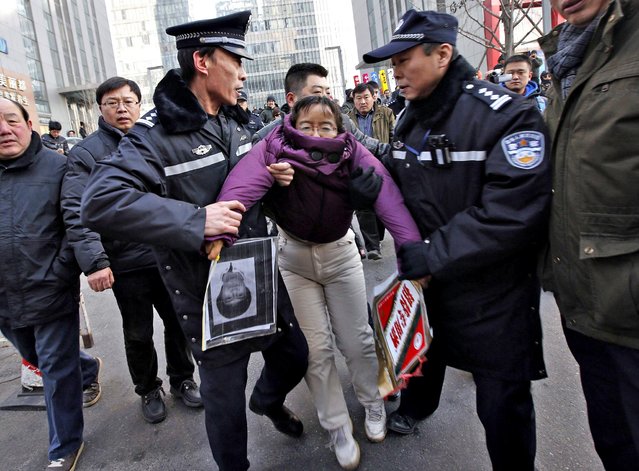
Liu Chunxia, a supporter of Xu Zhiyong, one of China's most prominent rights advocates, is detained by policemen while she gathers with other supporters nearby a court where Xu's trial is being held in Beijing January 22, 2014. (Photo by Kim Kyung-Hoon/Reuters)

Liu Chunxia, a supporter of Xu Zhiyong, one of China's most prominent rights advocates, is detained by policemen while she gathers with other supporters nearby a court where Xu's trial is being held in Beijing January 22, 2014. When dozens of activists unfurled banners across the country last March and April calling for officials to disclose their assets, they did so at the urging of one of China's most prominent rights advocates, Xu Zhiyong. Xu, 40, stands trial on Wednesday on a charge of “gathering a crowd to disturb public order” punishable by up to five years in prison. His case will almost certainly spark fresh criticism from Western governments over Beijing's crackdown on dissent. (Photo by Kim Kyung-Hoon/Reuters)
Details
26 Jan 2014 12:26:00
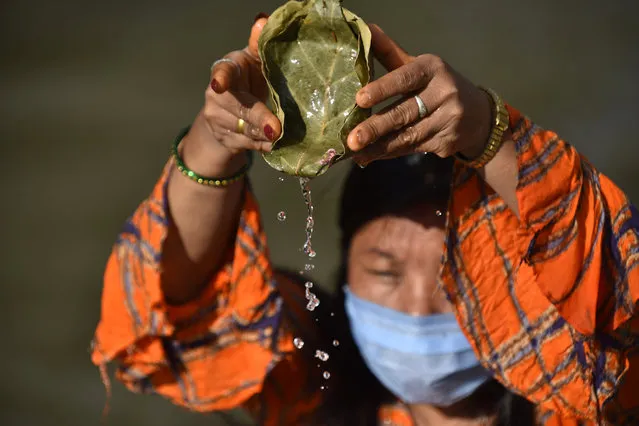
A Nepalese devotee offers ritual prayer at the Bank of Bagmati River of Pashupatinath Temple during Rishi Panchami Festival celebrations at Kathmandu, Nepal on Sunday, August 23, 2020. Rishi Panchami festival is  celebrated as the last day of three-day long Teej Festival. The Teej festival is celebrated by Hindu women in Nepal as well as in some parts of India. During the three-day long festival, women observe a day-long fast and pray for the long life of their husbands as well as for a happy family. Those who are unmarried pray for a good husband and a long life. Due to prohibitory order lockdown in Kathmandu valley for a week-long, as rapid increase in the number of COVID-19 cases. (Photo by Narayan Maharjan/NurPhoto via Getty Images)

A Nepalese devotee offers ritual prayer at the Bank of Bagmati River of Pashupatinath Temple during Rishi Panchami Festival celebrations at Kathmandu, Nepal on Sunday, August 23, 2020. Rishi Panchami festival is celebrated as the last day of three-day long Teej Festival. The Teej festival is celebrated by Hindu women in Nepal as well as in some parts of India. (Photo by Narayan Maharjan/NurPhoto via Getty Images)
Details
20 Sep 2020 00:01:00
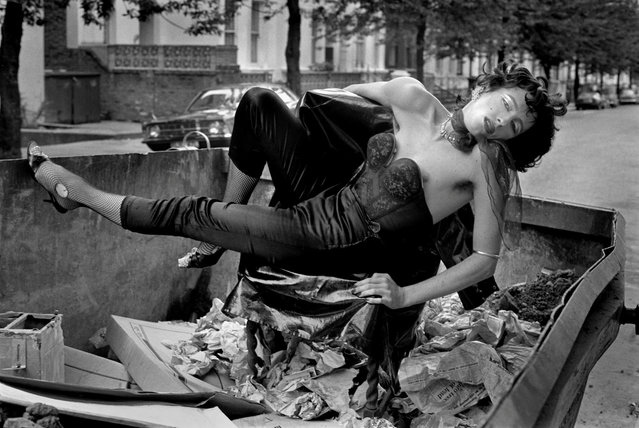
“A very delicate person, beneath the flamboyance”. Jasper, Ladbroke Grove, 1977. “In the 1970s, Australia was rather cut off. I’d always wanted to live abroad, so I moved to Rome and then London. I was an art historian, but started studying photography part-time. I was interested in the demi-monde culture and began mixing in all sorts of circles. Jasper was a rather wonderful character. He was from Sydney, but he was living downstairs from me in Ladbroke Grove, in a flat rented to some gay friends. It was fairly eclectic. Jasper was always playing around with clothes and makeup. If he was looking particularly wonderful, I might get out my lights and take a shot. Or he might put makeup on me. He wasn’t always in drag, but he was permanently in diva mode, dependably louche, funny and naughty. I think all that comes across in the image. He was actually a very delicate person, though, beneath the wit and flamboyance. Jasper floated through London all too briefly. His real name was Peter MacMahon, but to us he was only ever Jasper Havoc, an alter ego he’d created while part of a transvestite troupe called Sylvia and the Synthetics. They were legendary in Sydney gay culture. On this day, we’d been taking some pictures inside and had gone out into the streets to fool around some more. Jasper was wearing a corset and fishnets ensemble, with other bits and pieces, and we joked about him being trashy as he lay in the skip. We just took the shot for ourselves. It wasn’t done with any publication in mind, or anything else. This was way before the internet and people didn’t share images. If you dressed up, it was just for that moment”. (Photo by Jane England)

“A very delicate person, beneath the flamboyance”. Jasper, Ladbroke Grove, 1977. “In the 1970s, Australia was rather cut off. I’d always wanted to live abroad, so I moved to Rome and then London. I was an art historian, but started studying photography part-time. I was interested in the demi-monde culture and began mixing in all sorts of circles. Jasper was a rather wonderful character...”. (Photo by Jane England)
Details
26 Jun 2017 09:04:00
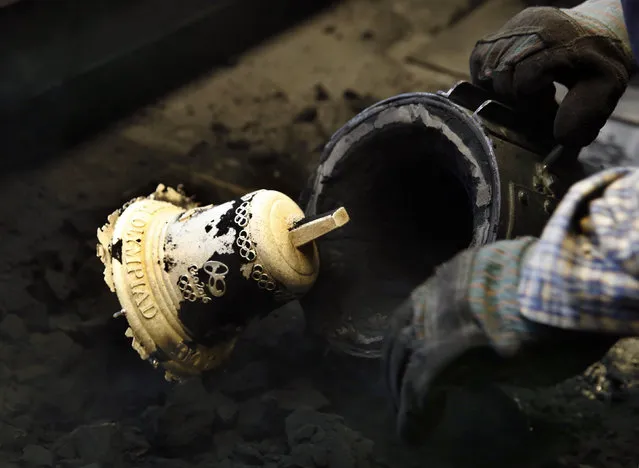
Serge Huguenin of the Blondeau foundry takes the newly melted bell out of the mould in La Chaux-de-Fonds, Switzerland January 21, 2016. At this year's Summer Olympics in Rio de Janeiro, no matter how elaborate the opening ceremony or how sophisticated the live broadcasts, the final lap of athletics races will be announced the traditional way by ringing an old-fashioned bell. (Photo by Denis Balibouse/Reuters)

Serge Huguenin of the Blondeau foundry takes the newly melted bell out of the mould in La Chaux-de-Fonds, Switzerland January 21, 2016. At this year's Summer Olympics in Rio de Janeiro, no matter how elaborate the opening ceremony or how sophisticated the live broadcasts, the final lap of athletics races will be announced the traditional way by ringing an old-fashioned bell. Omega, the official timekeeper of the event, has ordered 21 bells, forged almost entirely by hand by Blondeau's Bell Foundry in the Jura Mountains in Switzerland. Each last-lap bell is branded with the RIO 2016 logo and circled with the words “2016 GAMES OF THE XXXI OLYMPIAD”. (Photo by Denis Balibouse/Reuters)
Details
02 Feb 2016 13:51:00
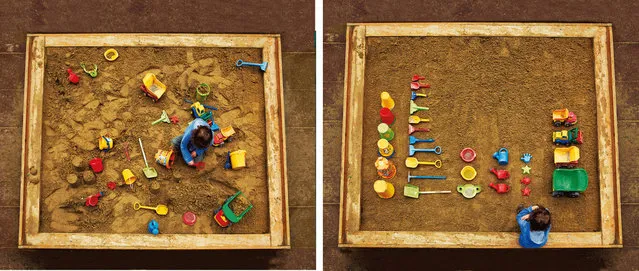
The Art Of Clean Up By Ursus Wehrli

Are you one of those people who like to keep everything in order? If you do, you’re going to love the project The Art of Clean Up, created by Ursus Wehrli. This guy will perfectly organize the most unusual of places! Do you hate how unorganized the parking lots are, or how your haphazardly your grandma hangs the laundry to dry in the sun? Welcome to the perfect world where everything is in its rightful place. Every little detail is kept in check; every color is placed where it belongs, just like you love it. Did you ever think that your Christmas tree is not orderly enough? Well, Ursus will take it apart and put it in near little piles. (Photo by Ursus Wehrli)
Details
15 Dec 2014 11:09:00
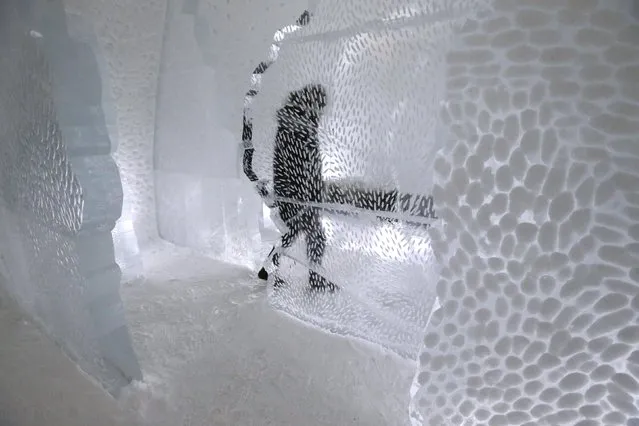
A man walks into a room in the Ice hotel in Jukkasjarvi, Sweden, December 16, 2015. (Photo by Ints Kalnins/Reuters)

In Jukkasjärvi, a village a few miles east of Kiruna, the proprietors of one hotel begin planning for a winter ice festival in March. That’s when they begin collecting some 5,000 tons of ice from the River Torne in order to prepare the Icehotel, the world’s coolest place to stay. Options for overnight stay include snow rooms, ice rooms, art suites, and the Northern Lights room, all of which range from about $300 to $900 per night. But the deluxe suite’s the only way to go. These rooms come with a critical amenity: heated ensuite bathrooms and saunas. Here: A man walks into a room in the Ice hotel in Jukkasjarvi, Sweden, December 16, 2015. (Photo by Ints Kalnins/Reuters)
Details
18 Dec 2015 08:02:00
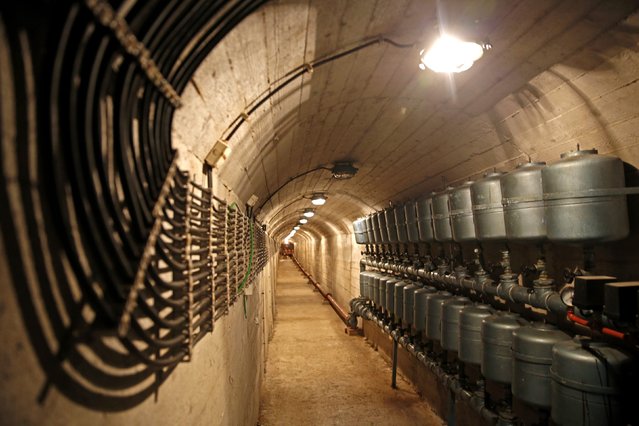
A tunnel with electric switches are seen in Josip Broz Tito's underground secret bunker (ARK) in Konjic, October 16, 2014. (Photo by Dado Ruvic/Reuters)

A tunnel with electric switches are seen in Josip Broz Tito's underground secret bunker (ARK) in Konjic, October 16, 2014. In the early 1950s, Josip Broz Tito, the late leader of the former Yugoslavia, ordered the building of the secret bunker, located 900 feet (270 m) underground and near the Bosnian town of Konjic, to safeguard the country's ruling class in case of a nuclear attack. Construction at the complex, which had a cost equivalent price tag of $4.6 billion, continued until 1979, the year before Tito died. (Photo by Dado Ruvic/Reuters)
Details
28 Nov 2014 12:14:00