Loading...
Done
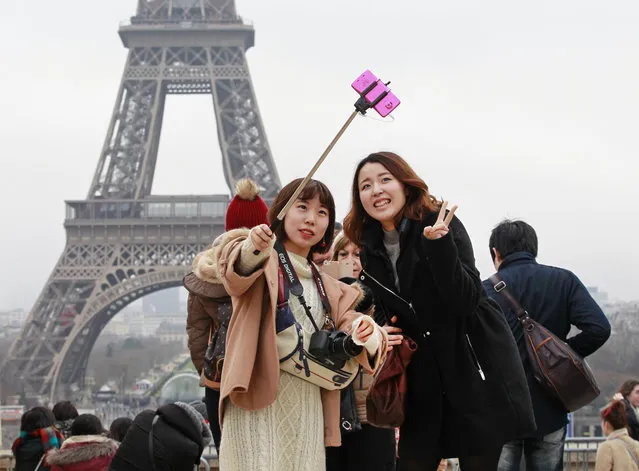
Tourists use a selfie stick on the Trocadero Square, with  the Eiffel Tower in background, in Paris, Tuesday, January 6, 2015. (Photo by Remy de la Mauviniere/AP Photo)

Tourists use a selfie stick on the Trocadero Square, with the Eiffel Tower in background, in Paris, Tuesday, January 6, 2015. Selfie sticks have become popular among tourists because you don't have to ask strangers to take your picture, and you can capture a wide view in a selfie without showing your arm. But some people find selfie sticks obnoxious, arguing that they detract from the travel experience. (Photo by Remy de la Mauviniere/AP Photo)
Details
09 Jan 2015 13:15:00
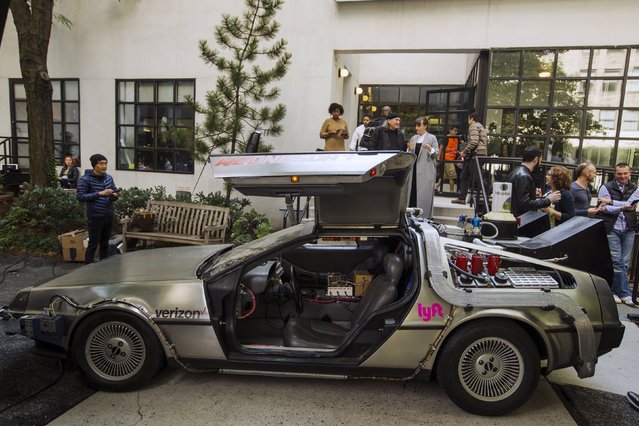
Pedestrians stop to look at and photograph a DeLorean Motor Company DMC-12 customized to look identical to the car used in the film "Back to the Future Part II" and that will be part of a Lyft promotion in New York, October 21, 2015. (Photo by Lucas Jackson/Reuters)

Pedestrians stop to look at and photograph a DeLorean Motor Company DMC-12 customized to look identical to the car used in the film "Back to the Future Part II" and that will be part of a Lyft promotion in New York, October 21, 2015. In the 1989 movie, main character Marty McFly traveled to the future to October 21, 2015. (Photo by Lucas Jackson/Reuters)
Details
24 Oct 2015 08:03:00
Rural Daily Life in Radicondoli by Photographer Marco Sgarbi Part 2

For the past 20 years,Marco has divided his time photographing, traveling, and living between italy and France. He regularly participates in workshops in Paris. Sharpening his technical skills and learning to take risks. He has been investigating various photographic styles, including macro-photography of precious stones and insects, portraits and weddings. All of these subjects have given him the opportunity to bring his love for the medium into areas which challenges his capacity to be creative.


See also: Part 1

Details
22 Jun 2014 12:51:00
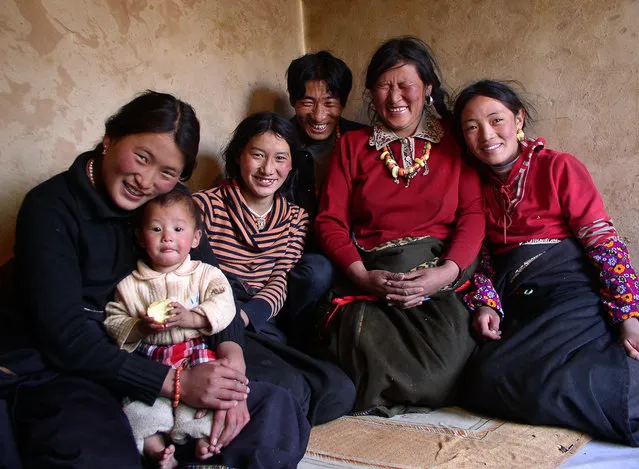
Buddhist pilgrim family from Sichuan. (Photo by Tom Carter/The Atlantic)

Nine years ago, Tom Carter traveled from San Francisco to China, responding to a job posting that turned out to be a scam. He managed to find another job as a teacher, and saved enough money to embark on a 56,000 km trip through all of China's 33 provinces that lasted two years. Carrying a camera – just a a 4-megapixel point-and-shoot – Carter captured some amazing images of the widely varying landscape, people, and architecture across the nation. Photo: Buddhist pilgrim family from Sichuan. (Photo by Tom Carter via The Atlantic)
Details
12 Mar 2013 14:19:00
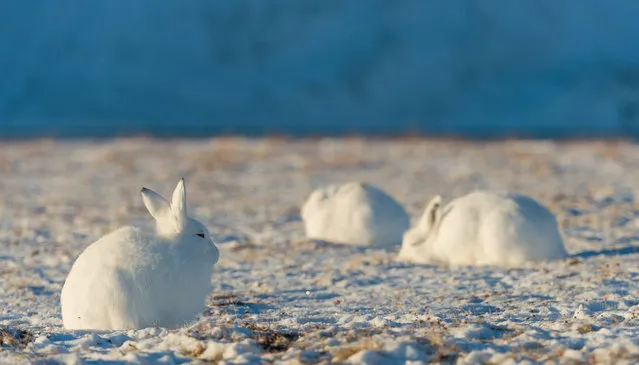
Arctic Hare

The arctic hare, or polar rabbit, is a species of hare which is adapted largely to polar and mountainous habitats. The arctic hare survives with a thick coat of fur and usually digs holes in the ground or under snow to keep warm and sleep. Arctic hares look like rabbits but have shorter ears, are taller when standing, and, unlike rabbits, can thrive in cold climates. They can travel together with many other hares, sometimes huddling with dozens or more, but are usually found alone, taking, in some cases, more than one partner. The arctic hare can run up to 60 kilometres per hour (40 mph). Its predators include the arctic wolf, arctic fox, and ermine.
Details
17 Mar 2014 13:56:00
“Blow Job”: Gale-force Wind Portraits by Tadao Cern

“In spring of 2010 I wanted to try something new and stopped being an architect. That 'something new' turned out to be photography. Wedding photography – to be exact. Today I travel around the world with my personal projects and commissions knowing that there is a lot more exiting stuff to be tried out. Don't be afraid to change something in your life, because for me that was one of the best decisions”. – Tadao Cern (Photo by Tadao Cern)
Details
19 May 2012 12:48:00
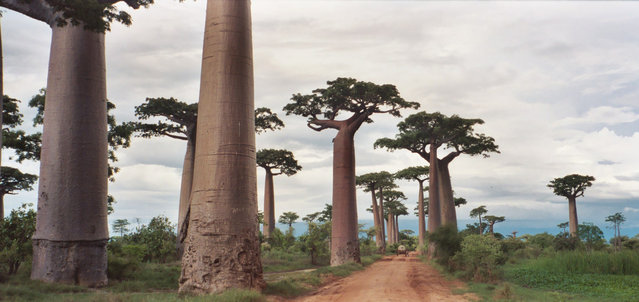
Avenue of the Baobabs

The Avenue or Alley of the Baobabs is a prominent group of baobab trees lining the dirt road between Morondava and Belon'i Tsiribihina in the Menabe region in western Madagascar. Its striking landscape draws travelers from around the world, making it one of the most visited locations in the region. It has been a center of local conservation efforts, and was granted temporary protected status in July 2007 by the Ministry of Environment, Water and Forests, the first step toward making it Madagascar's first natural monument.
Details
16 Nov 2012 10:05:00


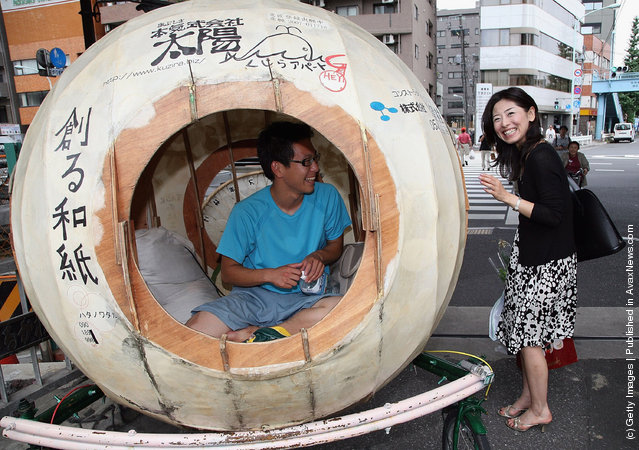
Gohei Hayashi of Kyoto University is seen in side his movable eco and healing house, “Kujira (Whale) House” July 21, 2007 in Tokyo, Japan. The house is made from Japanese paper, bamboo and tatami mat. Hayashi has travelled 500 km from Japan's ancient city, Kyoto to Tokyo with his eco house to promote his house which can be placed both out inside and outside to provide a private space. The Kujira house is available at the price of 800,000 yen (roughly US$6600). (Photo by Koichi Kamoshida/Getty Images)
Details
23 May 2011 06:45:00