Loading...
Done
“Potholes” Project by Photographer Davide Luciano

“Potholes” is a series of photographs depicting the concave street cracks and holes as a collection of imaginative tableaux in the city. Captured within the backdrops of New York City, Los Angeles, Toronto and Montreal, the sets explore the urban flaws as a playground creating a multitude of uses out of the potholes. Directly engaging the street and the city, the highly imaginative series transforms the bad into good, creating a tongue-in-cheek collection that is at once contextual and surreal”. (Photo and caption by Davide Luciano)
Details
03 Dec 2013 06:15:00
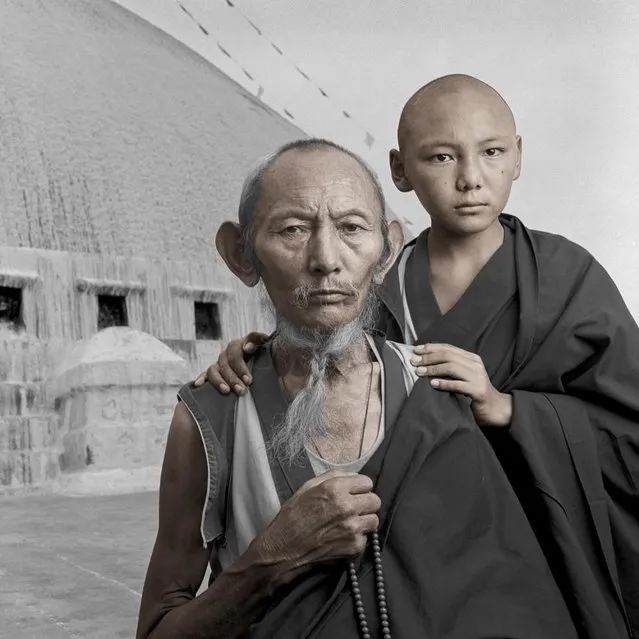
“Lobsang and 66 fellow monks were imprisoned in 1959. When released 21 years later, he was one of only three survivors. While in prison his best friend, a rinpoche, died in his arms. Tensin was later discovered to be the reincarnation of that friend. Lobsang said there are so many characteristics of his old friend in the young boy”. (Phil Borges)

“Lobsang and 66 fellow monks were imprisoned in 1959. When released 21 years later, he was one of only three survivors. While in prison his best friend, a rinpoche, died in his arms. Tensin was later discovered to be the reincarnation of that friend. Lobsang said there are so many characteristics of his old friend in the young boy”. (Photo and caption by Phil Borges)
Details
06 Mar 2014 14:01:00


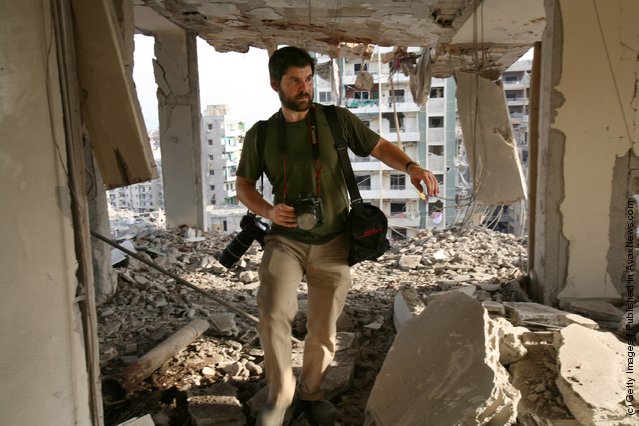
In this publication you can see some best pictures of photographer Chris Hondros, who was killed on April 20, 2011 by a rocket-propelled grenade (RPG) in Misrata, Libya.

Photo: “Getty Images” photographer Chris Hondros (1970–2011) walks the ruins of a building August 21, 2006 in southern Beirut, Lebanon. (Photo by Getty Images)
Details
23 Apr 2011 11:13:00
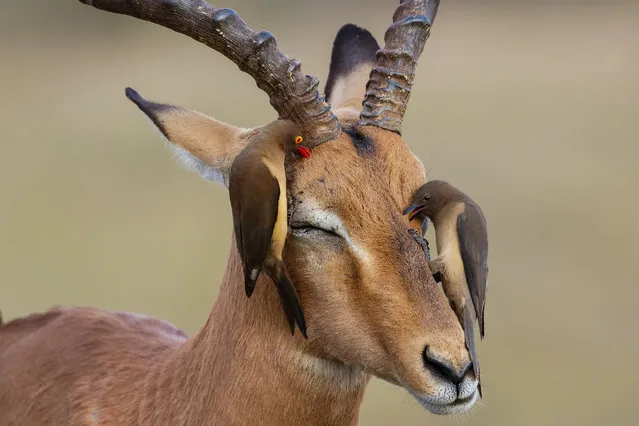
Red-billed oxpecker on an impala, Kruger National Park, South Africa. (Photo by Edmund Aylmer/BPOTY/Cover Images/The Guardian)

The shortlist for the coveted Bird Photographer of the Year awards has been announced by Nature Photographers and the British Trust for Ornithology. Here: Red-billed oxpecker on an impala, Kruger National Park, South Africa. (Photo by Edmund Aylmer/BPOTY/Cover Images/The Guardian)
Details
13 Mar 2018 00:05:00
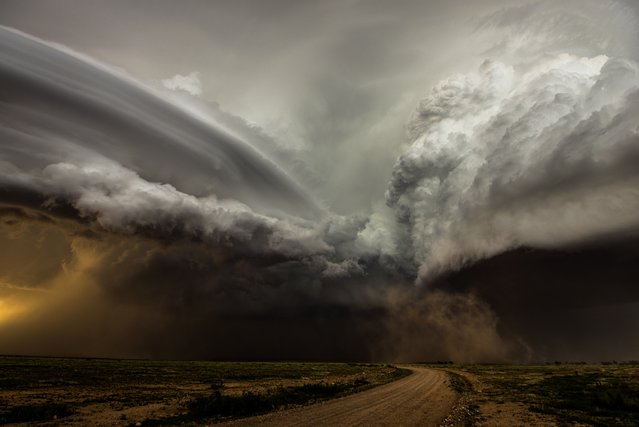
Clash of the storms, New Mexico, US by Camelia Czuchnicki. “A clash between two storm cells in New Mexico, US, each with its own rotating updraft. The curved striations of the oldest noticeable against the new bubbling convection of the newer. It was a fantastic sight to watch and it’s the rarity of such scenes that keep drawing me back to the US Plains each year”. (Photo by Camelia Czuchnicki/Weather Photographer of the Year 2016)

Clash of the storms, New Mexico, US by Camelia Czuchnicki. “A clash between two storm cells in New Mexico, US, each with its own rotating updraft. The curved striations of the oldest noticeable against the new bubbling convection of the newer. It was a fantastic sight to watch and it’s the rarity of such scenes that keep drawing me back to the US Plains each year”. (Photo by Camelia Czuchnicki/Weather Photographer of the Year 2016)
Details
16 Sep 2016 11:11:00
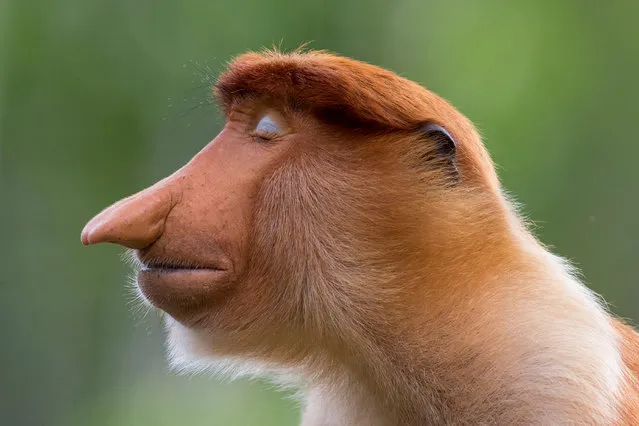
Winner – Animal Portraits: The pose by Mogens Trolle, Denmark. A young male proboscis monkey cocks his head slightly and closes his eyes. Unexpected pale blue eyelids now complement his immaculately groomed auburn hair. He poses for a few seconds as if in meditation. He is a wild visitor to the feeding station at Labuk Bay Proboscis Monkey Sanctuary in Sabah, Borneo – “the most laid-back character”, says Trolle, “quite unlike anything I’ve ever seen on another monkey” – connects us, he hopes, with a fellow primate. (Photo by Mogens Trolle/Wildlife Photographer of the Year 2020)

Winner – Animal Portraits: The pose by Mogens Trolle, Denmark. A young male proboscis monkey cocks his head slightly and closes his eyes. Unexpected pale blue eyelids now complement his immaculately groomed auburn hair. He poses for a few seconds as if in meditation. He is a wild visitor to the feeding station at Labuk Bay Proboscis Monkey Sanctuary in Sabah, Borneo – “the most laid-back character”, says Trolle, “quite unlike anything I’ve ever seen on another monkey” – connects us, he hopes, with a fellow primate. (Photo by Mogens Trolle/Wildlife Photographer of the Year 2020)
Details
16 Oct 2020 00:03:00
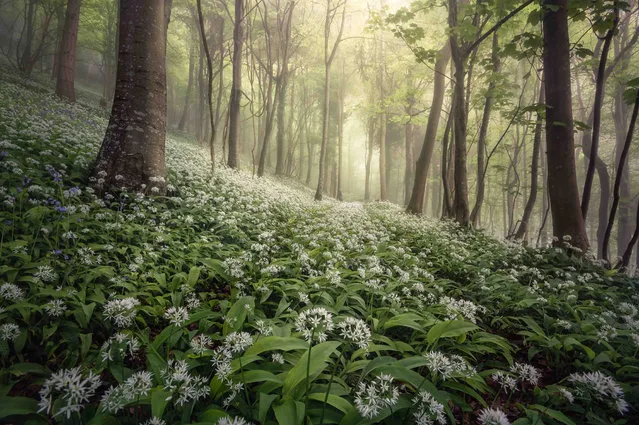
Woolland Woods, Dorset. Landscape photographer of the year 2020. “Taken in spring of 2018 in a wooded area close to Milborne St Andrew in Dorset, this was the third visit to the area in a matter of days. On the previous days, both devoid of morning mists, the light had been harsh and unappealing but the third day delivered stunning conditions with mist swirling through the trees. The low shooting position allowed more emphasis to be placed on the wild garlic and pathway”. (Photo by Chris Frost/UK Landscape Photographer of the Year 2020)

Woolland Woods, Dorset. Landscape photographer of the year 2020. “Taken in spring of 2018 in a wooded area close to Milborne St Andrew in Dorset, this was the third visit to the area in a matter of days. On the previous days, both devoid of morning mists, the light had been harsh and unappealing but the third day delivered stunning conditions with mist swirling through the trees. The low shooting position allowed more emphasis to be placed on the wild garlic and pathway”. (Photo by Chris Frost/UK Landscape Photographer of the Year 2020)
Details
22 Oct 2020 00:03:00
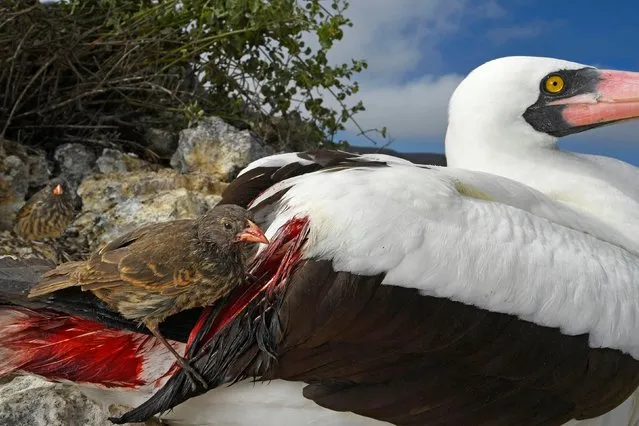
Bloodthirsty by Thomas P Peschak, Germany/South Africa — winner, Behaviour: birds. When rations run short on Wolf Island, in the remote northern Galápagos, the sharp-beaked ground finches become vampires. Their sitting targets are Nazca boobies and other large birds. The finches rely on a scant diet of seeds and insects, which regularly dries up, so they drink blood to survive. ‘I’ve seen more than half a dozen finches drinking from a single Nazca booby,’ says Tom. Rather than leave their nests the boobies tolerate the vampires, and the blood loss doesn’t seem to cause permanent harm. (Photo by Thomas P Peschak/2018 Wildlife Photographer of the Year)

Bloodthirsty by Thomas P. Peschak, Germany/South Africa — winner, Behaviour: birds. When rations run short on Wolf Island, in the remote northern Galápagos, the sharp-beaked ground finches become vampires. Their sitting targets are Nazca boobies and other large birds. The finches rely on a scant diet of seeds and insects, which regularly dries up, so they drink blood to survive. ‘I’ve seen more than half a dozen finches drinking from a single Nazca booby,’ says Tom. Rather than leave their nests the boobies tolerate the vampires, and the blood loss doesn’t seem to cause permanent harm. (Photo by Thomas P. Peschak/2018 Wildlife Photographer of the Year)
Details
19 Oct 2018 00:05:00