Loading...
Done
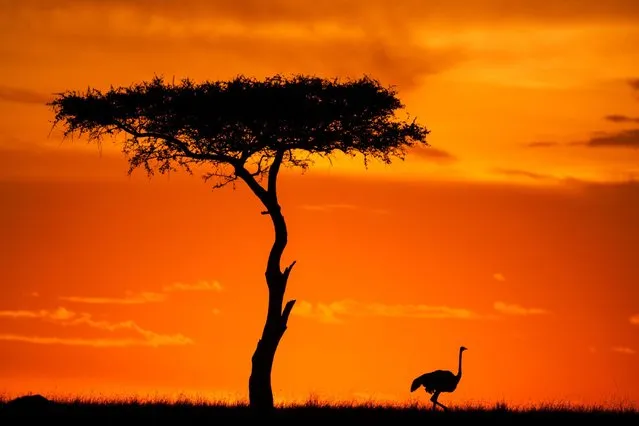
“African Fire”: Ostrich at sunset. (Photo by Paul Goldstein/Rex Features)

A photographer has shared his stunning gallery of African sunrises and sunsets. Paul Goldstein says he has spent years trying to photograph the perfect beginning and ending of the Masai Mara day. Thanks to his role as guide for Exodus Travels, there have been countless opportunities to document the beautiful natural spectacle. Photo: “African Fire”: Ostrich at sunset. (Photo by Paul Goldstein/Rex Features)
Details
12 Jun 2014 10:54:00
Kissing girls

Fuse TV VJ's Marianela and Juliya attend the store opening of “Nigo's A Bathing Ape” with Pharrell Williams January 11, 2005 in New York City. (Photo by Paul Hawthorne/Getty Images)
Details
29 Aug 2011 14:20:00
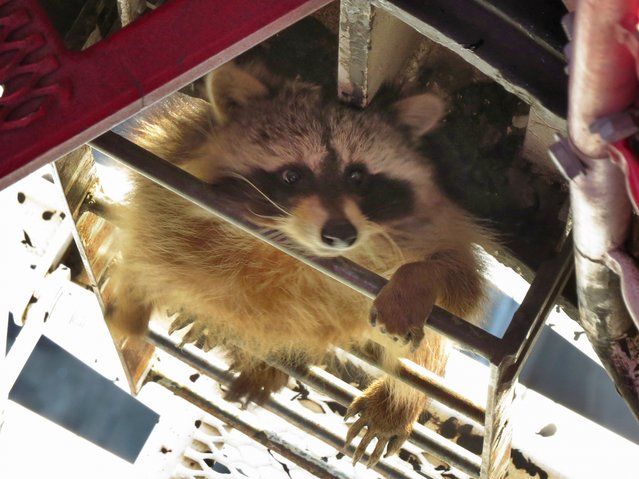
In this Thursday, April 16, 2015 photo provided by Robert MacFarlane, a raccoon climbs up a skyscraper in downtown Toronto. Social media was abuzz Thursday with the photo of the raccoon peering from between the metallic rungs of a crane 58 stories high. (Photo by Robert MacFarlane)

In this Thursday, April 16, 2015 photo provided by Robert MacFarlane, a raccoon climbs up a skyscraper in downtown Toronto. Social media was abuzz Thursday with the photo of the raccoon peering from between the metallic rungs of a crane 58 stories high. (Photo by Robert MacFarlane)
Details
18 Apr 2015 11:03:00
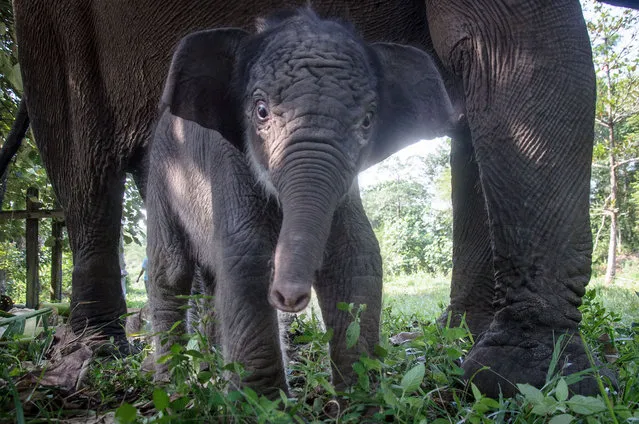
This photo taken on September 1, 2023 shows a one-day-old female Sumatran elephant by her 41-year-old mother elephant named Lisa at the Elephant Flying Squad camp in the Tesso Nilo National Park in Pelalawan, Sumatra. (Photo by Wahyudi/AFP Photo)

This photo taken on September 1, 2023 shows a one-day-old female Sumatran elephant by her 41-year-old mother elephant named Lisa at the Elephant Flying Squad camp in the Tesso Nilo National Park in Pelalawan, Sumatra. (Photo by Wahyudi/AFP Photo)
Details
24 Sep 2023 03:30:00
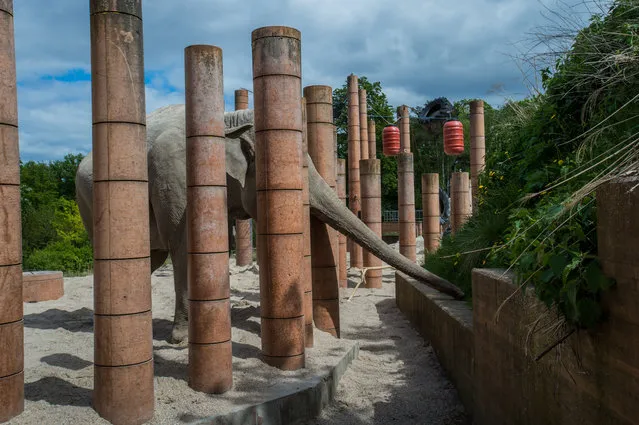
Asian Elephant, Denmark, 2016. (Photo by Jo-Anne McArthur/Born Free Foundation/The Guardian)

Jo-Anne McArthur’s book of photographs puts the spotlight on ethics of zoos around the world. Accompanied by essays by Born Free Foundation’s Virginia McKenna and philosopher Lori Gruen, the images and stories are also shared online through “A Year of Captivity”. Here: Asian Elephant, Denmark, 2016. (Photo by Jo-Anne McArthur/Born Free Foundation/The Guardian)
Details
28 Jul 2017 09:49:00
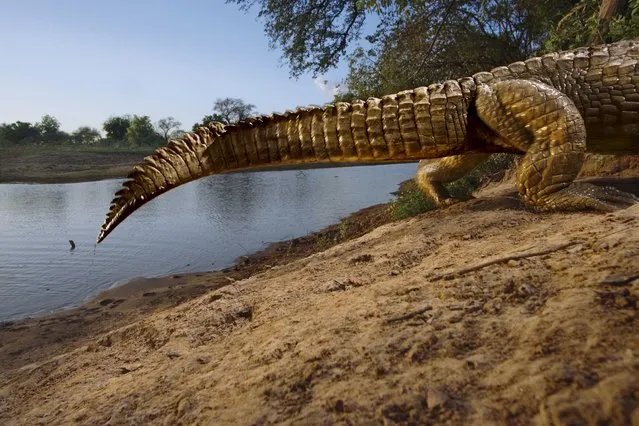
CT4 Crocodile cave on the Salamat river. Set up with Nathan Williamson last chip rain came while we were with the nomads. (Photo by Michael Nichols/National Geographic)

National Geographic has created “Air, Land & Sea: the 50 greatest wildlife photographs” exhibition. Here: CT4 Crocodile cave on the Salamat river. Set up with Nathan Williamson last chip rain came while we were with the nomads. (Photo by Michael Nichols/National Geographic)
Details
13 Sep 2018 00:03:00
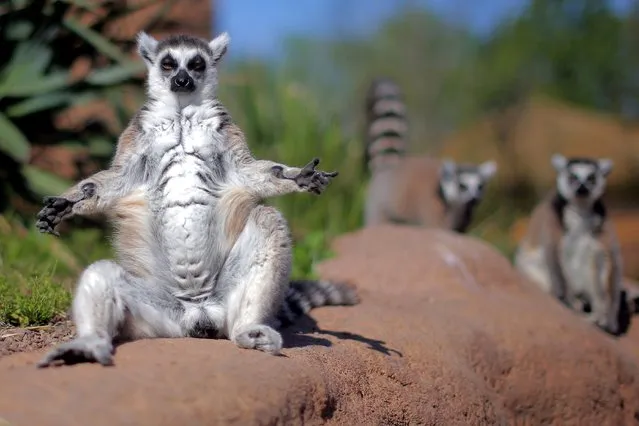
A ring-tailed lemur is pictured at Zoom Torino, a zoological park in Cumiana near Turin, on April 22, 2015. Zoom Torino is a new immersive zoological park, where animals can be seen without bars or cages, only natural barriers ensure the visit. (Photo by Marco Bertorello/AFP Photo)

A ring-tailed lemur is pictured at Zoom Torino, a zoological park in Cumiana near Turin, on April 22, 2015. Zoom Torino is a new immersive zoological park, where animals can be seen without bars or cages, only natural barriers ensure the visit. (Photo by Marco Bertorello/AFP Photo)
Details
25 Apr 2015 10:31:00
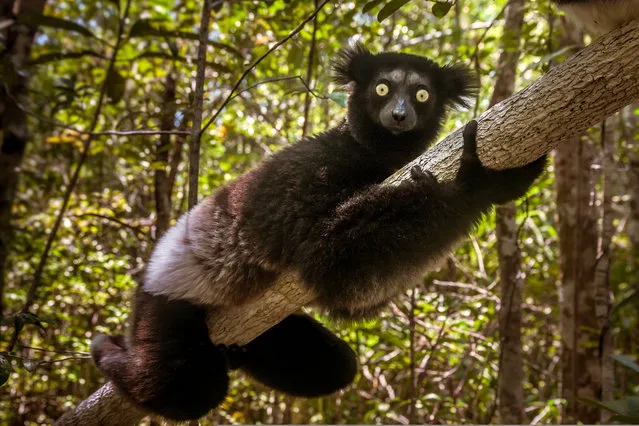
The secretive indri (Indri indri) of Madagascar, the largest living lemur. It is also critically endangered and highly evolutionarily distinct with no close relatives, which makes its branch one of most precarious on the mammal evolutionary tree. In the likely event that the indri goes extinct, we will lose 19m years of unique evolutionary history from the mammal tree of life. (Photo by Pierre-Yves Babelon/Aarhus University)

The secretive indri (Indri indri) of Madagascar, the largest living lemur. It is also critically endangered and highly evolutionarily distinct with no close relatives, which makes its branch one of most precarious on the mammal evolutionary tree. In the likely event that the indri goes extinct, we will lose 19m years of unique evolutionary history from the mammal tree of life. (Photo by Pierre-Yves Babelon/Aarhus University)
Details
18 Nov 2018 00:02:00