Loading...
Done
A picture made available on 13 May 2016 shows A Tiwa girl performing her traditional dance as they celebrated the Wanchuwa festival in Karbi Anglong District of Assam state, India, 11 May 2016. Wanchuwa is one of the most important festivals of the Tiwa tribal community living in the hills as it is related with agriculture which is the mainstay of their economy. Tiwas pray for a bountiful harvest during this festival and to protect their crops from pest and other natural calamities. (Photo by EPA/Stringer)

A picture made available on 13 May 2016 shows A Tiwa girl performing her traditional dance as they celebrated the Wanchuwa festival in Karbi Anglong District of Assam state, India, 11 May 2016. Wanchuwa is one of the most important festivals of the Tiwa tribal community living in the hills as it is related with agriculture which is the mainstay of their economy. Tiwas pray for a bountiful harvest during this festival and to protect their crops from pest and other natural calamities. Tiwa is a major tribe of Assam state who practice Jhum or shifting cultivation for their living in the hills. (Photo by EPA/Stringer)
Details
14 May 2016 11:45:00
World Car Free Day

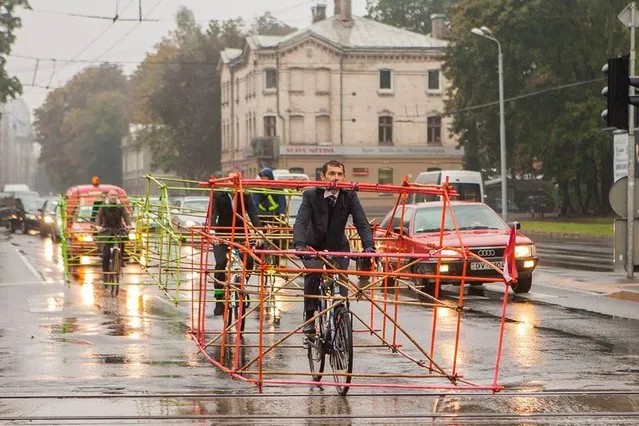
Latvian cyclists have decided to show the automobilists just how absurd it is to have only a single occupant in a car. The car takes up an enormous amount of space on the road; however, everyone is so used to it that no one ever notices it. It’s not hard to guess the thoughts of automobilists, and how they cursed those cyclists for taking up so much space. However, they have only themselves to blame. If everyone rode only bicycles to work, then there would never be such a thing as a traffic jam, the air in the city would become cleaner, while people would live longer, healthier lives, since cycling is a wonderful way to use the extra fat on your belly as the “fuel” for your bike.
Details
19 Oct 2014 12:29:00
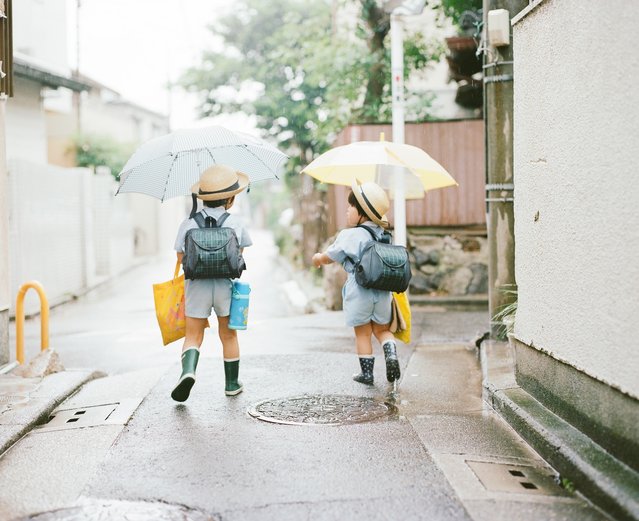
“Rainy days and mondays #1”. (Photo and caption by Hideaki Hamada)

“My children are not only my little darlings but off-shoots of myself. When I look at them, I have a strange feeling – as if I am watching myself re-living my life. What I want to show is their “living form”. – Hideaki Hamada. Photo: “Rainy days and mondays #1”. (Photo and caption by Hideaki Hamada)
Details
23 Mar 2015 09:56:00
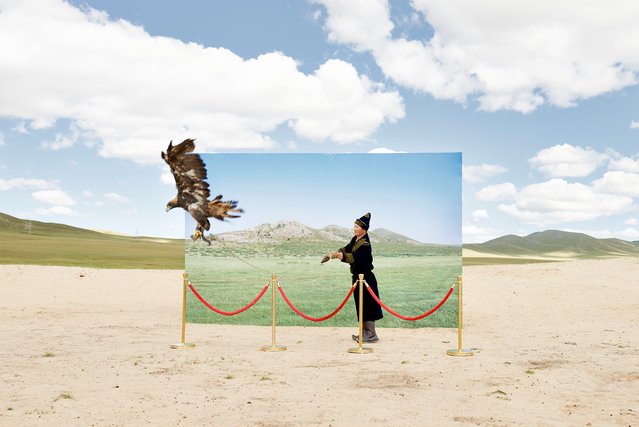
Up to 35% of Mongolians still live a nomadic life, depending on their land to survive. But environmental changes, particularly desertification, means this way of life is under threat. Korean photographer Daesung Lee’s Futuristic Archaeology images show billboard-size backdrops of lush steppe contrasting with actual scenery as former nomads enact scenes of hunting, herding and Mongolian wrestling. (Photo by Daesung Lee)

Up to 35% of Mongolians still live a nomadic life, depending on their land to survive. But environmental changes, particularly desertification, means this way of life is under threat. Korean photographer Daesung Lee’s Futuristic Archaeology images show billboard-size backdrops of lush steppe contrasting with actual scenery as former nomads enact scenes of hunting, herding and Mongolian wrestling. (Photo by Daesung Lee)
Details
24 Nov 2016 08:01:00
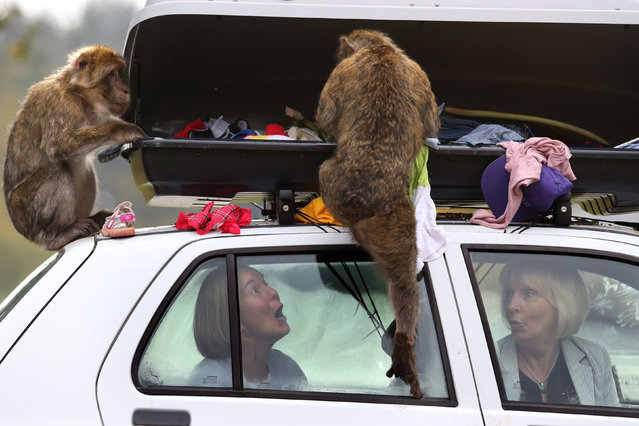
Sasha Muir and Margaret Davidson sit in a car as some of the 30 barbary macaques, known as the Middle Hill Troop after living between the top of Gibraltar rock and the town, show what happens when motorists forget to lock their luggage compartments, as Scotland’s only monkey drive-through section opens at Blair Drummond safari park in Stirling, Scotland on October 8, 2015. (Photo by Andrew Milligan/PA Wire)

Sasha Muir and Margaret Davidson sit in a car as some of the 30 barbary macaques, known as the Middle Hill Troop after living between the top of Gibraltar rock and the town, show what happens when motorists forget to lock their luggage compartments, as Scotland’s only monkey drive-through section opens at Blair Drummond safari park in Stirling, Scotland on October 8, 2015. (Photo by Andrew Milligan/PA Wire)
Details
13 Oct 2015 08:03:00
A general view of the residential area is pictured during dusk at Jodhpur in Rajasthan, April 5, 2015. Jodhpur, also known as the blue city in the desert Indian state of Rajasthan, which residents say originally, was used to show where the highest caste of priestly Hindus live, who wanted to set them apart from the rest of the population. Later the rest of the population followed suit. Another reason for the city to be blue is to keep the buildings cool during the summers, local residents said. (Photo by Adnan Abidi/Reuters)

A general view of the residential area is pictured during dusk at Jodhpur in Rajasthan, April 5, 2015. Jodhpur, also known as the blue city in the desert Indian state of Rajasthan, which residents say originally, was used to show where the highest caste of priestly Hindus live, who wanted to set them apart from the rest of the population. Later the rest of the population followed suit. Another reason for the city to be blue is to keep the buildings cool during the summers, local residents said. (Photo by Adnan Abidi/Reuters)
Details
12 Apr 2015 08:27:00
Lola is seen at left in everyday clothes – and then at right in her work clothes. She works as a clown in Paris. (Photo by Bruno Fert/Picturetank)

“The series of photos called Workwears, by French photographer Bruno Fert, visually juxtaposes people’s private lives with their lives at work. A firefighter, a fisherman, a nurse, a diver, a judge. One by one, Fert’s photos show people in their homes wearing everyday clothing – followed by another photo showing them dressed in the clothing of their chosen professions. Our reaction, Fert said, reminds us how tightly humans hold on to certain stereotypes about some professions. “I like to break those stereotypes”, he said”. – Thom Patterson via CNN. Here: Lola is seen at left in everyday clothes – and then at right in her work clothes. She works as a clown in Paris. (Photo by Bruno Fert/Picturetank)
Details
29 Oct 2014 12:40:00
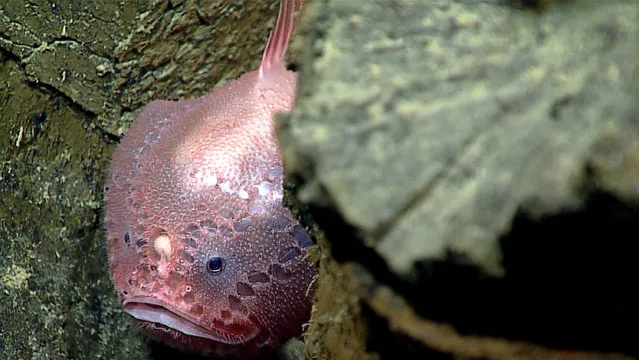
This April 30, 2016 image made available by NOAA shows a deep sea anglerfish living between pillow basalt rock formations, during a deepwater exploration of the Marianas Trench Marine National Monument area in the Pacific Ocean near Guam and Saipan. The ambush predator waits for prey to be attracted by its lure, located between its eyes, and gulps it with its large mouth. (Photo by NOAA Office of Ocean Exploration and Research via AP Photo)

This April 30, 2016 image made available by NOAA shows a deep sea anglerfish living between pillow basalt rock formations, during a deepwater exploration of the Marianas Trench Marine National Monument area in the Pacific Ocean near Guam and Saipan. The ambush predator waits for prey to be attracted by its lure, located between its eyes, and gulps it with its large mouth. (Photo by NOAA Office of Ocean Exploration and Research via AP Photo)
Details
21 Oct 2016 12:30:00