Loading...
Done
Autumn Colours

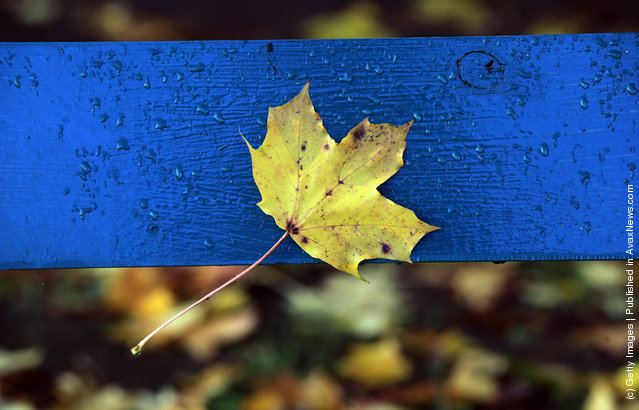
An autumn leaf sticks to a bench near the Bishops Castle near Wells Cathedral on November 1, 2011 in Wells, England. According to a number of nature watchers the autumn colours are currently reaching their peak following an unusually warm September and October which has led to trees holding onto their leaves longer than normal. (Photo by Matt Cardy/Getty Images)
Details
03 Nov 2011 09:37:00
Synchronized Swimming Turtles

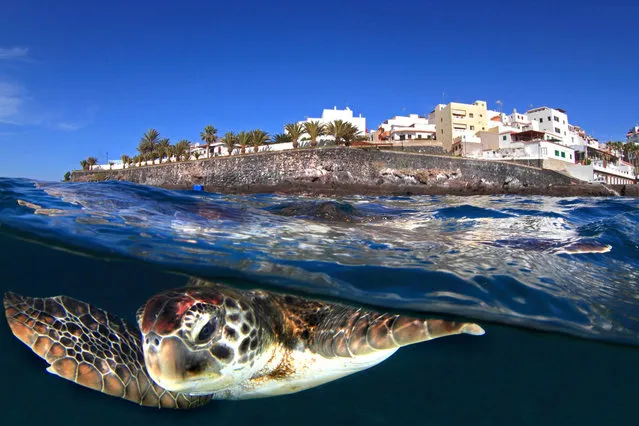
These talented turtles have been "snapped" performing for the camera as they practice their synchronized swimming routine. Photographed underwater by Monste Grillo, 36, from Tenerife, Spain, the turtles are seen swimming in unison as well as touching fins as they circle towards the surface. After spending hours in the water off the coast of the Canary Islands in 2012, the photographs capture the gentle nature of the creatures as well as giving a fascinating glimpse into their behavior in the wild. (CATERS NEWS)
Details
22 Aug 2013 15:56:00
Paper Craft By Lobulo Design

London-based Lobulo Design (who is actually just a single desiner who goes by Lobulo) creates wonderful, vibrant designs using paper. From pop culture to anatomy and the natural world it seems like nothing is off limits. Check out much more over on Behance.
Details
30 Mar 2014 11:12:00
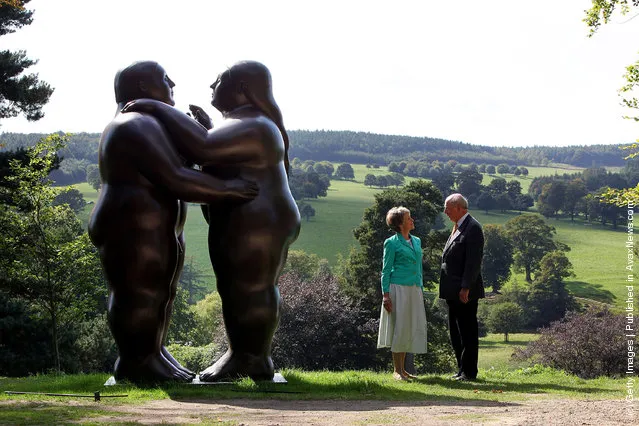
Dancers  by artist Fernando Botero

“Fernando Botero Angulo (born April 19, 1932) is a Colombian figurative artist. His works feature a figurative style, called by some “Boterismo”, which gives them an unmistakable identity. Botero depicts women, men, daily life, historical events and characters, milestones of art, still-life, animals and the natural world in general, with exaggerated and disproportionate volumetry, accompanied by fine details of scathing criticism, irony, humor, and ingenuity”. – Wikipedia

Photo: The Duke and Duchess of Devonshire view “Dancers” by artist Fernando Botero in the gardens of their home Chatsworth House on September 10, 2009, Chatsworth, England. (Photo by Christopher Furlong/Getty Images)
Details
29 Nov 2011 10:02:00
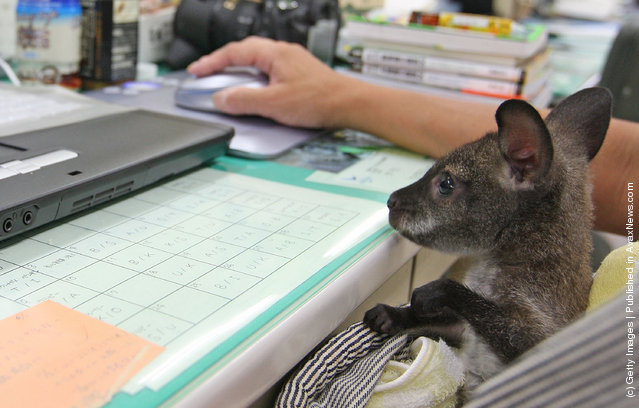
A baby wallaby

“Very small forest-dwelling wallabies are known as pademelons (genus Thylogale) and dorcopsises (genera Dorcopsis and Dorcopsulus). The name wallaby comes from the Eora Aboriginal tribe who were the original inhabitants of the Sydney area. Wallabies are herbivores whose diet consists of a wide range of grasses, vegetables, leaves, and other types of foliage”. – Wikipedia

Photo: A baby wallaby sits in a zoo attendant's lap at Edogawa Natural Zoo on August 4, 2009 in Tokyo, Japan. The staff of the zoo have raised the young wallaby after her mother neglected her. (Photo by Junko Kimura/Getty Images)
Details
07 Sep 2011 13:33:00
Goldwell Open Air Museum: Last Supper

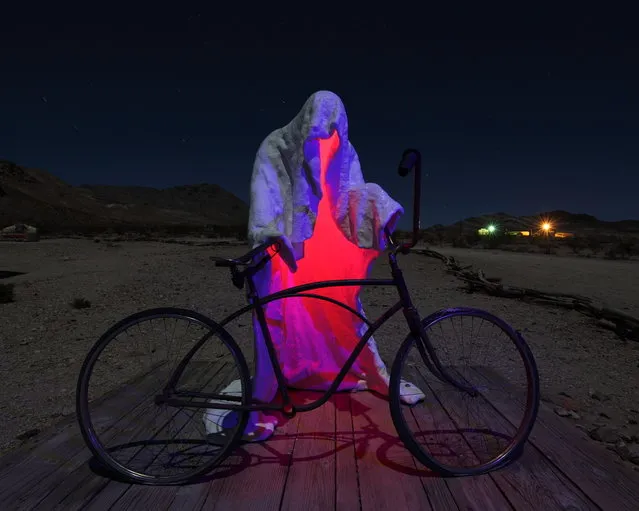
Just outside of a Nevada ghost town, Rhyolite, is the Goldwell Open Air Museum. The museum was created by a group of Belgian artists and consists of seven outdoor sculptures dramatically using the Mojae Desert as a backdrop. The Last Supper, created by the late artist Charles Szukalski, is a piece that was due to last only a couple of years but withstood time and nature since 1984. Men from the local community were covered in linen and plaster to create the eerie forms, reminiscent of Da Vinci's last supper. It is a truly unique environment and piece of art in the great American desert.
Details
03 Feb 2013 13:13:00
Eyes As Big As Plates – Norway And Finland

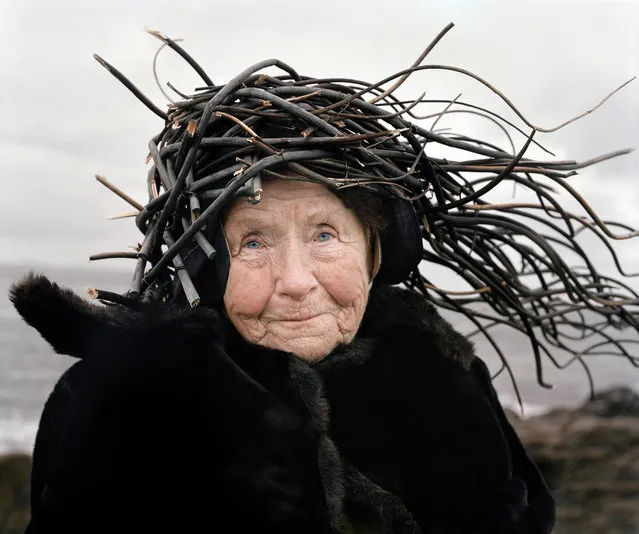
Eyes as Big as Plates is a whimsical series by Finnish photographer Riitta Ikonen and Norwegian photographer Karoline Hjorth that features senior citizens donning organic materials like twigs and grass. Ikonen says that the collaborative project originally began as "a play on characters and protagonists from Norwegian folklore" but has since evolved into a collection of images exploring "mental landscapes" that reflect a return of body to nature with the use of scavenged materials.
Details
08 Apr 2013 09:53:00
 Marble Caves, Patagonia, Chile

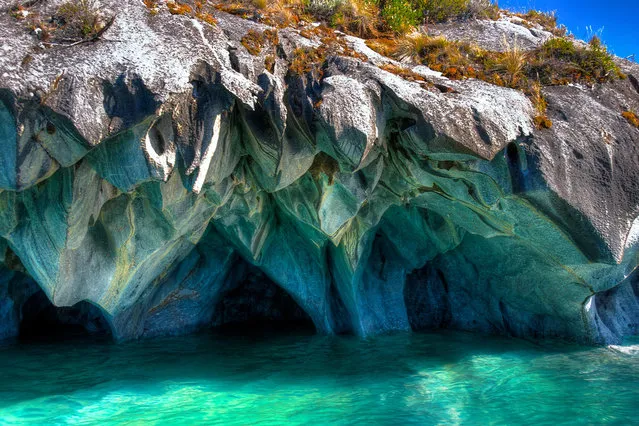
The Marble Caves of Patagonia, Chile, are beautiful vibrant blue caverns, partially submerged in the equally stunning turquoise waters of Carrera Lake. The lake itself is on the border of Argentina and Chile, with the caves located on the Chilean side. The caves are comprised of three main caverns: the Chapel (La Capilla), the Cathedral (El Catedral), and the Cave (La Cueva). Visitors to the caves can explore them in a small boat or kayak, but only when Carrera Lake’s waters are calm and gentle. A rare and invaluable natural wonder, the existence of these caves is currently threatened by plans to build five large dams in the area. If you visit these caves, please treat them with the utmost respect and care.
Details
15 Aug 2012 11:25:00