Loading...
Done
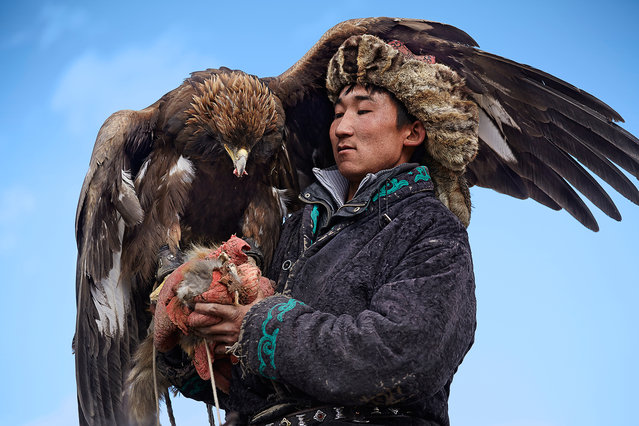
In one of the planet’s most desolate and harsh terrains, the Altai Mountains which run from Siberia in Russia down to Mongolia’s Gobi Desert, hunting with eagles is currently only practiced by a handful of Kyrgyz and Kazakhs. This form of falconry, the practice of hunting with the aid of birds of prey, can be traced back as far as 4,000 years in Central Asia. (Photo by Tariq Zaidi/The Washington Post)

In one of the planet’s most desolate and harsh terrains, the Altai Mountains which run from Siberia in Russia down to Mongolia’s Gobi Desert, hunting with eagles is currently only practiced by a handful of Kyrgyz and Kazakhs. This form of falconry, the practice of hunting with the aid of birds of prey, can be traced back as far as 4,000 years in Central Asia. Here: after a successful hunt, a proud hunter rewards his eagle by feeding it the lungs of the prey, which is considered the most highly prized part of the animal. (Photo by Tariq Zaidi/The Washington Post)
Details
22 Aug 2015 12:46:00
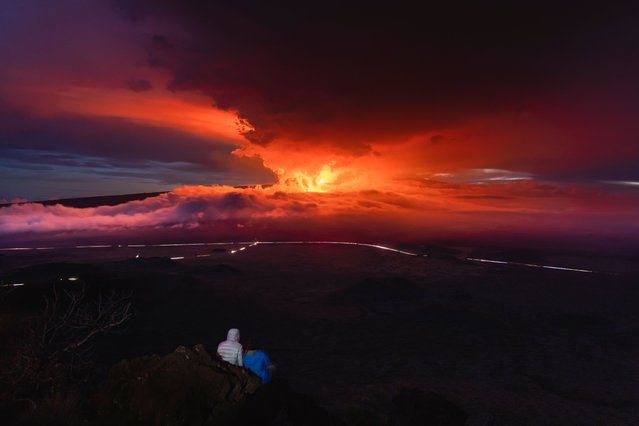
The Big Island's Mauna Loa Volcano erupts on November 28, 2022 on the Island of Hawaii. For the first time in almost 40 years, the biggest active volcano in the world erupted prompting an emergency response on the Big Island. (Photo by Andrew Richard Hara/Getty Images)

The Big Island's Mauna Loa Volcano erupts on November 28, 2022 on the Island of Hawaii. For the first time in almost 40 years, the biggest active volcano in the world erupted prompting an emergency response on the Big Island. (Photo by Andrew Richard Hara/Getty Images)
Details
20 Jan 2023 03:52:00
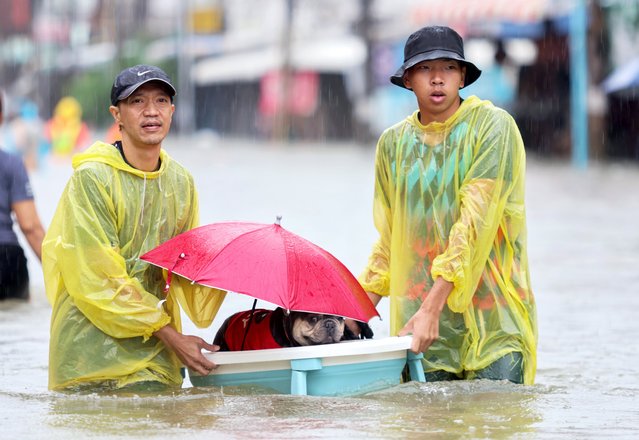
Thai residents carrying a basin with a dog inside wade through water at a flooded street during a downpour in central Yala, southern province, Thailand, 28 November 2024. Seven provinces in southern Thailand are facing severe flooding after heavy rains caused by a strong northeast monsoon, affecting thousands of people and forcing the closure of schools and roads, according to the Department of Disaster Prevention and Mitigation. (Photo by Nakharin Chinnawornkomol/EPA/EFE)

Thai residents carrying a basin with a dog inside wade through water at a flooded street during a downpour in central Yala, southern province, Thailand, 28 November 2024. Seven provinces in southern Thailand are facing severe flooding after heavy rains caused by a strong northeast monsoon, affecting thousands of people and forcing the closure of schools and roads, according to the Department of Disaster Prevention and Mitigation. (Photo by Nakharin Chinnawornkomol/EPA/EFE)
Details
25 Dec 2024 00:32:00
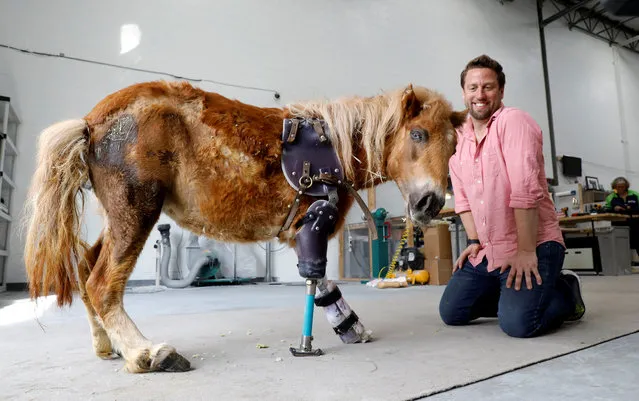
Derrick Campana kneels beside Angel Marie, a three legged mini horse who wears a prosthetic leg made by Campana, at Animal Ortho Care in Sterling, Virginia, U.S., March 27, 2017. (Photo by Kevin Lamarque/Reuters)

Derrick Campana kneels beside Angel Marie, a three legged mini horse who wears a prosthetic leg made by Campana, at Animal Ortho Care in Sterling, Virginia, U.S., March 27, 2017. (Photo by Kevin Lamarque/Reuters)
Details
30 Mar 2017 11:27:00
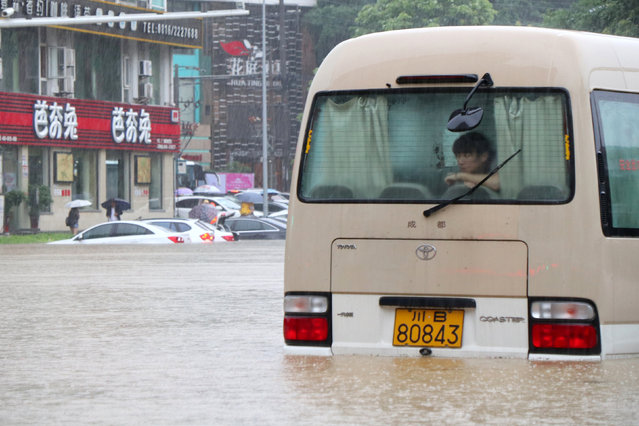
A woman watches the rain from inside a stranded vehicle on a flooded street in Mianyang, Sichuan, China on July 11, 2018. (Photo by CNS via Reuters)

A woman watches the rain from inside a stranded vehicle on a flooded street in Mianyang, Sichuan, China on July 11, 2018. (Photo by China News Service via Reuters)
Details
13 Jul 2018 00:01:00
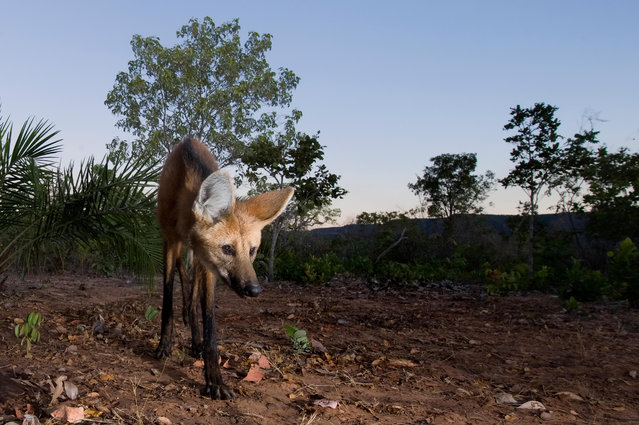
The maned wolf is among the large mammals in the Brazilian Cerrado that are threatened by the increasing conversion of grasslands into farmland for grazing and growing crops. (Photo by Ben Cranke/Nature Picture Library/Alamy Stock Photo)

Global wildlife populations will decline by 67% by 2020 unless urgent action is taken to reduce human impact on species and ecosystems, warns the biennial Living Planet Index report from WWF (World Wide Fund for Nature) and ZSL (Zoological Society of London). From elephants to eels, here are some of the wildlife populations most affected by human activity. Here: The maned wolf is among the large mammals in the Brazilian Cerrado that are threatened by the increasing conversion of grasslands into farmland for grazing and growing crops. (Photo by Ben Cranke/Nature Picture Library/Alamy Stock Photo)
Details
28 Oct 2016 10:47:00
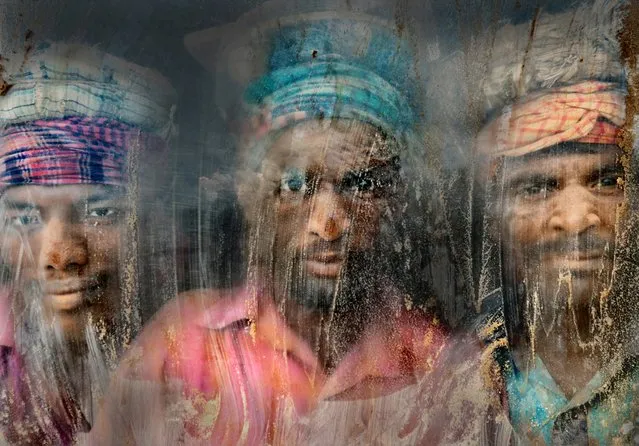
Gravel Workmen of Chittagong, Bangladesh, by Faisal Azim. Gravel workmen look through a glass window at a gravel-crushing yard in Chittagong. Full of dust and sand, it is an extremely unhealthy environment for working, but still hundreds of people work here for their livelihoods. (Photo by Faisal Azim/2016 Atkins CIWEM Environmental Photographer of the Year)

From Tibetan monks playing basket ball with ice thawing high up in the Himalayas, to the pollution that hides behind the Taj Mahal, here’s pick from 60 exceptional environmental photographs, by photographers and filmmakers from 70 countries, that will go on show at the Royal Geographical Society in London from 29 June to 21 August. The winners will be announced on 28 June. Here: Gravel Workmen of Chittagong, Bangladesh, by Faisal Azim. Gravel workmen look through a glass window at a gravel-crushing yard in Chittagong. Full of dust and sand, it is an extremely unhealthy environment for working, but still hundreds of people work here for their livelihoods. (Photo by Faisal Azim/2016 Atkins CIWEM Environmental Photographer of the Year)
Details
01 Jun 2016 12:25:00
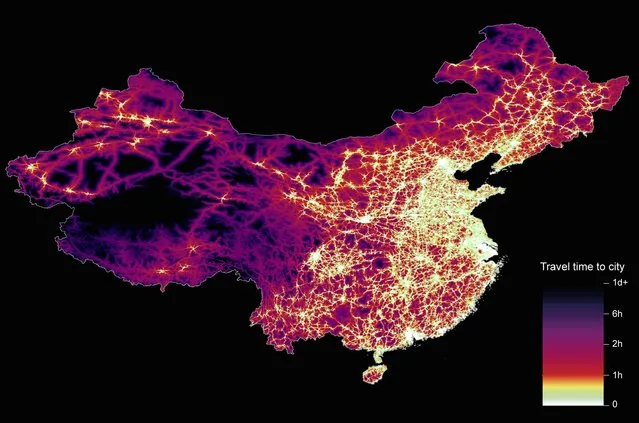
From Britain to China to Mali, new maps showing travel times to the nearest urban centre reveal huge differences between countries. Using Open Street Map and Google, a University of Oxford team have created a visual breakdown that suggests major inequalities when it comes to commuting. Here: China. The dataset used for China was unique as it relied solely on Open Street Map, due to restrictions on accessing Google data. The population is densely concentrated in the east and accessibility is increased, whereas rural provinces in the west remain remote. (Photo by Daniel Weiss/Jennifer Rozier/Malaria Atlas Project/University of Oxford )

From Britain to China to Mali, new maps showing travel times to the nearest urban centre reveal huge differences between countries. Using Open Street Map and Google, a University of Oxford team have created a visual breakdown that suggests major inequalities when it comes to commuting. Here: China. The dataset used for China was unique as it relied solely on Open Street Map, due to restrictions on accessing Google data. The population is densely concentrated in the east and accessibility is increased, whereas rural provinces in the west remain remote. (Photo by Daniel Weiss/Jennifer Rozier/Malaria Atlas Project/University of Oxford)
Details
12 Jan 2018 06:43:00