Loading...
Done
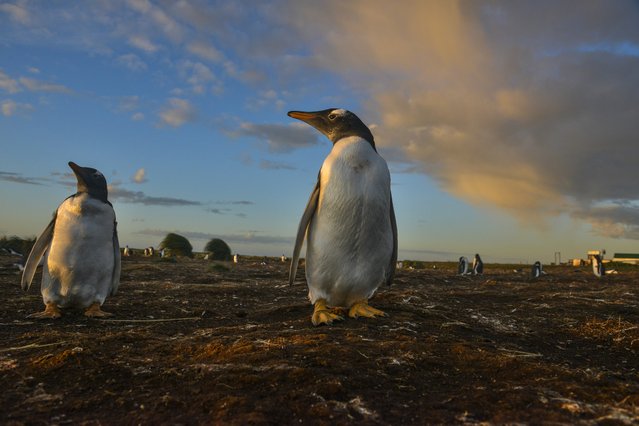
As the sun rises, Gentoo penguins start their day on Wednesday, February 17, 2016, on Sea Lion Island, Falkland Islands. Sea Lion Island, which lies about 10 miles to the south of mainland East Falkland, is the southern most human-inhabited island of the more than 750 islands and islets of the Falkland Islands. (Photo by Jahi Chikwendiu/The Washington Post)

As the sun rises, Gentoo penguins start their day on Wednesday, February 17, 2016, on Sea Lion Island, Falkland Islands. Sea Lion Island, which lies about 10 miles to the south of mainland East Falkland, is the southern most human-inhabited island of the more than 750 islands and islets of the Falkland Islands. (Photo by Jahi Chikwendiu/The Washington Post)
Details
02 Sep 2016 13:05:00
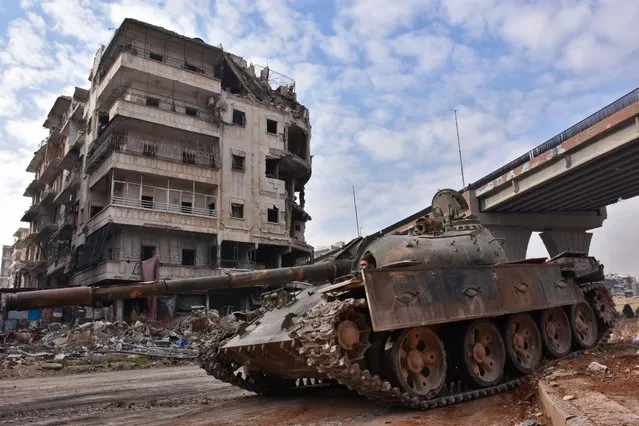
Syrian government troops patrol the newly captured al- Sakhour neighbourhood in the eastern part of the northern city of Aleppo on December 7, 2016 Rebels in Aleppo called for a five- day truce and the evacuation of civilians Wednesday after losing more than three quarters of their territory including the Old City to a Syrian army offensive. (Photo by George Ourfalian/AFP Photo)

Syrian government troops patrol the newly captured al- Sakhour neighbourhood in the eastern part of the northern city of Aleppo on December 7, 2016 Rebels in Aleppo called for a five- day truce and the evacuation of civilians Wednesday after losing more than three quarters of their territory including the Old City to a Syrian army offensive. (Photo by George Ourfalian/AFP Photo)
Details
08 Dec 2016 12:35:00
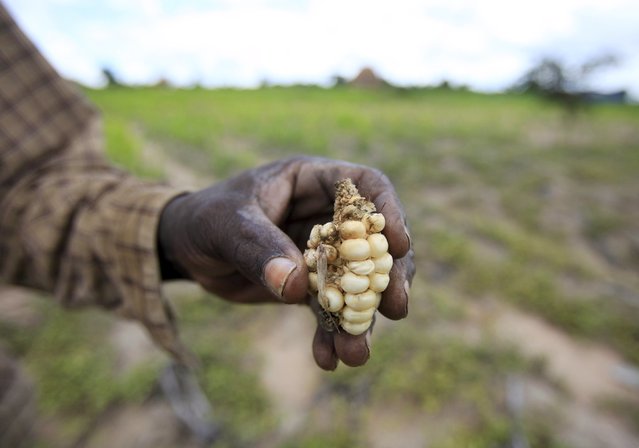
A Zimbabwean subsistence farmer holds a stunted maize cob in his field outside Harare, January 20, 2016. About 14 million people face hunger in Southern Africa because of a drought that has been exacerbated by an El Nino weather pattern, the United Nations World Food Programme (WFP) said on Monday. In Zimbabwe, 1.5 million people, more than 10 percent of the population, face hunger, WFP said. (Photo by Philimon Bulawayo/Reuters)

A Zimbabwean subsistence farmer holds a stunted maize cob in his field outside Harare, January 20, 2016. About 14 million people face hunger in Southern Africa because of a drought that has been exacerbated by an El Nino weather pattern, the United Nations World Food Programme (WFP) said on Monday. In Zimbabwe, 1.5 million people, more than 10 percent of the population, face hunger, WFP said. (Photo by Philimon Bulawayo/Reuters)
Details
22 Jan 2016 10:06:00
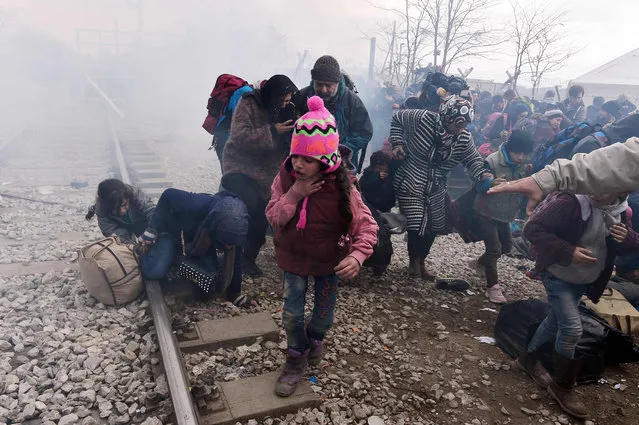
A child coughs as migrants and refugees run away after Macedonian police fired tear gas at hundreds of Iraqi and Syrian migrants who tried to break through the Greek border fence in Idomeni, on February 29, 2016. Greek police said more than 6,000 people were massed at the border, in a buildup triggered by Austria and Balkan states capping the numbers of migrants entering their territory. (Photo by Louisa Gouliamaki/AFP Photo)

A child coughs as migrants and refugees run away after Macedonian police fired tear gas at hundreds of Iraqi and Syrian migrants who tried to break through the Greek border fence in Idomeni, on February 29, 2016. Greek police said more than 6,000 people were massed at the border, in a buildup triggered by Austria and Balkan states capping the numbers of migrants entering their territory. (Photo by Louisa Gouliamaki/AFP Photo)
Details
01 Mar 2016 09:58:00
A woman cries while sitting on a road amid the destroyed city of Natori, Miyagi Prefecture in northern Japan March 13, 2011, after a massive earthquake and tsunami that are feared to have killed more than 10,000 people. (Photo by Asahi Shimbun/Reuters)

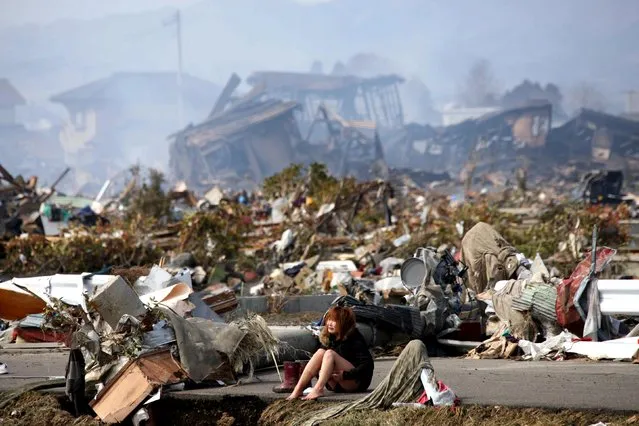
A woman cries while sitting on a road amid the destroyed city of Natori, Miyagi Prefecture in northern Japan March 13, 2011, after a massive earthquake and tsunami. Five years on from the tsunami that triggered meltdowns at Japan's Fukushima nuclear plant, the page is anything but turned. A magnitude 9 earthquake and towering tsunami on March 11, 2011 killed nearly 16,000 people along Japan's northeastern coast and left more than 2,500 missing. The 10-metre (33-foot) tsunami swept away everything in its path, including houses, ships, cars and farm buildings. (Photo by Asahi Shimbun/Reuters)
Details
09 Mar 2016 12:40:00
A life-size robot named “Mark 1”, built by product and graphic designer Ricky Ma, 42, is seen in Hong Kong, China March 31, 2016. Ma, a robot enthusiast, spent a year-and-a half and more than HK$400,000 ($51,000) to create the humanoid robot, which is modelled after a Hollywood star, to fulfil his childhood dream. The eyes of the robot include face and color tracking functions. (Photo by Bobby Yip/Reuters)

A life-size robot named “Mark 1”, built by product and graphic designer Ricky Ma, 42, is seen in Hong Kong, China March 31, 2016. Ma, a robot enthusiast, spent a year-and-a half and more than HK$400,000 ($51,000) to create the humanoid robot, which is modelled after a Hollywood star, to fulfil his childhood dream. The eyes of the robot include face and color tracking functions. (Photo by Bobby Yip/Reuters)
Details
02 Apr 2016 09:38:00
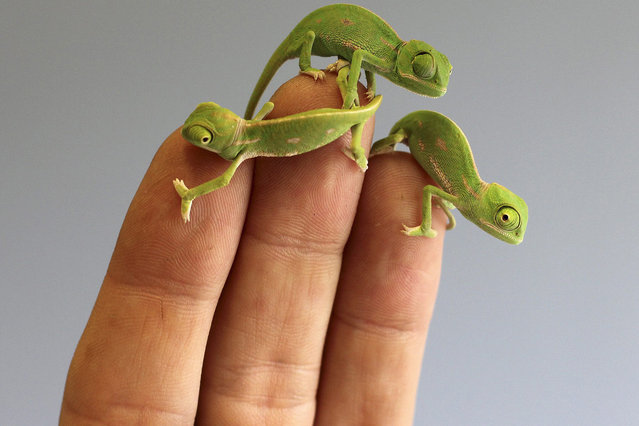
A handout image released by the Taronga Zoo shows Veiled Chameleon hatchlings at Taronga Zoo in Sydney, Australia, 11 March 2015. Taronga has welcomed more than 20 baby chameleons, with the last of three clutches of eggs hatching this week. Veiled Chameleons, or Chamaeleo calyptratus, are native to Saudi Arabia and Yemen and can live up to five years. (Photo by EPA/Taronga Zoo)

A handout image released by the Taronga Zoo shows Veiled Chameleon hatchlings at Taronga Zoo in Sydney, Australia, 11 March 2015. Taronga has welcomed more than 20 baby chameleons, with the last of three clutches of eggs hatching this week. Veiled Chameleons, or Chamaeleo calyptratus, are native to Saudi Arabia and Yemen and can live up to five years. (Photo by EPA/Taronga Zoo)
Details
21 Mar 2015 13:13:00
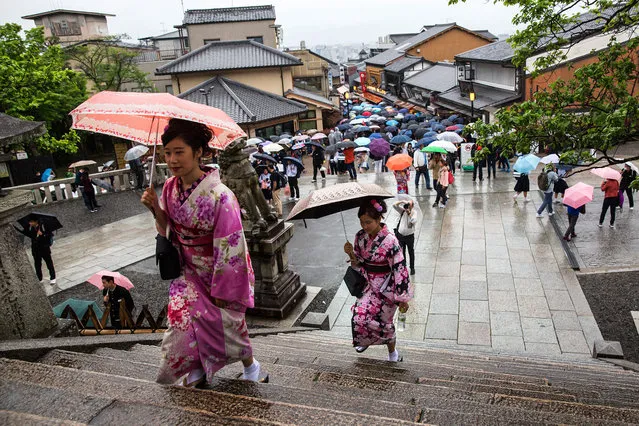
Tourists dressed in yukatas, a light, unlined, summer kimono made of cotton instead of the traditional silk, climb steps to visit a temple on April 27, 2016 in Kyoto, Japan. Now the seventh largest city in Japan, Kyoto was once the Imperial capital for more than one thousand years, it is now the capital city of Kyoto Prefecture and a major part of the Kyoto-Osaka-Kobe metropolitan area. (Photo by Carl Court/Getty Images)

Tourists dressed in yukatas, a light, unlined, summer kimono made of cotton instead of the traditional silk, climb steps to visit a temple on April 27, 2016 in Kyoto, Japan. Now the seventh largest city in Japan, Kyoto was once the Imperial capital for more than one thousand years, it is now the capital city of Kyoto Prefecture and a major part of the Kyoto-Osaka-Kobe metropolitan area. (Photo by Carl Court/Getty Images)
Details
21 May 2016 10:48:00