Loading...
Done
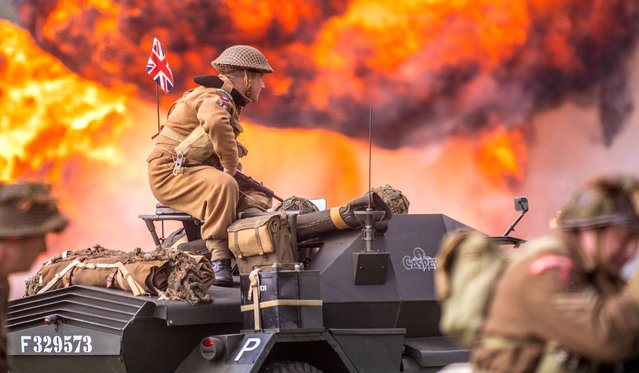
The picture dated September 3, 2023 shows a battle reenactment at the Crosby Victory Show in Leicestershire. It is the largest World War Two re-enactment weekend of its kind in the UK and around 15,000 visitors attended over the three-day even. Visitors stepped back in time as the farmland was transformed to recreate life during the war, with trenches, armoured vehicles and WW2 aircraft displays, including the Avro Lancaster and Douglas Dakota. (Photo by Claire Hartley/Bav Media)

The picture dated September 3, 2023 shows a battle reenactment at the Crosby Victory Show in Leicestershire. It is the largest World War Two re-enactment weekend of its kind in the UK and around 15,000 visitors attended over the three-day even. Visitors stepped back in time as the farmland was transformed to recreate life during the war, with trenches, armoured vehicles and WW2 aircraft displays, including the Avro Lancaster and Douglas Dakota. (Photo by Claire Hartley/Bav Media)
Details
01 Nov 2023 00:10:00
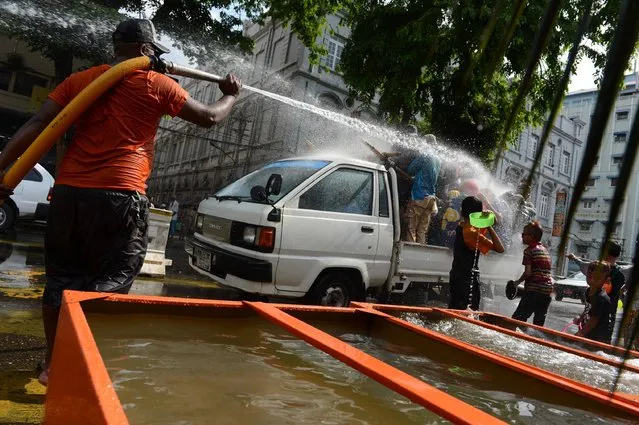
Myanmar revellers take part in celebrations on the fifth and last day marking Thingyan, a water festival which brings in the country's new year, in Yangon on April 16, 2016. The Buddhist festival of water pouring symbolizes spiritual cleansing and begin the new year free from worldly impurities with celebrants devoting the four days of Thingyan in merry making of water dousing until the eve of new year. (Photo by Romeo Gacad/AFP Photo)

Myanmar revellers take part in celebrations on the fifth and last day marking Thingyan, a water festival which brings in the country's new year, in Yangon on April 16, 2016. The Buddhist festival of water pouring symbolizes spiritual cleansing and begin the new year free from worldly impurities with celebrants devoting the four days of Thingyan in merry making of water dousing until the eve of new year. (Photo by Romeo Gacad/AFP Photo)
Details
17 Apr 2016 10:53:00
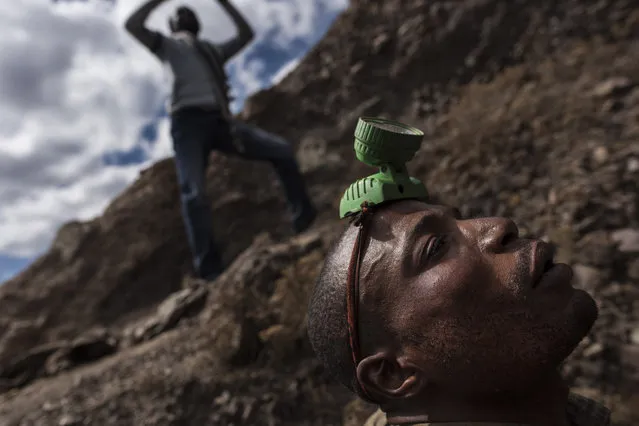
A “creuseur”, or digger, a plastic lantern on his head, readies to enter a copper and cobalt mine in Kawama, Democratic Republic of Congo on June 8, 2016. Cobalt is used in the batteries for electric cars and mobile phones. Working conditions are dangerous, often with no safety equipment or structural support for the tunnels. The diggers say they are paid on average US$2-3/day. (Photo by Michael Robinson Chavez/The Washington Post)

A “creuseur”, or digger, a plastic lantern on his head, readies to enter a copper and cobalt mine in Kawama, Democratic Republic of Congo on June 8, 2016. Cobalt is used in the batteries for electric cars and mobile phones. Working conditions are dangerous, often with no safety equipment or structural support for the tunnels. The diggers say they are paid on average US$2-3/day. (Photo by Michael Robinson Chavez/The Washington Post)
Details
30 Dec 2016 10:29:00
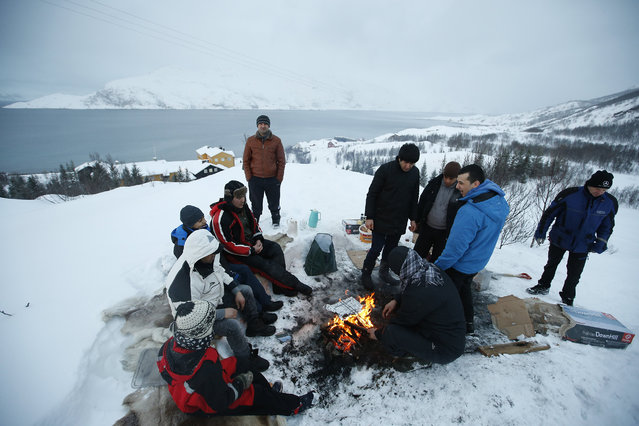
In this photo taken Tuesday, February 2, 2016, asylum seekers gather round a fire as they cook a meal overlooking the temporary Altnes camp refugee camp on the island of Seiland, northern Norway. (Photo by Alastair Grant/AP Photo)

In this photo taken Tuesday, February 2, 2016, asylum seekers gather round a fire as they cook a meal overlooking the temporary Altnes camp refugee camp on the island of Seiland, northern Norway. Waiting for their asylum claims to be processed, hundreds of people in emergency shelters in Hammerfest and neighboring towns are slowly getting used to the extreme climate and unfamiliar customs of the High North. They say they have adapted to the cold – the temperature rarely drops below minus 10 degrees C (14 F) along the coast, though it gets much colder further inland. It’s the darkness that throws them off. (Photo by Alastair Grant/AP Photo)
Details
18 Feb 2016 13:22:00
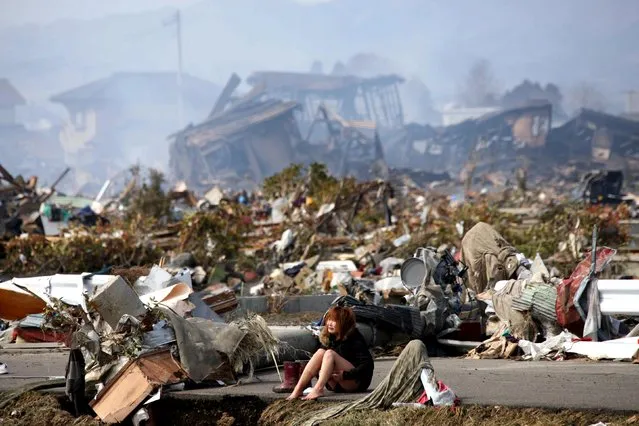
A woman cries while sitting on a road amid the destroyed city of Natori, Miyagi Prefecture in northern Japan March 13, 2011, after a massive earthquake and tsunami that are feared to have killed more than 10,000 people. (Photo by Asahi Shimbun/Reuters)

A woman cries while sitting on a road amid the destroyed city of Natori, Miyagi Prefecture in northern Japan March 13, 2011, after a massive earthquake and tsunami. Five years on from the tsunami that triggered meltdowns at Japan's Fukushima nuclear plant, the page is anything but turned. A magnitude 9 earthquake and towering tsunami on March 11, 2011 killed nearly 16,000 people along Japan's northeastern coast and left more than 2,500 missing. The 10-metre (33-foot) tsunami swept away everything in its path, including houses, ships, cars and farm buildings. (Photo by Asahi Shimbun/Reuters)
Details
09 Mar 2016 12:40:00
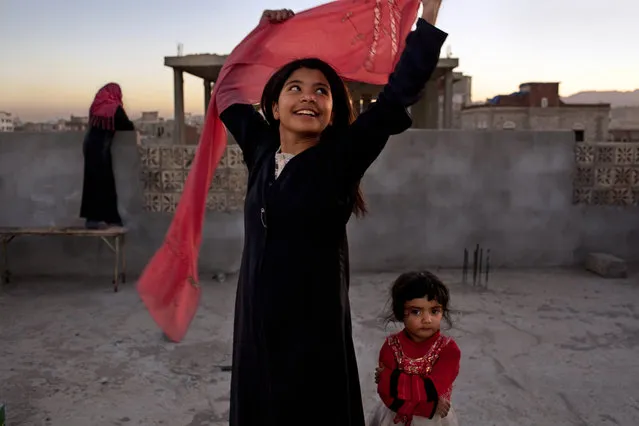
Some of the most powerful narratives of the past decade have been produced by a forward-thinking generation of women photojournalists as different as the places and the subjects they have covered. National Geographic's “Women of Vision” exhibit features the work of 11 photographers and is on display at the Fernbank Museum of Natural History in Atlanta until January 3, 2016. (Photo by Stephanie Sinclair/National Geographic)

Some of the most powerful narratives of the past decade have been produced by a forward-thinking generation of women photojournalists as different as the places and the subjects they have covered. National Geographic's “Women of Vision” exhibit features the work of 11 photographers and is on display at the Fernbank Museum of Natural History in Atlanta until January 3, 2016. Here: Nujood Ali stunned the world in 2008 by obtaining a divorce at age 10 in Yemen, striking a blow against forced marriage. (Photo by Stephanie Sinclair/National Geographic)
Details
11 Dec 2015 08:05:00
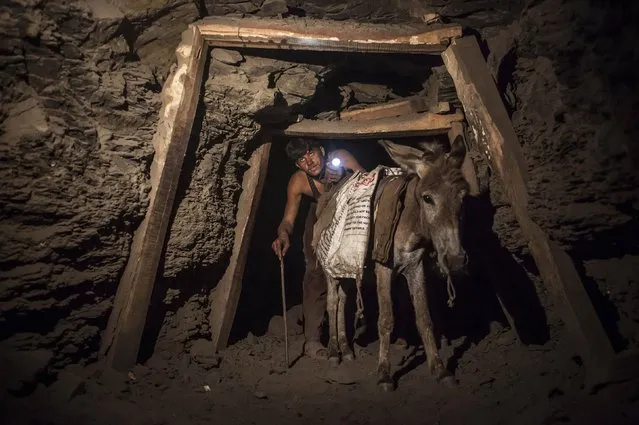
A miner with a donkey makes his way through the low and narrow tunnel leading out of a coal mine in Choa Saidan Shah in Punjab province, April 29, 2014. Workers at this mine in Choa Saidan Shah dig coal with pick axes, break it up and load it onto donkeys to be transported to the surface. (Photo by Sara Farid/Reuters)

A miner with a donkey makes his way through the low and narrow tunnel leading out of a coal mine in Choa Saidan Shah in Punjab province, April 29, 2014. Workers at this mine in Choa Saidan Shah dig coal with pick axes, break it up and load it onto donkeys to be transported to the surface. Employed by private contractors, a team of four workers can dig about a ton of coal a day, for which they earn around $10 to be split between them. The coalmine is in the heart of Punjab, Pakistan's most populous and richest province, but the labourers mostly come from the poorer neighbouring region of Khyber Pakhtunkhwa. (Photo by Sara Farid/Reuters)
Details
03 Aug 2014 07:35:00
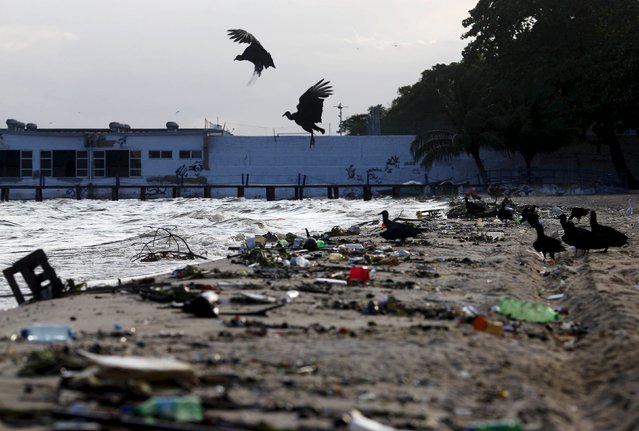
Vultures gather to eat waste in Bica beach, on the banks of the Guanabara Bay, with the Sugar Loaf mountain in background, 500 days ahead the Rio 2016 Olympic Games in Rio de Janeiro March 24, 2015. (Photo by Ricardo Moraes/Reuters)

Vultures gather to eat waste in Bica beach, on the banks of the Guanabara Bay, with the Sugar Loaf mountain in background, 500 days ahead the Rio 2016 Olympic Games in Rio de Janeiro March 24, 2015. As part of its Olympic bid, Rio promised to clean up 80 percent of the bay for the games. But local government officials have already admitted that a cleanup by 2016 is not achievable. Despite millions of dollars of investment over the years, the bay still stinks of sewage. Sailors who visited the city for test events complained of a floating sofa and a dead dog in the water. (Photo by Ricardo Moraes/Reuters)
Details
26 Mar 2015 12:16:00