Loading...
Done
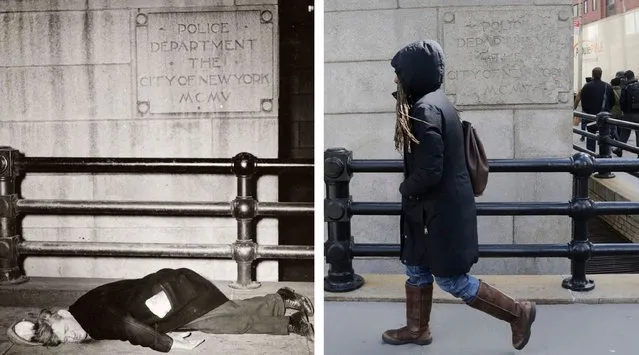
A new book of photos by legendary photographer Weegee shows what industrialized, pre-gentrified New York looked like in the mid-20th century, before the city was crammed with towers and billboards. (Photo by AP Photo/Copyright Weegee/The International Center of Photography, Mark Lennihan)

A new book of photos by legendary photographer Weegee shows what industrialized, pre-gentrified New York looked like in the mid-20th century, before the city was crammed with towers and billboards. Here: this combination shows the 1945 photo “Derelict sleeping on the sidewalk outside police headquarters” by Weegee, provided by the International Center of Photography in New York, and a woman walking on the same spot on Wednesday, March 18, 2015. (Photo by AP Photo/Copyright Weegee/The International Center of Photography, Mark Lennihan)


Details
27 Mar 2015 13:16:00


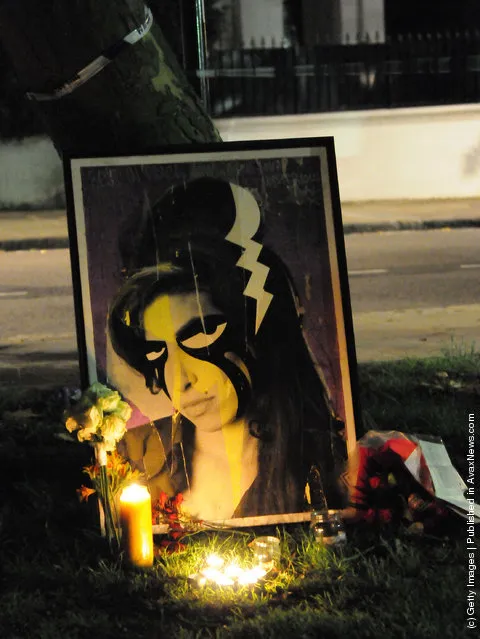
“Amy Jade Winehouse (14 September 1983 – 23 July 2011) was a British singer-songwriter known for her powerful contralto vocals and her eclectic mix of musical genres including R&B, soul and jazz. ... Winehouse died at the age of 27 on 23 July 2011 at her home in London; police have said that the cause of her death was «as yet unexplained»”. – Wikipedia

Photo: Amy Winehouse vigil outside Amy Winehouse's North London home on July 23, 2011 in London, England. Singer Winehouse, 27, was found dead today. (Photo by Sylvia Linares/Getty Images)
Details
24 Jul 2011 09:52:00
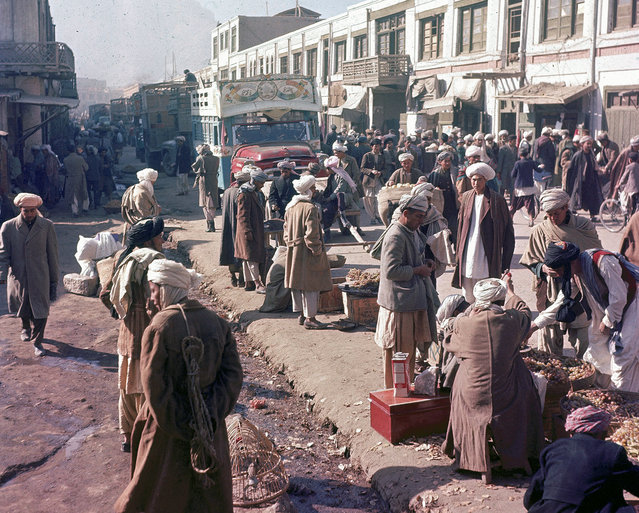
Men stroll past roadside vendors as a painted truck makes its way through the busy street in Kabul, Afghanistan, November, 1961. (Photo by Henry S. Bradsher/AP Photo via The Atlantic)

Men stroll past roadside vendors as a painted truck makes its way through the busy street in Kabul, Afghanistan, November, 1961. (Photo by Henry S. Bradsher/AP Photo via The Atlantic)
Details
03 Jul 2013 11:04:00
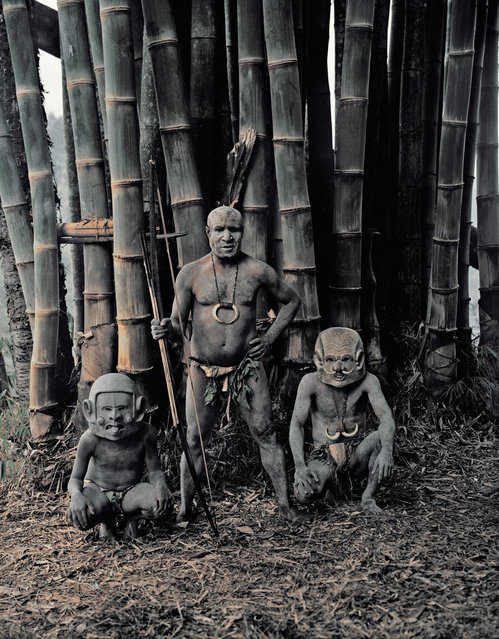
“Asaro from the Eastern Highlands”. The mudmen could not cover their faces with mud because the people of Papua New Guinea thought that the mud from the Asaro river was poisonous. So instead of covering their faces with this alleged poison, they made masks from pebbles that they heated and water from the waterfall, with unusual designs such as long or very short ears either going down to the chin or sticking up at the top, long joined eyebrows attached to the top of the ears, horns and sideways mouths. (Jimmy Nelson)

“Asaro from the Eastern Highlands”. The mudmen could not cover their faces with mud because the people of Papua New Guinea thought that the mud from the Asaro river was poisonous. So instead of covering their faces with this alleged poison, they made masks from pebbles that they heated and water from the waterfall, with unusual designs such as long or very short ears either going down to the chin or sticking up at the top, long joined eyebrows attached to the top of the ears, horns and sideways mouths. (Photo and caption by Jimmy Nelson)
Details
20 Oct 2013 08:54:00
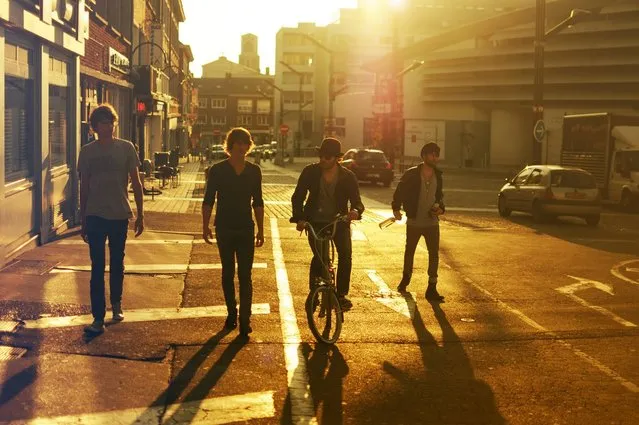
“Friends'n Roll”. (Théo Gosselin)

“Friends'n Roll”. (Photo and caption by Théo Gosselin)
Details
15 Nov 2013 12:11:00
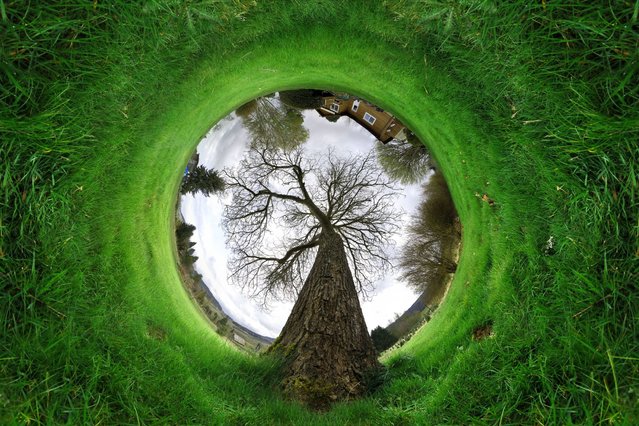
This incredible panoramic photographs are distorted to create miniature worlds and terrifying tunnels. (Photo by Caters News)

This incredible panoramic photographs are distorted to create miniature worlds and terrifying tunnels. (Photo by Caters News)
Details
25 Jan 2014 12:16:00
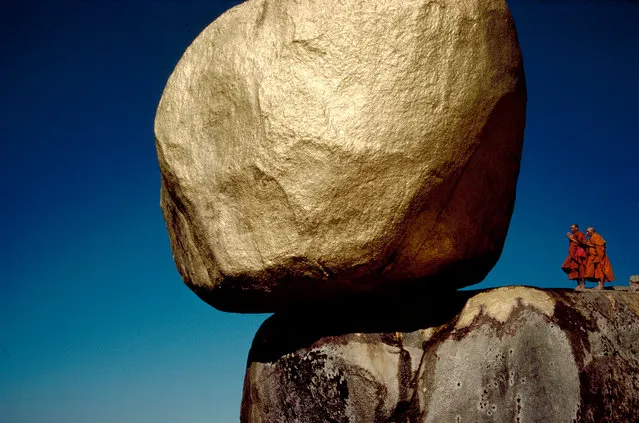
Kyaiktiyo, Burma, 1978. The Golden Rock at Shwe Pyi Daw (the Golden Country), the Buddhist holy place. Hiroji Kubota writes: “I was desperate to keep a distance from America for a while; luckily, I found Burma and its gentle and compassionate people. In the spring of 1978, on the top of the hill where I took this photo, I had two Leica bodies: the one with Tri-X and the other with Kodachrome 64. Soon after, I realised that the colour one looked very colourful and was more powerful. That was my decisive moment, to become a colour photographer”. (Photo by Hiroji Kubota/Magnum Photos)

Kyaiktiyo, Burma, 1978. The Golden Rock at Shwe Pyi Daw (the Golden Country), the Buddhist holy place. Hiroji Kubota writes: “I was desperate to keep a distance from America for a while; luckily, I found Burma and its gentle and compassionate people. In the spring of 1978, on the top of the hill where I took this photo, I had two Leica bodies: the one with Tri-X and the other with Kodachrome 64. Soon after, I realised that the colour one looked very colourful and was more powerful. That was my decisive moment, to become a colour photographer”. (Photo by Hiroji Kubota/Magnum Photos)
Details
10 Jun 2016 13:30:00
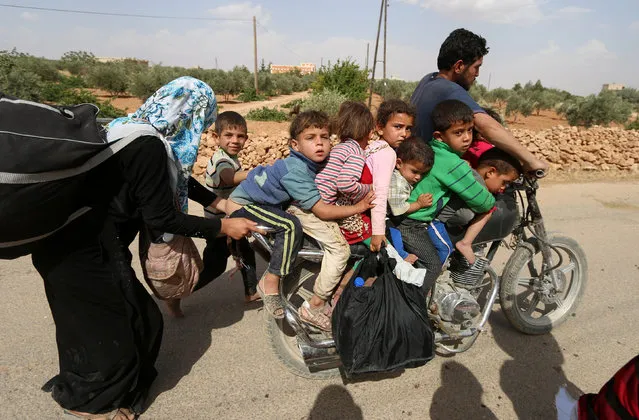
Civilians, who fled the violence in Manbij city, arrive to the southeastern rural area of Manbij, in Aleppo Governorate, Syria June 19, 2016. (Photo by Rodi Said/Reuters)

Civilians, who fled the violence in Manbij city, arrive to the southeastern rural area of Manbij, in Aleppo Governorate, Syria June 19, 2016. (Photo by Rodi Said/Reuters)
Details
20 Jun 2016 12:53:00