Loading...
Done
Dog Walker – 15:00. (Photo by Johanna Siegmann)

The CBRE Urban Photographer of the Year competition – now in its ninth year – encourages professional and amateur photographers to capture cities at work. Here: Dog Walker – 15:00. The competition allows photographers to enter up to 24 images, one representing each hour of the day. (Photo by Johanna Siegmann)
Details
17 Oct 2015 08:06:00
The Beautiful Landscapes By Alex Robciuc

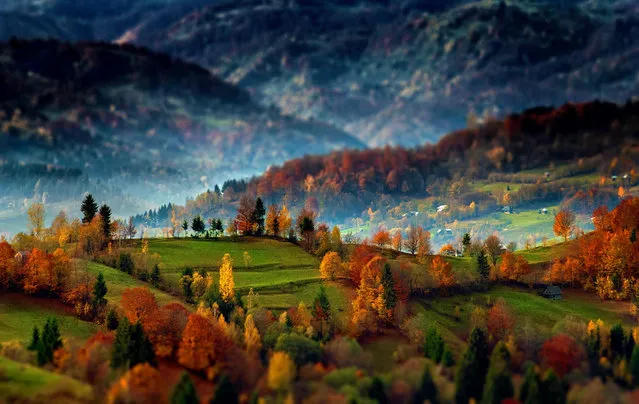
They say the great photographers are out of bed before sunrise and always late for dinner. Photographer Alex Robciuc does just that; waking at 5 AM to capture the gorgeous morning light spilling over a small county in Transylvania, Romania. This dedication to early rising and sticking around for the "perfect light" has offered Alex some seriously beautiful landscape images.
Details
24 Jun 2015 08:26:00
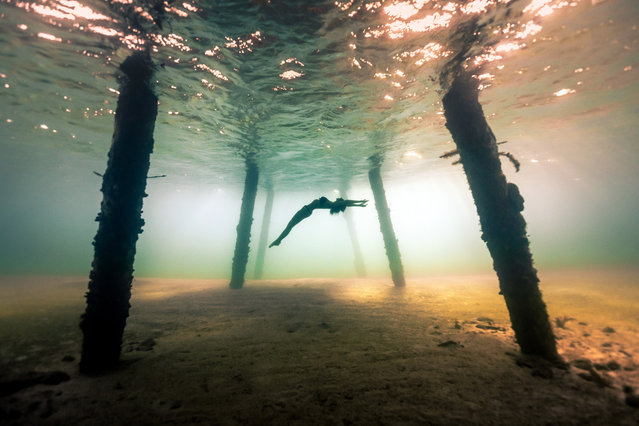
A diver swims in the shallow water under a pier. (Photo by Alex Voyer/Caters News Agency)

A series of beautiful shots of divers swimming near sunken ships have emerged. Alex Voyer, 39, was sailing around the Caribbean on a 60-foot boat when he stopped for a dive. The images show amazing shipwrecks as free divers explore the seabed. Here: A diver swims in the shallow water under a pier. (Photo by Alex Voyer/Caters News Agency)
Details
27 Aug 2018 00:03:00
“Aurora over a glacier lagoon”. A vivid green overheaded aurrora pictured in Iceland's Vatnajokull National Park reflected almost symetrically in Jokulsrlon Glacier lagoon. A complete lack of wind and currrent combin in this sheltred lagoon scene to crete an arresting mirror effect giving the image a sensation of utter stillness. Despite theis there is motion on a suprising scale, as the loops and arcs of the aurora are shaped by the shifting forces of the Earth's magnetic field. (Photo by  James Woodend/The Astronomy Photographer of the Year 2014 Contest)

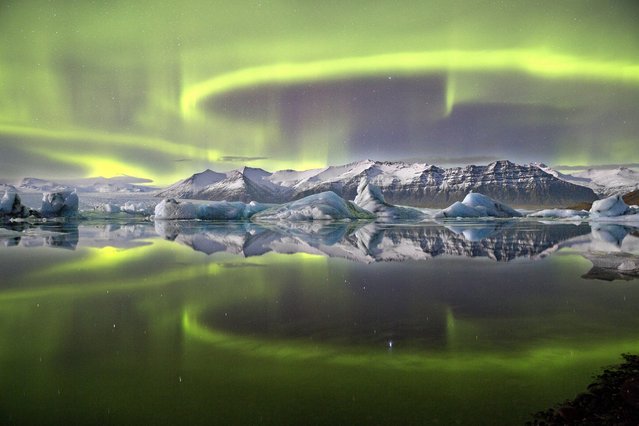
“Aurora over a glacier lagoon”. A vivid green overheaded aurrora pictured in Iceland's Vatnajokull National Park reflected almost symetrically in Jokulsrlon Glacier lagoon. A complete lack of wind and currrent combin in this sheltred lagoon scene to crete an arresting mirror effect giving the image a sensation of utter stillness. Despite theis there is motion on a suprising scale, as the loops and arcs of the aurora are shaped by the shifting forces of the Earth's magnetic field. James Woodend of Great Britain won the grand prize with the image, beating out more than 2,500 other entries. The Astronomy Photographer of the Year 2014 contest is judged by the Royal Observatory Greenwich and BBC Sky at Night magazine. (Photo by James Woodend/The Astronomy Photographer of the Year 2014 Contest)
Details
26 Sep 2014 13:39:00
In this handout image provided by Ogilvy, a burger made from cultured beef, which has been developed by Professor Mark Post of Maastricht University in the Netherlands (pictured) is shown to the media during a press conference on August 5, 2013 in London, England. Cultured Beef could help solve the coming food crisis and combat climate change with commercial production of Cultured Beef beginning within ten to twenty years. (Photo by David Parry via Getty Images)

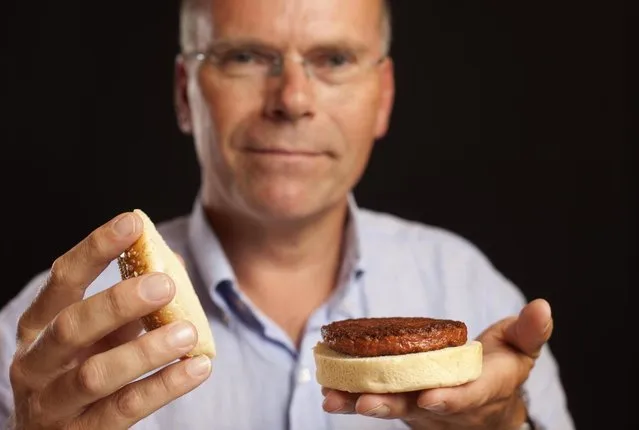
In this handout image provided by Ogilvy, a burger made from cultured beef, which has been developed by Professor Mark Post of Maastricht University in the Netherlands (pictured) is shown to the media during a press conference on August 5, 2013 in London, England. The in-vitro burger, cultured from cattle stem cells, the first example of what its creator says could provide an answer to global food shortages and help combat climate change, was fried in a pan and tasted by two volunteers. The burger is the result of years of research by Dutch scientist Mark Post, a vascular biologist at the University of Maastricht, who is working to show how meat grown in petri dishes might one day be a true alternative to meat from livestock.The meat in the burger has been made by knitting together around 20,000 strands of protein that has been cultured from cattle stem cells in Post's lab. (Photo by David Parry)
Details
06 Aug 2013 08:48:00
Emma Watson

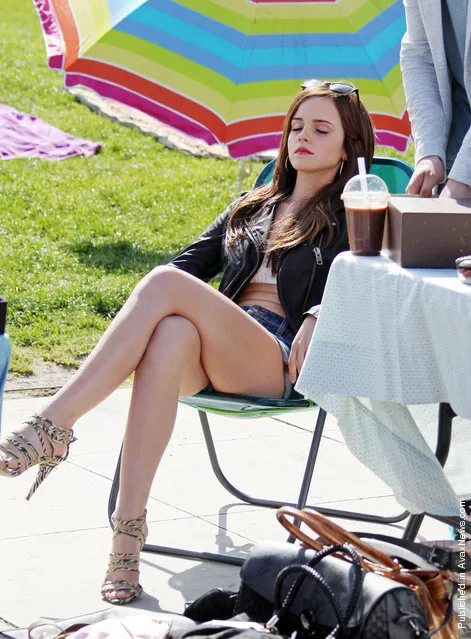
“Former Harry Potter star Emma Watson has shed her squeak-clean image by parading the streets in a bra and hot pants for her role in Sofia Coppola's latest movie. The actress has signed up for a leading role in The Bling Ring, playing one of the real-life teens who stole from the homes of stars including Paris Hilton, Lindsay Lohan and Orlando Bloom in 2008 and 2009. A series of images from the Los Angeles film set are set to shock the Brit's younger fans as she has been photographed strutting in tiny shorts, a bra-style top, leather jacket and towering high heels”. (Photo by PR Photos/Gaz Shirley/KVS/PacificCoastNews.com)
Details
20 Apr 2012 12:51:00


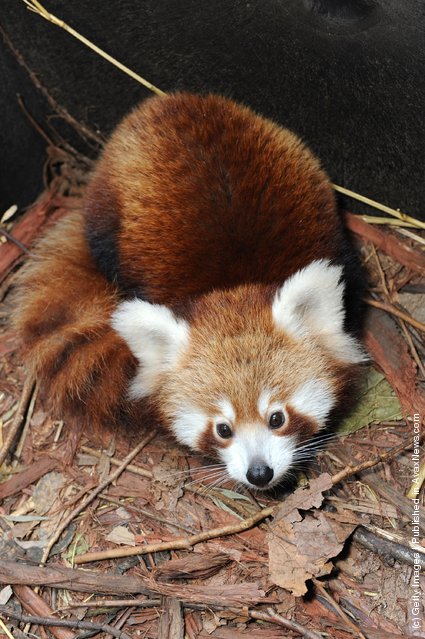
“The red panda (Ailurus fulgens, or shining-cat), is a small arboreal mammal native to the eastern Himalayas and southwestern China. It is the only species of the genus Ailurus. Slightly larger than a domestic cat, it has reddish-brown fur, a long, shaggy tail, and a waddling gait due to its shorter front legs. It feeds mainly on bamboo, but is omnivorous and may also eat eggs, birds, insects, and small mammals. It is a solitary animal, mainly active from dusk to dawn, and is largely sedentary during the day”. – Wikipedia

Photo: In this handout image provided by Taronga Zoo, Seba, a baby Red Panda, explores his new home at Taronga Zoo on April 7, 2011 in Sydney, Australia. The Red Panda cub was born at Christmas and is the 45th to be born at the zoo since 1977. (Photo by Peter Hardin/Taronga Zoo via Getty Images)

Details
07 Apr 2011 08:51:00
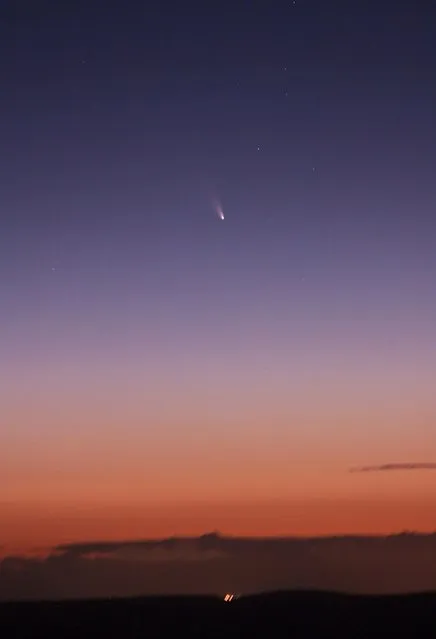
This image provided by NASA shoaws the comet PANSTARRS as seen from Mount Dale, Western Australia on March 5, 2013. According to NASA on March 10, it will make its closest approach to the sun about 28 million miles (45 million kilometers) away. As it continues its nightly trek across the sky, the comet may get lost in the sun's glare but should return and be visible to the naked eye by March 12. (Photo by AP Photo/NASA)

It’s time to start watching for Comet PANSTARRS, one of two comets to get excited about in 2013. Photo: This image provided by NASA shoaws the comet PANSTARRS as seen from Mount Dale, Western Australia on March 5, 2013. According to NASA on March 10, it will make its closest approach to the sun about 28 million miles (45 million kilometers) away. As it continues its nightly trek across the sky, the comet may get lost in the sun's glare but should return and be visible to the naked eye by March 12. (Photo by AP Photo/NASA)
Details
13 Mar 2013 08:03:00